martin Ⓥ (@__tsb) 's Twitter Profile
martin Ⓥ

@__tsb

Climate and animal rights activist || #Vegan for the animals ||
Born at 355.44 ppm, father of one (born
at 413.93 ppm).

ID: 384895210

calendar_today04-10-2011 14:29:10

2,2K Tweet

71 Takipçi

249 Takip Edilen

Andrew Ahern (@andrewsonearth) 's Twitter Profile Photo

"The children said animals & human beings should be treated the same & found eating animals less morally acceptable than adults. The findings suggest that 'speciesism'– a hierarchy that gives different value to animals – is learned during adolescence." theguardian.com/world/2022/apr…

George Monbiot (@georgemonbiot) 's Twitter Profile Photo

There's a further version of this fantasy which accepts there would be much less meat, but imagines this consumption would be distributed: everyone could eat it, but only on special occasions. Sorry, what? Since when has economics ever worked this way?

George Monbiot (@georgemonbiot) 's Twitter Profile Photo

I understand people’s hostility to new food technologies, such as precision fermentation, just as I understood people’s hostility towards wind turbines in the 2000s. If you believe there is no problem to be fixed, you will bridle at the proposed solutions.🧵

klimareporter° (@klimareport) 's Twitter Profile Photo

Die Produktion von Fleisch, Milch und Eiern trägt wesentlich zur #Klimakrise bei. Die Tierhaltung sei trotzdem wichtig, denn sie liefere wertvollen Dünger für die Landwirtschaft, behaupten Lobbyverbände. Das stimmt aber nicht. @frie_schmitz klimareporter.de/landwirtschaft…

Institute for Future Food Systems (@iffs_earth) 's Twitter Profile Photo

Dairy is the food most likely to be disrupted in the coming years. So we've just published a new 'living report' that we'll update as new evidence surfaces on the state of environmental impacts from dairy including a 🧵here of the 5 top facts to consider: plantbaseddata.org/post/stateofda…
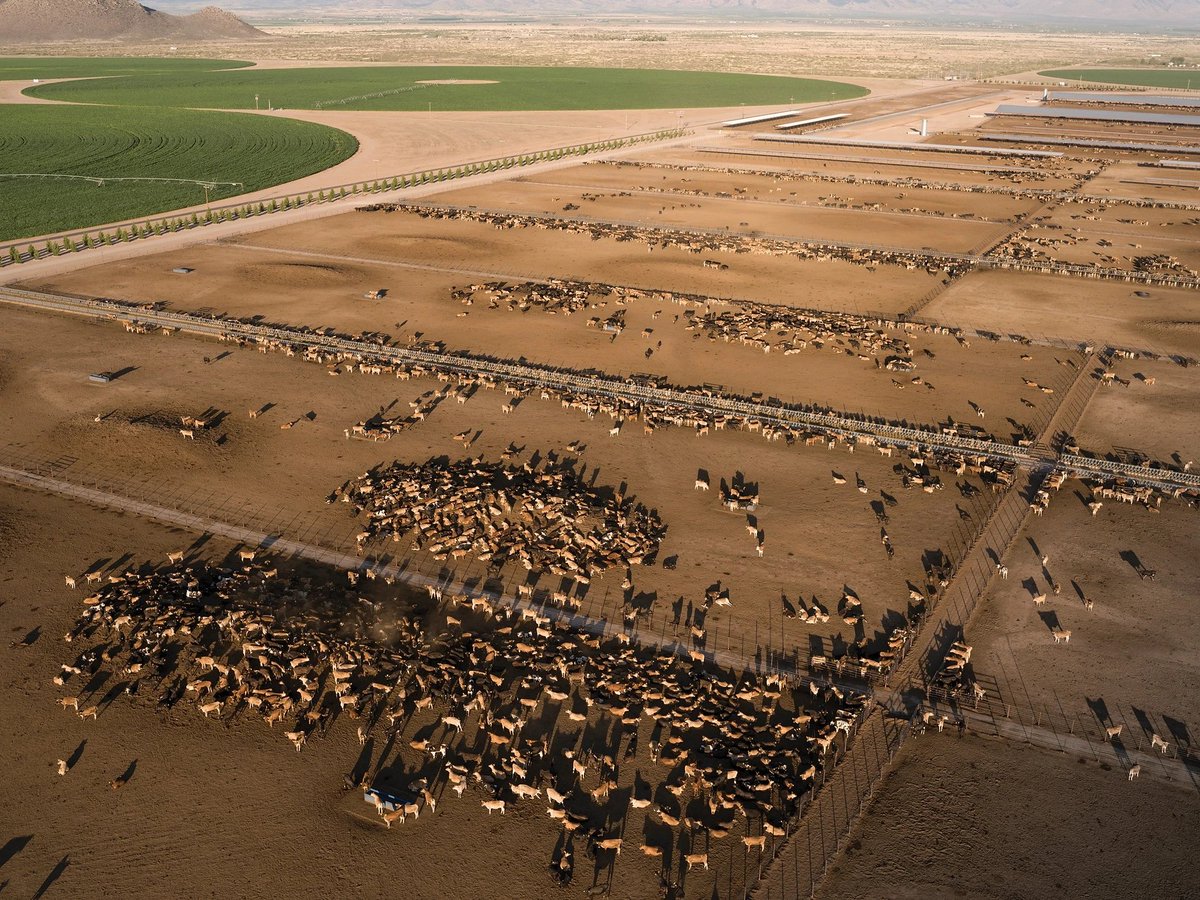

Dairy is the food most likely to be disrupted in the coming years.

So we've just published a new 'living report' that we'll update as new evidence surfaces on the state of environmental impacts from dairy including a 🧵here of the 5 top facts to consider:
plantbaseddata.org/post/stateofda…
Annemarie Botzki (@annemariebotzki) 's Twitter Profile Photo

.foodwatch Deutschland Recherche zeigt - Kükentöten-Verbot wird nicht kontrolliert - Verbleib von 9 Millionen männlichen Küken unklar - Hühner-Betriebe haben über 300.000 Tiere ins Ausland transportiert - min. in einem Fall nicht zur Aufzucht, sondern zur Tötung zdf.de/nachrichten/pa…

Jason Hickel (@jasonhickel) 's Twitter Profile Photo

Here's a quick roundup of highlights from research we published in 2022, on capitalism, imperialism, degrowth and decolonization. It's all open-access, and free PDFs are available via the link at the end of the thread. 🧵

spencer 🐡 (@unpop_science) 's Twitter Profile Photo

It’s popular right now to call out corporations for price gouging and egg corporations are doing that. But this pattern of framing egg prices as the real story & downplaying bird flu — to the point of putting it in scare quotes like it’s not even real — is extremely foolish. 🧵

Martin Smollich (@ernmedblog) 's Twitter Profile Photo

Neue Studie des DKFZ: Je mehr tierisches Protein, desto HÖHER die Sterblichkeit (v.a. bei typ. #LowCarb: viel tierisches Protein, wenig Kohlenhydate). Ersatz von tierischem Protein durch pflanzliches Protein: Gesamtsterblichkeit ⬇️ mdpi.com/2072-6643/15/3… via Nutrients MDPI

Neue Studie des <a href="/DKFZ/">DKFZ</a>:

Je mehr tierisches Protein, desto HÖHER die Sterblichkeit (v.a. bei typ. #LowCarb: viel tierisches Protein, wenig Kohlenhydate).

Ersatz von tierischem Protein durch pflanzliches Protein: Gesamtsterblichkeit ⬇️

mdpi.com/2072-6643/15/3… via <a href="/Nutrients_MDPI/">Nutrients MDPI</a>
Nicholas D. Carter (@nicholasdcarter) 's Twitter Profile Photo

Farming ruminant animals turns grass into bio-available protein, and all it cost us is: 🏞️the last of wild ecosystems, 🐺increasing risk of extinction of keystone species, ⬇️our only realistic opportunity to drawdown carbon, & 🌡️the biggest source of methane

spencer 🐡 (@unpop_science) 's Twitter Profile Photo

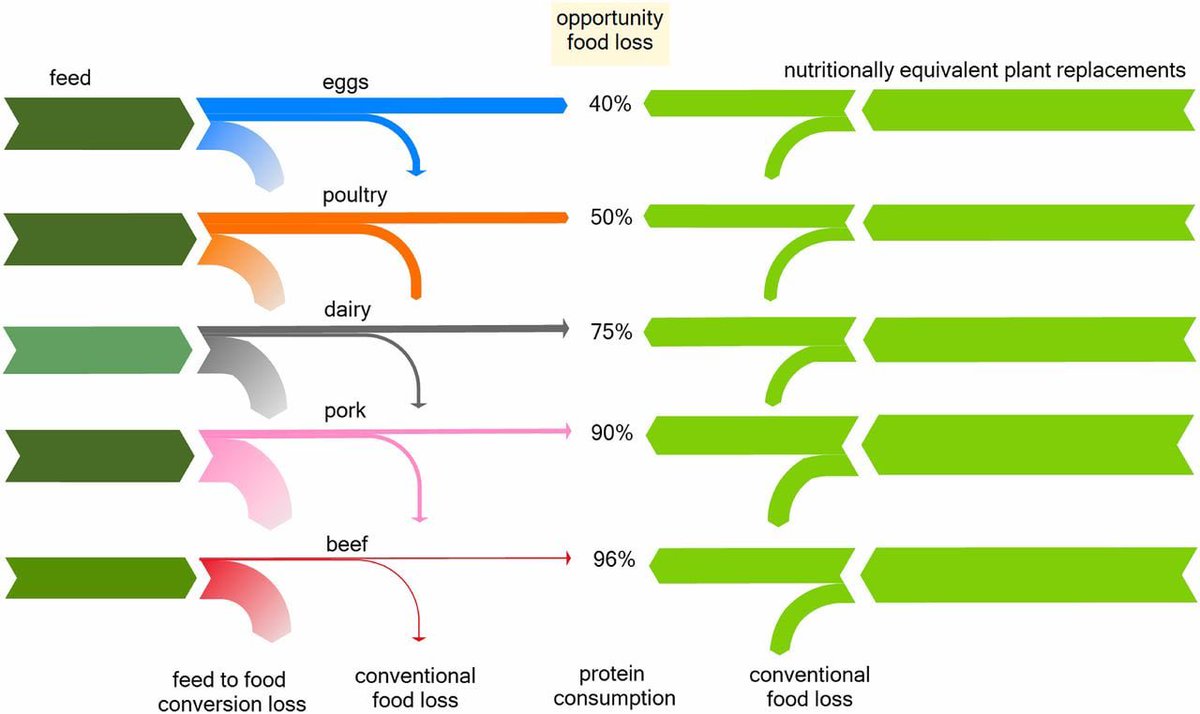
Animal farming is the biggest source of food waste in the world. For every 100 calories input to animal farms, only 12 come out as food. The rest are converted to heat and excrement. Calorically, this metabolic waste exceeds all food discards. pnas.org/doi/10.1073/pn…

Animal farming is the biggest source of food waste in the world.

For every 100 calories input to animal farms, only 12 come out as food. The rest are converted to heat and excrement.

Calorically, this metabolic waste exceeds all food discards.

pnas.org/doi/10.1073/pn…
Julia Steinberger (@jksteinberger) 's Twitter Profile Photo

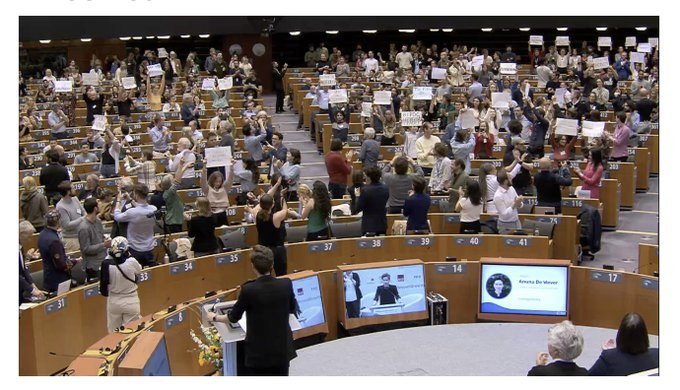
As floods & fires rise, oceans boil & ice melts, and "safe" temperatures are breached, something momentous just happened in the heart of the EU. No one has heard about it: journalists were present, but their editors refused to publish 🤯. 🧵, please RT. #BeyondGrowth2023 1/

As floods &amp; fires rise, oceans boil &amp; ice melts, and "safe" temperatures are breached, something momentous just happened in the heart of the EU. No one has heard about it: journalists were present, but their editors refused to publish 🤯.
🧵, please RT. 
#BeyondGrowth2023 
1/
martin Ⓥ (@__tsb) 's Twitter Profile Photo

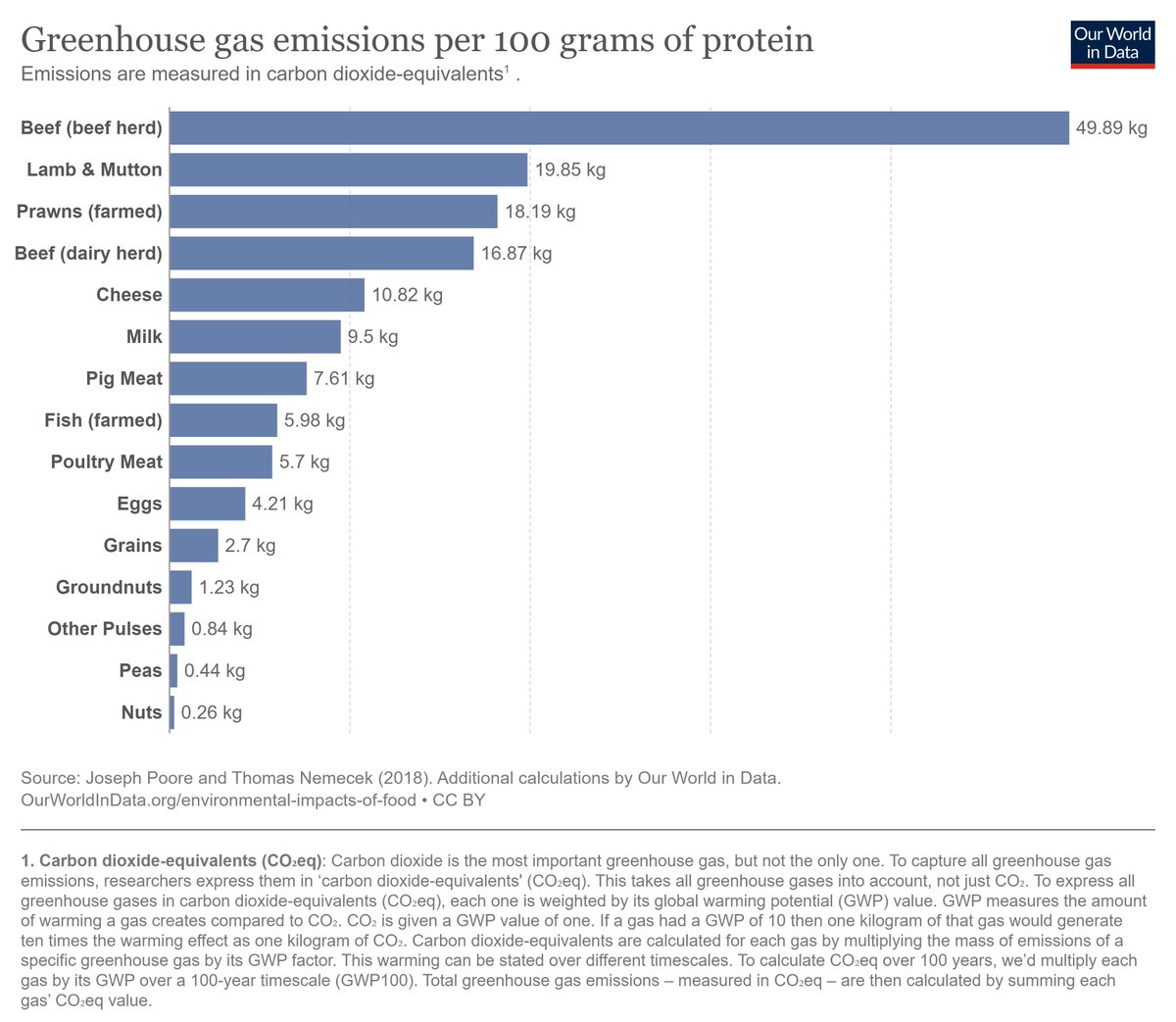
@GlobalEcoGuy Since animal products (inherently and invariably) cause greater emissions than plant products, I think an even better analogy is: Animal products are the fossil fuels of the food system. It's about time we treat them as such.

@GlobalEcoGuy Since animal products (inherently and invariably) cause greater emissions than plant products, I think an even better analogy is:

Animal products are the fossil fuels of the food system. 

It's about time we treat them as such.
Nicholas D. Carter (@nicholasdcarter) 's Twitter Profile Photo

🚩’Plant Based = Monocultures though’ Reality: The majority of monocultures, cultivated rows of the same crop grown continuously, are grown as: 1) feedcrops like corn or soy for confined animals🐄🐖🐓 2) non-native and invasive pasture cheatgrasses for intensive grazing. 🧵⤵️

Dr Charlie Gardner (also on the blue place) (@charliejgardner) 's Twitter Profile Photo

It's weird how wanting to maintain the conditions in which humanity has thrived is considered an ideology, yet pursuing the impossible goal of infinite economic growth, at any cost, is not Well, weird is one word

Faba Konzepte (@fabakonzepte) 's Twitter Profile Photo

Ab Freitag findet unsere Konferenz „#TierzahlenRunter, und zwar gerecht“ in Berlin statt! Mit >100 Anmeldungen sind alle Plätze ausgebucht –für uns auch ein Zeichen, wie wichtig & dringlich das Thema ist. Es braucht jetzt pol. Maßnahmen zur Transformation der #Landwirtschaft! 🧵

Reinhard @steurer.bsky.social (@reisteurer) 's Twitter Profile Photo

Nachdem die Aufregung über diese Aktionsform groß ist, möchte ich mich auch noch unbeliebt machen und sogar einem Shitstorm aussetzen. Warum halte ich diesen Protest für genial? 1/x 🧵