Toella Pliakas
@toellapliakas
ID: 1357006508576358401
03-02-2021 16:42:24
118 Tweet
186 Followers
261 Following

"Black people’s hairstyles can change — but our hair is a foundational part of who we are." Thanks to Toella Pliakas for coming to Washington Post Opinions with this excellent op-ed. washingtonpost.com/opinions/2022/…

Yes, we need a law protecting Black people against hair discrimination, Toella Pliakas writes in a guest opinion wapo.st/3vbpmPX

Toella Pliakas: “Yes, we need a law protecting Black people against hair discrimination.” #CrownAct washingtonpost.com/opinions/2022/…
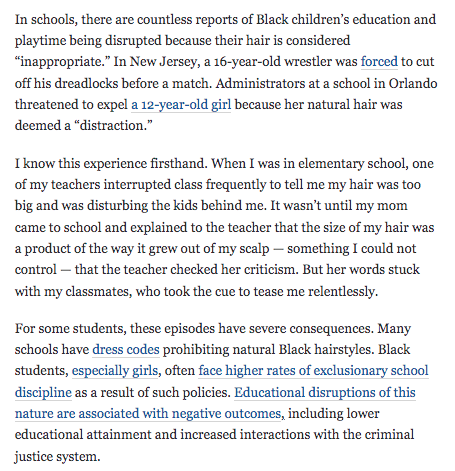


In the The Washington Post today, for an important piece about the Crown Act and politicisation of Black hair. Ty Danielle Kunitz for the opportunity Writer: Toella Pliakas
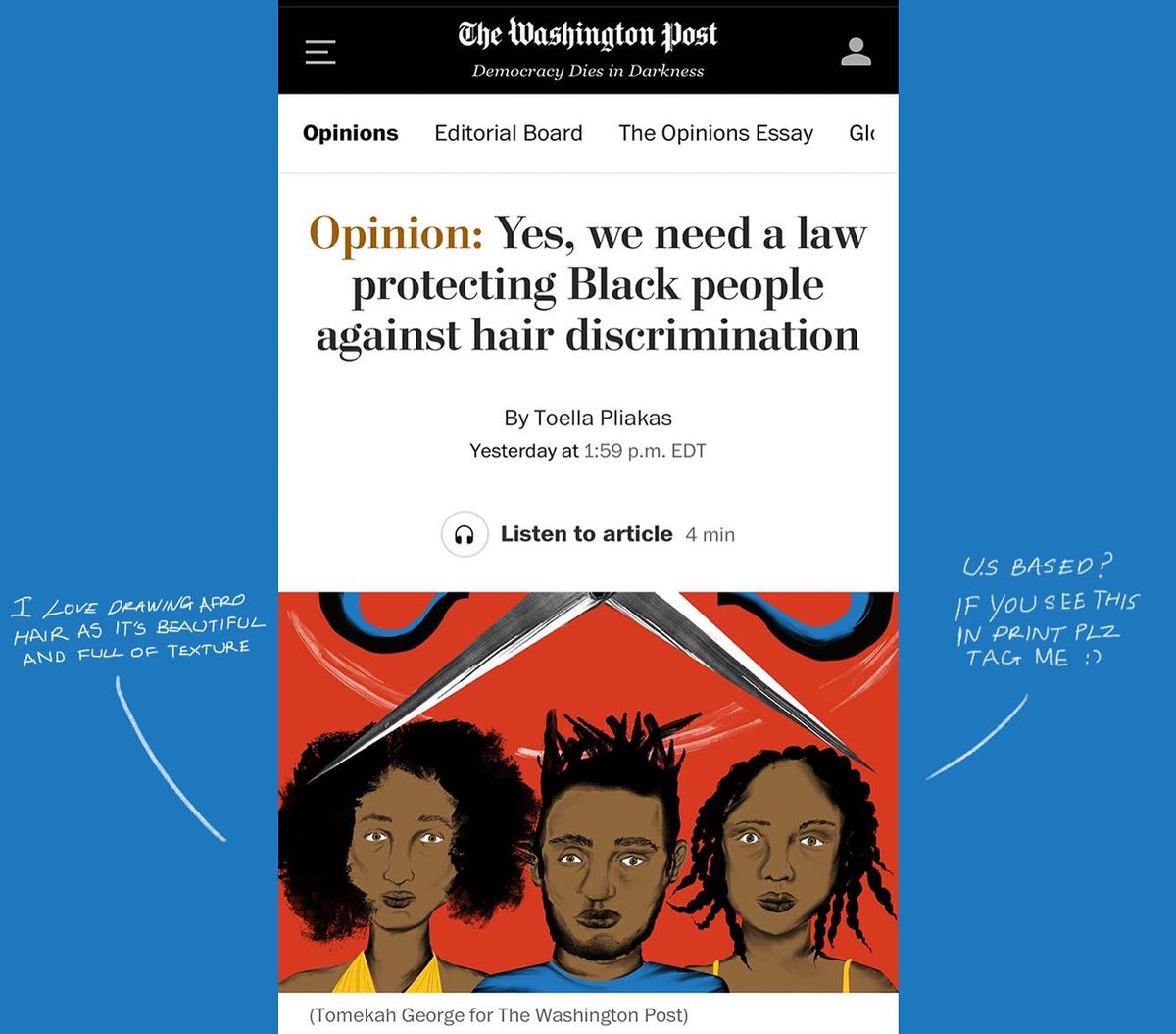

Read our own Youth Engagement Fellow Toella Pliakas in Washington Post Opinions on the need for the CROWN Act's ban on hair discrimination! washingtonpost.com/opinions/2022/…
"The historical politicization of hair has created stereotypes and biases that affect Black people’s ability to thrive, and our laws do not adequately address this discrimination," Toella Pliakas writes in a guest opinion wapo.st/3jxboCF
Some legislators have called the Crown Act trivial. They're wrong, Toella Pliakas writes in a guest opinion: wapo.st/37HrFCm
The Crown Act seeks to provide legal protection for Black people and other minorities who face discrimination based on their hair, Toella Pliakas writes in a guest opinion: wapo.st/3O5Q8SF

“The specificity of that critique. I looked down, becoming increasingly self conscious of standing up there next to Marinette. I began to imagine how the students in this class would remember this moment.” -from "Early Bird", a story by Toella Pliakas. alonghouse.com/early-bird/
My first piece of fiction was published last weekend. I’ve been too much of a scaredy cat to share it until now. If you read it let me know what you think! And be sure check out the rest of the Origins issue of A Long House! alonghouse.com/early-bird/



At the time, I was growing increasingly concerned that 1) no Black editors for feature pieces existed then at the The New Yorker; and 2) this meant that almost none of the longform feature pieces—those sent up for Pulitzers, etc.—had been edited by a Black editor in nearly 15 years.