

Thomas E. Jensen
@tejensen23
Associate professor, Department of Nutrition, Exercise and Sports (NEXS), University of Copenhagen. Interested in skeletal muscle cell signaling and metabolism
ID: 2756753553
https://nexs.ku.dk/english/ 31-08-2014 05:59:34
229 Tweet
1,1K Takipçi
628 Takip Edilen





In an article at ScienceNews Professor Erik A. Richter from University of Copenhagen Research shares insigths into new research that highlights that small cells lining human blood vessels have a significant role in causing insulin resistance, a critical aspect of metabolic disorders such as


Really proud of Olivia Conway presenting her exciting work using subcellular proteomics to study insulin action in adipocytes. #MetabolismInAction2024
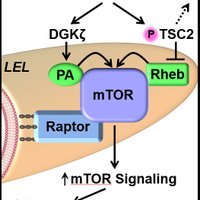
Our new FASEBJ paper. We looked into mTOR Ser1261 phosphorylation in human and mouse muscle, proposed by Diane Fingar's lab to be first an Akt and then AMPK site regulating mTORC1 and 2 activity. Clearly AMPK site but impact on mTORC unclear in our hands faseb.onlinelibrary.wiley.com/doi/10.1096/fj…

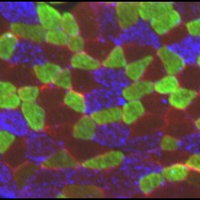
Our most comprehensive review ever! With twiterless Amira Klip and Philip Bilan. #nexs A Comprehensive View of Muscle Glucose Uptake: Regulation by Insulin, Contractile Activity and Exercise | Physiological Reviews | American Physiological Society journals.physiology.org/doi/abs/10.115…
🐭❄️ Temperature impacts molecular changes linked to cancer & cachexia in mouse models -something to consider when interpreting preclinical results and their translation to human cancers. Huge thanks to Andrea Irazoki & team onlinelibrary.wiley.com/doi/10.1002/jc…
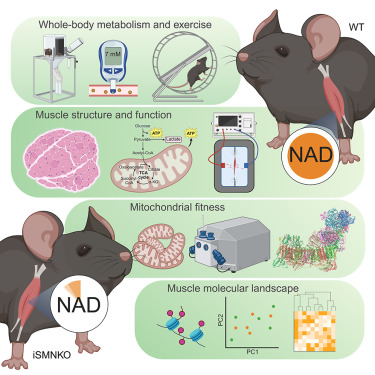
In our latest paper, we show that inducible sk. muscle AXIN1 /2 double KO have normal AMPK, mTOR and glucose uptake regulation, questioning previously proposed dependencies on this scaffold protein. Thanks to all co-authors for their contributions physoc.onlinelibrary.wiley.com/doi/10.1113/JP…

Thrilled to share our new study from the Thomas E. Jensen lab showing, for the first time, that mitochondrial H₂O₂ is sufficient to trigger muscle wasting signatures and suppress protein synthesis. Huge thanks to Carlos Henríquez-Olguin and everyone involved! biorxiv.org/content/10.110…
🚀New preprint w/ Roberto Meneses-Valdés: We used chemogenetics to precisely control mitochondrial H2O2 in skeletal muscle in vivo. This exposes a dose-dependent sequence: translation suppression → proteolysis → denervation-like → degeneration Thomas E. Jensen biorxiv.org/content/10.110…
