Tuomas Kärnä (@teekarna) 's Twitter Profile
Tuomas Kärnä

@teekarna

High performance computing, computational fluid dynamics, finite element method, and machine learning.

ID: 1057885888594751488

calendar_today01-11-2018 06:43:45

81 Tweet

84 Takipçi

82 Takip Edilen

Jemma Harding (@jemmashipton) 's Twitter Profile Photo

Please share! 4yr funded EPSRC PhD opportunity to work with me on compatible finite element algorithms for the compressible Euler equations! exeter.ac.uk/studying/fundi…

George Markomanolis (@geomark) 's Twitter Profile Photo

I am excited to give a talk about programming models for LUMI supercomputer supercomputer at ECMWF workshop on #HPC in meteorology. I will be  discussing porting solutions among weather and climate community. events.ecmwf.int/event/169/time…

Tuomas Kärnä (@teekarna) 's Twitter Profile Photo

Hot off the press🔥. Our new paper describes the Nemo-Nordic 2.0 operational marine model for the Baltic Sea. The model is used for operational forecasting at Copernicus Marine and @FMI_marine. Forecast products are freely available via marine.copernicus.eu 📰:doi.org/10.5194/gmd-14…

Hot off the press🔥. Our new paper describes the Nemo-Nordic 2.0 operational marine model for the Baltic Sea. The model is used for operational forecasting at <a href="/CMEMS_EU/">Copernicus Marine</a> and @FMI_marine. Forecast products are freely available via marine.copernicus.eu
📰:doi.org/10.5194/gmd-14…

Tuomas Kärnä (@teekarna) 's Twitter Profile Photo

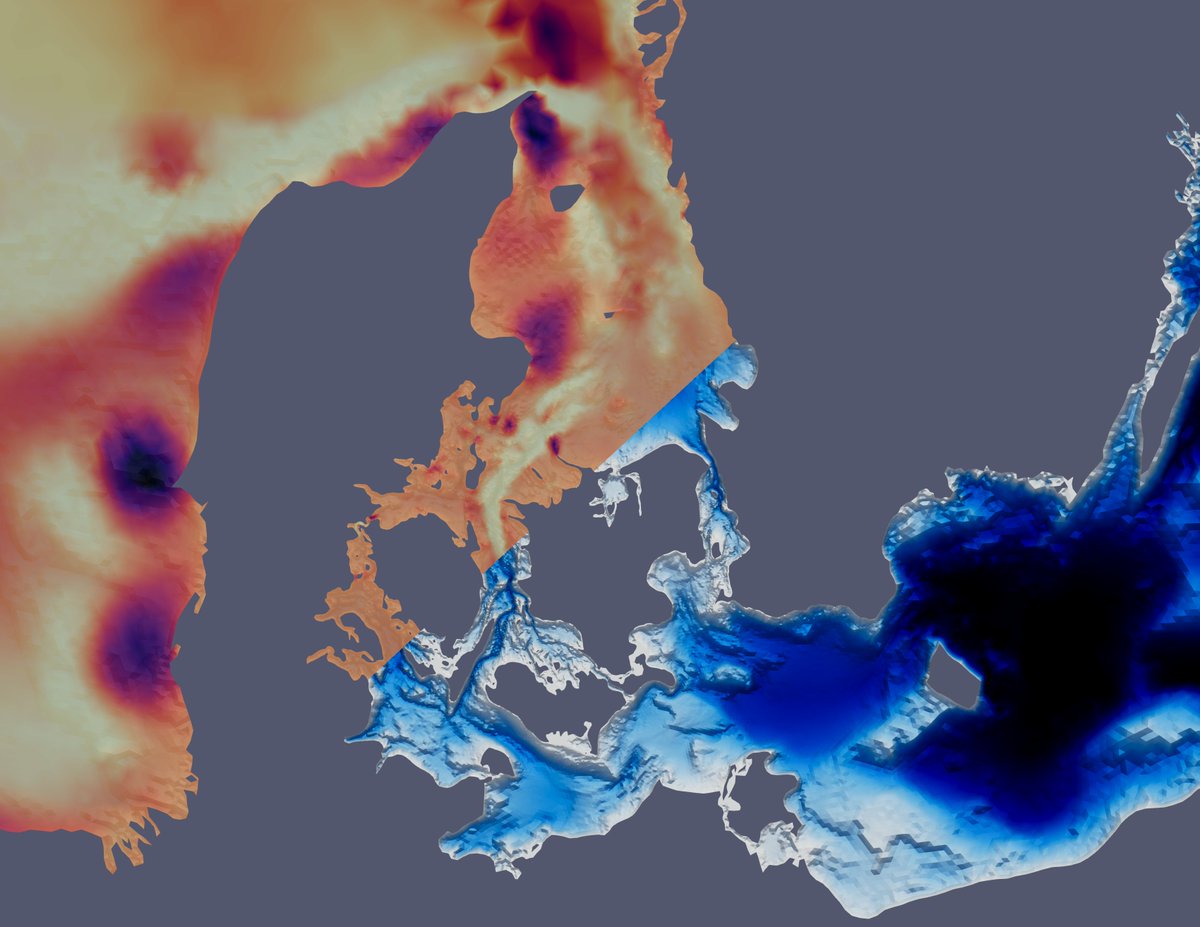
Generating unstructured meshes for ocean modeling is always a challenge. Here's an example for the North Sea/Baltic Sea. Resolution has to be sufficiently high to resolve the coastal topography and the open boundary must be placed outside the shallow continental shelf sea.

Tuomas Kärnä (@teekarna) 's Twitter Profile Photo

Modeling sea surface height in the North Sea/Baltic Sea. The shallow Danish Straits effectively filter out the tides. In the Baltic, SSH is mainly controlled by winds, atmospheric pressure, and seiche oscillations. Simulated with the Thetis ocean model (thetisproject.org).

Tuomas Kärnä (@teekarna) 's Twitter Profile Photo

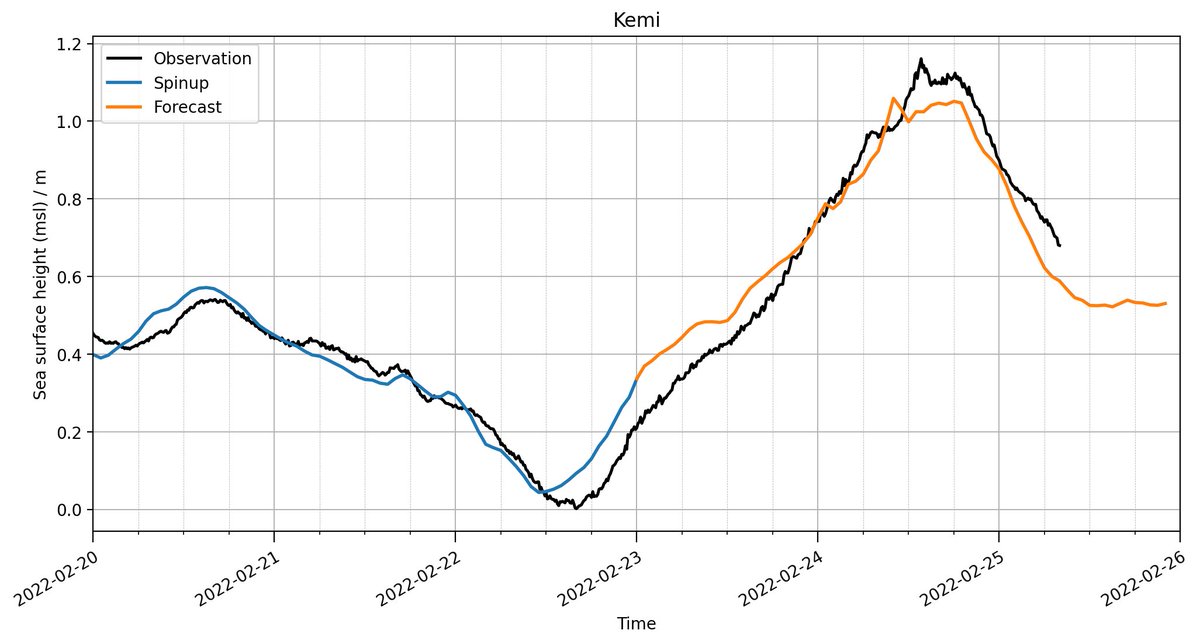
Recent storms have increased water level in the Baltic Sea and increased the risk of coastal flooding. Yesterday I did a forecast simulation with Thetis 2D model. The forecast seems to capture storm-induced water level variability in the Bay of Bothnia fairly well.

Recent storms have increased water level in the Baltic Sea and increased the risk of coastal flooding. Yesterday I did a forecast simulation with Thetis 2D model. The forecast seems to capture storm-induced water level variability in the Bay of Bothnia fairly well.
Tuomas Kärnä (@teekarna) 's Twitter Profile Photo

Can ocean model parameters be inferred from observational data? We used Thetis adoint model to optimize bottom friction coefficient in a Baltic Sea simulation based on tide gauge sea surface height observations. Preprint: arxiv.org/abs/2205.01343

Tuomas Kärnä (@teekarna) 's Twitter Profile Photo

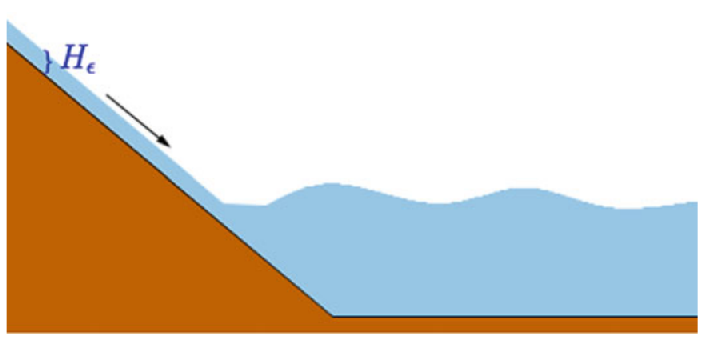
📕The Mathematics of Marine Modelling book is out. With Sigrun Ortleb and Jonathan Lambrechts we wrote a chapter about wetting-drying methods in FV/DG-FE shallow water models. 🔗doi.org/10.1007/978-3-…

📕The Mathematics of Marine Modelling book is out. With Sigrun Ortleb and Jonathan Lambrechts we wrote a chapter about wetting-drying methods in FV/DG-FE shallow water models. 🔗doi.org/10.1007/978-3-…
Tuomas Kärnä (@teekarna) 's Twitter Profile Photo

Our paper presents an automated procedure to optimize ocean model parameters. The procedure is very similar to training in machine learning — the main difference is that the model is a physics-based PDE solver. Inverse model is automatically generated. doi.org/10.1029/2022MS…

Our paper presents an automated procedure to optimize ocean model parameters.

The procedure is very similar to training in machine learning — the main difference is that the model is a physics-based PDE solver. Inverse model is automatically generated.

doi.org/10.1029/2022MS…