Simon Friederich (@simonfriederich) 's Twitter Profile
Simon Friederich

@simonfriederich

Philosopher of science at @univgroningen.

ID: 942681942100672512

linkhttp://simonfriederich.eu calendar_today18-12-2017 09:04:23

3,3K Tweet

1,1K Followers

224 Following

Daniel Eth (yes, Eth is my actual last name) (@daniel_271828) 's Twitter Profile Photo

Agree with Garrison here. It’s probably the case that, if humanity sticks around for millennia, we’re ~destined to build AGI eventually. But there’s no reason humanity is sure to build it ~as soon as we can, and those saying so are trying to create a self-fulling prophecy

Maarten Boudry (@mboudry) 's Twitter Profile Photo

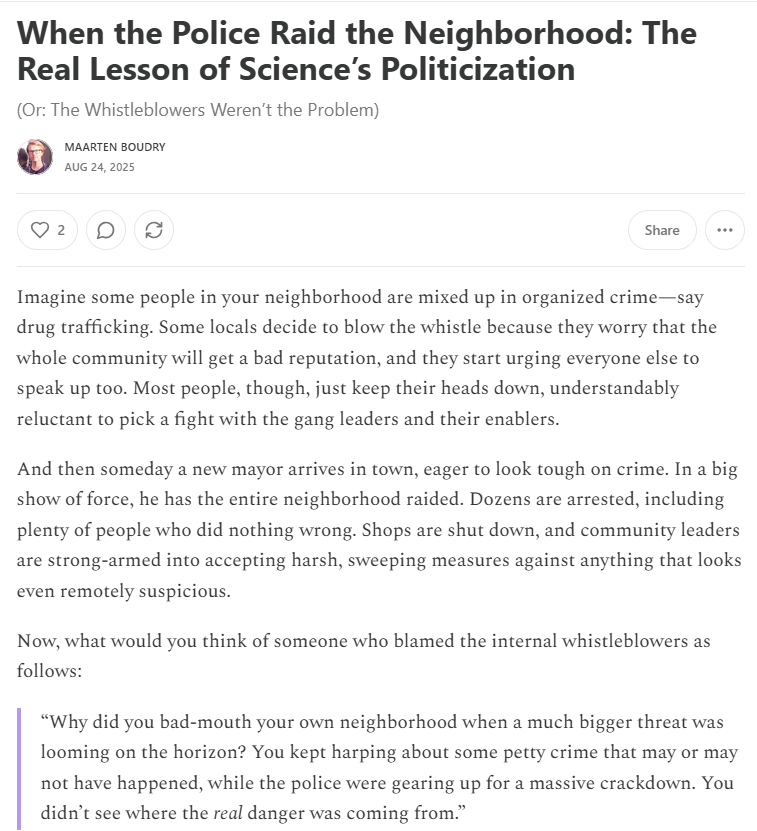
When the Police Raid the Neighborhood: The Real Lesson of Science’s Politicization (Or: The Whistleblowers Weren’t the Problem) maartenboudry.substack.com/p/when-the-pol…

When the Police Raid the Neighborhood: The Real Lesson of Science’s Politicization
(Or: The Whistleblowers Weren’t the Problem) maartenboudry.substack.com/p/when-the-pol…
Harvey Lederman (@ledermanharvey) 's Twitter Profile Photo

This is a fantastic article. In my view, the issue is both more important and easier to solve than many of my colleagues. A short thread about why 1/n

Andreas Fichtner ☢️ 🇺🇦🗽 (@andreasnukechem) 's Twitter Profile Photo

Die öffentlich-rechtliche „Wissenschaftssendung“ Quarks betreibt dreiste Propaganda und verbreitet offensichtliche Lügen über die Atomkraft. „Warum ist der Atomstrom in Frankreich dann so billig? - Er wird zu 75% subventioniert“ Frankreich produziert 350 Milliarden kWh

Die öffentlich-rechtliche „Wissenschaftssendung“ <a href="/quarkswdr/">Quarks</a> betreibt dreiste Propaganda und verbreitet offensichtliche Lügen über die Atomkraft.

„Warum ist der Atomstrom in Frankreich dann so billig? - Er wird zu 75% subventioniert“

Frankreich produziert 350 Milliarden kWh
Forecasting Research Institute (@research_fri) 's Twitter Profile Photo

We now have the first accuracy results from the largest-ever existential risk forecasting tournament. In 2022, we convened 80 experts and 89 superforecasters for the Existential Risk Persuasion Tournament (XPT), which collected thousands of forecasts in 172 questions across

We now have the first accuracy results from the largest-ever existential risk forecasting tournament.

In 2022, we convened 80 experts and 89 superforecasters for the Existential Risk Persuasion Tournament (XPT), which collected thousands of forecasts in 172 questions across
Ed Newton-Rex (@ednewtonrex) 's Twitter Profile Photo

People concerned about AI should stop arguing it's useless / a fad. Some AI products probably are, sure. But some are clearly useful for lots of people. 800 million people use ChatGPT every week. Obviously, ChatGPT is useful. This doesn't mean we should encourage ChatGPT usage.

Anthony Aguirre (@anthonynaguirre) 's Twitter Profile Photo

Things that were once considered inevitable by very large groups of people: - Rule by kings - Almost every family losing a child to disease or hunger - War as the main way to settle disputes between countries - Overpopulation leading to mass starvation - Widespread

Ed Newton-Rex (@ednewtonrex) 's Twitter Profile Photo

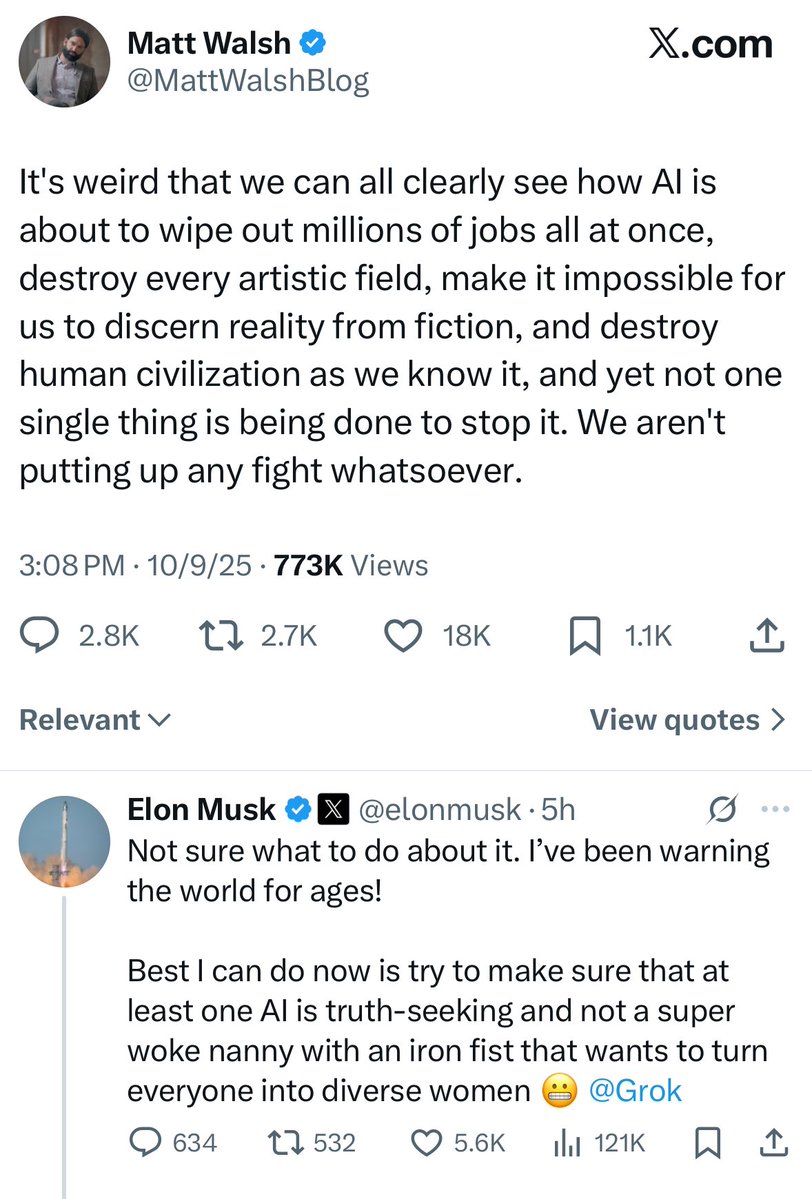
The world’s richest man agrees that AI will wipe out millions of jobs, destroy the arts, make us lose trust in what we see, and destroy civilization - - and says the best he can do about it is make his own AI that doesn’t want “to turn everyone into diverse women”. 1. What

The world’s richest man agrees that AI will wipe out millions of jobs, destroy the arts, make us lose trust in what we see, and destroy civilization -

- and says the best he can do about it is make his own AI that doesn’t want “to turn everyone into diverse women”.

1. What
Leonard Dung (@leonarddung1) 's Twitter Profile Photo

Do language models actually deceive? My new paper in Erkenntnis identifies distinct varieties of deception in LLMs-some more concerning than others: link.springer.com/article/10.100…

Harvey Lederman (@ledermanharvey) 's Twitter Profile Photo

Important also for people in the community to grapple with feelings about how the world will look **even in the best case**. Few in industry seem to take seriously the challenge to their own self conception this will be. I did my best here: scottaaronson.blog/?p=9030

Ed Newton-Rex (@ednewtonrex) 's Twitter Profile Photo

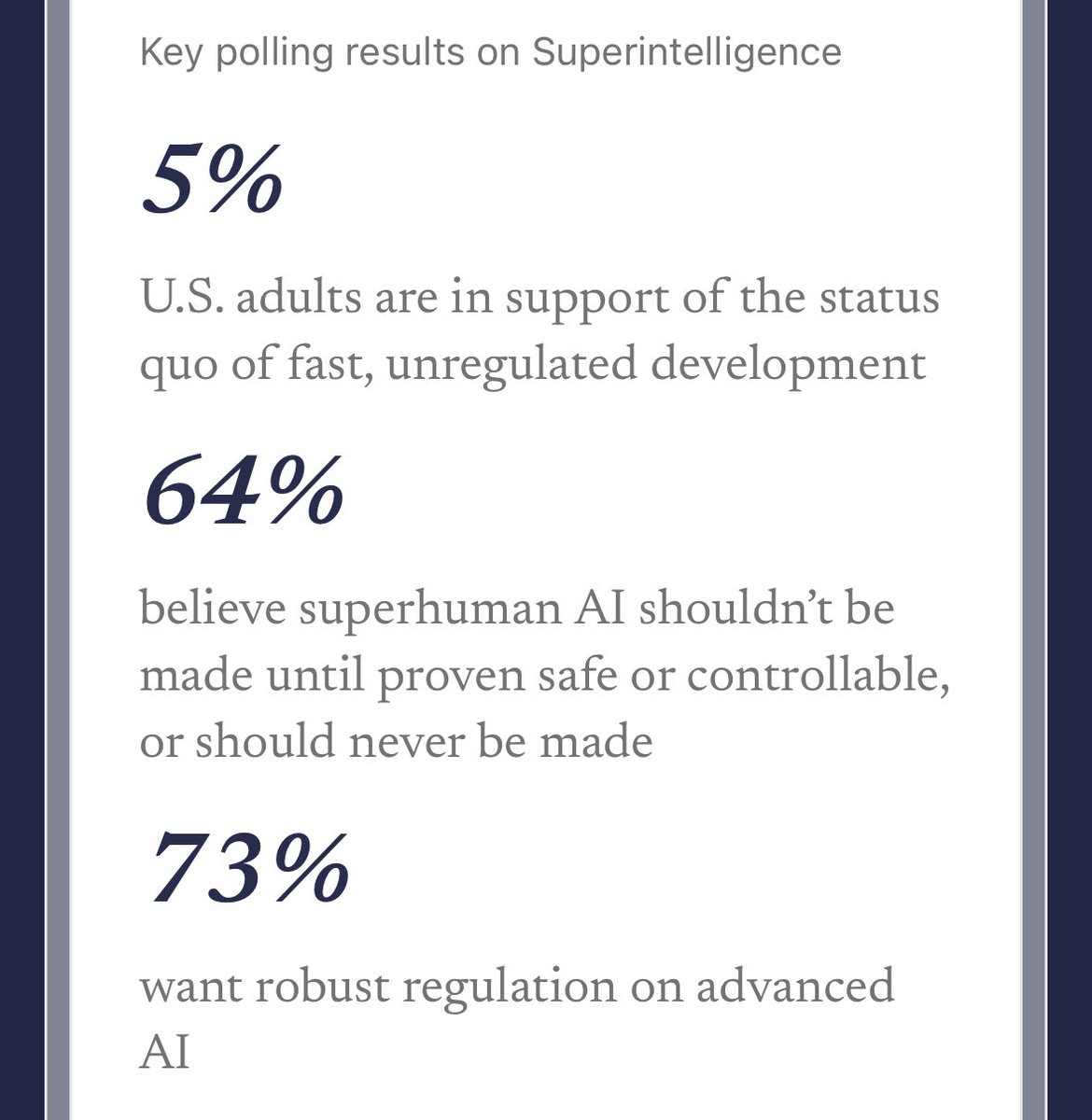
Ban superintelligence. New letter signed by politicians, faith leaders, musicians & many more. Sign here: superintelligence-statement.org

Ban superintelligence.

New letter signed by politicians, faith leaders, musicians &amp; many more.

Sign here:

superintelligence-statement.org
Luke Drago (@luke_drago_) 's Twitter Profile Photo

Wrote a piece on Technocalvinism in Cosmos Institute. The thesis: the future of AI is not already written. We can steer this technology to uplift -- rather than replace -- humanity. But to do so, we've got to get building. Link in the replies.
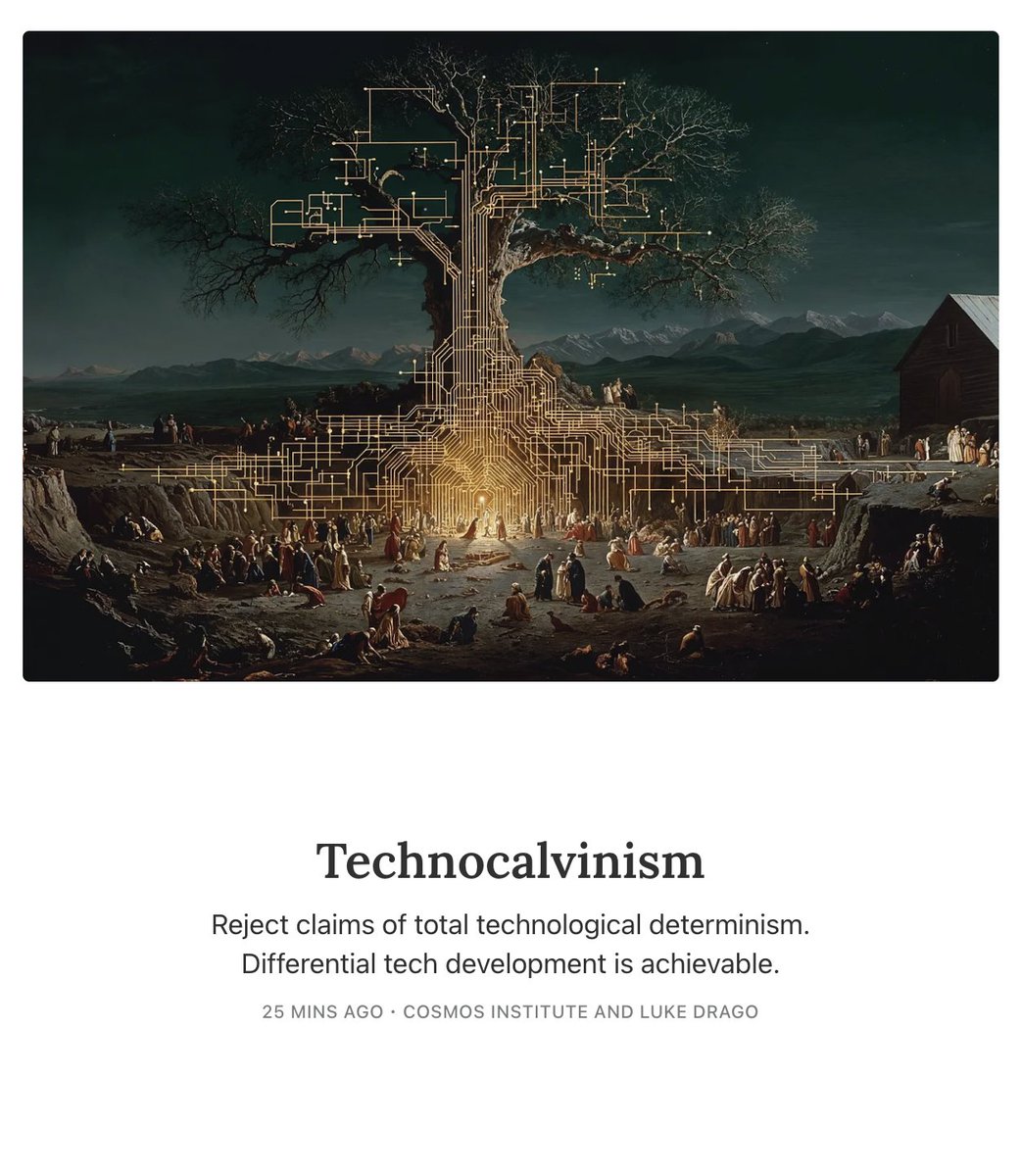

Wrote a piece on Technocalvinism in <a href="/cosmos_inst/">Cosmos Institute</a>. 

The thesis: the future of AI is not already written. We can steer this technology to uplift -- rather than replace -- humanity. But to do so, we've got to get building.

Link in the replies.
Rob Wiblin (@robertwiblin) 's Twitter Profile Photo

I don't think that greater attention to the 'political economy' of superintelligence is going to make ordinary people feel better about pushing ahead tylercowen. The most salient effect of superintelligence (plus vast numbers of robots) is that most people lose political and
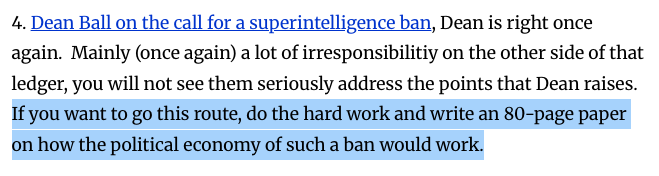
I don't think that greater attention to the 'political economy' of superintelligence is going to make ordinary people feel better about pushing ahead <a href="/tylercowen/">tylercowen</a>.

The most salient effect of superintelligence (plus vast numbers of robots) is that most people lose political and
Eric Levitz (@ericlevitz) 's Twitter Profile Photo

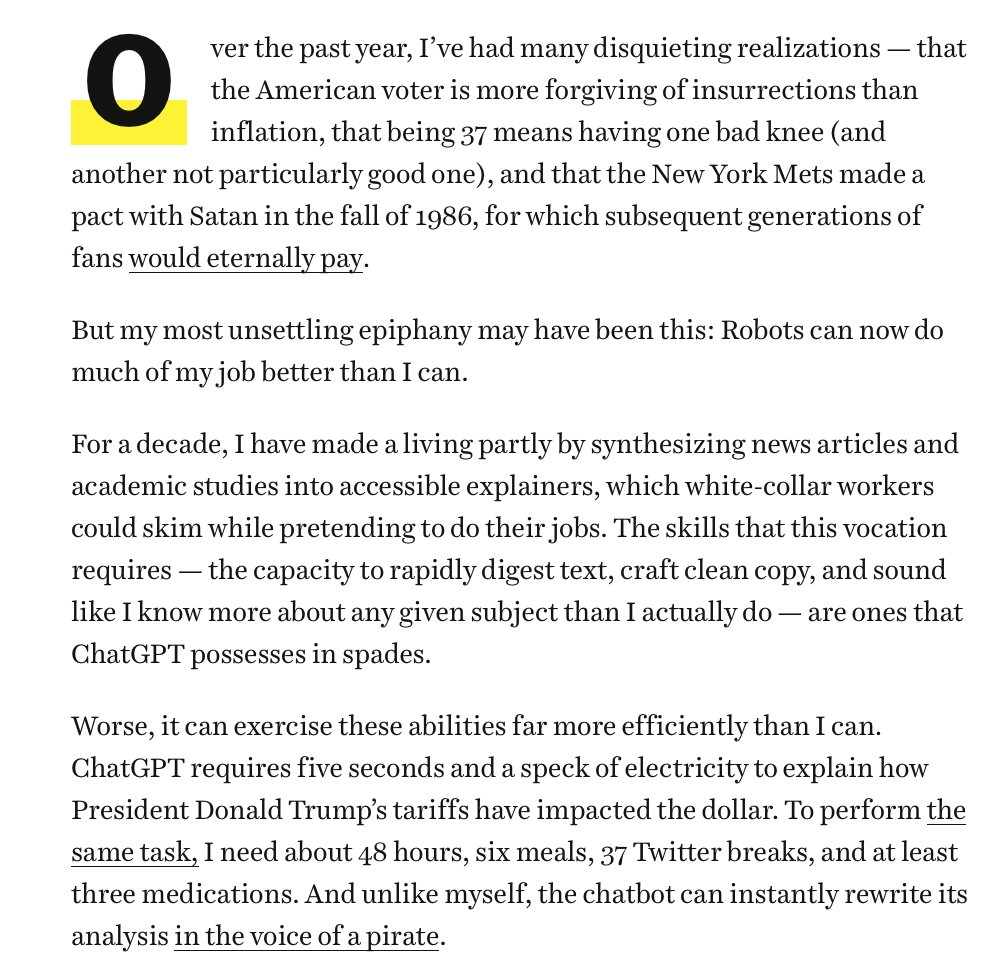
Robots can now do much my job better than I can This has made me a bit anxious about my own obsolescence It has also led me to contemplate the one AI dystopia I find plausible: A world where robots free elites of all dependence on most ordinary people. Link to my essay below

Robots can now do much my job better than I can

This has made me a bit anxious about my own obsolescence

It has also led me to contemplate the one AI dystopia I find plausible: A world where robots free elites of all dependence on most ordinary people.

Link to my essay below
Simon Friederich (@simonfriederich) 's Twitter Profile Photo

As AI systems get more and more powerful, questions about which uses are legitimate and how credit should be given become more pressing. Together with jon symons - @jonsymons.bsky.social I discussed some of these issues in a paper I am rather happy with: link.springer.com/article/10.100…

Anthony Aguirre (@anthonynaguirre) 's Twitter Profile Photo

Superintelligence, if we develop it using anything like current methods, would not be under meaningful human control. That's the bottom-line of a new study I've put out entitled Control Inversion (link in second post.) Many experts I talk to who take superintelligence (real,

Superintelligence, if we develop it using anything like current methods, would not be under meaningful human control.

That's the bottom-line of a new study I've put out entitled Control Inversion (link in second post.) Many experts I talk to who take superintelligence (real,
Steije Hofhuis (@hofhuissteije) 's Twitter Profile Photo

Is er in de Nederlandse wetenschap nog ruimte voor tegendraads onderzoek? Ik sprak er vrijdag over bij het symposium Open debat in de wetenschap! aan de Universiteit Leiden. Lees hier een bewerkte versie van mijn voordracht op Substack: open.substack.com/pub/hofhuis/p/…