Zhongzheng Wang (@realolipopcorn) 's Twitter Profile
Zhongzheng Wang

@realolipopcorn

Lecturer @QUT, PhD @Sydney_Uni and @EcoleDesPonts. multiphase flow, porous media.

ID: 1272286507

calendar_today16-03-2013 13:04:33

186 Tweet

176 Takipçi

450 Takip Edilen

Physical Review Fluids (@physrevfluids) 's Twitter Profile Photo

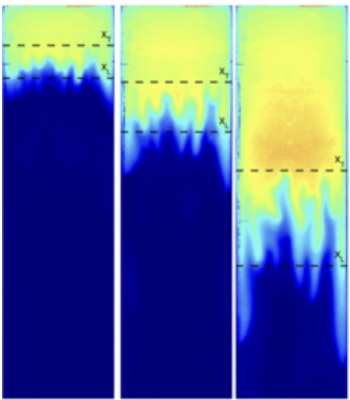
PRFluids Editor's suggestion: Growth of Rayleigh-Taylor fingers in the interface of a laboratory analog of a porous rock! As the instability develops, the injected fluid can mix more into the formation, which is key for geothermal systems. By Clarke et al. go.aps.org/3Eu9CAd

PRFluids Editor's suggestion: Growth of Rayleigh-Taylor fingers in the interface of a laboratory analog of a porous rock! As the instability develops, the injected fluid can mix more into the formation, which is key for geothermal systems. By Clarke et al. go.aps.org/3Eu9CAd
Physical Review Fluids (@physrevfluids) 's Twitter Profile Photo

PRFluids Editor's suggestion: spreading and sliding of compound droplets, revisited by Diekmann & Thiele (go.aps.org/4hwoA7g) with an enhanced mesoscopic hydrodynamic model, paving the way for incorporating effects like soft elastic substrates and surfactants #fluiddynamics

Physical Review Fluids (@physrevfluids) 's Twitter Profile Photo

Clarke and Woods will discuss their paper, “Experiments on buoyancy-driven instability ahead of a dissolution front in a porous rock” (go.aps.org/4bT8mmG) at the PR Fluids Journal Club on Monday, March 31 (3pm GMT, 10am ET, 7am PT). Register here: go.aps.org/4iPRzTW

Clarke and Woods will discuss their paper, “Experiments on buoyancy-driven instability ahead of a dissolution front in a porous rock” (go.aps.org/4bT8mmG) at the PR Fluids Journal Club on Monday, March 31 (3pm GMT, 10am ET, 7am PT).  Register here: go.aps.org/4iPRzTW
Yixiang Gan (@drgan) 's Twitter Profile Photo

Tuning droplet motion in deformable non-parallel channels. Our recent work by PhD student Haiyi Zhong appeared as ACS Publications Langmuir #MyACSCover doi.org/10.1021/acs.la…
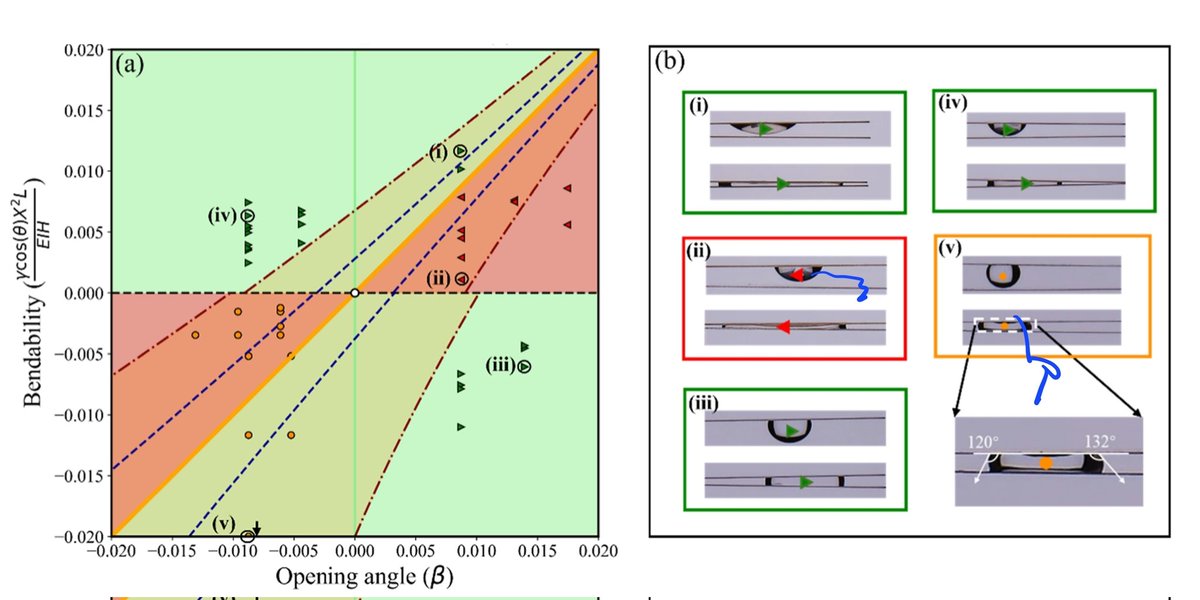

Tuning droplet motion in deformable non-parallel channels. Our recent work by PhD student Haiyi Zhong appeared as
<a href="/ACSPublications/">ACS Publications</a> Langmuir #MyACSCover
doi.org/10.1021/acs.la…
Physical Review Fluids (@physrevfluids) 's Twitter Profile Photo

When active droplets squeeze through increasingly narrow microchannels, their shape changes from spherical to capsule-like, and the hydrodynamic signature shifts from symmetric, quadrupolar to an asymmetric velocity field. More, by Guchhait et al., at go.aps.org/42qjAeb

Physical Review Fluids (@physrevfluids) 's Twitter Profile Photo

🗓️✏️ From the April issue (1) go.aps.org/4314L21 (2) go.aps.org/3RJMb9i (3) go.aps.org/3EJryXY (4) go.aps.org/4cXPtiN Have a look at the full issue from the last month here go.aps.org/4jSpj3m #fluiddynamics

🗓️✏️ From the April issue
(1) go.aps.org/4314L21
(2) go.aps.org/3RJMb9i
(3) go.aps.org/3EJryXY 
(4) go.aps.org/4cXPtiN 


Have a look at the full issue from the last month here go.aps.org/4jSpj3m

#fluiddynamics
Physical Review Fluids (@physrevfluids) 's Twitter Profile Photo

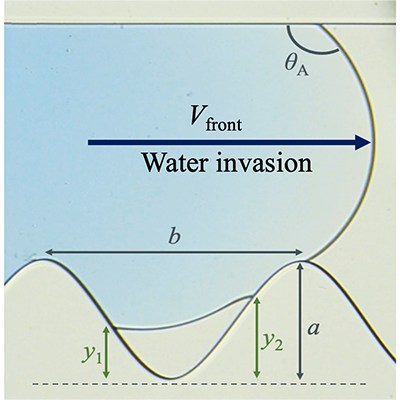
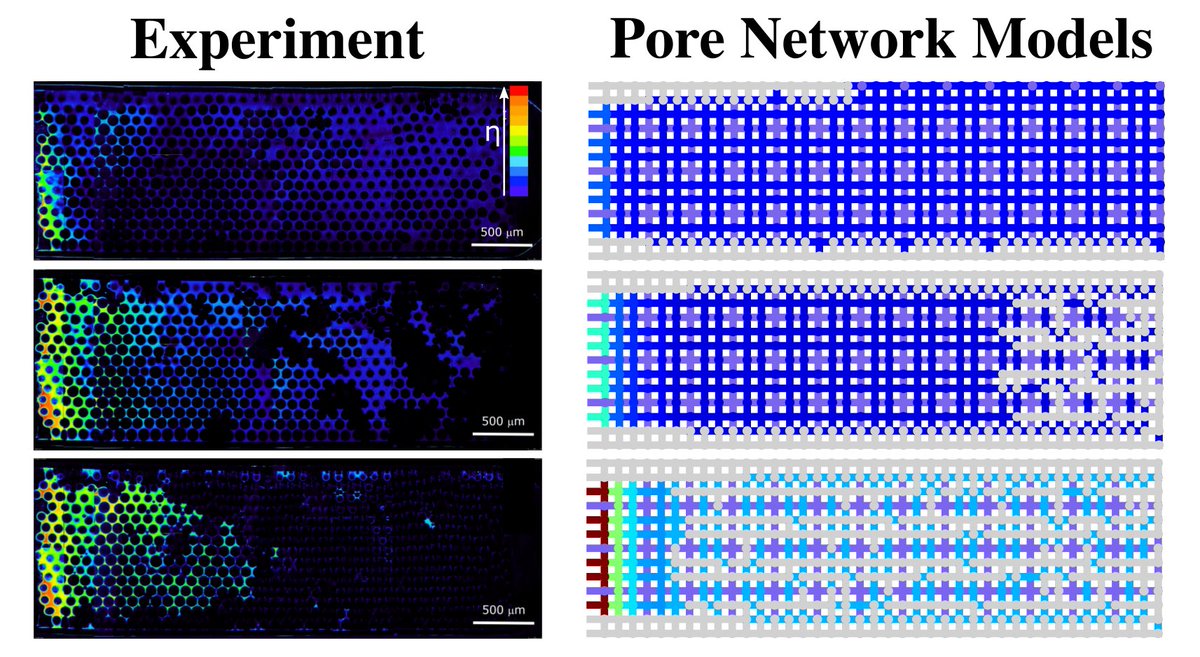
📢 PRFluids Editors' suggestion: How does oil get trapped in microscale pores during water invasion? McBride et al. show that higher oil viscosity and water speed cause more trapping, due to a transition from meniscus displacement to viscous fingering. 🔗 go.aps.org/4lXHp61

📢 PRFluids Editors' suggestion: How does oil get trapped in microscale pores during water invasion? McBride et al. show that higher oil viscosity and water speed cause more trapping, due to a transition from meniscus displacement to viscous fingering.
🔗 go.aps.org/4lXHp61
Liquids&Elasticity LAB @Princeton (@liquidslab) 's Twitter Profile Photo

Are you interested in a postdoc in fluid mechanics/ 3d printing/ soft robotics/ active matter... This call might be for you …sklodowska-curie-actions.ec.europa.eu/actions/postdo… Reach out if interested, I am now in Belgium KU Leuven

Physical Review Fluids (@physrevfluids) 's Twitter Profile Photo

Immiscible fluid interfaces destabilize during invasion in porous media. Brodin et al. use 3D imaging to show that, depending on flow rate, the interface transitions from stable sheets to unstable fingers, bridging 2D theory with complex 3D behavior. 🔗 go.aps.org/4ekidTX

Journal of Fluid Mechanics (@jfluidmech) 's Twitter Profile Photo

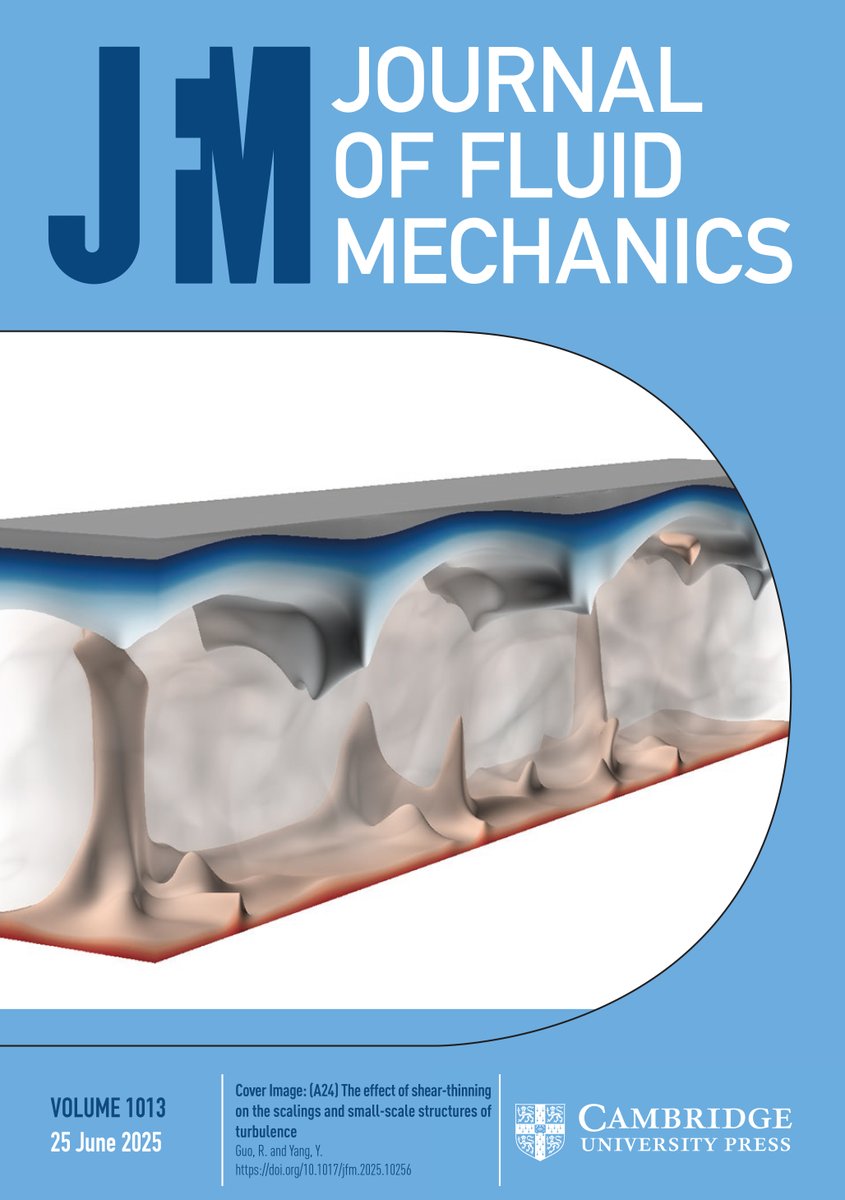
New Volume of Journal of Fluid Mechanics available on Cambridge Core cup.org/44mufY2 New Volume = New Cover 📸 (A24) The effect of shear-thinning on the scalings and small-scale structures of turbulence Guo, R. and Yang, Y. doi.org/10.1017/jfm.20…

New Volume of Journal of Fluid Mechanics available on Cambridge Core cup.org/44mufY2
New Volume = New Cover 
📸 (A24) The effect of shear-thinning on the scalings and small-scale structures of
turbulence Guo, R. and Yang, Y. doi.org/10.1017/jfm.20…
Physical Review Fluids (@physrevfluids) 's Twitter Profile Photo

Solute transport in porous media is often modeled with constant dispersivity, but is this valid for shear-thinning fluids? Al-Qenae et al. show that the viscosity varies across pore spaces, enhancing dispersion, and present a model that accounts for it 🔗 go.aps.org/45IH15F

Solute transport in porous media is often modeled with constant dispersivity, but is this valid for shear-thinning fluids? Al-Qenae et al. show that the viscosity varies across pore spaces, enhancing dispersion, and present a model that accounts for it
🔗 go.aps.org/45IH15F
Physical Review Fluids (@physrevfluids) 's Twitter Profile Photo

📢 PRFluids Editors' suggestion: How does a droplet split between two fibers? At specific angles, near-complete transfer from one fiber to the other is possible, highlighting how soft metamaterials can be harnessed to control liquid transport. Read more at go.aps.org/40jYON0

Physical Review Fluids (@physrevfluids) 's Twitter Profile Photo

A new constitutive law for viscous stresses in two-phase flows, derived from continuum mechanics and interface conditions, accurately captures experimental observations of exchange flows in a pipe and outperforms traditional ad-hoc models. Read more at go.aps.org/4lX9ES1

A new constitutive law for viscous stresses in two-phase flows, derived from continuum mechanics and interface conditions, accurately captures experimental observations of exchange flows in a pipe and outperforms traditional ad-hoc models.
Read more at go.aps.org/4lX9ES1
Physical Review Fluids (@physrevfluids) 's Twitter Profile Photo

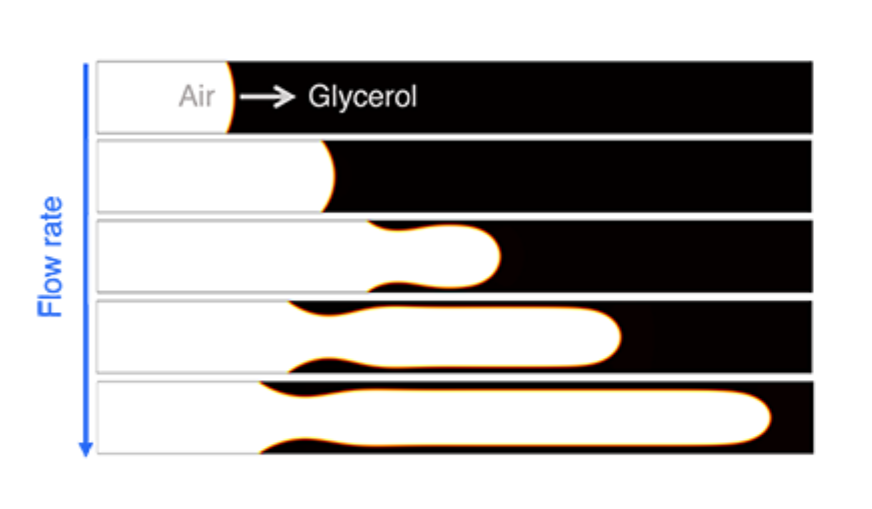
Contact line dynamics in capillary tubes are notoriously hard to model. A phase-field approach with a novel formulation of boundary wetting conditions captures equilibrium states, wetting transitions, thin films, and pinch-off events, matching experiments. go.aps.org/3VEzvCu

Contact line dynamics in capillary tubes are notoriously hard to model. A phase-field approach with a novel formulation of boundary wetting conditions captures equilibrium states, wetting transitions, thin films, and pinch-off events, matching experiments.
go.aps.org/3VEzvCu
Physical Review Fluids (@physrevfluids) 's Twitter Profile Photo

📢 PRFluids Editors' suggestion: Gel-like skins that form on drying porous materials delay evaporation. By accounting for pore size gradients and viscosity-dependent vapor pressure, a new model predicts the evaporation slowdown observed in experiments. go.aps.org/4n7U9qR

📢 PRFluids Editors' suggestion: Gel-like skins that form on drying porous materials delay evaporation. By accounting for pore size gradients and viscosity-dependent vapor pressure, a new model predicts the evaporation slowdown observed in experiments.

go.aps.org/4n7U9qR
Physical Review Fluids (@physrevfluids) 's Twitter Profile Photo

How can machine learning in fluid dynamics deepen our understanding of flow physics and expand its applications? A new perspective article explores key challenges and highlights the importance of open datasets, open-source tools, and training. Read more: go.aps.org/46rmPEb

How can machine learning in fluid dynamics deepen our understanding of flow physics and expand its applications? A new perspective article explores key challenges and highlights the importance of open datasets, open-source tools, and training.

Read more: go.aps.org/46rmPEb
Physical Review Fluids (@physrevfluids) 's Twitter Profile Photo

Fog on a window after a breath mostly evaporates, but some tiny droplets remain. Experiments show that larger droplets grow as smaller ones shrink, following classic Ostwald ripening. A mean field model accurately predicts these dynamics. Read the Letter: go.aps.org/42mhr40

Physical Review Fluids (@physrevfluids) 's Twitter Profile Photo

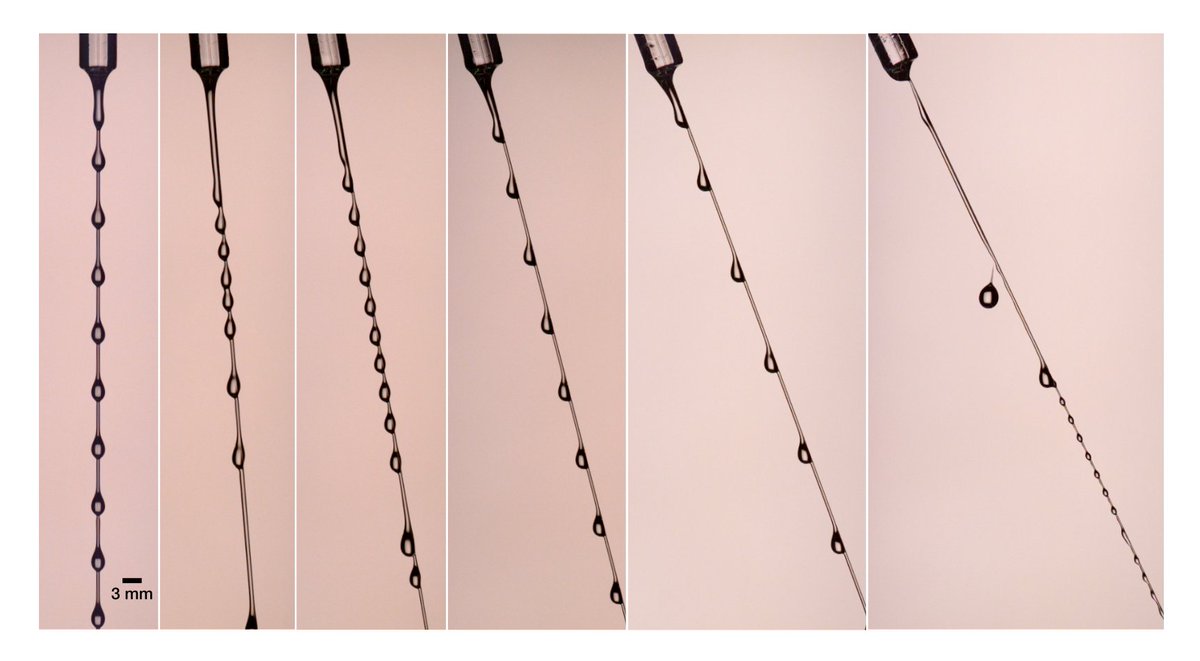
A simple tilt can drastically change the behavior of a liquid thread on a wire. Adjusting the angle of the wire at a fixed flow rate causes transitions from Rayleigh-Plateau to droplet drop-off, showing how geometry alone tunes the instability. go.aps.org/47z7928

A simple tilt can drastically change the behavior of a liquid thread on a wire. Adjusting the angle of the wire at a fixed flow rate causes transitions from Rayleigh-Plateau to droplet drop-off, showing how geometry alone tunes the instability.

go.aps.org/47z7928