PHENIX (@phenixcto) 's Twitter Profile
PHENIX

@phenixcto

TAPROOT ASSETS 凤一其随
TAPROOT ASSETS(主根资产)协议钱包@Bitlongwallet
交易直达
TP钱包
binance WEB3钱包
OKX WEB3钱包
swap.bitlong.io
加入社区:t.me/bitlongwallet_…

ID: 1827973613347307520

calendar_today26-08-2024 07:37:43

94 Tweet

1,1K Followers

98 Following
PHENIX (@phenixcto) 's Twitter Profile Photo

🧠 DID YOU KNOW? #Bitcoin Bitcoin once allowed anyone to create coins with no private key owner. In the early days, Bitcoin supported a script type called “anyone-can-spend”. Coins sent to these scripts could be spent by anyone who found them. This wasn’t meant for generosity

🧠 DID YOU KNOW? #Bitcoin

Bitcoin once allowed anyone to create coins with no private key owner.

In the early days, Bitcoin supported a script type called “anyone-can-spend”.
Coins sent to these scripts could be spent by anyone who found them.

This wasn’t meant for generosity
PHENIX (@phenixcto) 's Twitter Profile Photo

🧠 DID YOU KNOW? Bitcoin blocks were once allowed to contain arbitrary text data - and early users experimented with it. Before strict standardness rules were enforced, people embedded messages, experiments, and metadata directly into transactions using script fields. This

🧠 DID YOU KNOW? 

Bitcoin blocks were once allowed to contain arbitrary text data - and early users experimented with it.

Before strict standardness rules were enforced, people embedded messages, experiments, and metadata directly into transactions using script fields.

This
PHENIX (@phenixcto) 's Twitter Profile Photo

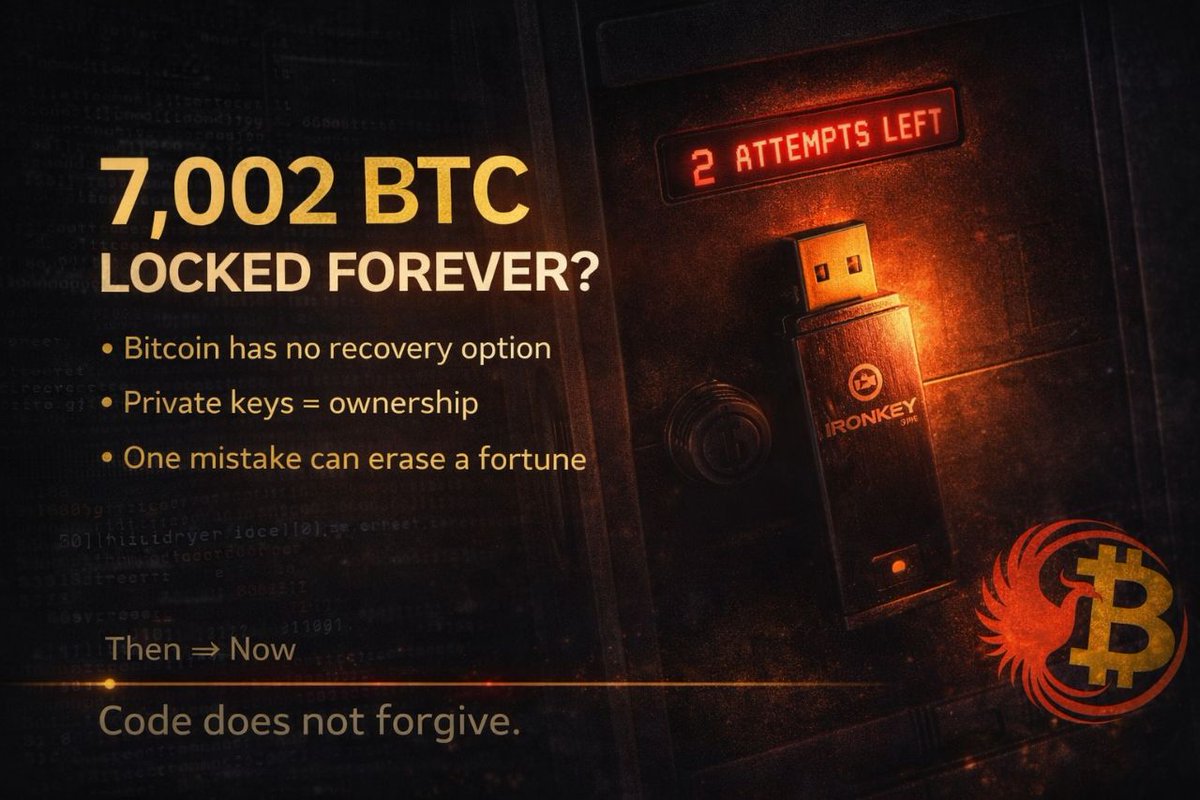
📌 DID YOU KNOW? 🤯 A developer lost access to an encrypted USB wallet containing 7,002 BTC. The device allows only 10 password attempts. He has already used 8. Only 2 attempts remain. If they fail, the Bitcoin is locked forever. This is not a hack. This is not theft. This

📌 DID YOU KNOW? 🤯 

A developer lost access to an encrypted USB wallet containing 7,002 BTC.

The device allows only 10 password attempts.
He has already used 8.

Only 2 attempts remain.
If they fail, the Bitcoin is locked forever.

This is not a hack.
This is not theft.
This
PHENIX (@phenixcto) 's Twitter Profile Photo

🧠 DID YOU KNOW? #Bitcoin Bitcoin’s difficulty adjustment almost broke in the early days. In 2009–2010, blocks were sometimes found too fast or too slow because the network was tiny and hash power changed unpredictably. Bitcoin adjusts mining difficulty every 2016 blocks, but

PHENIX (@phenixcto) 's Twitter Profile Photo

🧠 DID YOU KNOW? In 2015, some Bitcoin transactions filled almost an entire block - not because of high value, but because of massive data size. These transactions used thousands of small UTXOs in a single transfer, consuming up to 99% of a block’s space while costing only a

🧠 DID YOU KNOW?

In 2015, some Bitcoin transactions filled almost an entire block - not because of high value, but because of massive data size.

These transactions used thousands of small UTXOs in a single transfer, consuming up to 99% of a block’s space while costing only a
PHENIX (@phenixcto) 's Twitter Profile Photo

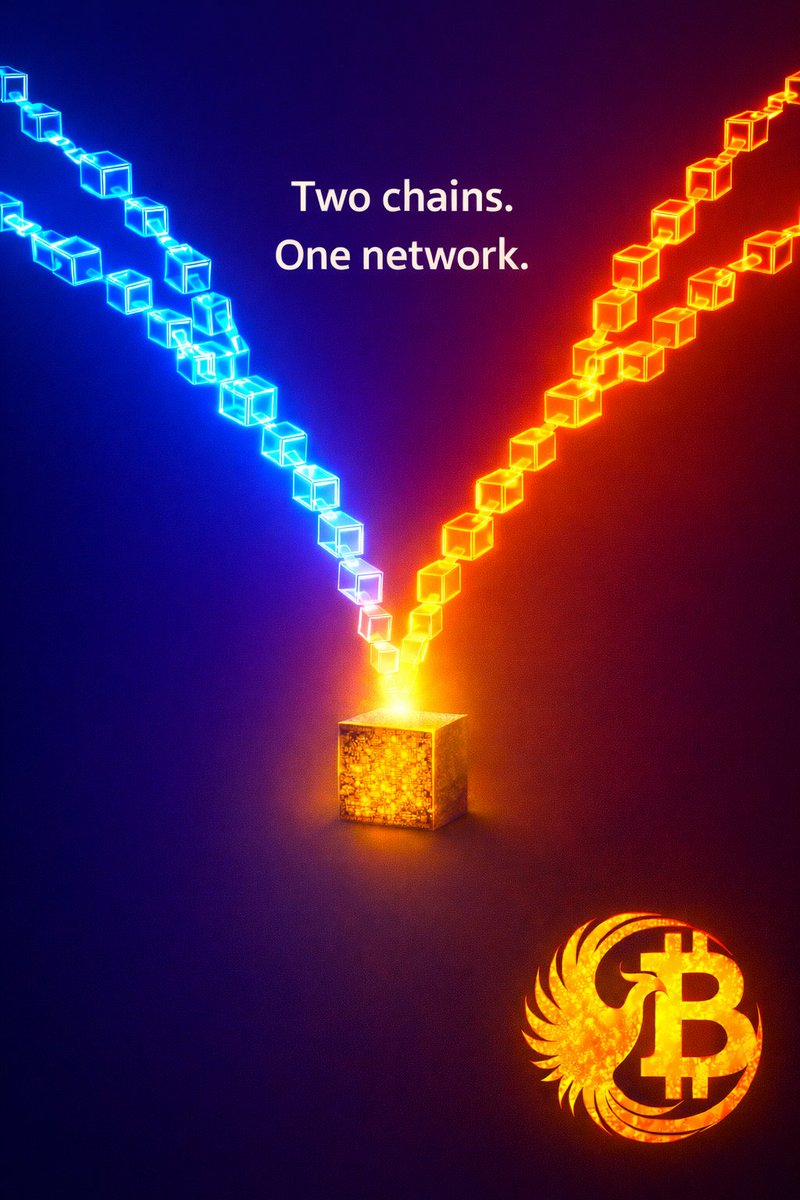
🧠 DID YOU KNOW? In 2013, Bitcoin experienced a real blockchain split - and the network fixed itself. Due to a software version mismatch, the Bitcoin network temporarily split into two valid chains, each accepting different blocks at the same time. For several hours, both

🧠 DID YOU KNOW?

In 2013, Bitcoin experienced a real blockchain split - and the network fixed itself.

Due to a software version mismatch, the Bitcoin network temporarily split into two valid chains, each accepting different blocks at the same time. For several hours, both
PHENIX (@phenixcto) 's Twitter Profile Photo

🧠 DID YOU KNOW? Bitcoin’s first-ever price was calculated using electricity costs - not markets. In October 2009, before exchanges, charts, or traders existed, Bitcoin had no price. So how was 1 BTC valued? A developer known as New Liberty Standard created the first BTC

🧠 DID YOU KNOW?

Bitcoin’s first-ever price was calculated using electricity costs - not markets.

In October 2009, before exchanges, charts, or traders existed, Bitcoin had no price.

So how was 1 BTC valued?

A developer known as New Liberty Standard created the first BTC
PHENIX (@phenixcto) 's Twitter Profile Photo

🧠 DID YOU KNOW? Bitcoin did not start mining immediately after it was released. When Bitcoin v0.1 was published in January 2009, the software would not begin producing blocks unless another node was connected. This meant Bitcoin required real peer participation before

🧠 DID YOU KNOW?

Bitcoin did not start mining immediately after it was released.

When Bitcoin v0.1 was published in January 2009, the software would not begin producing blocks unless another node was connected.

This meant Bitcoin required real peer participation before
PHENIX (@phenixcto) 's Twitter Profile Photo

Did you know? Before Bitcoin had blocks, miners, or a price, it had a website. On August 18, 2008, the domain bitcoin.org was registered. This happened months before the Bitcoin whitepaper was released. That website later became the first public home of Bitcoin,

Did you know?

Before Bitcoin had blocks, miners, or a price,
it had a website.

On August 18, 2008, the domain bitcoin.org was registered.
This happened months before the Bitcoin whitepaper was released.

That website later became the first public home of Bitcoin,
PHENIX (@phenixcto) 's Twitter Profile Photo

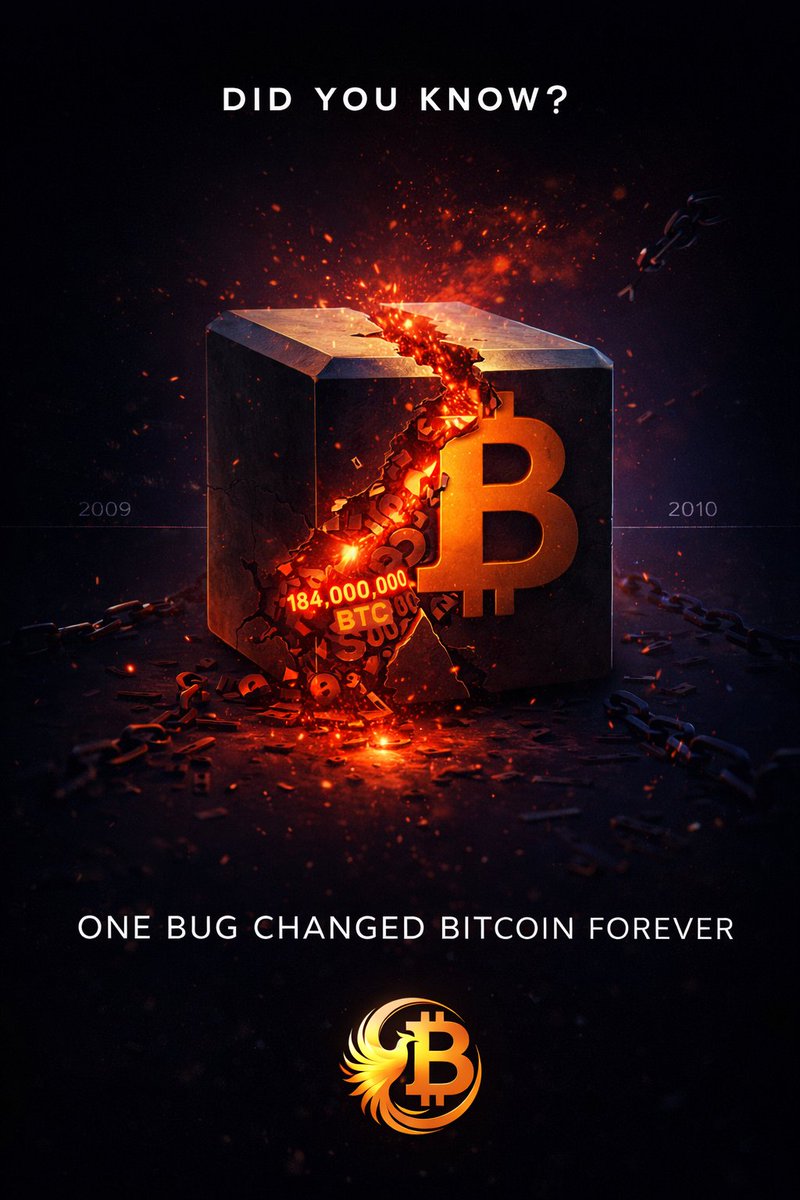
𝗗𝗶𝗱 𝘆𝗼𝘂 𝗸𝗻𝗼𝘄? ⛓️ 𝗕𝗶𝘁𝗰𝗼𝗶𝗻 𝗼𝗻𝗰𝗲 𝗵𝗮𝗱 𝗡𝗢 𝗯𝗹𝗼𝗰𝗸 𝘀𝗶𝘇𝗲 𝗹𝗶𝗺𝗶𝘁. In Bitcoin’s earliest days, blocks had no enforced size restriction at all. In 2010, a critical bug allowed a single transaction to create over 184 billion bitcoins, far exceeding

𝗗𝗶𝗱 𝘆𝗼𝘂 𝗸𝗻𝗼𝘄? ⛓️  
𝗕𝗶𝘁𝗰𝗼𝗶𝗻 𝗼𝗻𝗰𝗲 𝗵𝗮𝗱 𝗡𝗢 𝗯𝗹𝗼𝗰𝗸 𝘀𝗶𝘇𝗲 𝗹𝗶𝗺𝗶𝘁.

In Bitcoin’s earliest days, blocks had no enforced size restriction at all.

In 2010, a critical bug allowed a single transaction to create over
184 billion bitcoins, far exceeding
PHENIX (@phenixcto) 's Twitter Profile Photo

𝗗𝗶𝗱 𝘆𝗼𝘂 𝗸𝗻𝗼𝘄? 🧠 𝗘𝗮𝗿𝗹𝘆 𝗕𝗶𝘁𝗰𝗼𝗶𝗻 𝗱𝗶𝗱𝗻’𝘁 𝘂𝘀𝗲 𝗮𝗱𝗱𝗿𝗲𝘀𝘀𝗲𝘀 𝗮𝘁 𝗮𝗹𝗹. In Bitcoin’s first blocks, payments were sent directly to public keys, not to Bitcoin addresses. This method is called Pay-to-Public-Key (P2PK). Later, Bitcoin quietly

𝗗𝗶𝗱 𝘆𝗼𝘂 𝗸𝗻𝗼𝘄? 🧠  
𝗘𝗮𝗿𝗹𝘆 𝗕𝗶𝘁𝗰𝗼𝗶𝗻 𝗱𝗶𝗱𝗻’𝘁 𝘂𝘀𝗲 𝗮𝗱𝗱𝗿𝗲𝘀𝘀𝗲𝘀 𝗮𝘁 𝗮𝗹𝗹.

In Bitcoin’s first blocks, payments were sent directly
to public keys, not to Bitcoin addresses.

This method is called Pay-to-Public-Key (P2PK).

Later, Bitcoin quietly
PHENIX (@phenixcto) 's Twitter Profile Photo

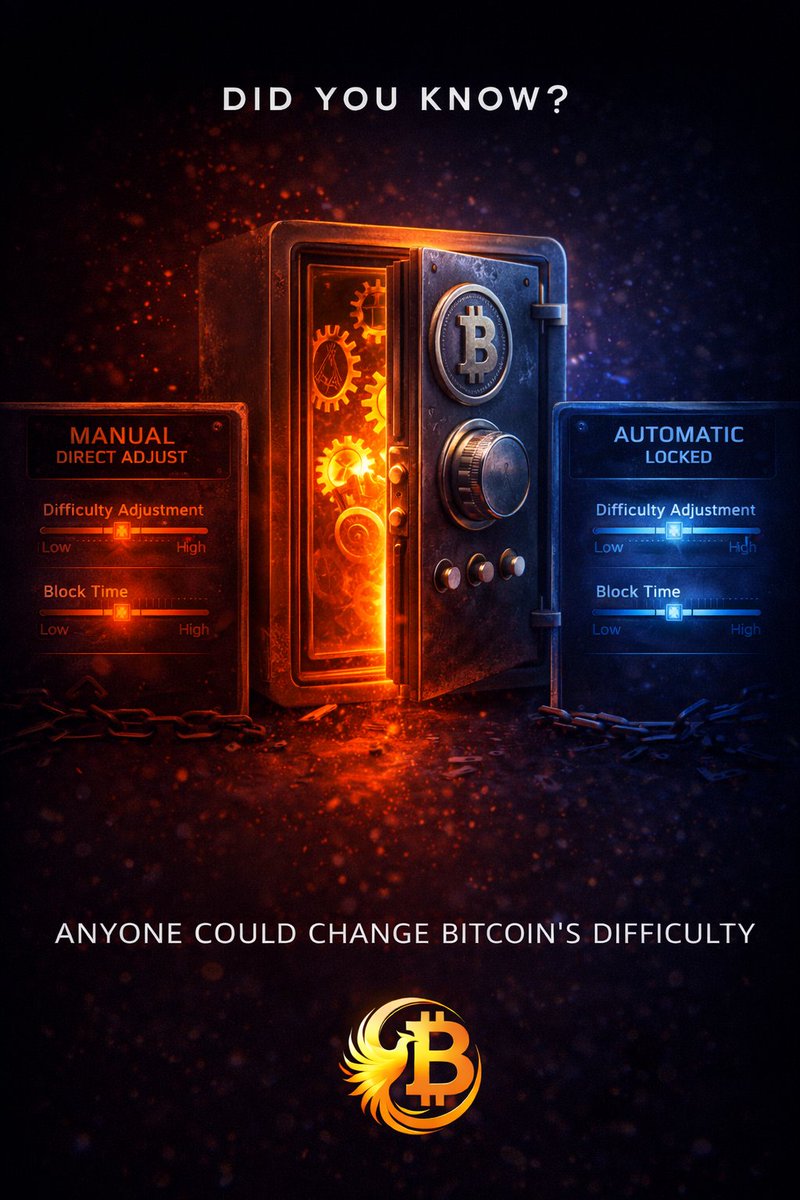
Did you know? Bitcoin originally allowed anyone to change the mining difficulty. In Bitcoin’s earliest code, difficulty adjustment parameters were not as tightly protected as they are today. This was not a vulnerability - it was intentional. Satoshi expected rapid

Did you know?

Bitcoin originally allowed anyone to change the mining difficulty.

In Bitcoin’s earliest code, difficulty adjustment parameters
were not as tightly protected as they are today.

This was not a vulnerability - it was intentional.
Satoshi expected rapid
PHENIX (@phenixcto) 's Twitter Profile Photo

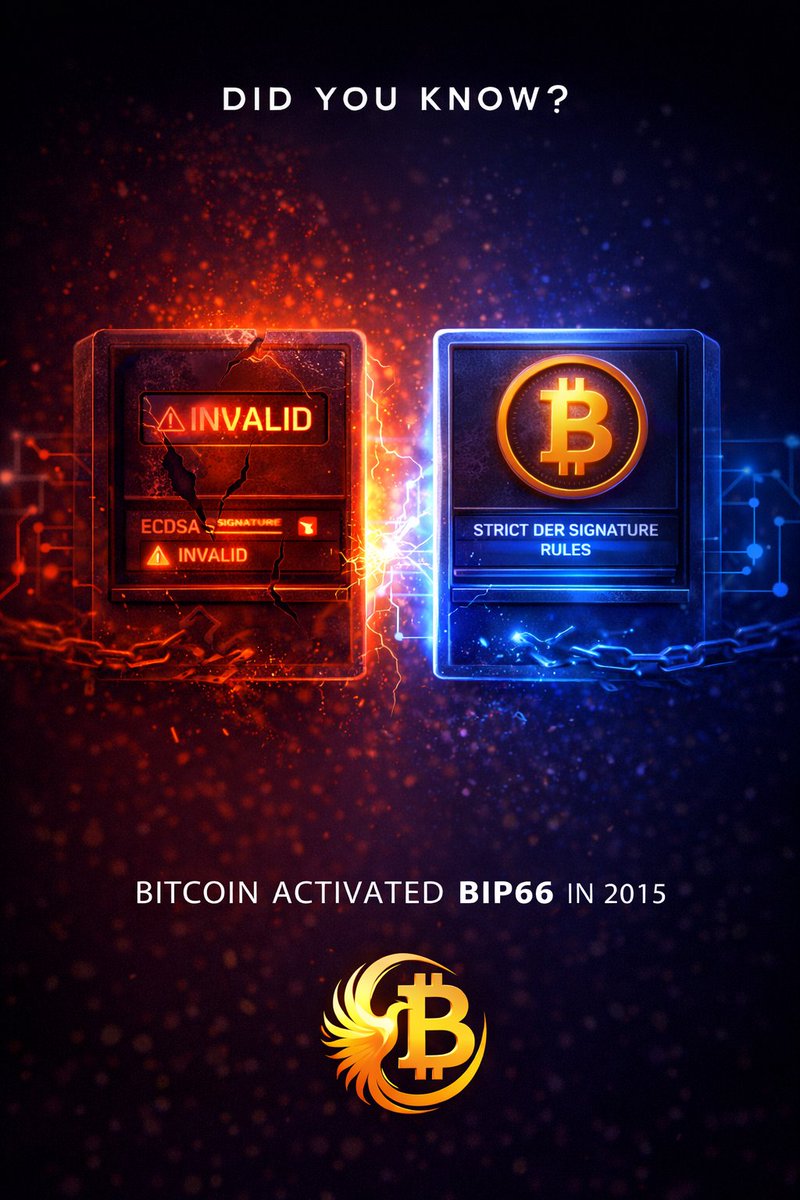
🧠 DID YOU KNOW? Bitcoin once accepted invalid cryptographic signatures. Before 2015, Bitcoin nodes were lenient when checking ECDSA signatures. Some signatures were technically invalid, but still accepted by the network. This was risky because different nodes could interpret

🧠 DID YOU KNOW?

Bitcoin once accepted invalid cryptographic signatures.

Before 2015, Bitcoin nodes were lenient when checking ECDSA signatures.
Some signatures were technically invalid,
but still accepted by the network.

This was risky because different nodes
could interpret
PHENIX (@phenixcto) 's Twitter Profile Photo

🧠 DID YOU KNOW? Bitcoin originally relied on Internet Relay Chat (IRC) to find other nodes. In Bitcoin’s early days (2009–2010), there were no DNS seed servers. Instead, new Bitcoin nodes connected to a public IRC channel to discover peers. How it worked: • A node would join

🧠 DID YOU KNOW?

Bitcoin originally relied on Internet Relay Chat (IRC) to find other nodes.

In Bitcoin’s early days (2009–2010), there were no DNS seed servers.
Instead, new Bitcoin nodes connected to a public IRC channel to discover peers.

How it worked:
• A node would join
PHENIX (@phenixcto) 's Twitter Profile Photo

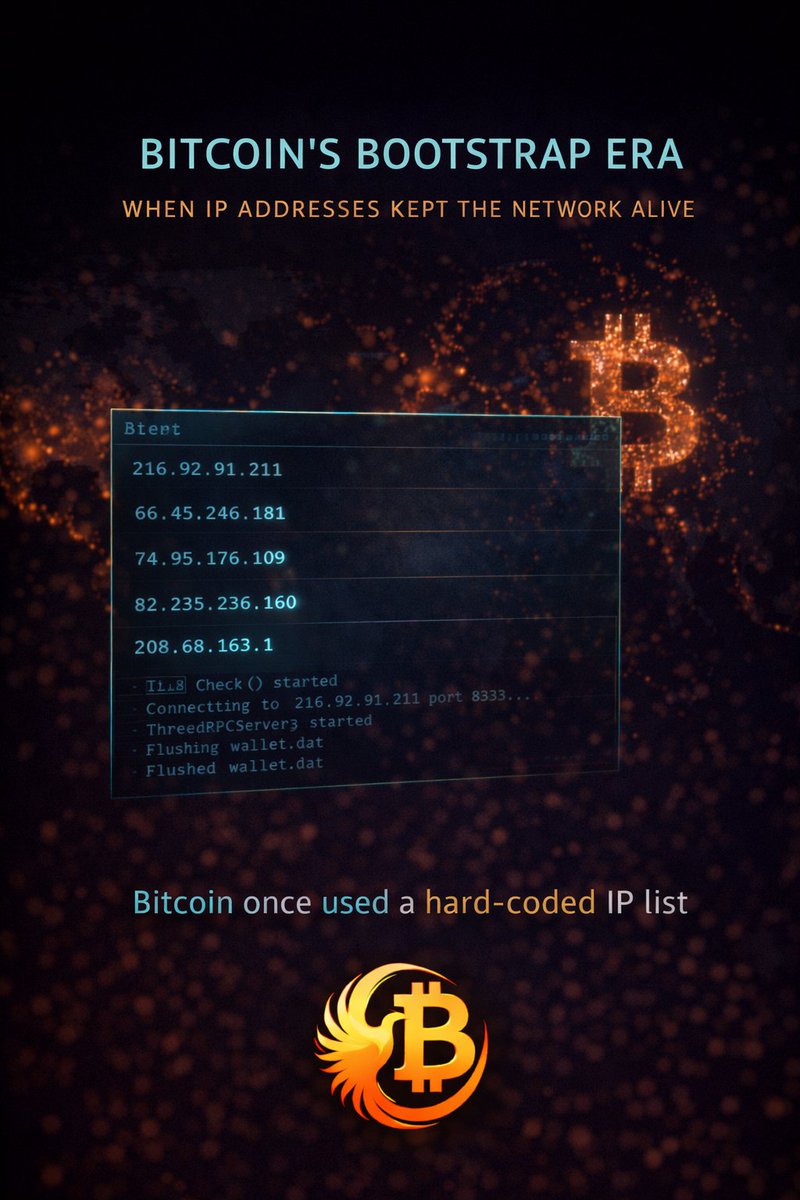
🧠 DID YOU KNOW? Bitcoin once relied on a hard-coded IP address list to survive. In Bitcoin’s earliest days, there were no DNS seeds, no explorers, and no discovery services. To help new nodes find the network, early Bitcoin clients shipped with a fixed list of IP addresses

🧠 DID YOU KNOW?

Bitcoin once relied on a hard-coded IP address list to survive.

In Bitcoin’s earliest days, there were no DNS seeds, no explorers, and no discovery services.
To help new nodes find the network, early Bitcoin clients shipped with a fixed list of IP addresses
PHENIX (@phenixcto) 's Twitter Profile Photo

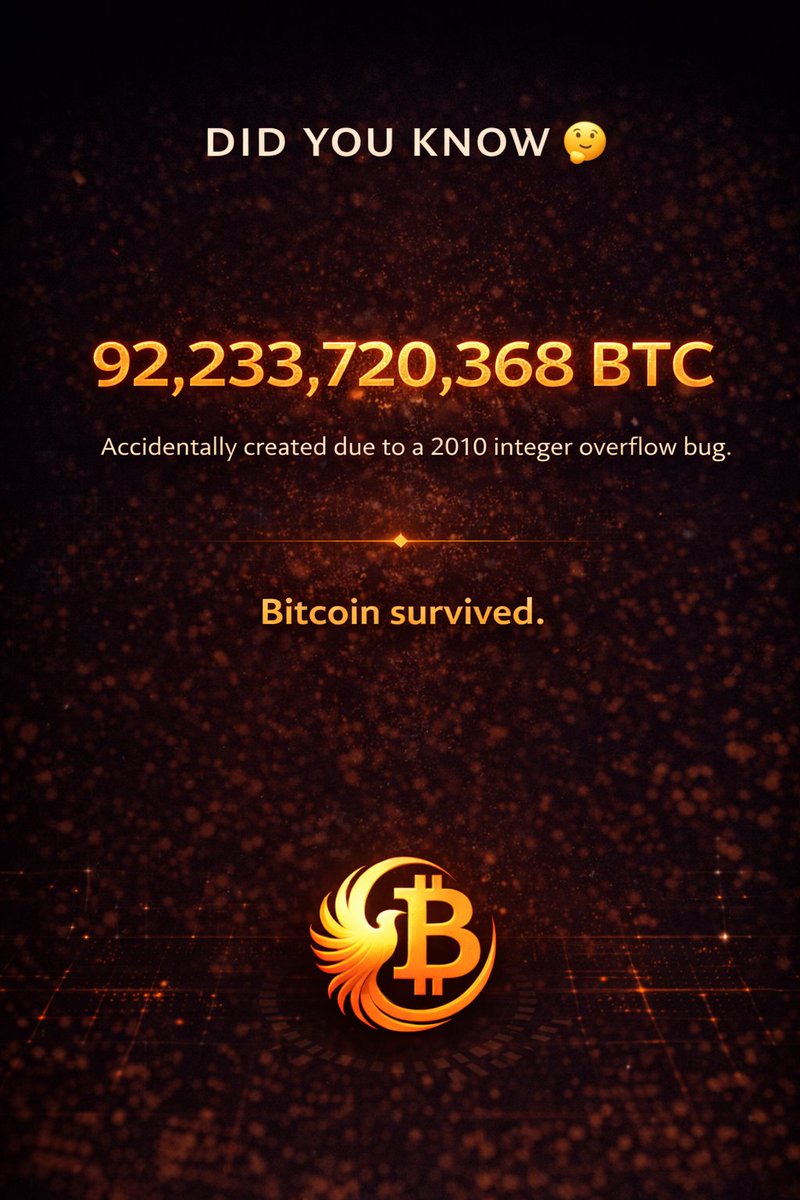
𝗗𝗜𝗗 𝗬𝗢𝗨 𝗞𝗡𝗢𝗪? 🤔 In 2010, someone accidentally sent 92 BILLION BTC in a single transaction. Yes — 92,233,720,368 BTC. This happened due to an integer overflow bug in early Bitcoin code. Within hours, Satoshi Nakamoto and developers identified the bug, rolled out a

𝗗𝗜𝗗 𝗬𝗢𝗨 𝗞𝗡𝗢𝗪? 🤔

In 2010, someone accidentally sent 92 BILLION BTC in a single transaction.

Yes — 92,233,720,368 BTC.

This happened due to an integer overflow bug in early Bitcoin code.

Within hours, Satoshi Nakamoto and developers identified the bug, rolled out a
PHENIX (@phenixcto) 's Twitter Profile Photo

𝗗𝗜𝗗 𝗬𝗢𝗨 𝗞𝗡𝗢𝗪? 🧠 Bitcoin once had a block with NO transactions. Block 1 contained only the 50 BTC block reward. No transfers. No users. Just the beginning. In its earliest days, there was nothing to send - because almost no one was there yet. Every global network

𝗗𝗜𝗗 𝗬𝗢𝗨 𝗞𝗡𝗢𝗪? 🧠

Bitcoin once had a block with
NO transactions.

Block 1 contained only the
50 BTC block reward.

No transfers.
No users.
Just the beginning.

In its earliest days,
there was nothing to send -
because almost no one was there yet.

Every global network
PHENIX (@phenixcto) 's Twitter Profile Photo

𝗗𝗜𝗗 𝗬𝗢𝗨 𝗞𝗡𝗢𝗪? 🧠 In Bitcoin’s first year, mining rewards were often ignored. Because BTC had no market price, many early miners didn’t bother backing up their wallets. When computers crashed or hard drives failed, the coins were simply lost. There was no recovery.

𝗗𝗜𝗗 𝗬𝗢𝗨 𝗞𝗡𝗢𝗪? 🧠

In Bitcoin’s first year,
mining rewards were often ignored.

Because BTC had no market price,
many early miners didn’t bother
backing up their wallets.

When computers crashed
or hard drives failed,
the coins were simply lost.

There was no recovery.
PHENIX (@phenixcto) 's Twitter Profile Photo

As we welcome the blessed month of Ramadan, the entire Phenix team sends you heartfelt wishes for peace, reflection, and spiritual growth. May this Ramadan bring you closer to faith, family, and your highest aspirations. Ramadan Kareem from all of us at Phenix. #BTC #Phenix

As we welcome the blessed month of Ramadan, the entire Phenix team sends you heartfelt wishes for peace, reflection, and spiritual growth. May this Ramadan bring you closer to faith, family, and your highest aspirations. Ramadan Kareem from all of us at Phenix.
#BTC #Phenix