
Peter Pao-Huang (@peterpaohuang) 's Twitter Profile
Peter Pao-Huang

@peterpaohuang

CS PhD student @Stanford | ML + biomedicine

ID: 897267013365772288

linkhttps://peterpaohuang.github.io/ calendar_today15-08-2017 01:21:41

2 Tweet

73 Takipçi

153 Takip Edilen
Gabriele Corso (@gabricorso) 's Twitter Profile Photo

Generative models are necessary to fully capture uncertainty and conformational flexibility of protein structures, but how can we build such models? At the ICLR MLDD workshop, we'll present EigenFold, work led by Bowen Jing with undergrad students Ezra Erives and Peter Pao-Huang!


Bonnie Berger Lab (@lab_berger) 's Twitter Profile Photo

Happy new year everyone! In 2023, we worked on a broad range of tasks, from privacy-preserving analytics 🔒 to language models for protein sequences 🧪 to more! Here are some highlights from our awesome students, postdocs, and engineers. Citations at the end of the🧵 1/

evo-devo (@xiaojie_qiu) 's Twitter Profile Photo

I'm thrilled to share that a rotation project fully led by my first PhD student, the amazing Peter Pao-Huang Peter Pao-Huang, has been accepted to ICML 2025! Peter's paper, “Geometric Generative Modeling with Noise-Conditioned Graph Networks”, addresses a fundamental limitation
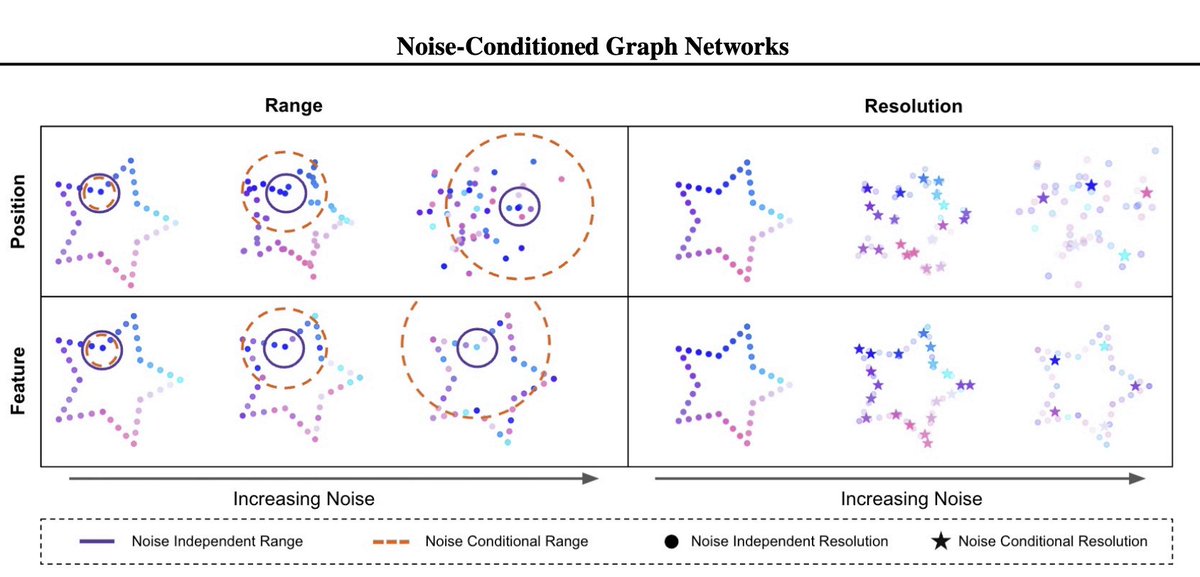

I'm thrilled to share that a rotation project fully led by my first PhD student, the amazing Peter Pao-Huang <a href="/peterpaohuang/">Peter Pao-Huang</a>, has been accepted to ICML 2025!

Peter's paper, “Geometric Generative Modeling with Noise-Conditioned Graph Networks”, addresses a fundamental limitation
Intology (@intologyai) 's Twitter Profile Photo

Introducing Locus: the first AI system to outperform human experts at AI R&D Locus conducts research autonomously over multiple days and achieves superhuman results on RE-Bench given the same resources as humans, as well as SOTA performance on GPU kernel & ML engineering tasks.

Kuan Pang (@kkuanpang) 's Twitter Profile Photo

Biology emerges from interactions at different physical scales, from molecular to cellular to multicellular layers. Introducing PULSAR🌌, a multi-scale and multicellular foundation learns how genes impact cellular states and how groups of cells coordinate to collectively define