Marijn A. Bolhuis (@ma_bolhuis) 's Twitter Profile
Marijn A. Bolhuis

@ma_bolhuis

Economist at the IMF. Views are my own.

ID: 1516466932073091077

linkhttps://sites.google.com/site/mabolhuis/home calendar_today19-04-2022 17:21:11

99 Tweet

193 Takipçi

57 Takip Edilen

. (@rawlingsha_) 's Twitter Profile Photo

Here’s a link to the analysis, part of the spring 2023 Regional Economic Outlook for sub-Saharan Africa. imf.org/en/Publication…

. (@rawlingsha_) 's Twitter Profile Photo

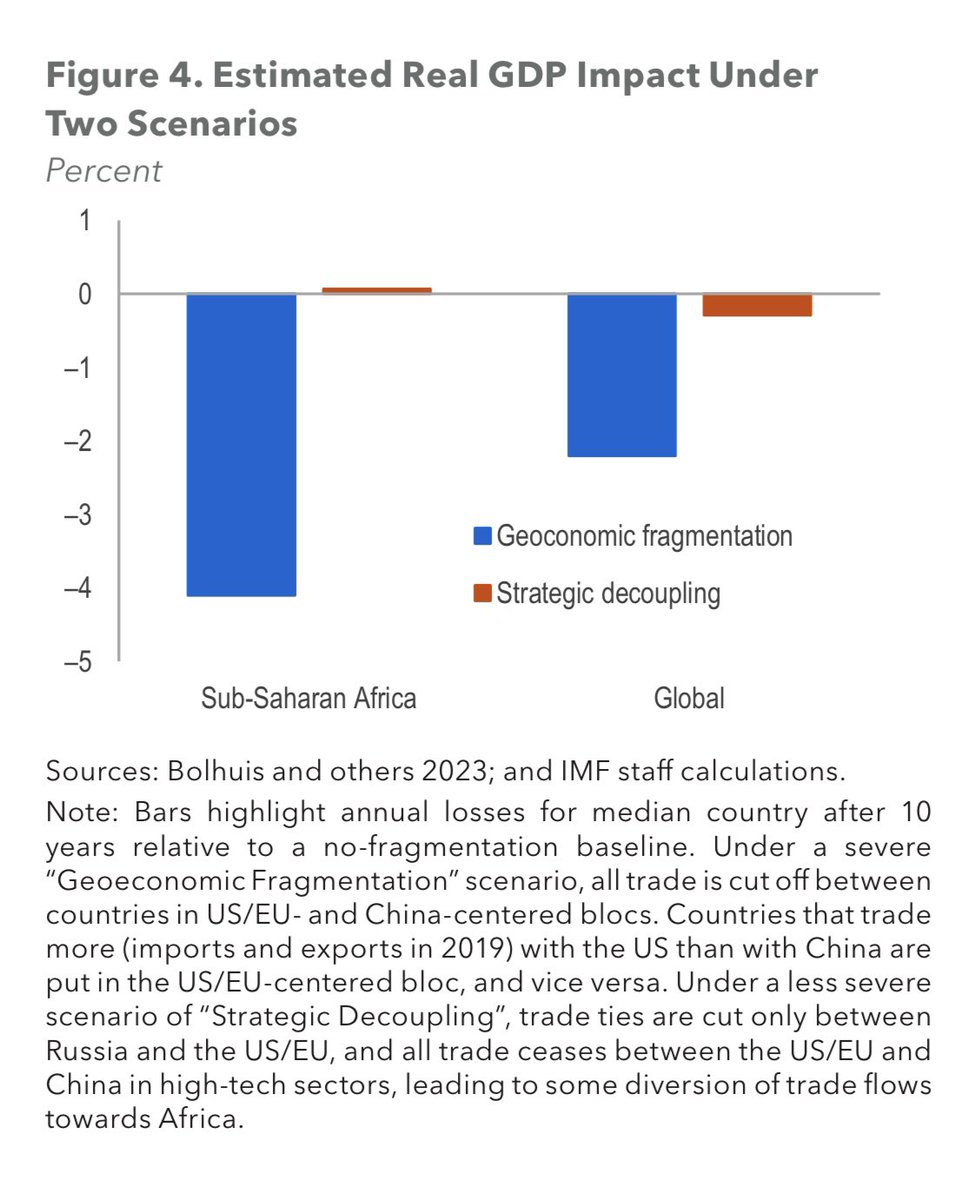
SSA stands to lose the most (-4% gdp) in a severely fragmented world compared to other regions, but could also benefit from strategic decoupling.

SSA stands to lose the most (-4% gdp) in a severely fragmented world compared to other regions, but could also benefit from strategic decoupling.
Susan Lund (@susanlund_dc) 's Twitter Profile Photo

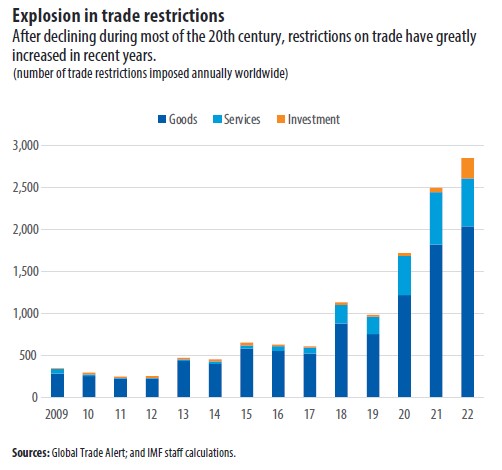
Rising trade barriers marks a remarkable shift away from the trade liberalization of the 20th century, risking higher prices and lower incomes for households. Marijn A. Bolhuis Ben Kett IMF imf.org/en/Publication…

Rising trade barriers marks a remarkable shift away from the trade liberalization of the 20th century, risking higher prices and lower incomes for households. <a href="/MA_Bolhuis/">Marijn A. Bolhuis</a> <a href="/BenKett1/">Ben Kett</a> <a href="/IMFNews/">IMF</a>

imf.org/en/Publication…
Susan Lund (@susanlund_dc) 's Twitter Profile Photo

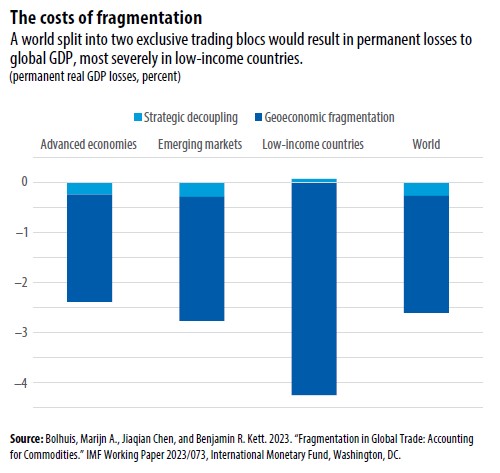
Geoeconomic fragmentation's costs are enormous. Estimates of exclusive trade alignment with US+EU vs Russia+China would reduce global output by 2.3% of GDP, finds Marijn A. Bolhuis Ben Kett IMF imf.org/en/Publication…

Geoeconomic fragmentation's costs are enormous. Estimates of exclusive trade alignment with US+EU vs Russia+China would reduce global output by 2.3% of GDP, finds <a href="/MA_Bolhuis/">Marijn A. Bolhuis</a> <a href="/BenKett1/">Ben Kett</a> <a href="/IMFNews/">IMF</a>

imf.org/en/Publication…
CEPR (@cepr_org) 's Twitter Profile Photo

In their chapter of the new CEPR/IMF eBook, Marijn A. Bolhuis, J Chen & Ben Kett IMF explore the #economic costs of fragmentation from an #InternationalTrade perspective, with a focus on production & #trade of commodities. ow.ly/hMkn50PUxJ3

In their chapter of the new CEPR/IMF eBook, <a href="/MA_Bolhuis/">Marijn A. Bolhuis</a>, J Chen &amp; <a href="/BenKett1/">Ben Kett</a> <a href="/IMFNews/">IMF</a> explore the #economic costs of fragmentation from an #InternationalTrade perspective, with a focus on production &amp; #trade of commodities.
ow.ly/hMkn50PUxJ3
Kevin P. Gallagher (@kevinpgallagher) 's Twitter Profile Photo

How the Brady Plan Delivered Debt Relief-important new paper by⁦IMF⁩ Brady bonds have been a cornerstone of drgr.org proposal ⁦ying qian⁩ ⁦Stephany Griffith-Jones⁩ ⁦Uli Volz⁩ ⁦María Fernanda Espinosa⁩ ⁦⁦Marina Zucker-Marques⁩ imf.org/en/Publication…

Ceyla Pazarbasioglu (@ceylap_imf) 's Twitter Profile Photo

This working paper finds that Brady-style mechanisms could be useful to deliver haircuts, faster growth, & enhanced market access for distressed sovereigns. To be most effective, they should be accompanied by creditor coordination & willingness for reform. imf.org/en/Publication…

Kevin Carey (@kevin_carey_wb) 's Twitter Profile Photo

Excellent IMF working paper on Brady Plan lessons: "The results of this paper show that the Brady Plan’s success applied to debtors under specific conditions relating to, inter-alia, countries that previously had market access and had been targets for the original Baker Plan .."

Michael Pettis (@michaelxpettis) 's Twitter Profile Photo

1/8 The IMF has just published an interesting paper on the impact of Brady restructurings, which included partial debt forgiveness, on the overly-indebted developing countries of the 1980s. This might provide useful lessons for future restructurings. imf.org/en/Publication…

Alan Keenan (@akeenan23) 's Twitter Profile Photo

A useful thread on new #IMF research that should be useful for those following #SriLanka debt negotiations. It sounds like more generous debt relief now might be helpful for everyone further down the line. What a crazy idea.

Charlie Robertson (@charliettecon) 's Twitter Profile Photo

The Brady bond restructuring of emerging market debt was the eventual solution to the Latin American debt crisis of the 1980/ when US interest rates reached record high levels and many high fertility countries defaulted (low fertility Chile / Uruguay did not). Relevant today

Scott Lincicome (@scottlincicome) 's Twitter Profile Photo

New NBER: "The Cost of Money is Part of the Cost of Living: New Evidence on the Consumer Sentiment Anomaly" nber.org/papers/w32163 "lows in US consumer sentiment that cannot be explained by unemployment and official inflation are strongly correlated with borrowing costs..."

New <a href="/nberpubs/">NBER</a>: "The Cost of Money is Part of the Cost of Living: New Evidence on the Consumer Sentiment Anomaly" nber.org/papers/w32163
"lows in US consumer sentiment that cannot be explained by unemployment and official inflation are strongly correlated with borrowing costs..."
Eric Levitz (@ericlevitz) 's Twitter Profile Photo

"Lows in US consumer sentiment that cannot be explained by unemployment and official inflation are strongly correlated with borrowing costs and consumer credit supply...consumer sentiment gaps across countries are also strongly correlated with changes in interest rates."

Matt Stoller (@matthewstoller) 's Twitter Profile Photo

I wrote up this theory in September, and Larry Summers, Marijn A. Bolhuis, Judd Cramer, and Karl Oskar Schulz not only came out with a paper laying it out in more detail but they actually cited my Substack post. thebignewsletter.com/p/strikes-and-…

Lawrence H. Summers (@lhsummers) 's Twitter Profile Photo

In new NBER paper with Marijn A. Bolhuis, Judd Cramer and Oskar Shulz, we argue that the unprecedented increase in borrowing costs is crucial to explaining the low consumer sentiment of the last two years. 1/N nber.org/papers/w32163