Jason Liu @CoRL (@jasonxyliu) 's Twitter Profile
Jason Liu @CoRL

@jasonxyliu

Roboticist in training at @BrownCSDept | robotics | natural language | GRFP @nsf

ID: 1275993893159555072

linkhttps://jasonxyliu.github.io/ calendar_today25-06-2020 03:27:21

65 Tweet

108 Takipçi

153 Takip Edilen

David Abel (@dabelcs) 's Twitter Profile Photo

New #RLC2024 paper Three Dogmas of Reinforcement Learning joint w/ Mark Ho and Anna Harutyunyan | Աննա Հարությունյան! arxiv.org/pdf/2407.10583 We reflect on where our scientific paradigm needs adjustment, and suggest three departures from previous conventions. Curious to hear what folks think! 🧵
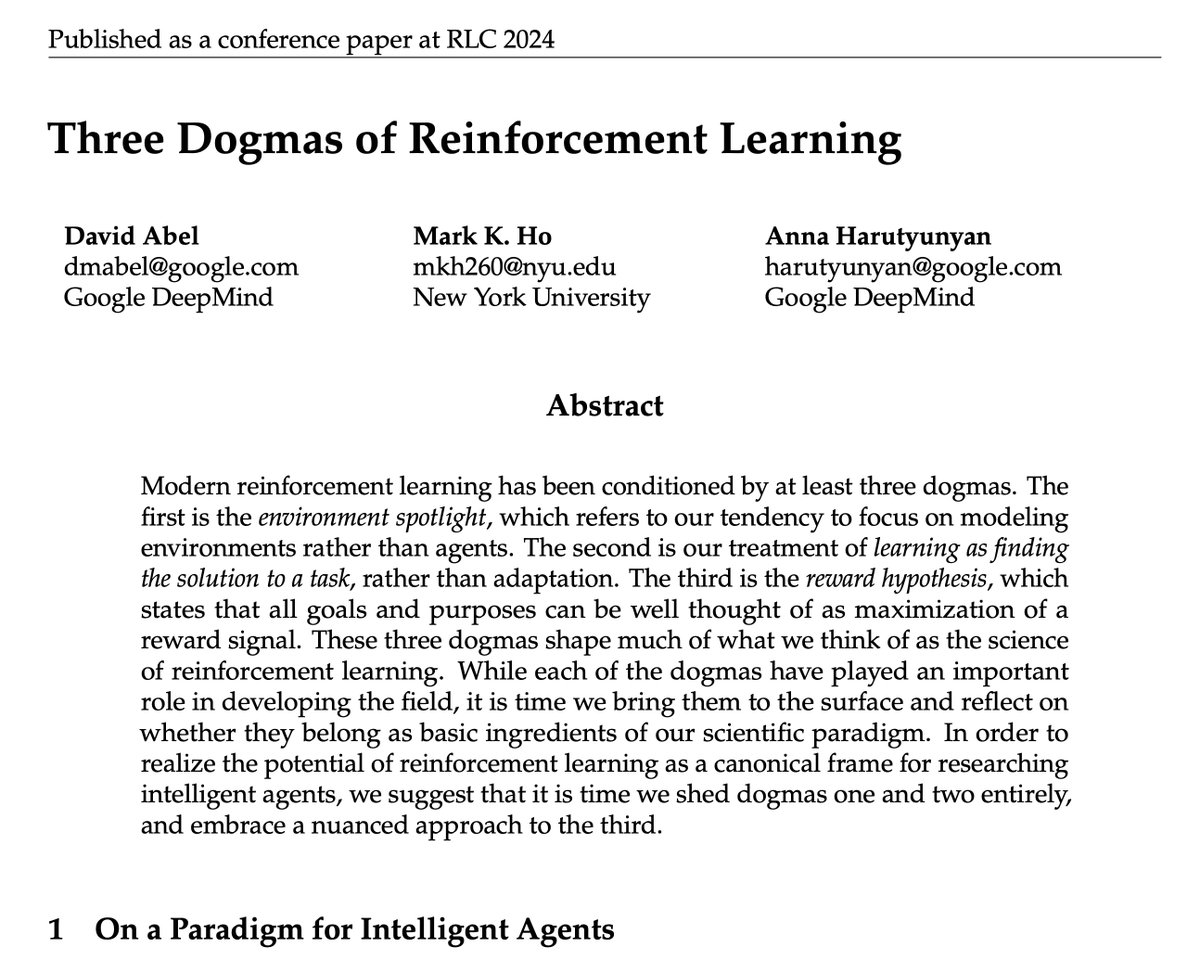
New #RLC2024 paper Three Dogmas of Reinforcement Learning joint w/ <a href="/mark_ho_/">Mark Ho</a> and <a href="/aharutyu/">Anna Harutyunyan | Աննա Հարությունյան</a>!

arxiv.org/pdf/2407.10583

We reflect on where our scientific paradigm needs adjustment, and suggest three departures from previous conventions. Curious to hear what folks think!

🧵

Jason Liu @CoRL (@jasonxyliu) 's Twitter Profile Photo

How do robots understand natural language? #IJCAI2024 survey paper on robotic language grounding We situated papers into a spectrum w/ two poles, grounding language to symbols and high-dimensional embeddings. We discussed tradeoffs, open problems & exciting future directions!

How do robots understand natural language?

#IJCAI2024 survey paper on robotic language grounding

We situated papers into a spectrum w/ two poles, grounding language to symbols and high-dimensional embeddings. We discussed tradeoffs, open problems &amp; exciting future directions!
Peter Stone (@peterstone_tx) 's Twitter Profile Photo

10 years after DQN, what are deep RL’s impacts on robotics? Which robotic problems have seen the most thrilling real-world successes thanks to DRL? Where do we still need to push the boundaries, and how? Our latest survey explores these questions! Read on for more details. 👇

10 years after DQN, what are deep RL’s impacts on robotics? Which robotic problems have seen the most thrilling real-world successes thanks to DRL? Where do we still need to push the boundaries, and how?

Our latest survey explores these questions!  Read on for more details. 👇
Luca Carlone (@lucacarlone1) 's Twitter Profile Photo

Pre-release of part 1 of our handbook: from SLAM to Spatial Intelligence. Please provide comments and suggestions to make it better! and a big THANK YOU to our amazing contributors! #spatialAI #robotics #perception #slam #ComputerVision

Anirudha Majumdar (@majumdar_ani) 's Twitter Profile Photo

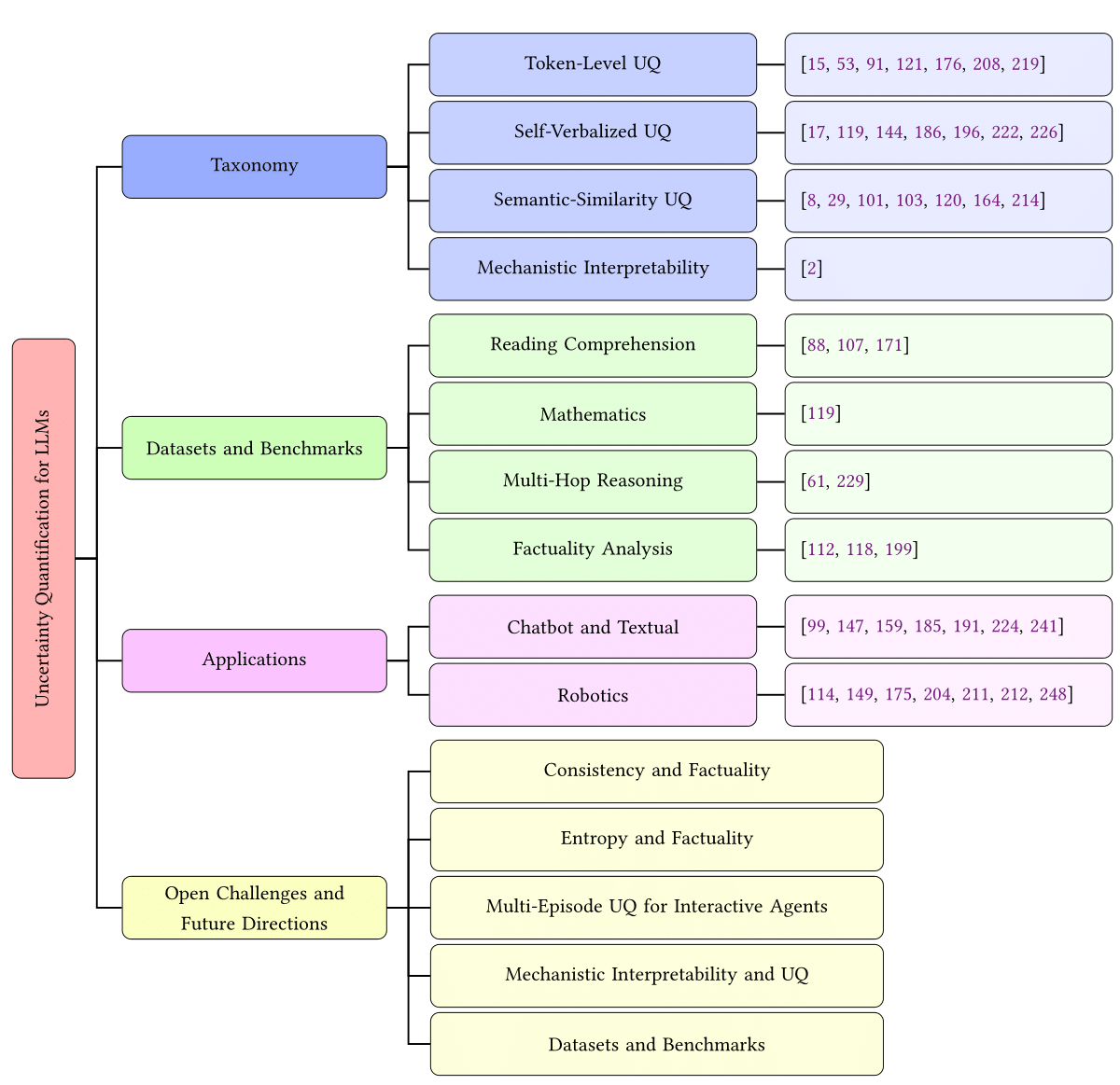
Interested in uncertainty quantification for LLMs? Check out our new survey paper on the topic! arxiv.org/abs/2412.05563 A Survey on Uncertainty Quantification of Large Language Models: Taxonomy, Open Research Challenges, and Future Directions

Interested in uncertainty quantification for LLMs? Check out our new survey paper on the topic!
arxiv.org/abs/2412.05563
A Survey on Uncertainty Quantification of Large Language Models: Taxonomy, Open Research Challenges, and Future Directions
Igor Kulakov (@ihorbeaver) 's Twitter Profile Photo

"Gr00t" vs "Pi0" vs "Pi0 Fast". I compared top open-source robotic models, and here's a detailed overview based on our own experience:

Yoonchang Sung (@yoonchangsung) 's Twitter Profile Photo

I’m hiring multiple PhD students and one postdoc at NTU Singapore, starting in Spring or Fall 2026, to push the frontiers of robot planning, learning, and embodied AI. Details are available here: yoonchangsung.com/opportunity Thank you for your support in sharing this opportunity!

Tianyu Li (@tianyurobot) 's Twitter Profile Photo

I will be presenting this work at the RSS Workshop on Robot Hardware-Aware Intelligence on Wednesday, 06/25. (Location: EEB 248) The spotlight talk is happening in the session 3:30PM-4:00PM. The poster session will be 10:30AM-11:00AM and 4:00PM-4:45PM. Come chat with us!

Shivam Vats @ ICLR (@shivaamvats) 's Twitter Profile Photo

How can 🤖 learn from human workers to provably reduce their workload in factories? Our latest Robotics: Science and Systems paper answers this question by proposing the first cost-optimal interactive learning (COIL) algorithm for multi-task collaboration.