V (@vriishin) 's Twitter Profile
V

@vriishin

ID: 1964000243776974848

calendar_today05-09-2025 16:18:51

0 Tweet

0 Takipçi

8 Takip Edilen

Sourish Jasti (@sourishjasti) 's Twitter Profile Photo

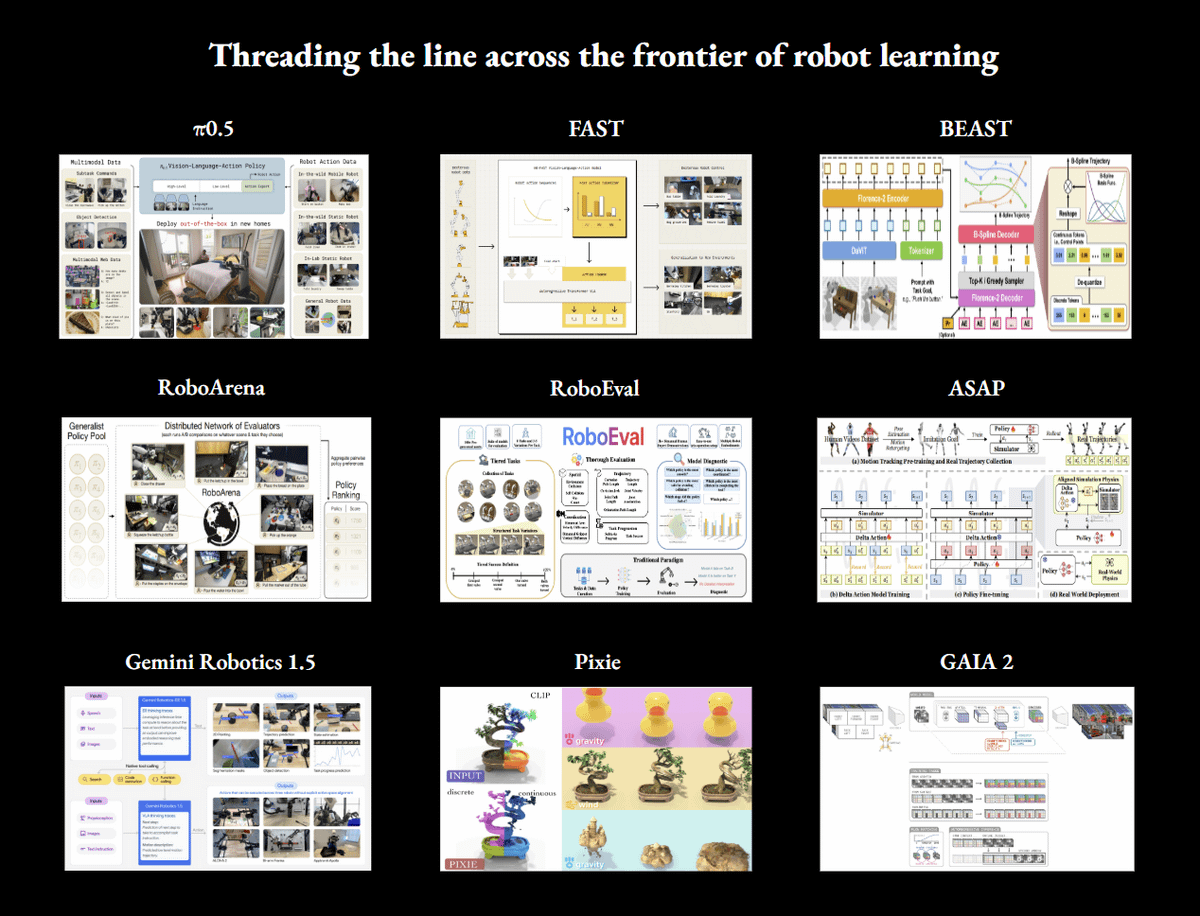
1/ The future of general-purpose robotics will be decided by one major question: which flavor of data scales reasoning? Every major lab represents a different bet. Over the past 3 months, Adam Patni, vrishin, and I read the core research papers, spoke with staff at the major

Sourish Jasti (@sourishjasti) 's Twitter Profile Photo

2/ Before you understand the breakthroughs, know that modern general purpose robotics is all about forcing language models into robots. Every research paper in robotics is built from the fact that a VLM wasn’t designed to output actions. Each research paper is thus an attempt to

2/ Before you understand the breakthroughs, know that modern general purpose robotics is all about forcing language models into robots. Every research paper in robotics is built from the fact that a VLM wasn’t designed to output actions. Each research paper is thus an attempt to
Sourish Jasti (@sourishjasti) 's Twitter Profile Photo

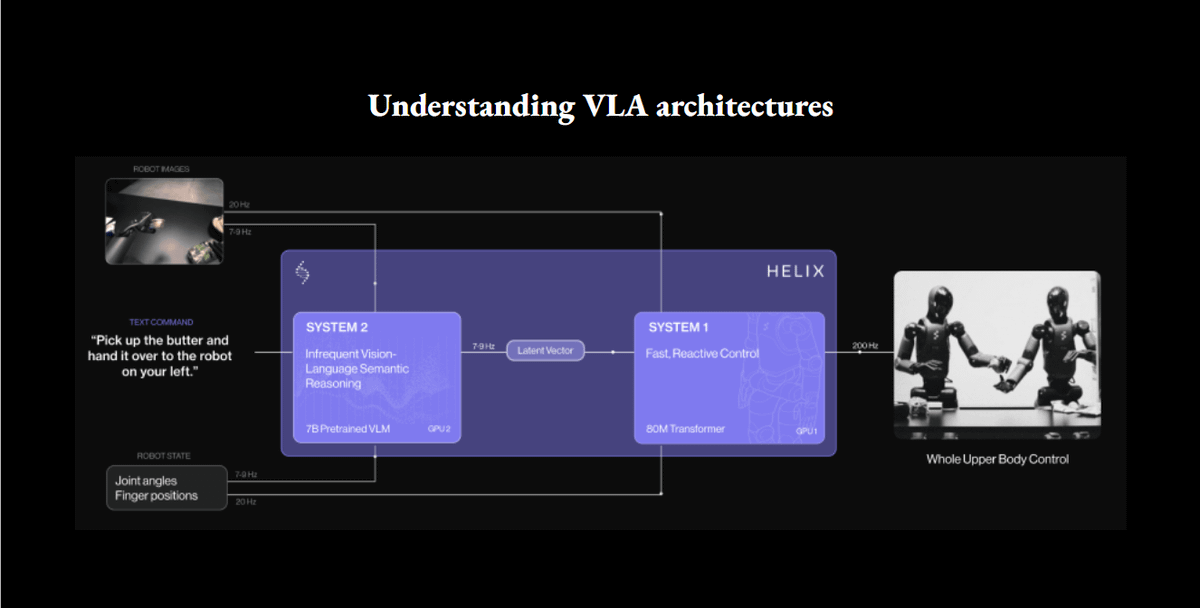
3/ Most labs converge on hierarchicalization. Major labs have converged on a “two-brain” VLA architecture consisting of a slow, high-level planner that reasons in language and a fast, low-level controller (e.g π0.5, NVIDIA’s GR00T, Figure’s Helix). Hierarchy evolved from

3/ Most labs converge on hierarchicalization.

Major labs have converged on a “two-brain” VLA architecture consisting of a slow, high-level planner that reasons in language and a fast, low-level controller (e.g π0.5, NVIDIA’s GR00T, Figure’s Helix). Hierarchy evolved from
Sourish Jasti (@sourishjasti) 's Twitter Profile Photo

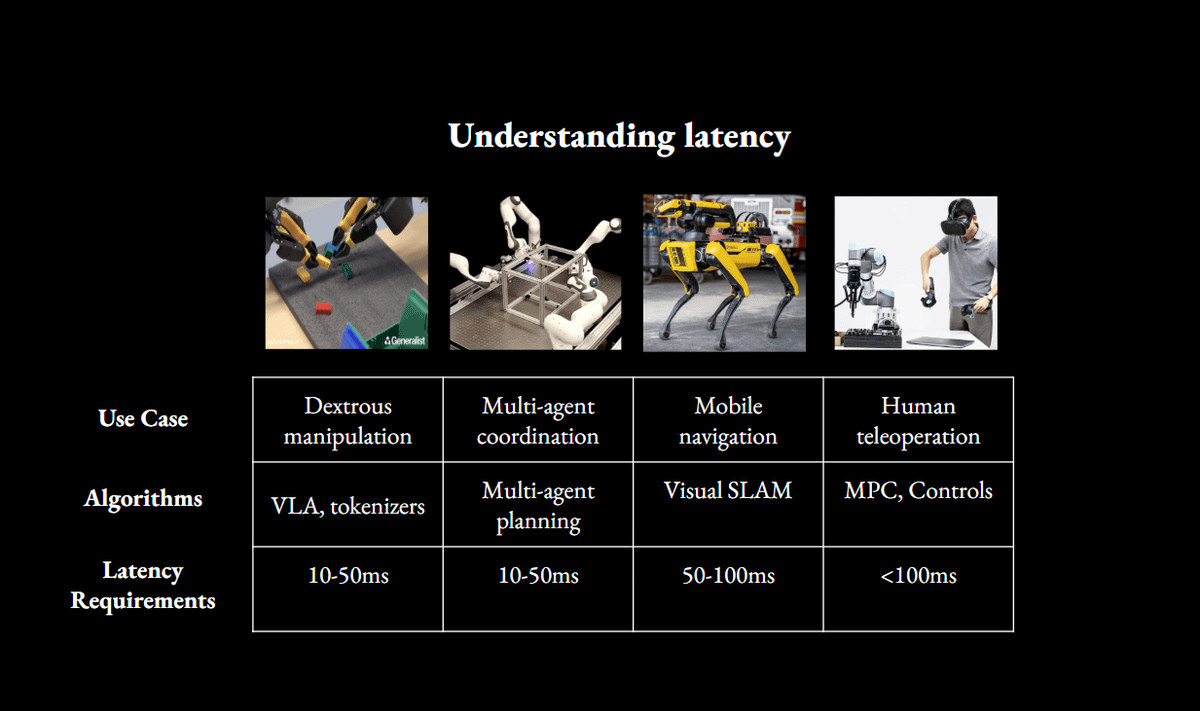
4/ The action tokenizer translates slow brain planning into low-level actions. The throughput of this system determines how quick robots can act. The goal is to efficiently encode and decode action data without losing subtle but still important details. 2025 saw research

4/ The action tokenizer translates slow brain planning into low-level actions. The throughput of this system determines how quick robots can act. The goal is to efficiently encode and decode action data without losing subtle but still important details.

2025 saw research
Sourish Jasti (@sourishjasti) 's Twitter Profile Photo

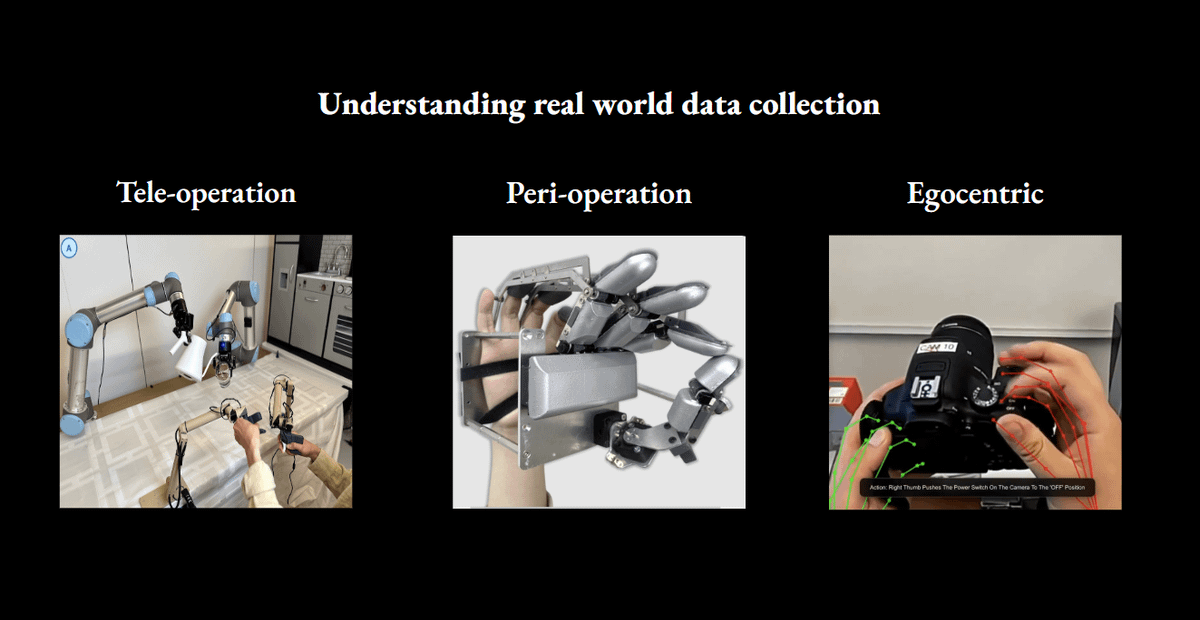
5/ Data collection is by far the most important piece of the puzzle. The biggest question is: are there monotonic scaling laws for where to put $? Everyone is trying to decide which strategy (real world data collection, physics-based simulators, and world models) to allocate

5/ Data collection is by far the most important piece of the puzzle.

The biggest question is: are there monotonic scaling laws for where to put $? Everyone is trying to decide which strategy (real world data collection, physics-based simulators, and world models) to allocate
Sourish Jasti (@sourishjasti) 's Twitter Profile Photo

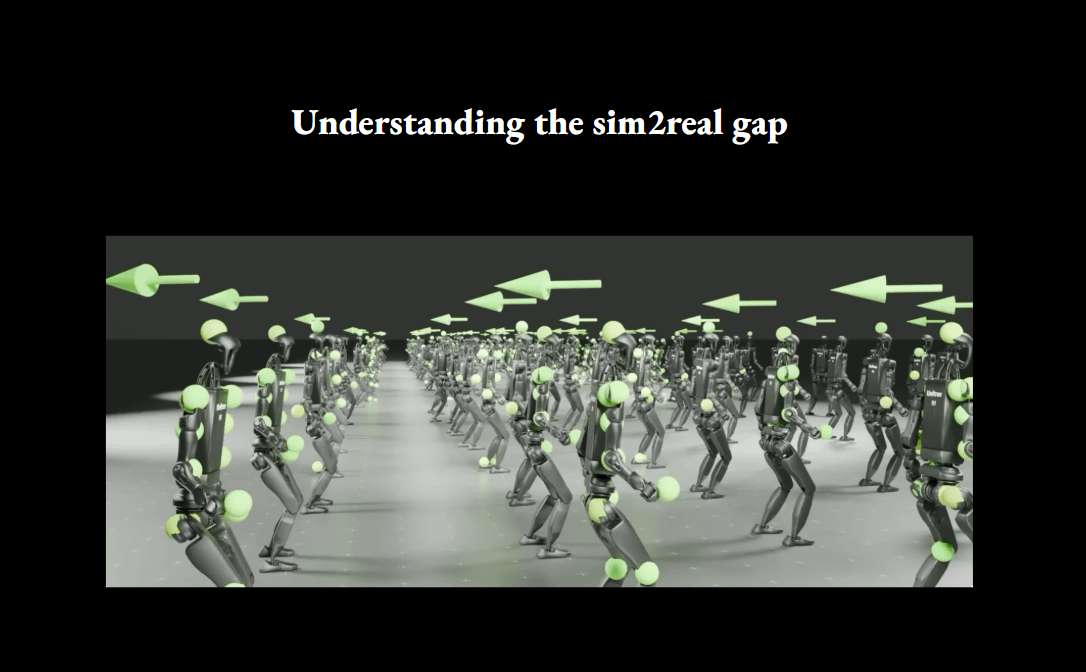
6/ Simulators augment real-world data with physics-based environments. While there’s potential for infinite scale, it’s very hard to get right. Existing bottlenecks still largely hold true: 1) The sim2real gap (physics based sims struggle to precisely capture contact dynamics,

6/ Simulators augment real-world data with physics-based environments.

While there’s potential for infinite scale, it’s very hard to get right. Existing bottlenecks still largely hold true:

1) The sim2real gap (physics based sims struggle to precisely capture contact dynamics,
Sourish Jasti (@sourishjasti) 's Twitter Profile Photo

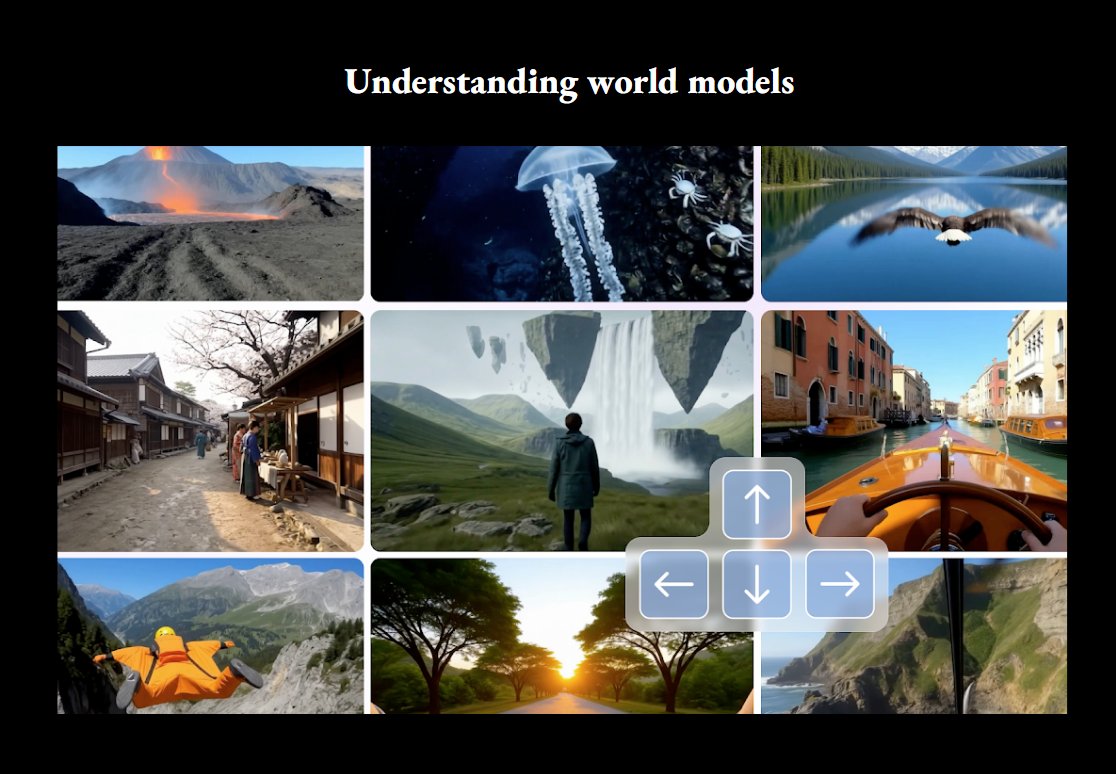
7/ World models let systems imagine. These models internalize the physics and dynamics of reality (‘the true distribution’) so completely that they can predict future states and actions without ever touching the real world. This approach is the least tractable with today’s

7/ World models let systems imagine.

These models internalize the physics and dynamics of reality (‘the true distribution’) so completely that they can predict future states and actions without ever touching the real world. This approach is the least tractable with today’s
Sourish Jasti (@sourishjasti) 's Twitter Profile Photo

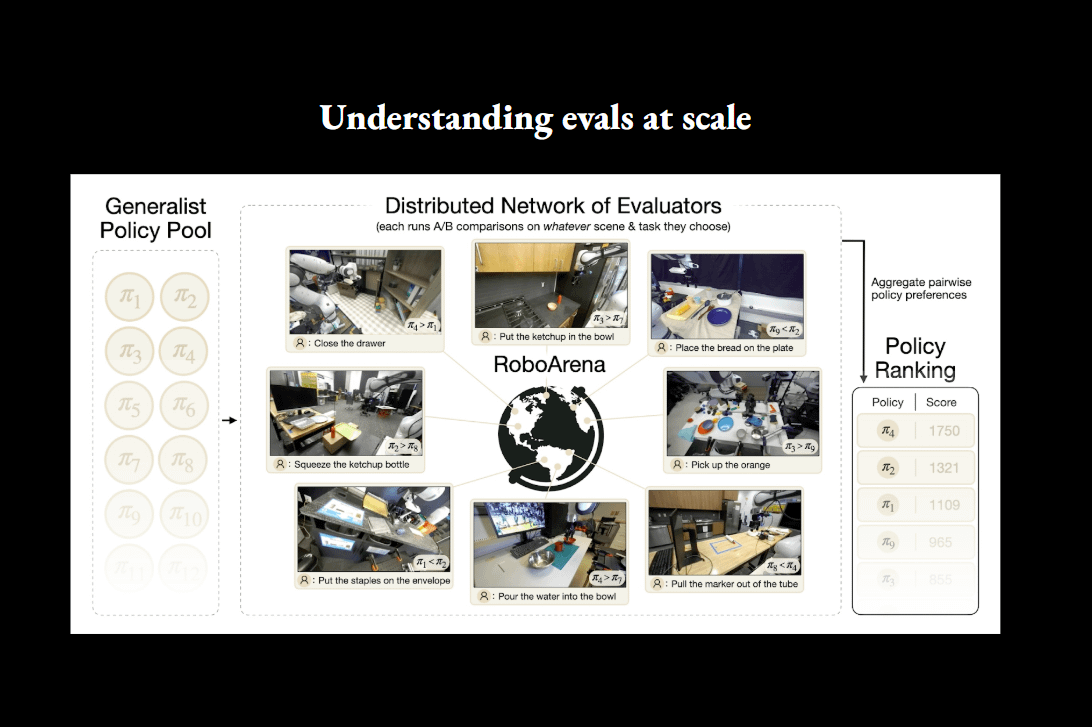
8/ Evals are one of the hardest things for labs to scale in tandem with their data collection efforts. Today’s general purpose robots hinge on fuzzy metrics (e.g. did the grasp hold, is the plate clean, is the room tidy) making rigorous evaluation critical for real-world

8/ Evals are one of the hardest things for labs to scale in tandem with their data collection efforts.

Today’s general purpose robots hinge on fuzzy metrics (e.g. did the grasp hold, is the plate clean, is the room tidy) making rigorous evaluation critical for real-world
Sourish Jasti (@sourishjasti) 's Twitter Profile Photo

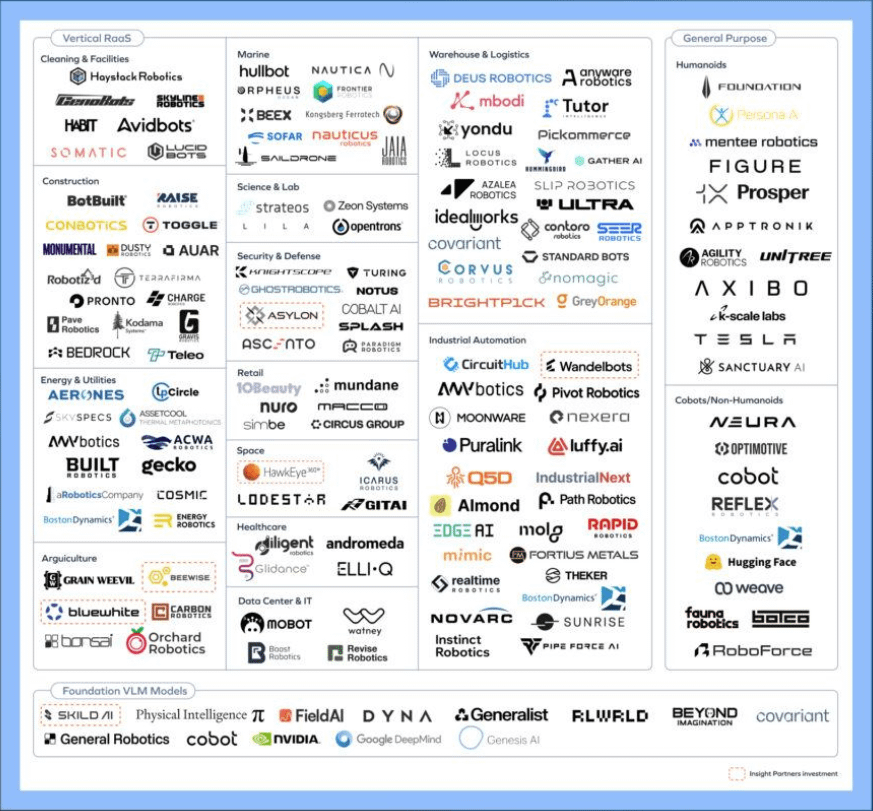
9/ Industry Framework We classify the robotics industry along 3 axes: 1) Deployment setting (industrial or consumer) 2) Model training strategy (foundation model lab or fine-tuning) 3) Physical embodiment (humanoid, cobot, or animal-analog) These labels are by no means mutually

9/ Industry Framework

We classify the robotics industry along 3 axes:
1) Deployment setting (industrial or consumer)
2) Model training strategy (foundation model lab or fine-tuning)
3) Physical embodiment (humanoid, cobot, or animal-analog)

These labels are by no means mutually
Sourish Jasti (@sourishjasti) 's Twitter Profile Photo

10/ For those curious about our process: We read 50+ papers and asked staff at top labs what they were paying attention to help us narrow down on what was and wasn’t important. ~25 of these papers matter most to build intuition (full list at the end of the tweet). >Read the