Thomas Engesser (@thomasengesser) 's Twitter Profile
Thomas Engesser

@thomasengesser

Ex-Sydney University SFC Technical Director, Ex-Marrickville FC Technical Director, trying be Ex-X and move to Bluesky

ID: 394510529

calendar_today20-10-2011 05:48:29

173 Tweet

105 Takipçi

124 Takip Edilen

Thomas Engesser (@thomasengesser) 's Twitter Profile Photo

Postecoglou provides a treatise on how we learn to play. 1) Don’t focus on the score: “If you let that guide you you’re never going to be committed to anything.” 2) Don’t focus on the win: “The players get the sugar hit of a win” and “don’t address the way we want to play”.

Thomas Engesser (@thomasengesser) 's Twitter Profile Photo

Great article which again poses the question: Why do we continue to talent ID 6-12 year olds when the evidence indicates no correlation between early selection and later success? Dinamo Zagreb’s Academy is a case in point. 9 of their top 10 transfers joined after the age of 15.

Thomas Engesser (@thomasengesser) 's Twitter Profile Photo

Postecoglou: “I want the ball to move slowly.” So players are afforded opportunities to assess and understand their situation, helping them decide their next action. Imagine trying to learn this when most coaches constantly demand high ball speed and cajole players to release!

Thomas Engesser (@thomasengesser) 's Twitter Profile Photo

Great research again confirming that time spent in informal play rather than formal training environments is key for learning and expertise development.

Thomas Engesser (@thomasengesser) 's Twitter Profile Photo

Winning as THE purpose of competing?! Not according to McKeown: I’ve made it my mission to not be processed around medals or medal tally or anything like that. I’ve come to the Olympics to a) have fun b) do the best that I can c) just enjoy the atmosphere. theguardian.com/sport/article/…

Thomas Engesser (@thomasengesser) 's Twitter Profile Photo

If engaging in ‘play’ is integral to learning and development, surely the impetus for educators is to ensure children are in environments that facilitate play. What reduces potential for play? Adults who assess and rank, and ultimately load play with risk and a fear of failure.

Jorg van der Breggen (@jvanderb78) 's Twitter Profile Photo

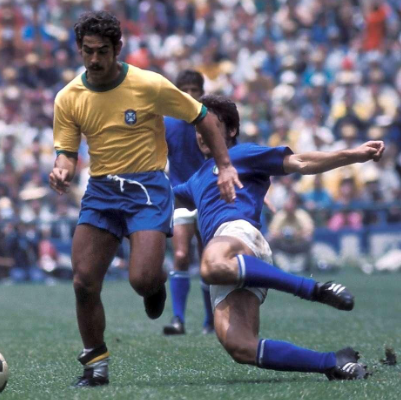
"Times have changed! we learned to play football by playing; today, however, it is claimed, especially with children, to teach them to play without playing it. We live in a period where the child must learn without playing." - Rivelino

"Times have changed! we learned to play football by playing; today, however, it is claimed, especially with children, to teach them to play without playing it. We live in a period where the child must learn without playing." - Rivelino
Tom Parry (@kestrelpsych) 's Twitter Profile Photo

5-6 kids….. 3v2, 3v3 maybe. Can we please stop doing this, kids come to play the game not run through your dumb made up drills. 🤦🏻

Thomas Engesser (@thomasengesser) 's Twitter Profile Photo

“Awareness of when to speed up the game or to slow it down”. Playing with time. When all we value is quickness - being-playing quick - how will we learn to play with time? Incessant instruction to, RELEASE!simply disables awareness of when to slow it down. theguardian.com/football/2025/…

Thomas Engesser (@thomasengesser) 's Twitter Profile Photo

Interesting how this is still treated as an anomaly — yet it’s exactly what kids do intuitively in play. So why isn’t that the norm? Maybe because our outcome-driven culture has taught fear of failure instead of joy in discovery. linkedin.com/posts/gary-cur…

Thomas Engesser (@thomasengesser) 's Twitter Profile Photo

This a great take on why the CLA matters: “Skills emerge from within rather than being commanded from above. Plus it’s a lot of fun.” Learning is constructed through interaction and ownership. When the skill is yours, adaptability follows - and joy makes it stick.

Thomas Engesser (@thomasengesser) 's Twitter Profile Photo

How to play sport, play-fully? The problem begins with the assumption that sport only exists when formally organised. Perhaps the challenge isn’t culture within sport, but reimagining what sport is - finding ways for kids to play without adult involvement. theguardian.com/sport/2025/nov…

Thomas Engesser (@thomasengesser) 's Twitter Profile Photo

Senses to motivate action? More that they act as primordial cues to pull us back into play. If a coach’s job is to enable play, then tuning players’ attention to these sensations is essential - it transports them to the play-ground, where trying things replaces avoiding mistakes.

Thomas Engesser (@thomasengesser) 's Twitter Profile Photo

Love this from #Giannis: Self-worth emerges from focusing on process, effort, and learning - not the win/loss binary. When value is anchored in what we do - how we adapt, reflect, persist and play - we create space for improvement.

Thomas Engesser (@thomasengesser) 's Twitter Profile Photo

#Guardiola flips the script: RUN LESS = good! We improve when we have a chance to notice, think and feel what’s happening around us. How? When we pause, wait and move less, we notice more. Hard to learn in a culture where “try harder” and “do more” are valued above all else.

Thomas Engesser (@thomasengesser) 's Twitter Profile Photo

Great read Nick. Especially for coaches/parents still cajoling kids to PRACTICE rather than PLAY: “Ball mastery…is the OUTCOME of players repeatedly solving meaningful problems. When we teach the ball before the game, we teach movement without meaning.“

Thomas Engesser (@thomasengesser) 's Twitter Profile Photo

Research shows that our youth sport system is optimising for the wrong metric. “It produces great 14-year-olds, not great 24-year-olds.” The takeaway? Let kids sample, switch, and BE AVERAGE at many things. The data shows this builds more elite performers and less burnout.