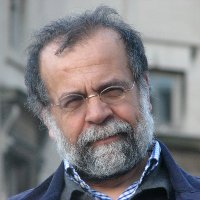
Hamid Dabashi (@dabashihamid) 's Twitter Profile
Hamid Dabashi

@dabashihamid

Official Account for #HamidDabashi, the Hagop Kevorkian Professor of Iranian Studies & Comparative Literature at @Columbia University.

ID: 1388189530130456586

linkhttp://www.hamiddabashi.com/books calendar_today30-04-2021 17:52:49

15 Tweet

2,2K Takipçi

24 Takip Edilen
Hamid Dabashi (@dabashihamid) 's Twitter Profile Photo

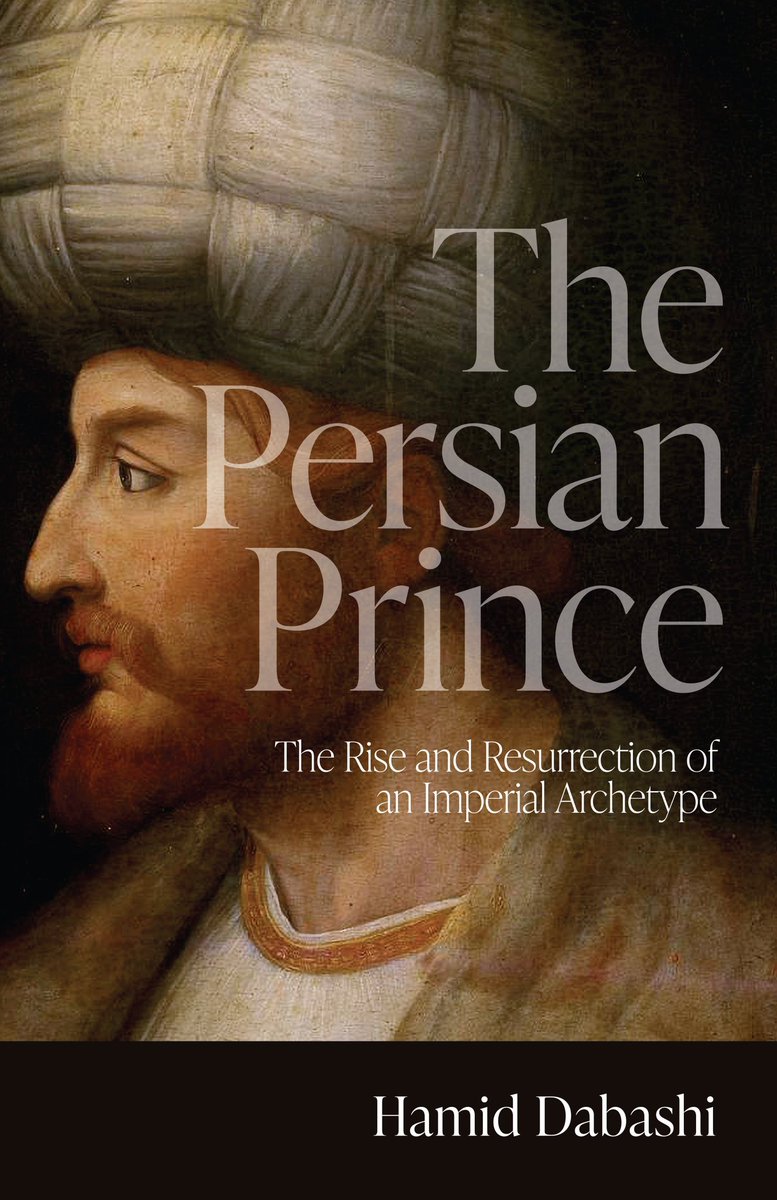
"The Persian Prince is a unique and formidable text that encapsulates the brilliance, vivacity, and political ferocity of Dabashi's mind." —Jeanne Morefield, University of Oxford

"The Persian Prince is a unique and formidable text that encapsulates the brilliance, vivacity, and political ferocity of Dabashi's mind." 

—Jeanne Morefield, University of Oxford
Hamid Dabashi (@dabashihamid) 's Twitter Profile Photo

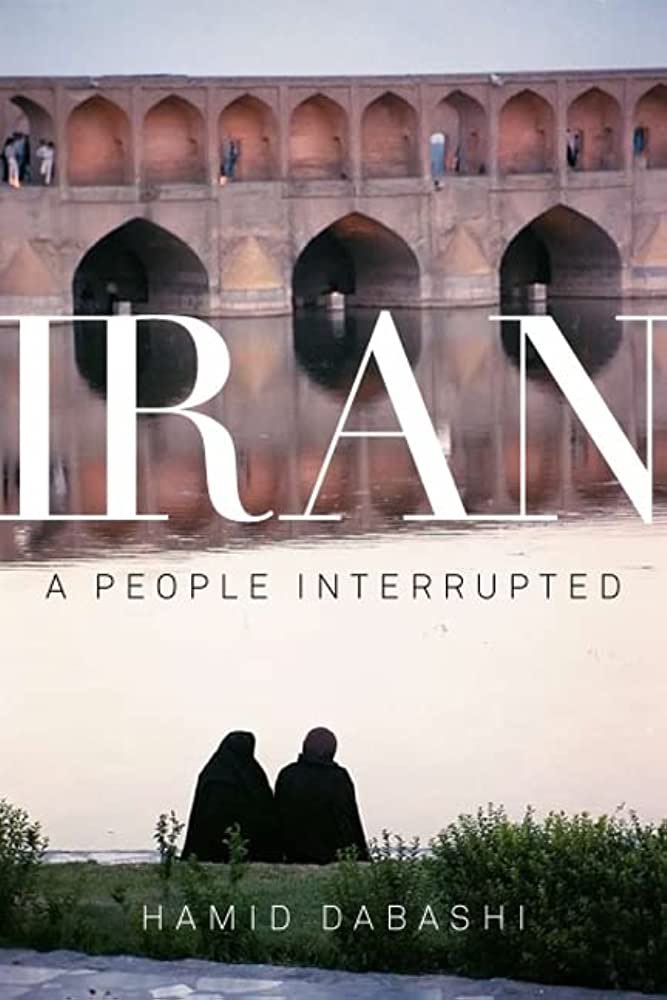
“Praised by leading academics in the field as “extraordinary,” “a brilliant analysis,” “fresh, provocative and iconoclastic,” Iran: A People Interrupted has distinguished itself as a major work that has single-handedly effected a revolution in the field of Iranian studies.”

“Praised by leading academics in the field as “extraordinary,” “a brilliant analysis,” “fresh, provocative and iconoclastic,” Iran: A People Interrupted has distinguished itself as a major work that has single-handedly effected a revolution in the field of Iranian studies.”
Hamid Dabashi (@dabashihamid) 's Twitter Profile Photo

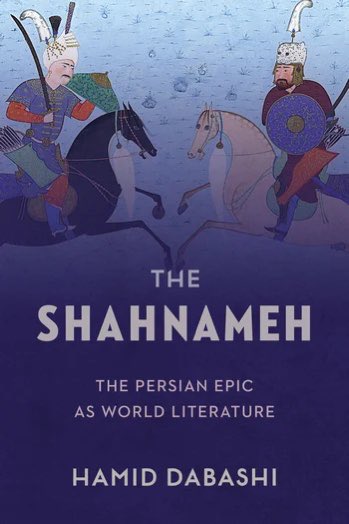
“A major achievement. With wit and erudition, Hamid Dabashi has pushed open one of the great locked doors of world literature: the Shahnameh.” Aravind Adiga, author of The White Tiger

“A major achievement. With wit and erudition, Hamid Dabashi has pushed open one of the great locked doors of world literature: the Shahnameh.”

Aravind Adiga, author of The White Tiger
Hamid Dabashi (@dabashihamid) 's Twitter Profile Photo

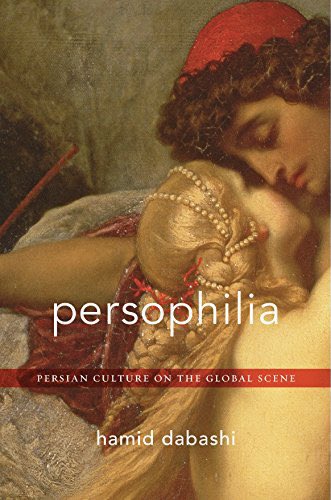
Hamid Dabashi’s scholarly investigation into Persophilia―the attraction that Iran’s literary humanism held for giants of European culture including Mozart, Goethe, and Nietzsche―turns simplistic views of ‘Orientalism’ upside down. Malise Ruthven—

Hamid Dabashi’s scholarly investigation into Persophilia―the attraction that Iran’s literary humanism held for giants of European culture including Mozart, Goethe, and Nietzsche―turns simplistic views of ‘Orientalism’ upside down. 

Malise Ruthven—
Hamid Dabashi (@dabashihamid) 's Twitter Profile Photo

“Dabashi is sui generis: there is no other scholar like him in the study of Iranian cinema or Persian literature."—Shaj Mathew, Trinity University

“Dabashi is sui generis: there is no other scholar like him in the study of Iranian cinema or Persian literature."—Shaj Mathew, Trinity University
Hamid Dabashi (@dabashihamid) 's Twitter Profile Photo

In his retelling of the boldness and tragedy of the Zhina uprising in Iran, Hamid Dabashi asks: What constitutes the success of revolutions and how do we measure their failures? haymarketbooks.org/books/2456-ira…

In his retelling of the boldness and tragedy of the Zhina uprising in Iran, Hamid Dabashi asks: What constitutes the success of revolutions and how do we measure their failures?

haymarketbooks.org/books/2456-ira…
Hamid Dabashi (@dabashihamid) 's Twitter Profile Photo

“Anyone wishing to understand what progressive Iranian intellectuals are now thinking about the traumatic developments in their country will want to read this book. (Talal Asad, Distinguished Professor Emeritus of Anthropology, The Graduate Center, CUNY, USA)

“Anyone wishing to understand what progressive Iranian intellectuals are now thinking about the traumatic developments in their country will want to read this book. 

(Talal Asad, Distinguished Professor Emeritus of Anthropology, The Graduate Center, CUNY, USA)
Hamid Dabashi (@dabashihamid) 's Twitter Profile Photo

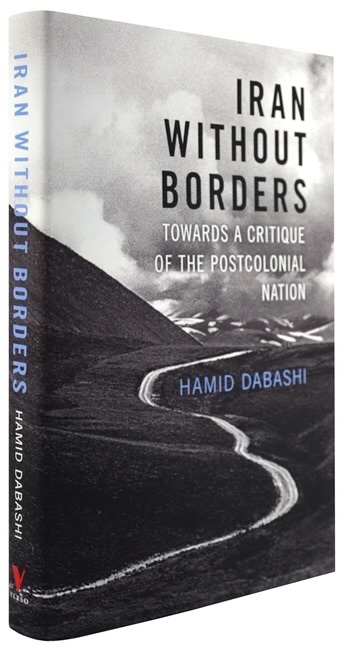
“In a grand sweep of Iran’s intellectual history since the eighteenth century, Dabashi discovers a cosmopolitan worldliness rooted in national freedom struggles . . . Partha Chatterjee —

“In a grand sweep of Iran’s intellectual history since the eighteenth century, Dabashi discovers a cosmopolitan worldliness rooted in national freedom struggles . . . 

 Partha Chatterjee —