Caitlin Ford
@caitlinford09
University of Guelph | MSc. Candidate, Population Medicine
ID: 1037753206250528769
06-09-2018 17:23:39
49 Tweet
54 Takipçi
21 Takip Edilen

Havie Carter @UofGFoodProf Have you ever kept a banana in the fridge? This will cause chilling injury symptoms such as failure of the fruit to soften and delayed progression of it's yellow colour. Thus, you should keep your bananas above 13°C for optimal taste! #Jiang @UofGFoodProf #Food2150
@UofGFoodProf Plant based proteins are popular in the #foodscience industry because of environmental & cost concerns associated with meat. Pea protein isolate, for example, behaves similarly to soy & can be gelatinized for use as a structural component in food! @UofGFoodProf #Food2150 #Munialo

@UofGFoodProf As food science advances, more processes to create plant-based alternatives (that actually taste like meat!) are being discovered. The article by #Munialo discusses the importance of assembling pea-proteins into fibrils to achieve a meat-like texture. #FOOD2150 @UofGFoodProf
@UofGFoodProf Bitterness, detected by taste receptors in the mouth, ensured that early humans didn’t ingest toxic plants while foraging! This evolutionary protection still exists in pregnant women and children, who often experience aversions to bitter foods! @UofGFoodProf #Food2150 #Breslin
Jordan Elshof @UofGFoodProf Species with highly specialized diets, such as pandas, face fewer hazards when making dietary choices. Thus, they have a diminished gustatory system. On the contrary, omnivores have a wide food range, meaning they have a developed gustatory system!#Breslin #Food2150 @UofGFoodProf
Emily Robins, CCA-ON @UofGFoodProf There are four types of taste bud cells (TBCs) which are found on the tongue and sub-populations of TBCs synthesize hormones in the gut and brain. Type 1 cells account of about half of TBCs and are characterized by extensive lamellar processes. @UofGFoodProf #Calvo #FOOD2150
Peter Ruberto @UofGFoodProf Humans are made to love sugar! This is relevant because sugar is the basic unit of energy in the bloodstream and body. However, humans today have an increased intake of sugar, yet lower caloric needs, which can lead to various chronic diseases. #Clemens #Food2150 @UofGFoodProf
@UofGFoodProf Frying potatoes not only adds lots of saturated fat to your diet, it also increases your intake of the carcinogen, acrylamide. This compound is found mostly in foods cooked in high heat, so boiled & baked potatoes are a far healthier alternative! @UofGFoodProf #Food2150 #Svensson
KC @UofGFoodProf It is important to maintain certain environmental conditions in order to prevent microorganism growth on corn - given that it is a primary food for roughly 200 million people worldwide. #Nuss states that temperatures between 12-20° C are ideal for storage. #FOOD2150 @UofGFoodProf
@UofGFoodProf Processing food changes the way that it behaves in the body. Baking, toasting or ‘puffing’ conventional carbohydrates increases their digestibility. This causes the starches to enter circulation faster, and spikes blood glucose to a higher level! @UofGFoodProf #Food2150 #Brand
Sarah Vangalen @UofGFoodProf Using integrated genome approaches, a study by #Falchi was able to show that low copy numbers at the AMY1 salivary amylase gene are associated with a high risk of obesity. This copy number could account for up to ~20% of total genetic variation in obesity. #FOOD2150 @UofGFoodProf
sarah milinkovich @UofGFoodProf Type 2 diabetes is a growing epidemic worldwide, but more specifically in Asian countries. These populations tend to develop diabetes at a younger age due to their poor nutrition in utero and a high intake of refined carbohydrates during early life. #Frank @UofGFoodProf #Food2150
Ian St.Pierre @UofGFoodProf Reducing saturated fat intake improves cardiovascular health, but replacing it with carbs or protein is not beneficial. Replacing saturated with polyunsaturated fats is the only substitution that has been proven to reduce the risk of heart disease! #Hooper @UofGFoodProf #Food2150
@camilladiamant1 @UofGFoodProf Food quality can decrease from oxidative degradation of lipids which produce reactive oxygen species (ROS). Although, consuming ROS have harmful effects on human health. To surpass this issue, use vegetable antioxidants to improve food quality! #Laguerre #Food2150 @UofGFoodProf
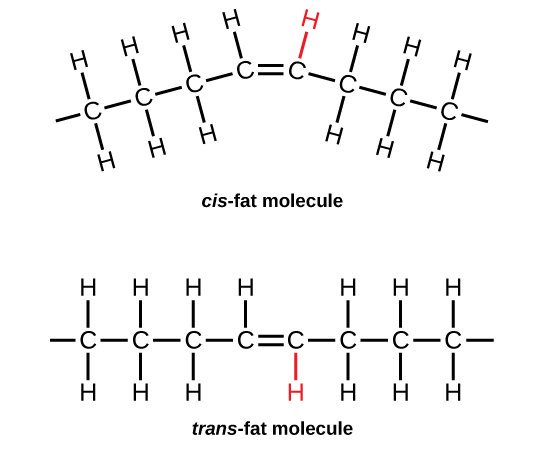
@UofGFoodProf Although it is not yet at a commercial stage, one way to suppress trans isomer formation is using zeolites as a catalyst support. Since the trans isomer is rather straight, it can fit into the zeolite pore, unlike the cis isomer which is bent. #FOOD2150 #Dijkstra @UofGFoodProf
Jordan Elshof @UofGFoodProf Folate is an important B-vitamin that increases cell division. Unfortunately, its derivative folic acid, has the same effect on cancer cells! A 10 yr study found that prostate cancer rates were 6% higher in men who took folic acid vs a placebo! @UofGFoodProf #Food2150 #Figueiredo

Our latest @SPARKUoG article on #UofG COVID-19 research written by Caitlin Ford #UofGResearch uoguel.ph/o9afg