Arturo Estrella (@intheyield) 's Twitter Profile
Arturo Estrella

@intheyield

Economist, recession forecaster. Prof Emeritus at RPI. Former Senior VP, NY Fed. PhD in economics, Harvard.

ID: 1486014747711582221

linkhttp://financeecon.com/ calendar_today25-01-2022 16:36:25

1,1K Tweet

3,3K Followers

24 Following
Arturo Estrella (@intheyield) 's Twitter Profile Photo

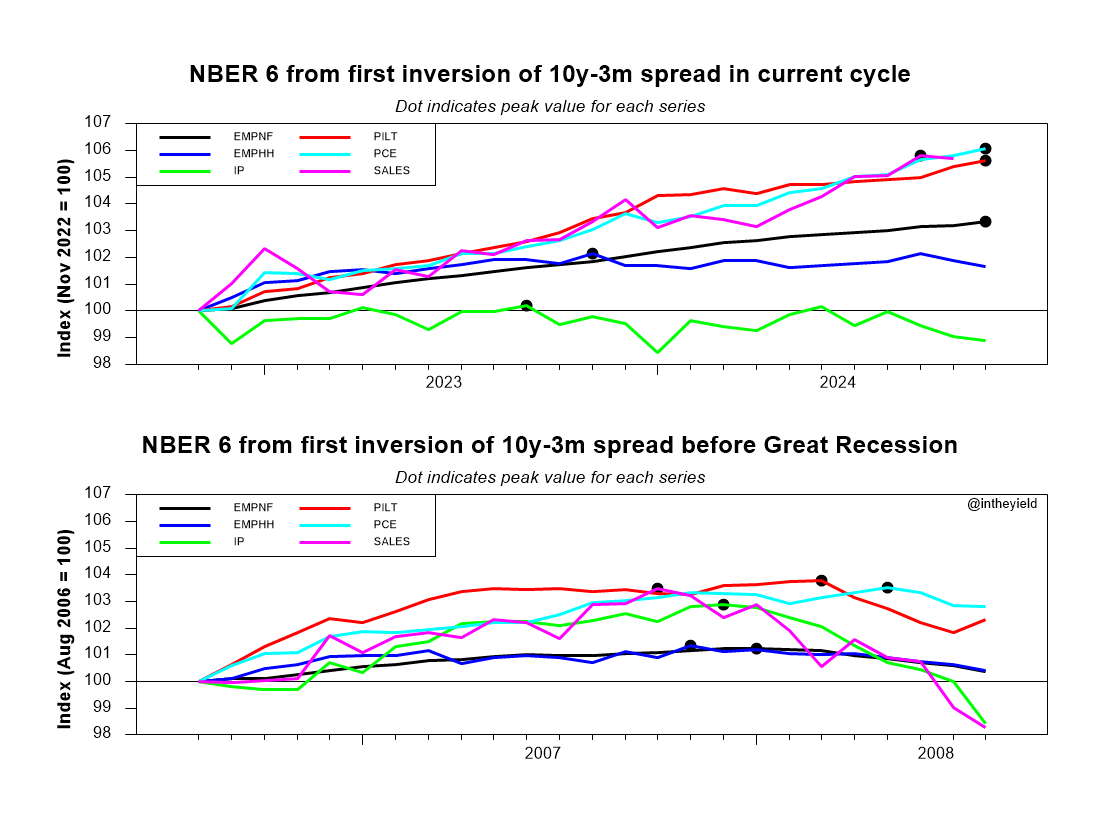
How do the NBER 6 indicators usually behave after the yield curve inverts? Here's a comparison of the current cycle with the 2008 recession. This time industrial production is worse and HH employment is comparable, but the others did not clearly turn (at least yet).

How do the NBER 6 indicators usually behave after the yield curve inverts? Here's a comparison of the current cycle with the 2008 recession. This time industrial production is worse and HH employment is comparable, but the others did not clearly turn (at least yet).
Arturo Estrella (@intheyield) 's Twitter Profile Photo

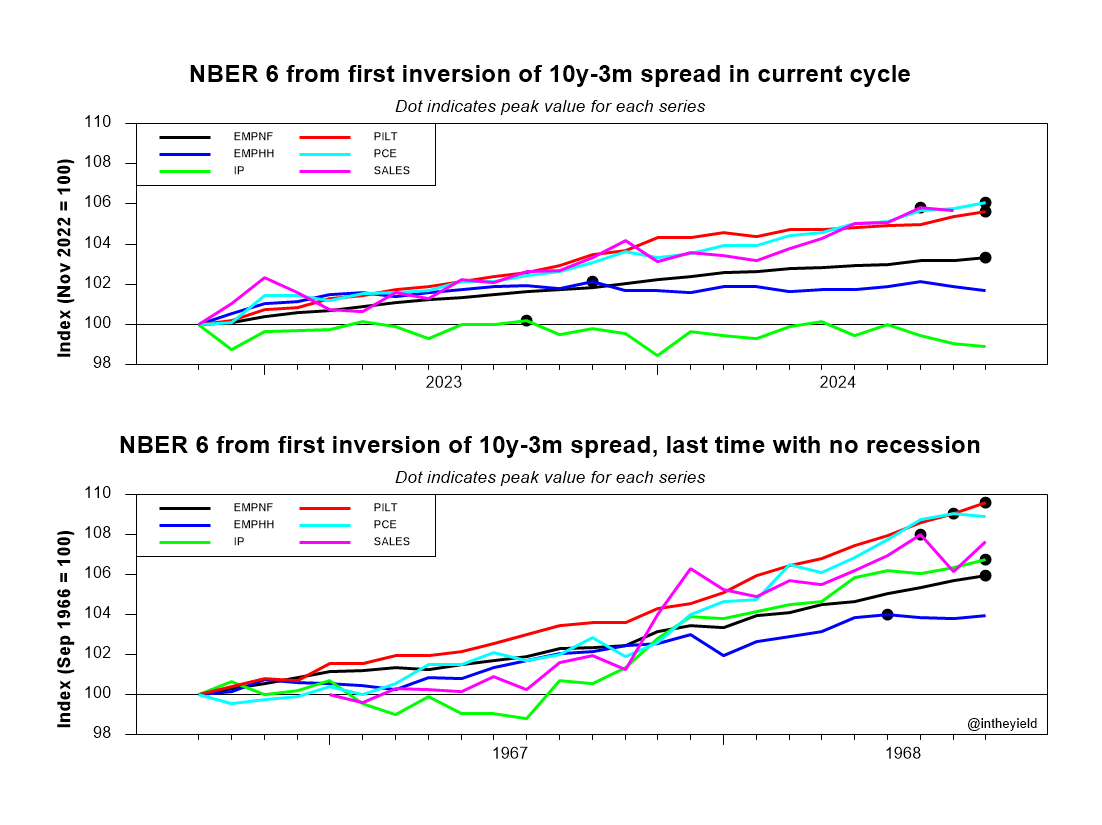
What happened the last time the yield curve inverted and there was no recession? We have to go back to 1966, 9 inversions ago. Industrial production was weak for about a year, compared with 2 years now. Overall, growth of the NBER 6 indicators is generally weaker this time.

What happened the last time the yield curve inverted and there was no recession? We have to go back to 1966, 9 inversions ago. Industrial production was weak for about a year, compared with 2 years now. Overall, growth of the NBER 6 indicators is generally weaker this time.
Arturo Estrella (@intheyield) 's Twitter Profile Photo

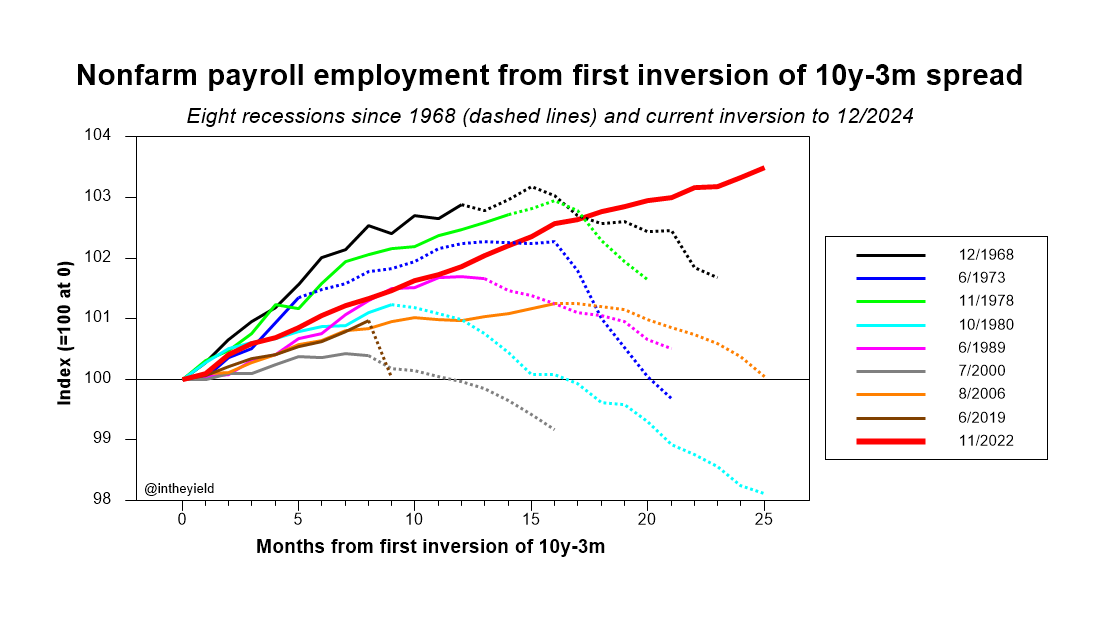
It's time to retire the recession tracking graphs based on the yield curve inversion starting Nov 2022. Dec 2024 employment numbers came out today and the establishment survey firmly suggests that the economy broke of the recession pattern a while ago. Caveat follows, though.

It's time to retire the recession tracking graphs based on the yield curve inversion starting Nov 2022. Dec 2024 employment numbers came out today and the establishment survey firmly suggests that the economy broke of the recession pattern a while ago. Caveat follows, though.
Arturo Estrella (@intheyield) 's Twitter Profile Photo

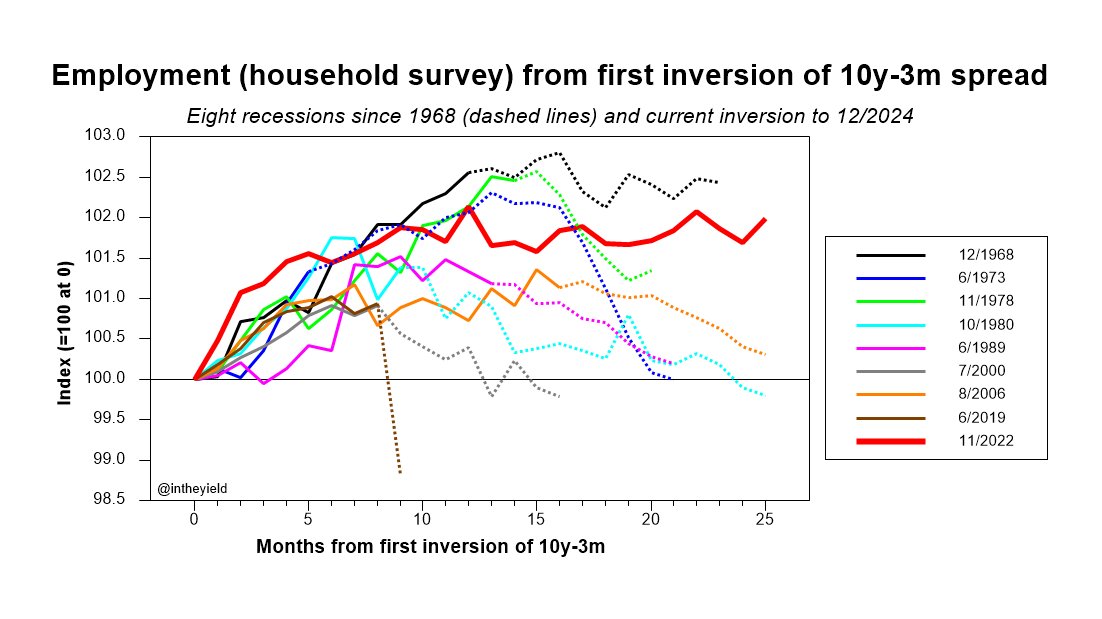
Employment from the household survey went up in Dec 2024 but is still below the peak from Nov 2022. In fact, this indicator never fully broke out of the recession zone after the yield curve inverted. So, jobs increased but the number of people employed failed to keep pace.

Employment from the household survey went up in Dec 2024 but is still below the peak from Nov 2022. In fact, this indicator never fully broke out of the recession zone after the yield curve inverted. So, jobs increased but the number of people employed failed to keep pace.
Arturo Estrella (@intheyield) 's Twitter Profile Photo

The yield curve inversion did not lead to recession this time, unlike the last 8 times. Did monetary tightening have no effect? Hardly. From the start of Fed tightening, all NBER 6 indicators did worse than in soft landings, in many case worse than in recessions! Examples coming.

Arturo Estrella (@intheyield) 's Twitter Profile Photo

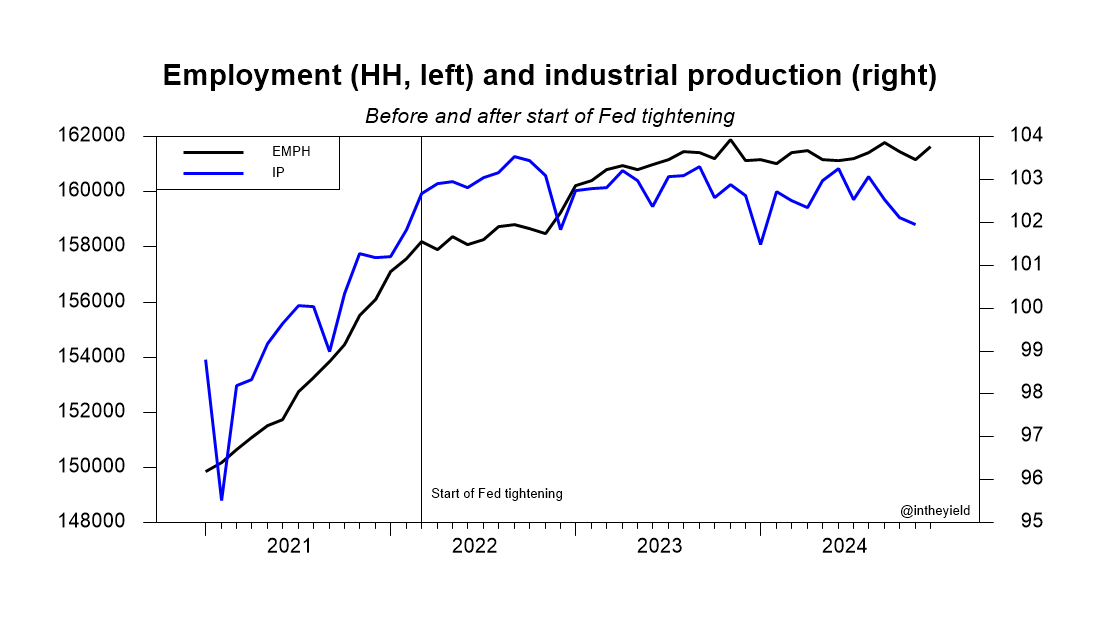
Start with 2 of the NBER 6, employment from household survey and industrial production. This may not be a recession but growth doesn't look so hot. Employment peaked in Nov 2023 and IP in Sep 2022.

Start with 2 of the NBER 6, employment from household survey and industrial production. This may not be a recession but growth doesn't look so hot. Employment peaked in Nov 2023 and IP in Sep 2022.
Arturo Estrella (@intheyield) 's Twitter Profile Photo

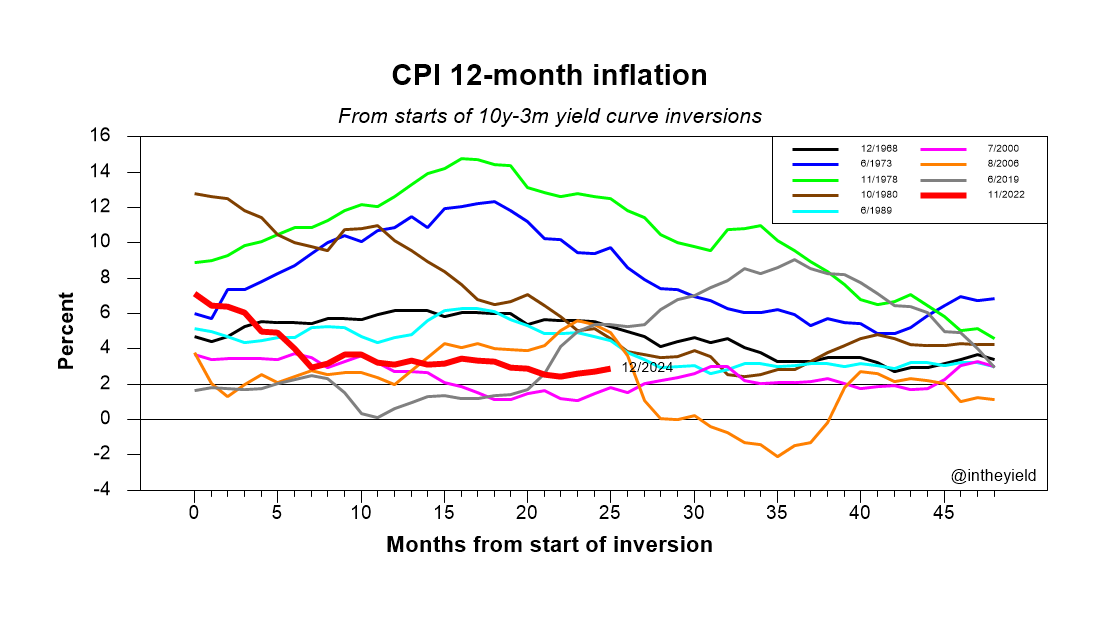
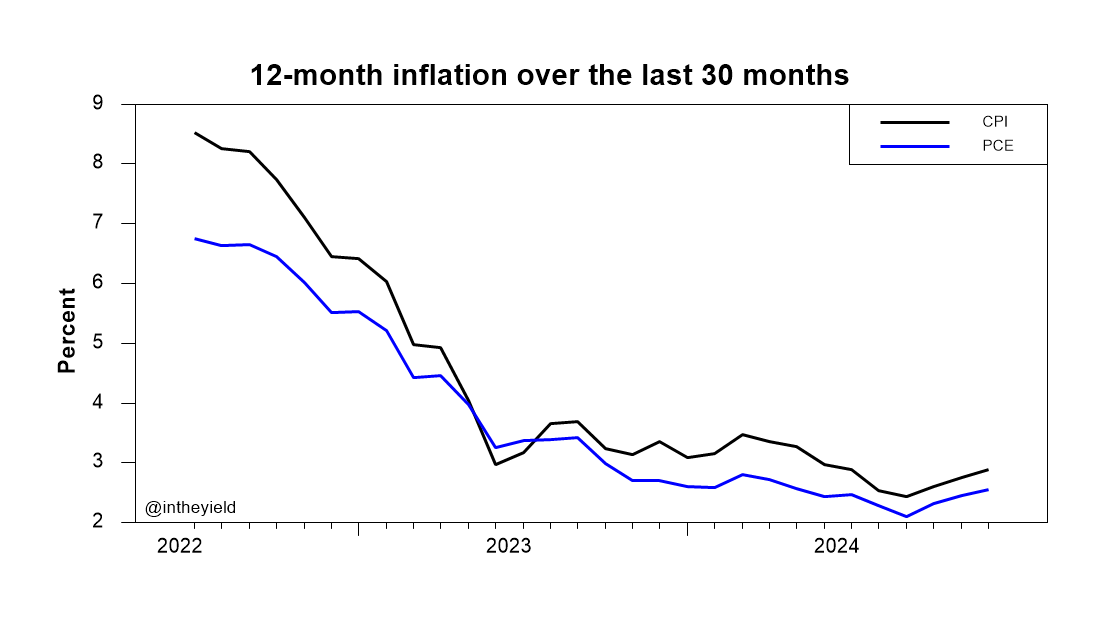
Headlines say December CPI is encouraging. Maybe because it's only going up slowly? Neutral seems like a better reading while we wait to see what's next.

Headlines say December CPI is encouraging. Maybe because it's only going up slowly? Neutral seems like a better reading while we wait to see what's next.
Arturo Estrella (@intheyield) 's Twitter Profile Photo

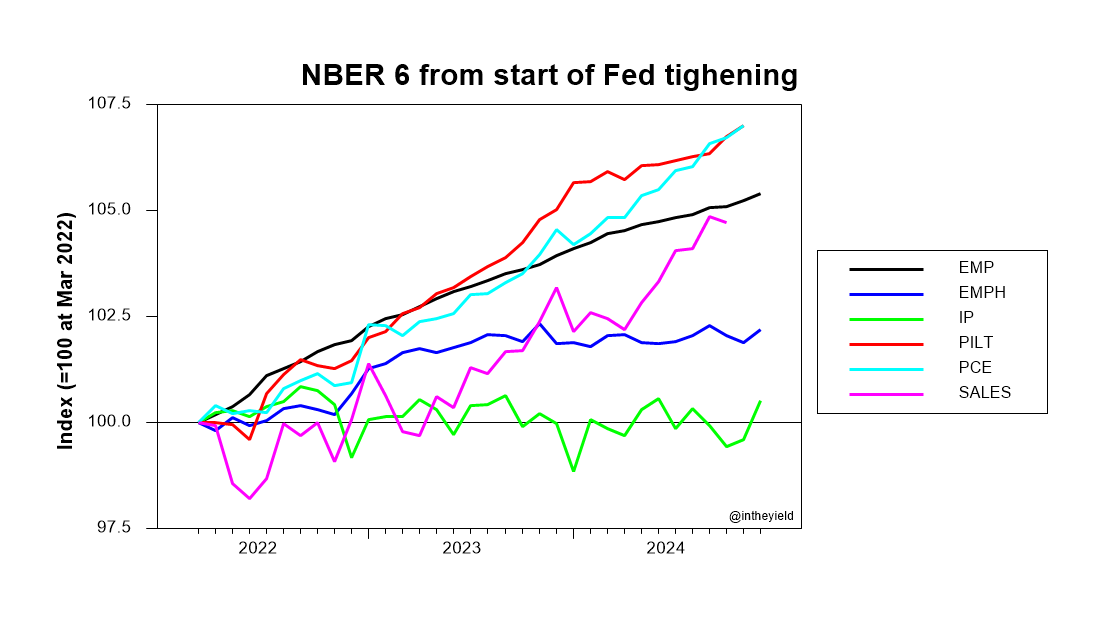
What did the most recent Fed tightening episode accomplish? Looking at the NBER 6 indicators, industrial production was paralyzed and employment (HH) was flattened, but the others mainly grew. How does this compare to previous tightenings? Let's see 1 by 1.

What did the most recent Fed tightening episode accomplish? Looking at the NBER 6 indicators, industrial production was paralyzed and employment (HH) was flattened, but the others mainly grew. How does this compare to previous tightenings? Let's see 1 by 1.
Arturo Estrella (@intheyield) 's Twitter Profile Photo

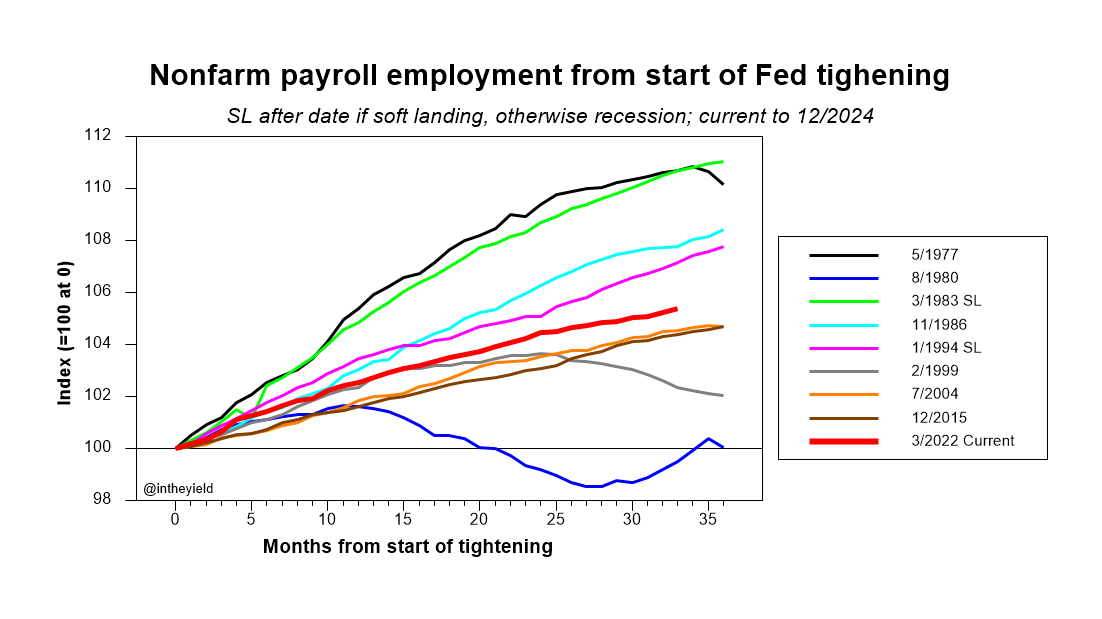
From the start of Fed tightening, employment (establishment) kept rising, but less than in 2 soft landings and 2 recessions since 1977.

From the start of Fed tightening, employment (establishment) kept rising, but less than in 2 soft landings and 2 recessions since 1977.
Arturo Estrella (@intheyield) 's Twitter Profile Photo

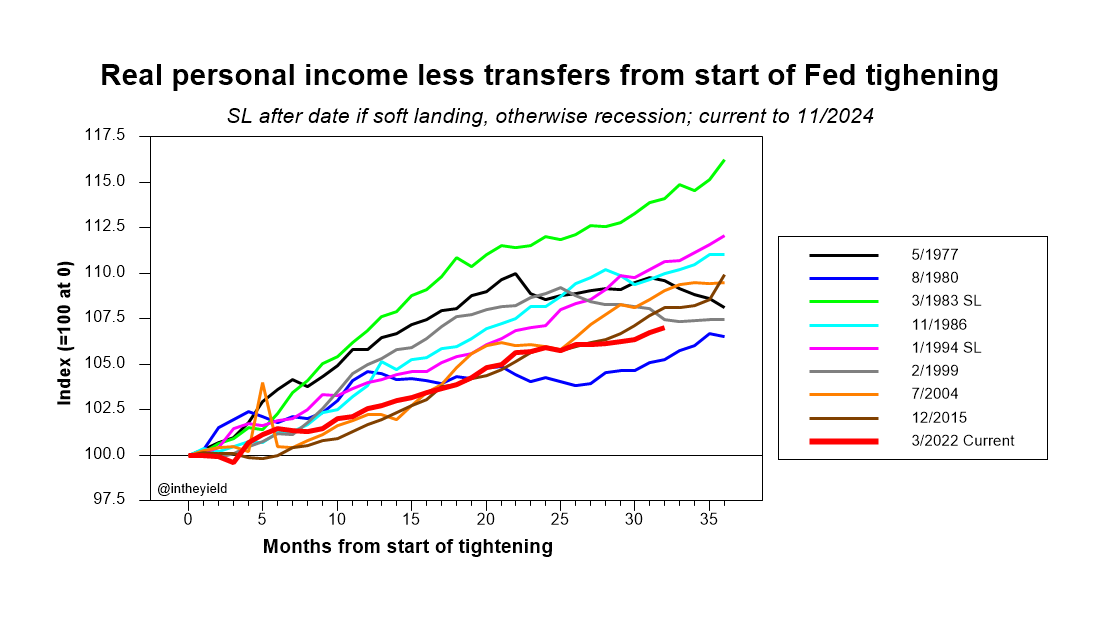
Personal income grew almost from the start of tightening, but the result so far is worse that in 2 soft landings and 5 of 6 recessions.

Personal income grew almost from the start of tightening, but the result so far is worse that in 2 soft landings and 5 of 6 recessions.
Arturo Estrella (@intheyield) 's Twitter Profile Photo

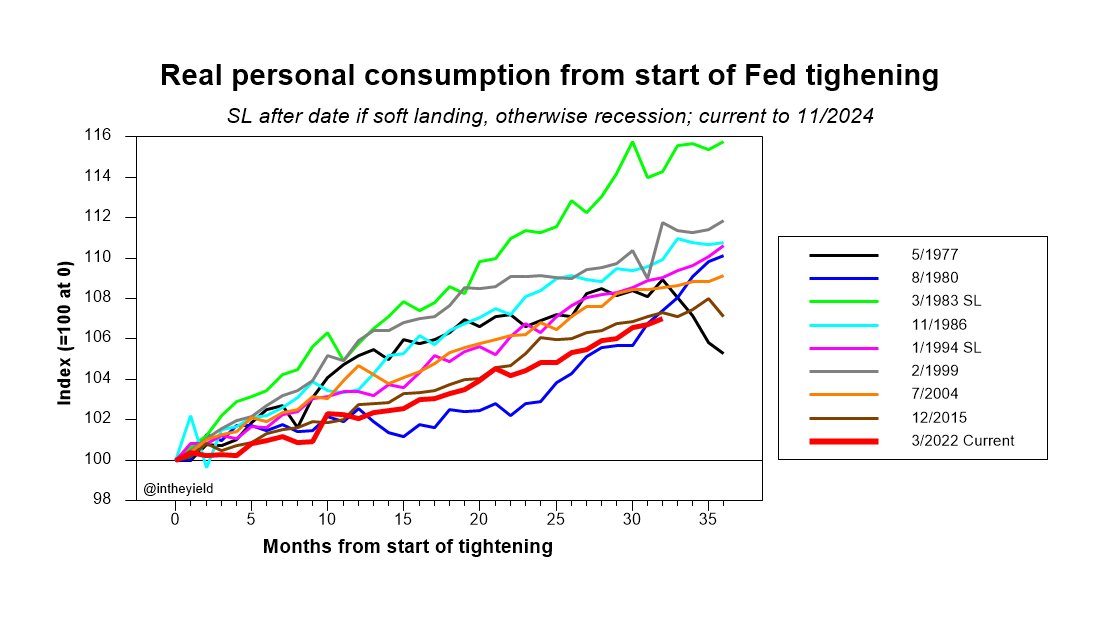
Personal consumption kept growing through the Fed tightening, but total growth so far is worse than in both soft landings and all 6 recessions.

Personal consumption kept growing through the Fed tightening, but total growth so far is worse than in both soft landings and all 6 recessions.
Arturo Estrella (@intheyield) 's Twitter Profile Photo

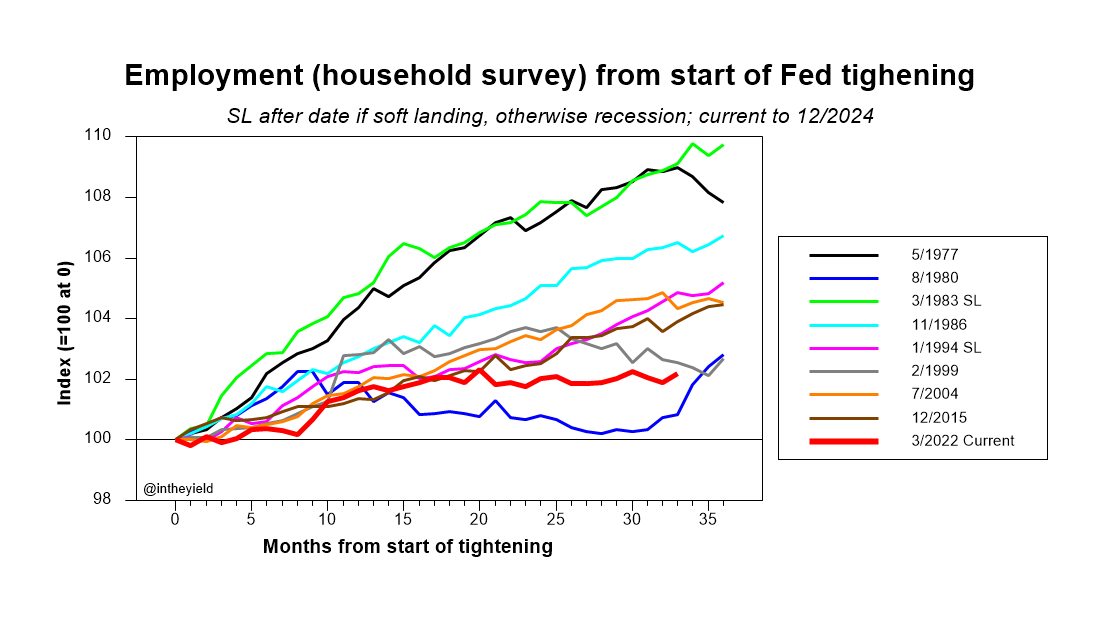
Employment from the household survey (no double counting) grew at first when Fed tightening started but then flattened out. At this point, it's worse than in the 2 soft landings and 5 of the 6 recessions in the sample.

Employment from the household survey (no double counting) grew at first when Fed tightening started but then flattened out. At this point, it's worse than in the 2 soft landings and 5 of the 6 recessions in the sample.
Arturo Estrella (@intheyield) 's Twitter Profile Photo

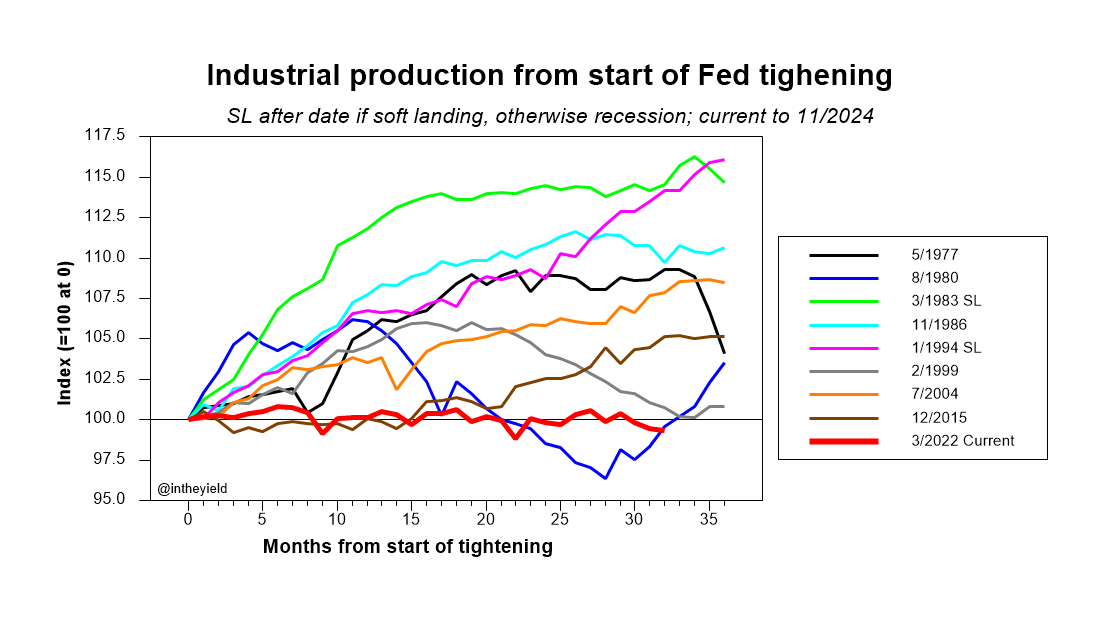
Industrial production clearly stalled from the start of Fed tightening. We all know the issues with "post hoc..." but this looks bad anyway. It's worse than in the 2 soft landings and all 6 recessions.

Industrial production clearly stalled from the start of Fed tightening. We all know the issues with "post hoc..." but this looks bad anyway. It's worse than in the 2 soft landings and all 6 recessions.
Arturo Estrella (@intheyield) 's Twitter Profile Photo

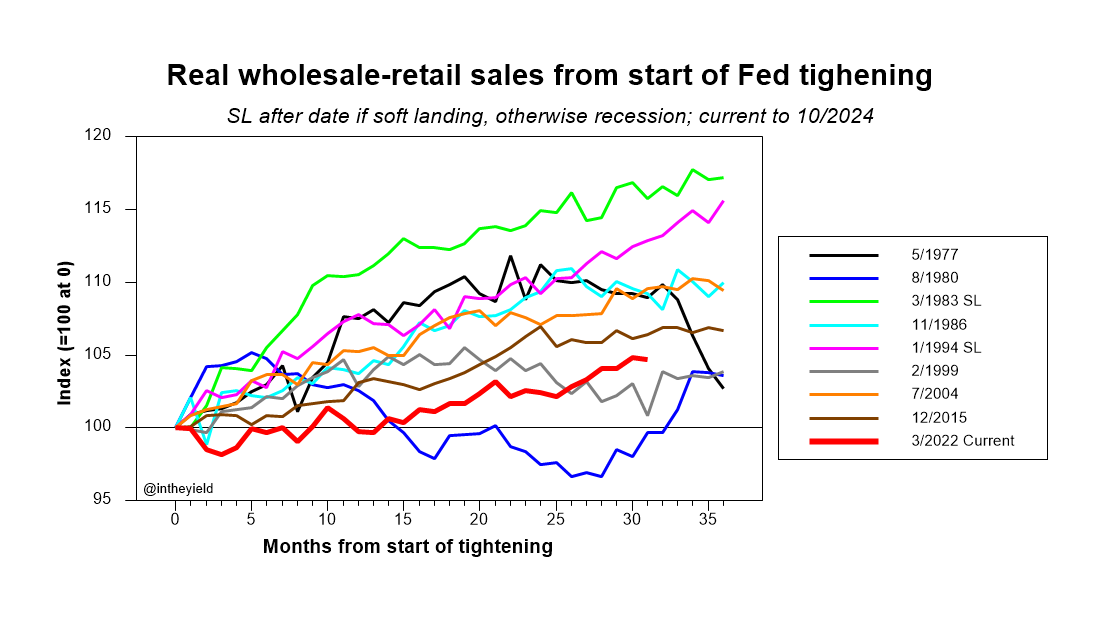
My previous 6 graphs show that Fed tightening that started Mar 2022 was followed by performance of the NBER 6 indicators that fell generally short of the prior 8 tightening episodes, 2 followed by soft landings and 6 by recession. No recession perhaps but not a model expansion.

Arturo Estrella (@intheyield) 's Twitter Profile Photo

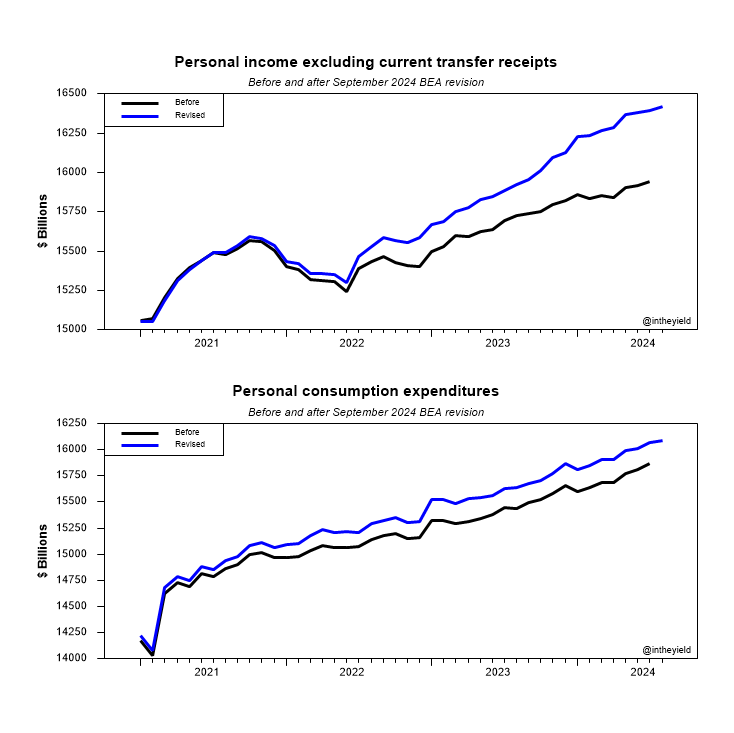
When did it become clear that the 2022 Fed tightening was unlikely to lead to a recession? Chances of recession tumbled on 9/27/2024 when the BEA revised some of the NBER 6 recession indicators retroactively. Rational forecasts were bound to change dramatically that day.

When did it become clear that the 2022 Fed tightening was unlikely to lead to a recession? Chances of recession tumbled on 9/27/2024 when the BEA revised some of the NBER 6 recession indicators retroactively. Rational forecasts were bound to change dramatically that day.
Arturo Estrella (@intheyield) 's Twitter Profile Photo

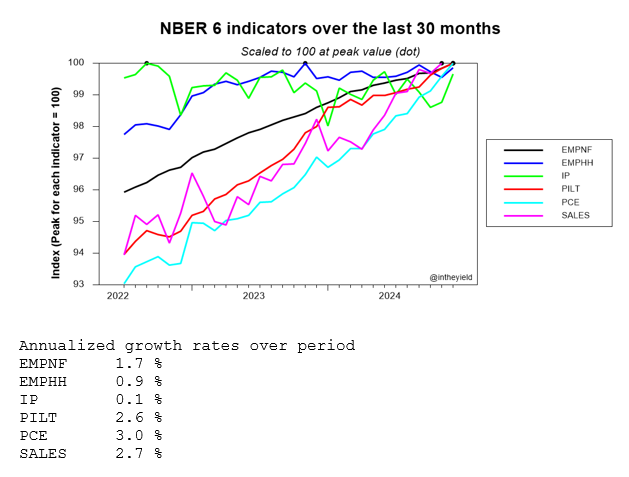
Worried about tariffs, inflation and recession? Here's a new way to track the NBER 6 recession indicators. Shows the last 30 months scaled to the peak of each series. Employment (household) and industrial production already look fragile. The rest look OK for now.

Worried about tariffs, inflation and recession? Here's a new way to track the NBER 6 recession indicators. Shows the last 30 months scaled to the peak of each series. Employment (household) and industrial production already look fragile. The rest look OK for now.
Arturo Estrella (@intheyield) 's Twitter Profile Photo

Employment increased in February by 151K as per the establishment survey, less than expected, and DECREASED by 588K as per the household survey. Quite frankly, it's getting harder to make sense of the monthly fluctuations and revisions in these numbers.

Arturo Estrella (@intheyield) 's Twitter Profile Photo

Q1 real GDP is down by .3%. Is this the recession the bond market had been predicting? Could be but seems like a stretch. Good forecasts depend on good data and manageable uncertainty and we haven't had much of either in recent times.