Hiro Eto
@hiromuneeto
Postdoc in Sonnen Lab (@_Hubrecht Institute). Organoids + Microfab enthusiast. Alumni: Schwille Lab @MPI_Biochem
ID: 1110957551259213829
27-03-2019 17:31:35
28 Tweet
138 Takipçi
317 Takip Edilen

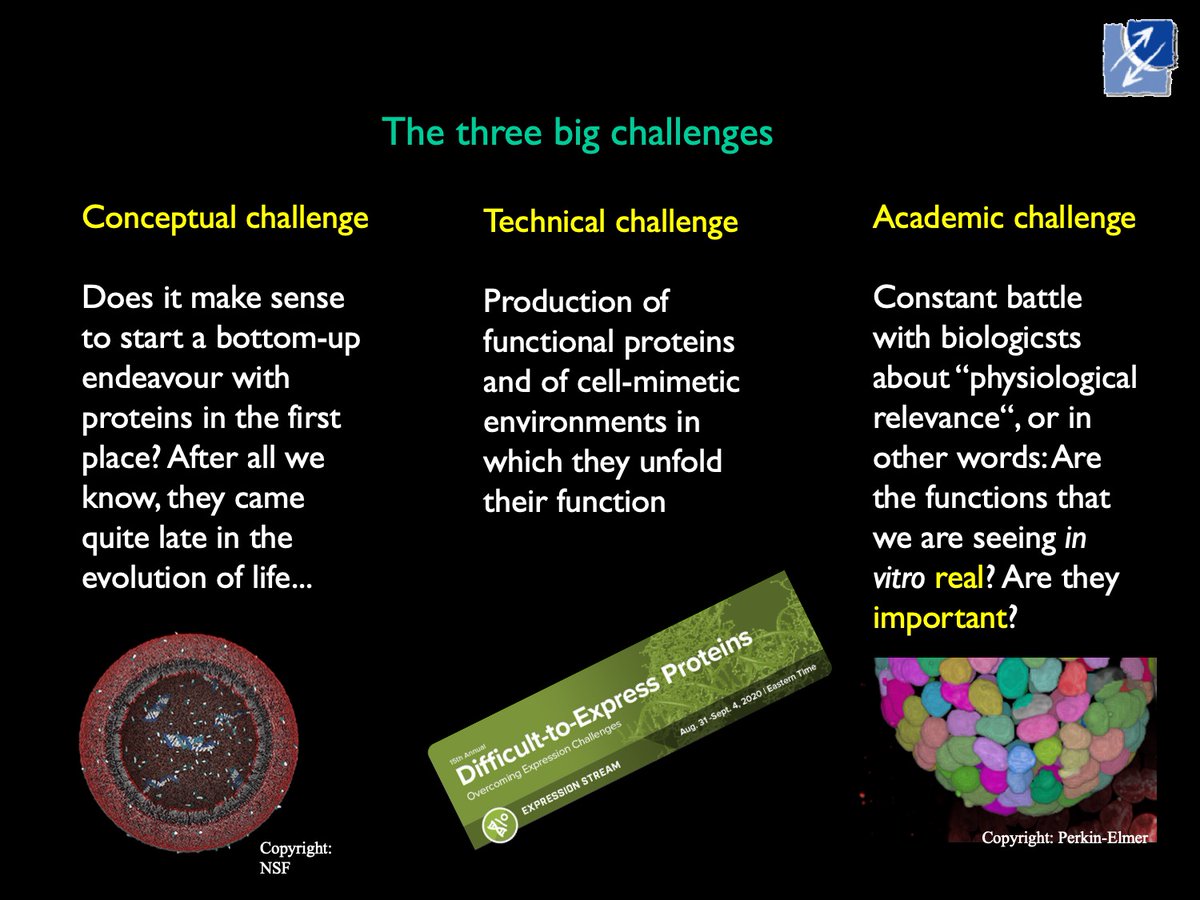
Ironically, the closer we get to building a living cell, the less we are able to understand it. Researchers worldwide discussed the promises of bottom-up #synbio during a Lorentz Center virtual workshop: syntheticcell.eu/2020/07/16/cha… #syntheticcell

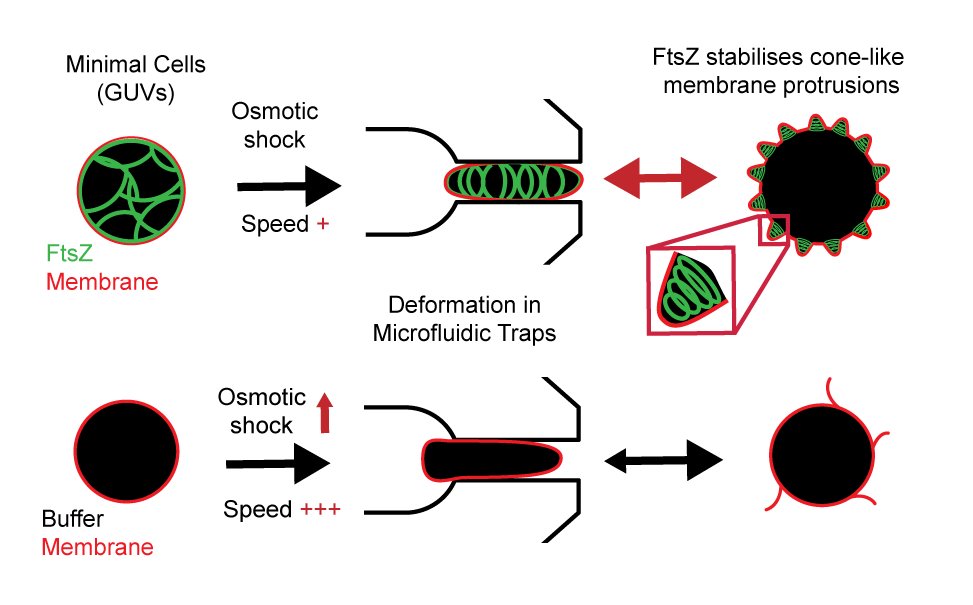
The Schwille lab developed a microfluidic chip to trap and reversibly deform lipid vesicle into elongated shapes. Read more about "FtsZ reorganisation facilitates deformation of giant vesicles in microfluidic traps" Angewandte Chemie ➡️doi.org/10.1002/anie.2…
Reversible #membrane deformations by straight DNA origami filaments. Great back cover by Henri G. Franquelim from the Schwille lab👏🏻
An exciting collaboration led by Leon Harrington of the Schwille Lab Max Planck Institute of Biochemistry (MPIB) and the WoolfsonLab at the University of Bristol report new synthetic biology tools for reversible, phosphorylation-dependent membrane targeting. Out today Nature Communications ➡️nature.com/articles/s4146…

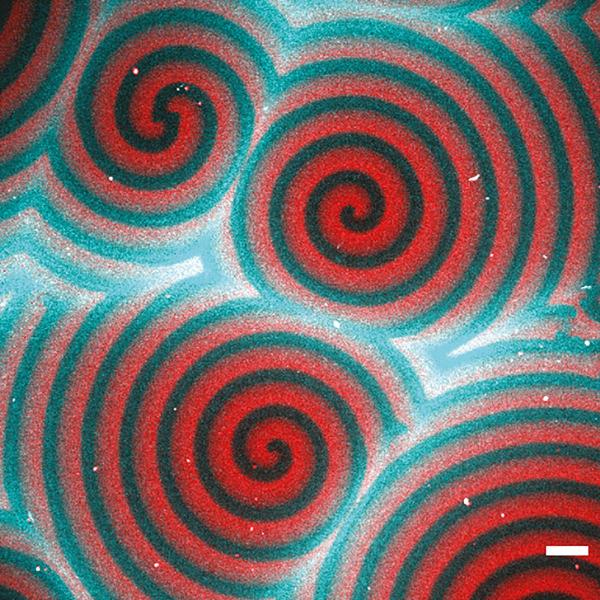
We are thrilled that our paper with the Schwille lab is now online in Nature Physics rdcu.be/ch6JR. Below is a brief summary of this joint experimental and theoretical work by the two first authors Beatrice Ramm and Andriy Goychuk 👇

It was a fantastic collaboration between the Schwille Lab at Max Planck Institute of Biochemistry (MPIB) and the Frey group PhysicsOfLifeLMU with Andriy Goychuk, Alena Khmelinskaia, Hiro Eto, Ganzinger Lab and Philipp Blumhardt. Please also check out the great News& Views article nature.com/articles/s4156… by (2/n)
Read the latest paper from the Schwille-Lab Max Planck Institute of Biochemistry (MPIB) and the Frey-Group Universität München: “A diffusiophoretic mechanism for ATP-driven transport without motor proteins” Beatrice Ramm Andriy Goychuk PhysicsOfLifeLMU ➡️dx.doi.org/10.1038/s41567… ➡️biochem.mpg.de/a-novel-form-o…
In their new paper in Nature Communications, the Schwille lab encapsulated cytoskeletal proteins inside synthetic lipid vesicles and aimed to imitate the contracting actomyosin rings that are central to eukaryotic cell division. Thomas Litschel ➡️nature.com/articles/s4146…

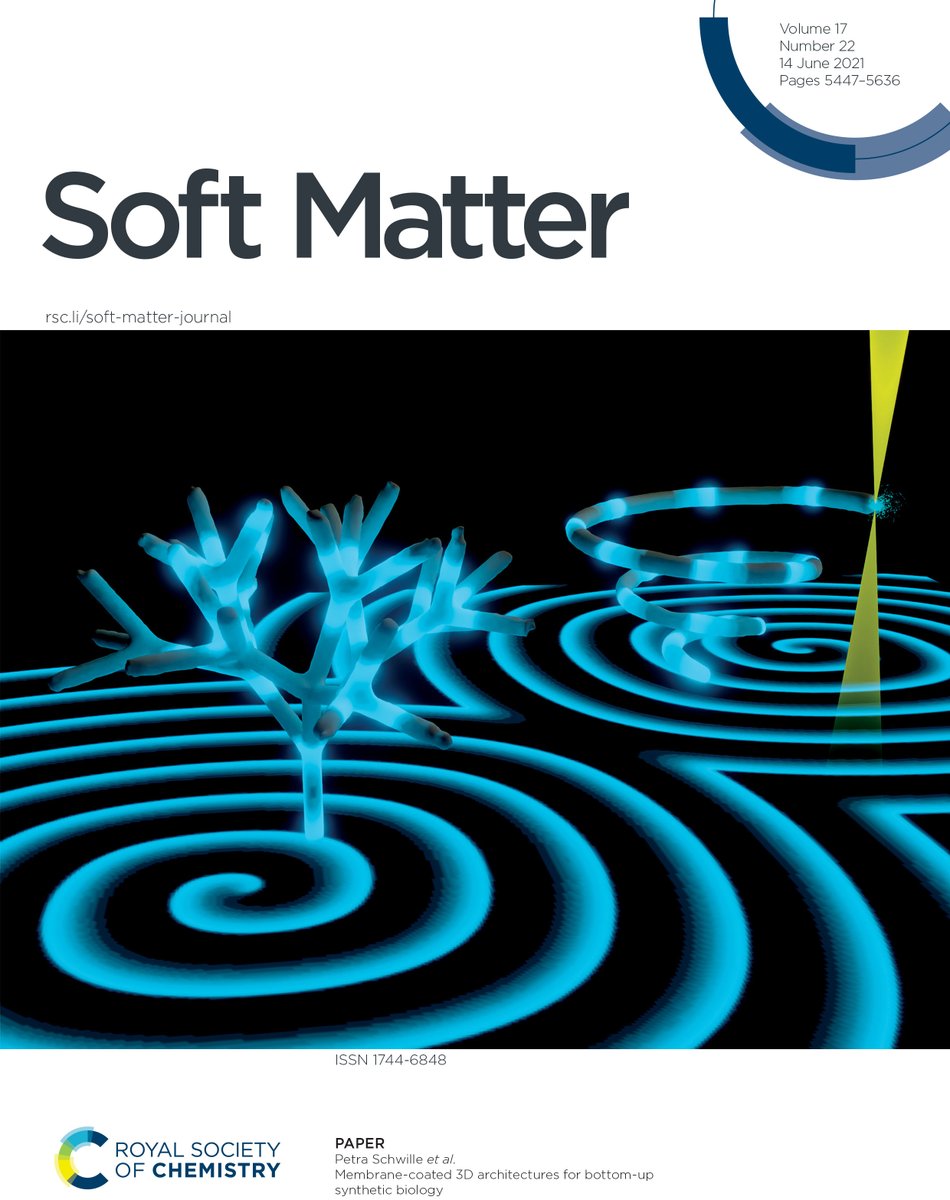
Excited that we won the Center for NanoScience LMU publication award in the category "best interdisciplinary publication" for our paper on diffusiophoretic transport on membranes! 🎉 Andriy Goychuk PhysicsOfLifeLMU Khmelinskaia Lab Ganzinger Lab Hiro Eto nature.com/articles/s4156…
It was fun discussing with Claudia Janda how the biochemical properties of signalling pathways influence their signalling dynamics. We particularly focus on Wnt, Notch and Erk signalling, pathways that show dynamics in various systems: portlandpress.com/biochemj/artic…
Very proud & happy 🎉 to present the preprint of my student Christian Niederauer on repurposing DNA-PAINT for extending single-particle trajectory lengths for protein-protein interaction studies & live cell measurements 👇 biorxiv.org/content/10.110…

Bacterial Min proteins are shown to be a valuable molecular toolkit for spatially patterned functionalization of artificial biosystems like these microswimmers and vesicles. Max Planck Institute of Biochemistry (MPIB) Hubrecht Institute CSIC Read more 📖 ow.ly/3QuB50OZsk9