

Aditya Singh (@gafnys) 's Twitter Profile
Aditya Singh

@gafnys

Chemistry PhD Candidate, UC Berkeley

ID: 140638011

calendar_today06-05-2010 01:34:22

12 Tweet

84 Takipçi

151 Takip Edilen
limmerlab (@limmerlab) 's Twitter Profile Photo

Inspired to see Avishek's Avishek Das latest out in PNASNews today, in which he describes how to design functional materials that operate far from equilibrium- leveraging broken detailed balance to bypass eq. constraints College of Chemistry Kavli Energy NanoScience Institute (ENSI) pnas.org/doi/10.1073/pn…
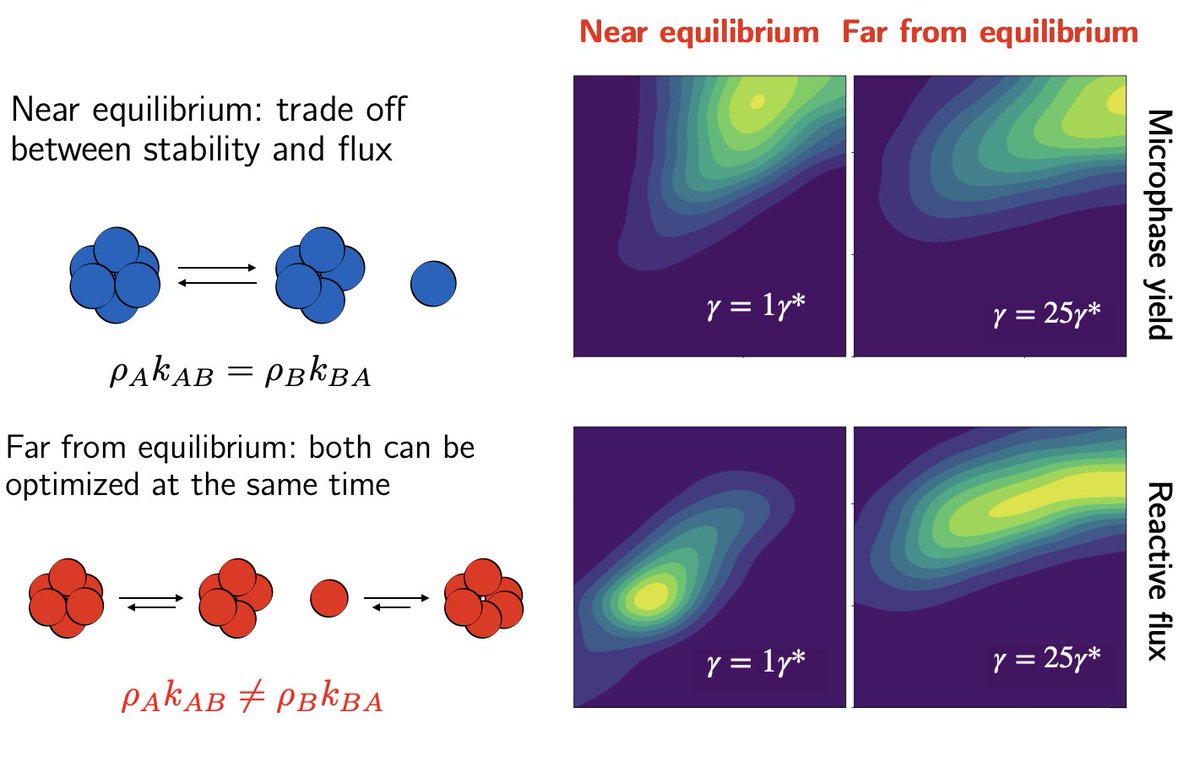
Inspired to see Avishek's <a href="/pleplostelous/">Avishek Das</a> latest out in <a href="/PNASNews/">PNASNews</a> today, in which he describes how to design functional materials that operate far from equilibrium- leveraging broken detailed balance to bypass eq. constraints <a href="/UCB_Chemistry/">College of Chemistry</a> <a href="/KavliENSI/">Kavli Energy NanoScience Institute (ENSI)</a>  pnas.org/doi/10.1073/pn…
limmerlab (@limmerlab) 's Twitter Profile Photo

In molecular simulations, one often tries to add a force to a system to speed up a rare event. Nearly always their addition obscures the dynamics by which the event would occur naturally. In Aditya’s Aditya Singh arXiv post he solves this problem arxiv.org/abs/2402.05414
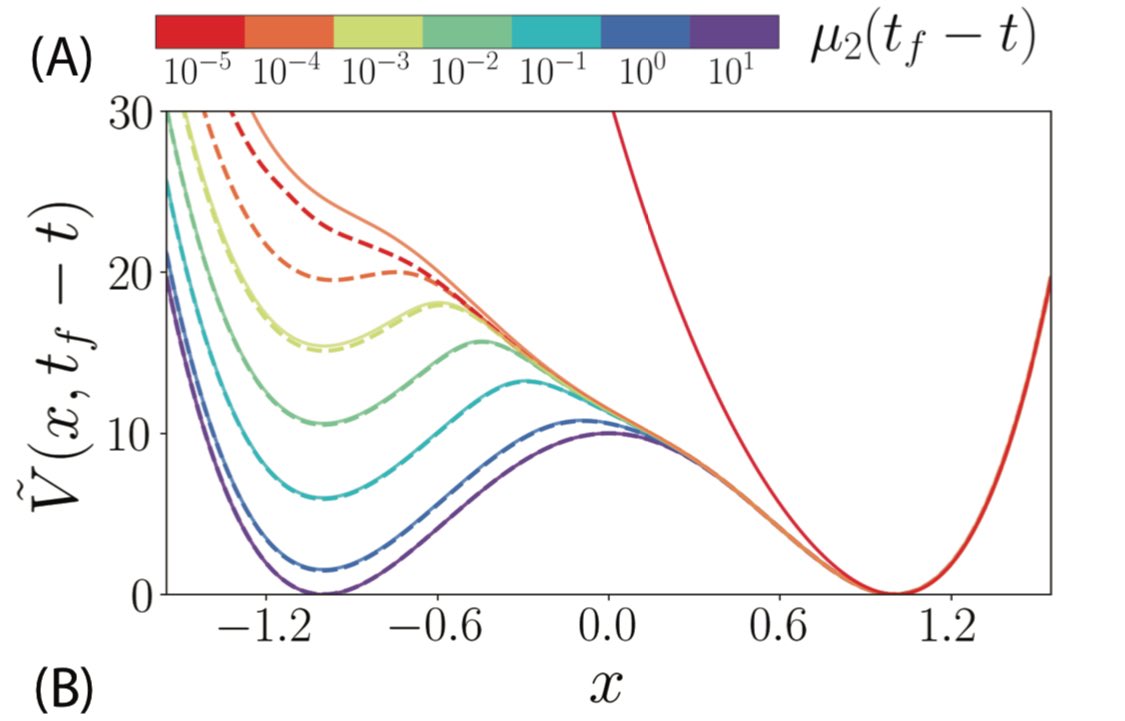
In molecular simulations, one often tries to add a force to a system to speed up a rare event. Nearly always their addition obscures the dynamics by which the event would occur naturally. In Aditya’s <a href="/gafnys/">Aditya Singh</a> arXiv post he solves this problem arxiv.org/abs/2402.05414
limmerlab (@limmerlab) 's Twitter Profile Photo

Excited to see Eric's Eric Heller preprint in which he has devised a way to calculate rates in nonequilibrium systems by extending instanton theory away from equilibrium. Check out how an active field theory nucleates a stable phase below arxiv.org/abs/2403.18794 College of Chemistry

limmerlab (@limmerlab) 's Twitter Profile Photo

Very proud of this one, Leonardo's first in the group, in which he deduces the microscopic origin of the observations from the Kwabena Bediako group that electron transfer is enhanced at the magic angle of twisted bilayer graphene arxiv.org/abs/2405.00783 College of Chemistry Kavli Energy NanoScience Institute (ENSI)

Very proud of this one, Leonardo's first in the group, in which he deduces the microscopic origin of the observations from the <a href="/DKBediako/">Kwabena Bediako</a> group that electron transfer is enhanced at the magic angle of twisted bilayer graphene arxiv.org/abs/2405.00783 <a href="/UCB_Chemistry/">College of Chemistry</a> <a href="/KavliENSI/">Kavli Energy NanoScience Institute (ENSI)</a>
limmerlab (@limmerlab) 's Twitter Profile Photo

Students of chemical physics, soft matter, biophysics, or anyone interested in understanding the visible world through a lens of its molecular constituents should check out Statistical Mechanics and Stochastic Thermodynamics, available for preorder amazon.co.uk/Statistical-Me…

limmerlab (@limmerlab) 's Twitter Profile Photo

Check out Jorge's latest, first in the group, in which he develops what we call variational time reversal, a formalism and algorithm to compute distributions of collective variables in nonequilibrium steady-states and active matter arxiv.org/abs/2406.01582 College of Chemistry U.S. National Science Foundation

Check out Jorge's latest, first in the group, in which he develops what we call variational time reversal, a formalism and algorithm to compute distributions of collective variables in nonequilibrium steady-states and active matter arxiv.org/abs/2406.01582 <a href="/UCB_Chemistry/">College of Chemistry</a> <a href="/NSF/">U.S. National Science Foundation</a>
limmerlab (@limmerlab) 's Twitter Profile Photo

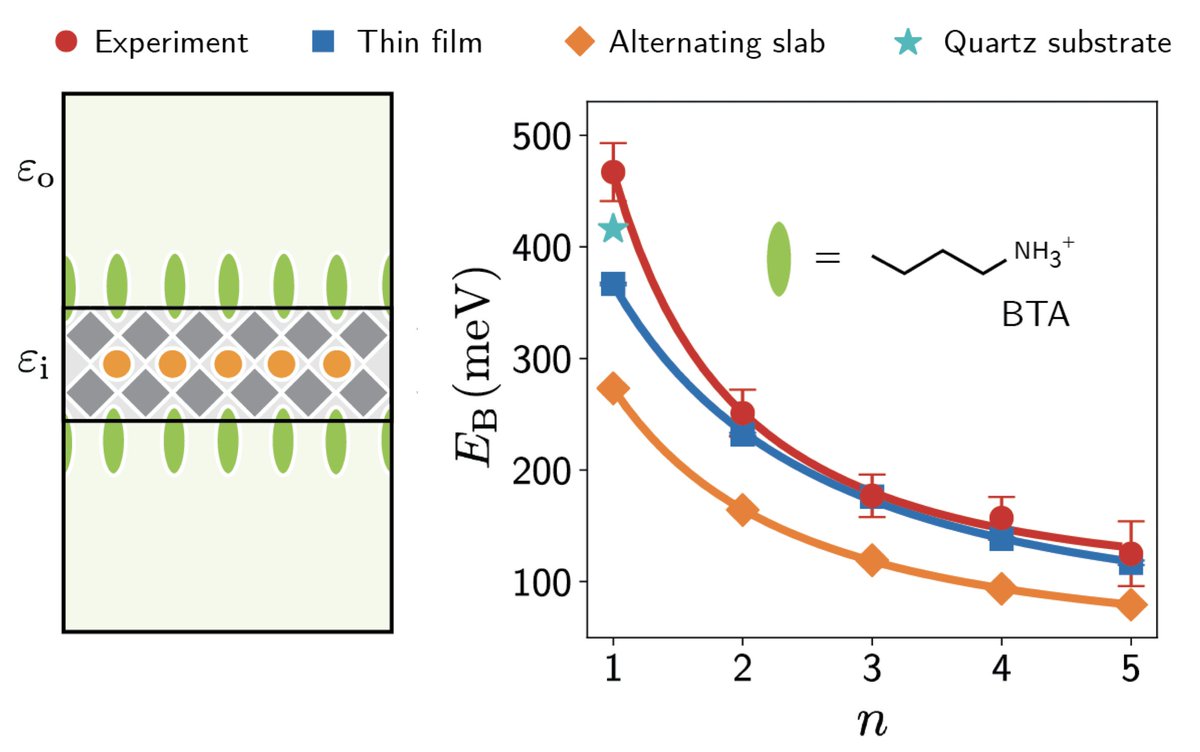
Big day today, Rohit's first group paper is up on the arXiv! In it he shows how the polaron formation renormalizes exciton binding energies in two-dimensional perovskites, including extending Feynman's variational framework in 2d arxiv.org/abs/2407.08173

Big day today, Rohit's first group paper is up on the arXiv! In it he shows how the polaron formation renormalizes exciton binding energies in two-dimensional perovskites, including extending Feynman's variational framework in 2d arxiv.org/abs/2407.08173
limmerlab (@limmerlab) 's Twitter Profile Photo

When is DNA like an asymmetric top? Check out Ashesh Ghosh's study on the twisted worm-like chain, a good model for DNA mechanics, whose Green's function is solved in a basis of Wigner D-functions, the eigenfunctions of the asymmetric top arxiv.org/abs/2408.08954 College of Chemistry
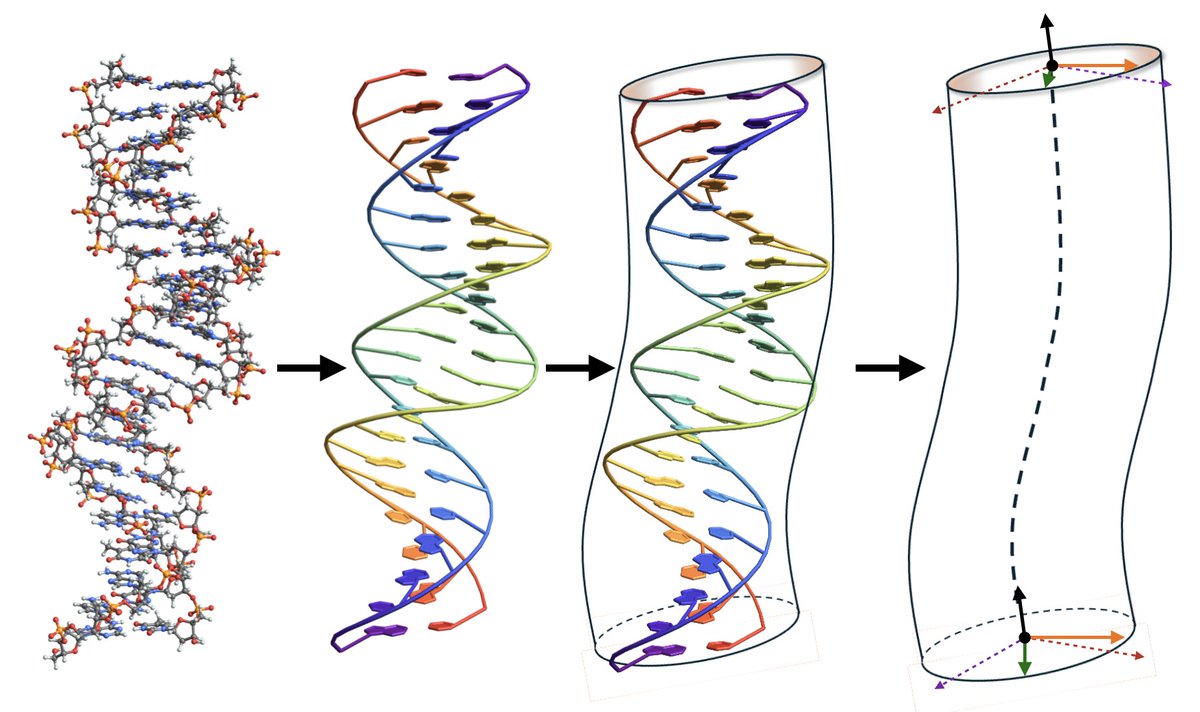
When is DNA like an asymmetric top? Check out <a href="/AsheshGhosh1/">Ashesh Ghosh</a>'s study on the twisted worm-like chain, a good model for DNA mechanics, whose Green's function is solved in a basis of Wigner D-functions, the eigenfunctions of the asymmetric top arxiv.org/abs/2408.08954 <a href="/UCB_Chemistry/">College of Chemistry</a>
Vaikuntanathan Lab (@suri_lab) 's Twitter Profile Photo

Very happy to share new work by Cal (w Aaron and Arvind Murugan )  arxiv.org/abs/2409.05827 ! We show how the expressivity/computational ability of non-equilibrium biological processes may expected to be fundamentally limited.