Yann Vander Meersche (@yann_vander) 's Twitter Profile
Yann Vander Meersche

@yann_vander

Computational Structural Biologist - WhiteLab Genomics

ID: 1362411010141863938

calendar_today18-02-2021 14:38:02

65 Tweet

85 Followers

282 Following
Biology+AI Daily (@biologyaidaily) 's Twitter Profile Photo

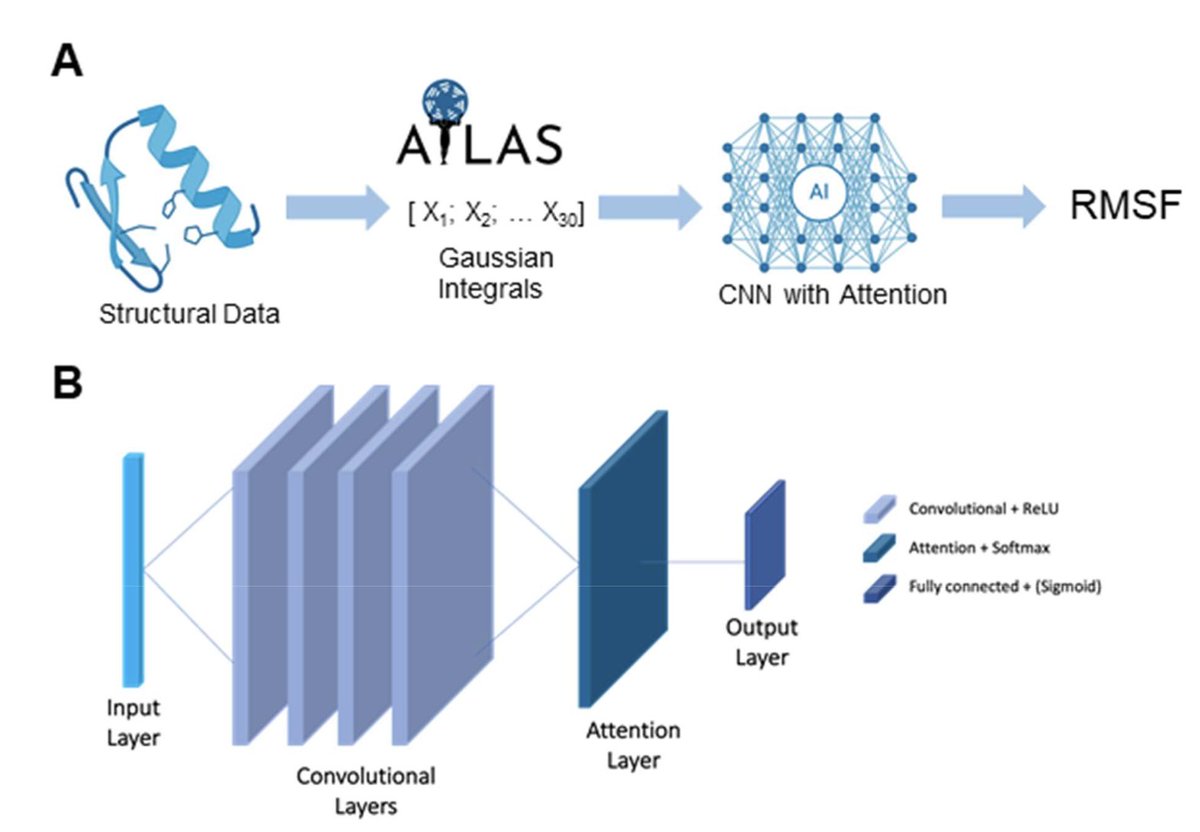
Inferring Dynamic Information from Protein Structures by Gaussian Integrals and Deep Learning 1. This study introduces a novel deep learning framework that predicts protein flexibility directly from static structural descriptors, bypassing the need for computationally intensive

Inferring Dynamic Information from Protein Structures by Gaussian Integrals and Deep Learning

1. This study introduces a novel deep learning framework that predicts protein flexibility directly from static structural descriptors, bypassing the need for computationally intensive
Hannes Stärk (@hannesstaerk) 's Twitter Profile Photo

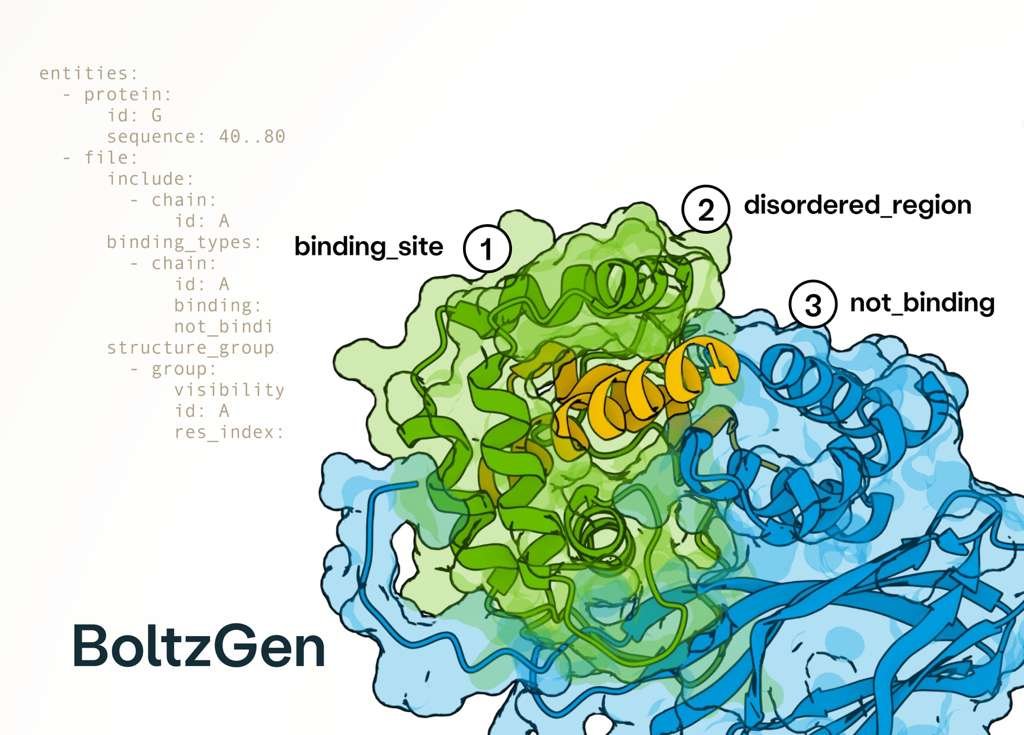
Excited to release BoltzGen which brings SOTA folding performance to binder design! The best part of this project has been collaborating with many leading biologists who tested BoltzGen at an unprecedented scale, showing success on many novel targets and pushing its limits! 🧵..

Excited to release BoltzGen which brings SOTA folding performance to binder design! The best part of this project has been collaborating with many leading biologists who tested BoltzGen at an unprecedented scale, showing success on many novel targets and pushing its limits! 🧵..
Biology+AI Daily (@biologyaidaily) 's Twitter Profile Photo

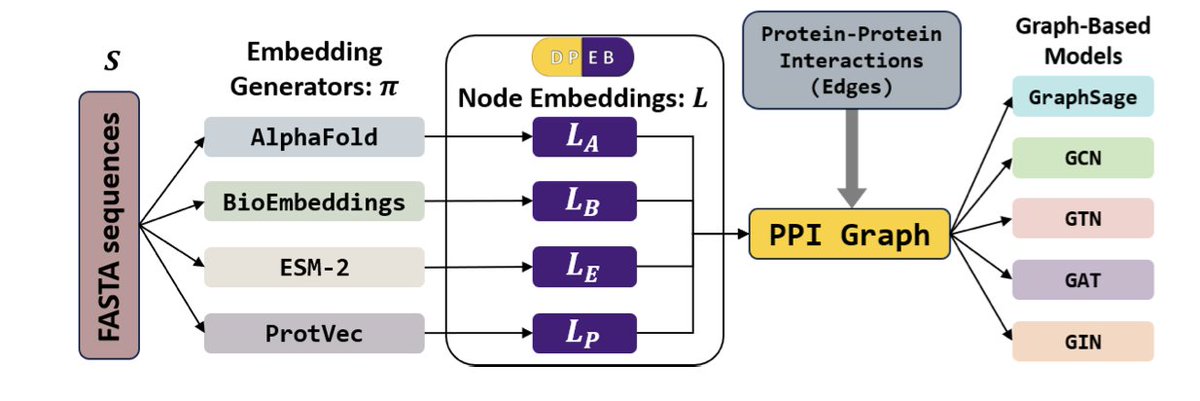
A Multimodal Human Protein Embeddings Database: DeepDrug Protein Embeddings Bank (DPEB) 1. DPEB is a novel database that integrates 22,043 human proteins with four types of embeddings: structural (AlphaFold2), transformer-based sequence (BioEmbeddings), contextual amino acid

A Multimodal Human Protein Embeddings Database: DeepDrug Protein Embeddings Bank (DPEB)

1. DPEB is a novel database that integrates 22,043 human proteins with four types of embeddings: structural (AlphaFold2), transformer-based sequence (BioEmbeddings), contextual amino acid
Leo Zang (@leotz03) 's Twitter Profile Photo

ODesign: A World Model for Biomolecular Interaction Design | Odin Zhang et al. - "ODesign allows scientists to specify epitopes on arbitrary targets and generate diverse classes of binding partners with fine-grained control. Across entity-, token-, and atom-level benchmarks in

Deniz Kavi (@kavi_deniz) 's Twitter Profile Photo

OpenFold3 is finally out! New fully open-source AF3 reproduction from openfold Consortium Try it out on Tamarind Bio now! The model is released with training code, similar performance to AlphaFold3 on protein-ligand complexes, best performance ever for RNA structure

Biology+AI Daily (@biologyaidaily) 's Twitter Profile Photo

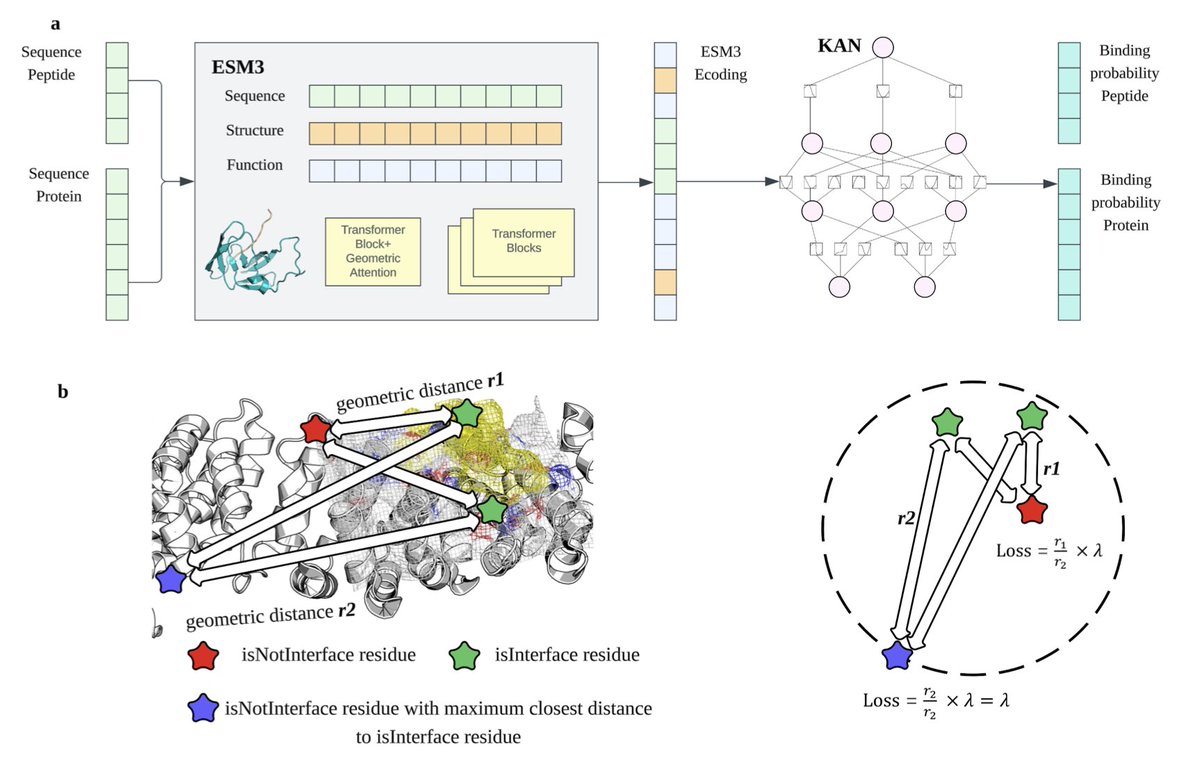
GeoPep: A geometry-aware masked language model for protein-peptide binding site prediction 1. GeoPep introduces a novel framework for predicting peptide binding sites on proteins by leveraging transfer learning from ESM3, a multimodal protein foundation model. This approach

GeoPep: A geometry-aware masked language model for protein-peptide binding site prediction  

1. GeoPep introduces a novel framework for predicting peptide binding sites on proteins by leveraging transfer learning from ESM3, a multimodal protein foundation model. This approach
Profluent (@profluentbio) 's Twitter Profile Photo

Protein language models just got an upgrade. Meet Profluent-E1: a free, flexible, frontier protein sequence encoder. E1 is built with retrieval augmentation to learn from multiple sequences. Models trained over 4T tokens with only 150M-600M params, E1 is SOTA for zero-shot

Biology+AI Daily (@biologyaidaily) 's Twitter Profile Photo

Peptide2Mol: A Diffusion Model for Generating Small Molecules as Peptide Mimics for Targeted Protein Binding 1. Peptide2Mol introduces a novel approach to generate small molecules that mimic peptide binders, leveraging an E(3)-equivariant graph neural network diffusion model.

Peptide2Mol: A Diffusion Model for Generating Small Molecules as Peptide Mimics for Targeted Protein Binding  

1. Peptide2Mol introduces a novel approach to generate small molecules that mimic peptide binders, leveraging an E(3)-equivariant graph neural network diffusion model.
Nabla Bio (@nablabio) 's Twitter Profile Photo

Today we’re thrilled to announce JAM-2 — the first AI model capable of generating drug-quality antibodies straight from the computer, with industry-leading success rates. > Drug-like affinities: Picomolar to single-digit nanomolar antibody binders for half of 26 targets while

Biology+AI Daily (@biologyaidaily) 's Twitter Profile Photo

PepTriX: A Framework for Explainable Peptide Analysis through Protein Language Models 1. PepTriX introduces a novel approach to peptide classification by integrating one-dimensional sequence embeddings and three-dimensional structural features. This integration is achieved via

PepTriX: A Framework for Explainable Peptide Analysis through Protein Language Models  

1. PepTriX introduces a novel approach to peptide classification by integrating one-dimensional sequence embeddings and three-dimensional structural features. This integration is achieved via
Biology+AI Daily (@biologyaidaily) 's Twitter Profile Photo

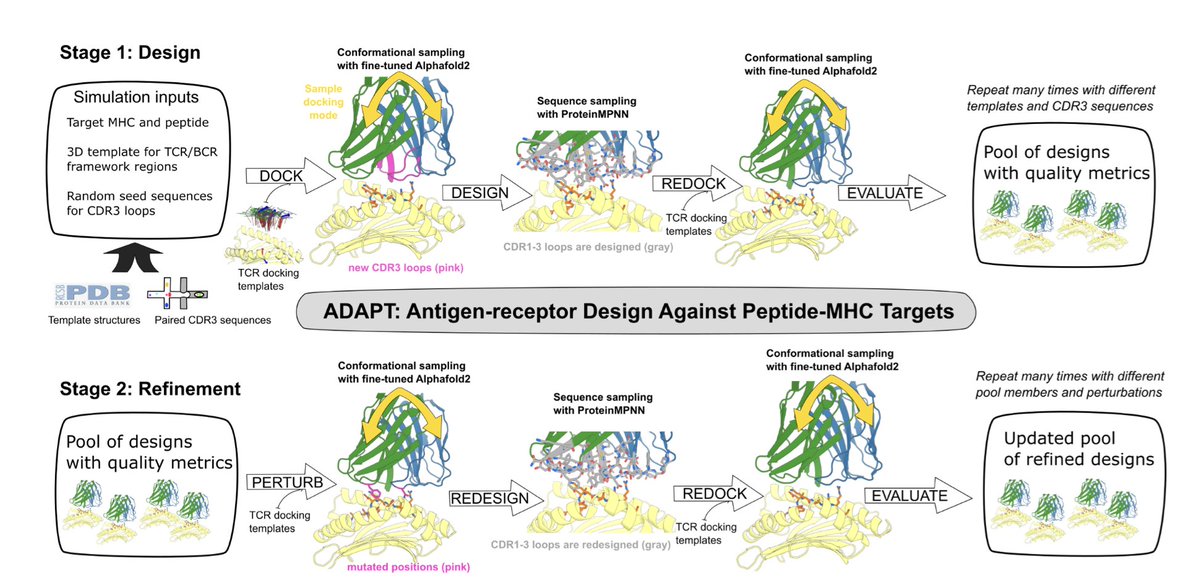
Targeting peptide–MHC complexes with designed T cell receptors and antibodies 🚀 New preprint from David Baker!🚀 1. Researchers have developed a novel deep learning framework named ADAPT to design T cell receptors (TCRs) and antibodies that specifically bind to peptide–MHC

Targeting peptide–MHC complexes with designed T cell receptors and antibodies  

🚀 New preprint from David Baker!🚀

1. Researchers have developed a novel deep learning framework named ADAPT to design T cell receptors (TCRs) and antibodies that specifically bind to peptide–MHC
GAMA Miguel Angel 🐦‍⬛🔑 (@miangoar) 's Twitter Profile Photo

fajie yuan Chaitanya K. Joshi As with metagenomic seqs, one issue is that they used the standard genetic code to translate the contigs. With common clustering protocols the dset could perhaps be improved, or even by considering filters like ProTrek-scores or pLDDT_Predictor github.com/jw-chae/pLDDT_…

Biology+AI Daily (@biologyaidaily) 's Twitter Profile Photo

Rewriting Protein Alphabets with Language Models 1. A groundbreaking study introduces TEA (The Embedded Alphabet), a novel 20-letter alphabet derived from protein language models, enabling highly efficient large-scale protein homology searches. This method achieves sensitivity

Rewriting Protein Alphabets with Language Models  

1. A groundbreaking study introduces TEA (The Embedded Alphabet), a novel 20-letter alphabet derived from protein language models, enabling highly efficient large-scale protein homology searches. This method achieves sensitivity
Biology+AI Daily (@biologyaidaily) 's Twitter Profile Photo

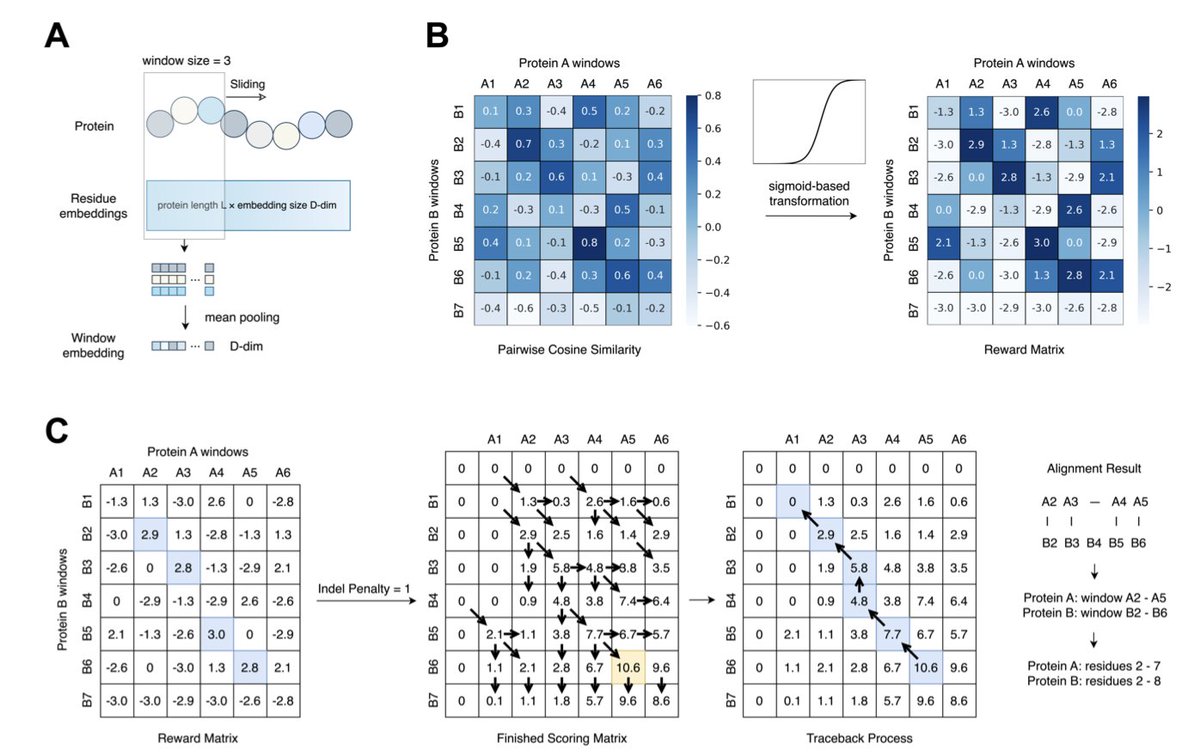
Inferring Local Protein Structural Similarity from Sequence Alone 1. A groundbreaking study by researchers at UC San Diego demonstrates that protein language models (pLMs) can detect local structural similarities in proteins using only sequence data. This approach bypasses the

Inferring Local Protein Structural Similarity from Sequence Alone  

1. A groundbreaking study by researchers at UC San Diego demonstrates that protein language models (pLMs) can detect local structural similarities in proteins using only sequence data. This approach bypasses the
Biology+AI Daily (@biologyaidaily) 's Twitter Profile Photo

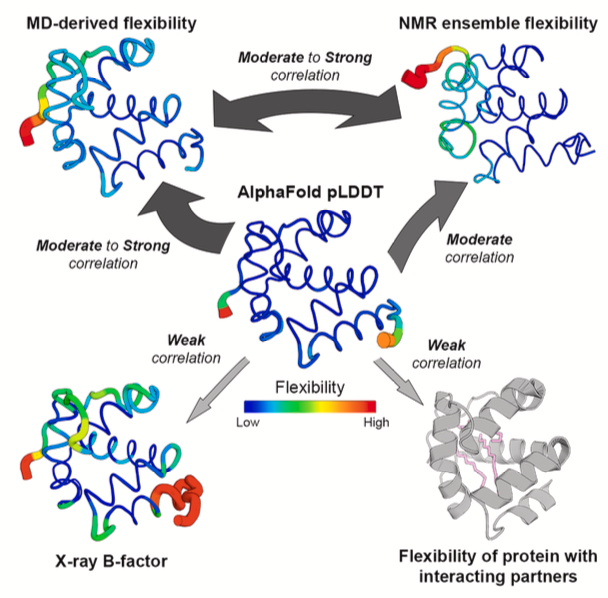
Structure Flexibility or Uncertainty? A Critical Assessment of AlphaFold 2 pLDDT 1. A comprehensive study by Vander Meersche et al. evaluates the relationship between AlphaFold 2 and 3's pLDDT scores and protein flexibility metrics derived from molecular dynamics (MD)

Structure Flexibility or Uncertainty? A Critical Assessment of AlphaFold 2 pLDDT

1. A comprehensive study by Vander Meersche et al. evaluates the relationship between AlphaFold 2 and 3's pLDDT scores and protein flexibility metrics derived from molecular dynamics (MD)
Biology+AI Daily (@biologyaidaily) 's Twitter Profile Photo

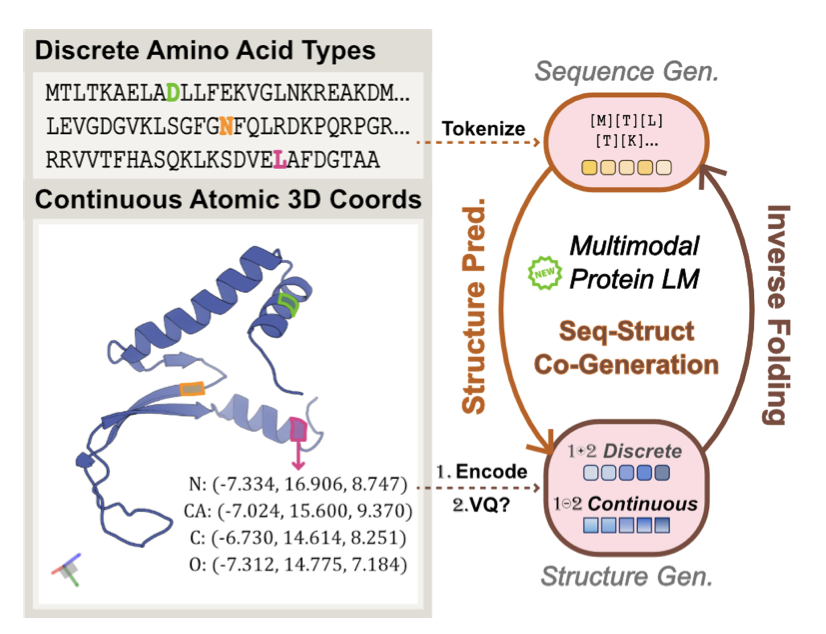
HD-Prot: A Protein Language Model for Joint Sequence-Structure Modeling with Continuous Structure Tokens 1. HD-Prot proposes a novel hybrid diffusion framework that integrates continuous structure tokens into protein language models (pLMs), effectively bridging the gap between

HD-Prot: A Protein Language Model for Joint Sequence-Structure Modeling with Continuous Structure Tokens  

1. HD-Prot proposes a novel hybrid diffusion framework that integrates continuous structure tokens into protein language models (pLMs), effectively bridging the gap between