Scott Enderle (@scottenderle) 's Twitter Profile
Scott Enderle

@scottenderle

DH at Penn Libraries. Increasingly stealthy. He/him, opinions mine, everything's a bookmark.

ID: 61625084

linkhttp://lagado.name calendar_today30-07-2009 23:01:10

5,5K Tweet

637 Followers

517 Following

Guy Shrubsole (@guyshrubsole) 's Twitter Profile Photo

Few people realise that this country has fragments of a globally rare habitat: temperate rainforest. Can you help me map the lost rainforests of England? 👇A brief thread about my new side-project: lostrainforestsofengland.org

Few people realise that this country has fragments of a globally rare habitat: temperate rainforest.

Can you help me map the lost rainforests of England?

👇A brief thread about my new side-project: lostrainforestsofengland.org
Ryan Heuser / @heuser.bsky (@quadrismegistus) 's Twitter Profile Photo

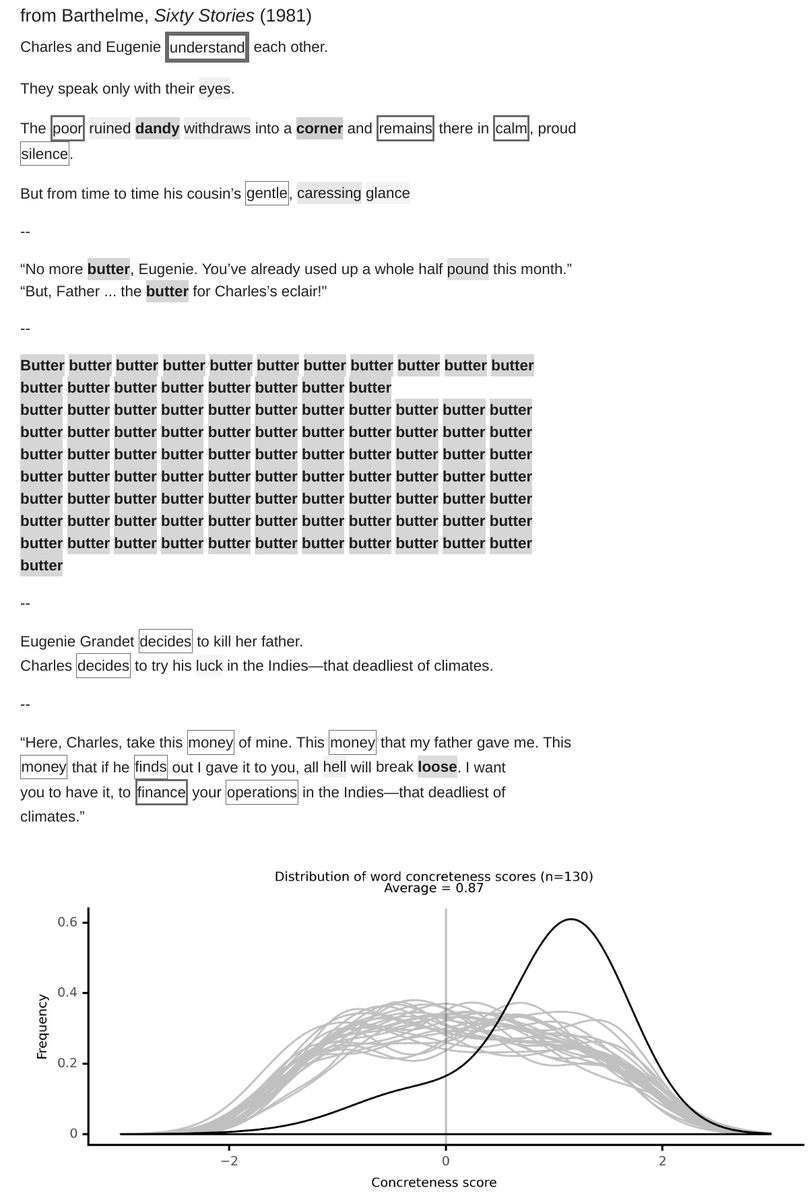
It's not a bug or typo either. I don't know the text (a short story collection) but it's a bizarre, fascinating passage. Immediately after the 79 repetitions of "butter": "Eugenie Grandet decides to kill her father."

It's not a bug or typo either. I don't know the text (a short story collection) but it's a bizarre, fascinating passage. Immediately after the 79 repetitions of "butter": "Eugenie Grandet decides to kill her father."
Wenyi Shang (@shangwenyi) 's Twitter Profile Photo

Going to present the work "Improving Measures of Text Reuse in English Poetry: A TF–IDF Based Method" co-authored with @tedunderwood.me (is at 🦋, not here) at #iconference2021 on Wednesday. We validated the method through the example of text reuse between Yeats and the English Romantic poets.
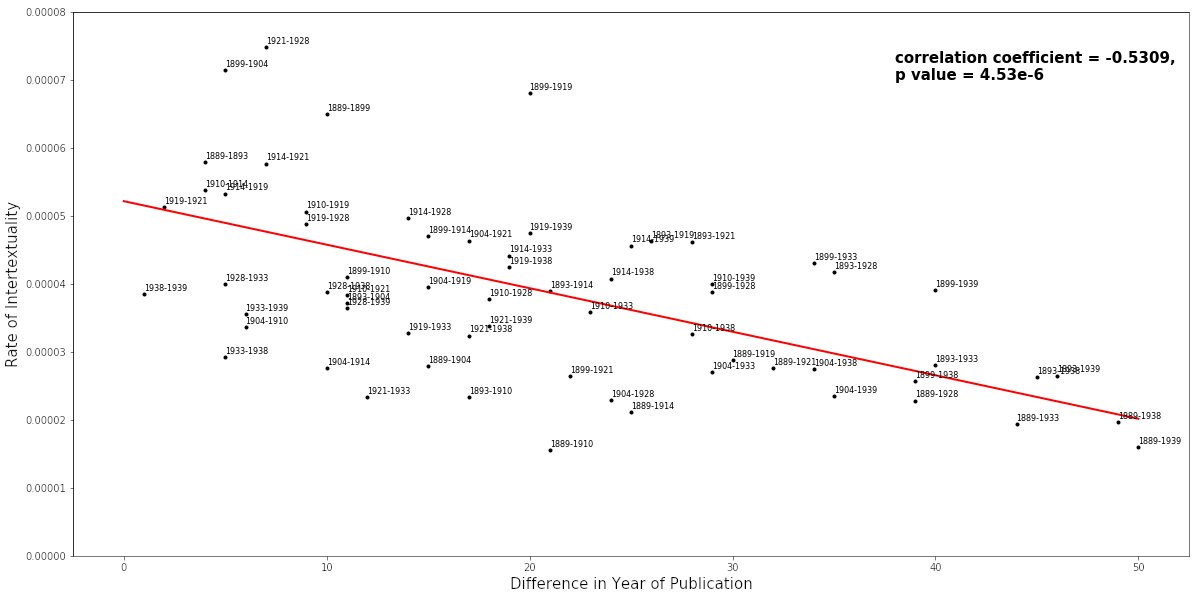
Going to present the work "Improving Measures of Text Reuse in English Poetry: A TF–IDF Based Method" co-authored with <a href="/Ted_Underwood/">@tedunderwood.me (is at 🦋, not here)</a> at #iconference2021 on Wednesday. We validated the method through the example of text reuse between Yeats and the English Romantic poets.
Scott Enderle (@scottenderle) 's Twitter Profile Photo

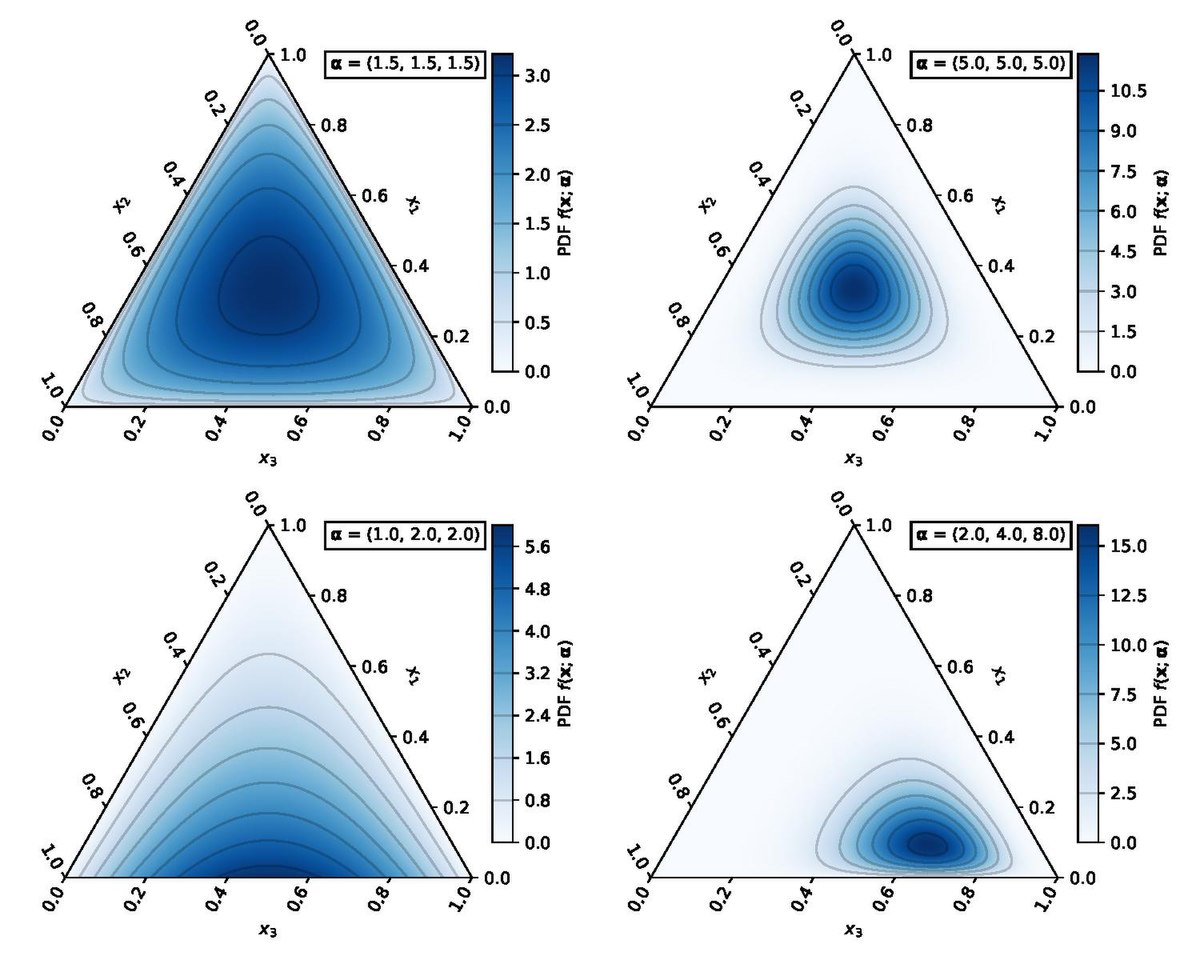
When you throw vectors of LDA topics haphazardly at UMAP and get these triangle looking things — is it somehow recovering the shape of the Dirichlet prior?

When you throw vectors of LDA topics haphazardly at UMAP and get these triangle looking things — is it somehow recovering the shape of the Dirichlet prior?
Ming Jiang (@seleenajiang) 's Twitter Profile Photo

We've developed a Gutenberg-HathiTrust parallel corpus of 19,049 pairs uncorrected OCR + human-proofread books in 6 domains, publ. 1780-1993. Description: hdl.handle.net/2142/109695 HT Research Center @tedunderwood.me (is at 🦋, not here) J. Stephen Downie @gworthey Yuerong Hu
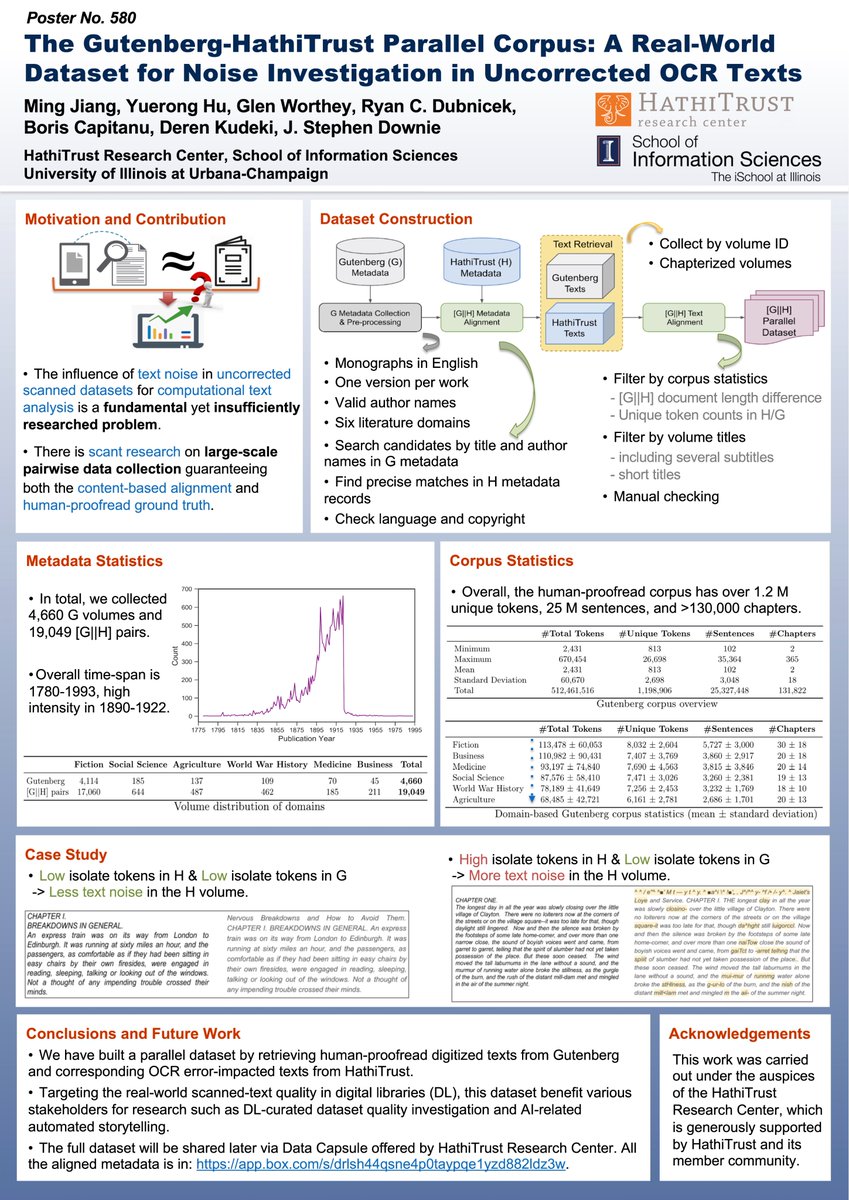

We've developed a Gutenberg-HathiTrust parallel corpus of 19,049 pairs uncorrected OCR + human-proofread books in 6 domains, publ. 1780-1993.
Description: hdl.handle.net/2142/109695
<a href="/hathitresearch/">HT Research Center</a> <a href="/Ted_Underwood/">@tedunderwood.me (is at 🦋, not here)</a> <a href="/profdownie/">J. Stephen Downie</a> @gworthey <a href="/miehumie/">Yuerong Hu</a>
Deb Raji (@rajiinio) 's Twitter Profile Photo

These are the four most popular misconceptions people have about race & gender bias in algorithms. I'm wary of wading into this conversation again, but it's important to acknowledge the research that refutes each point, despite it feeling counter-intuitive. Let me clarify.👇🏾

Scott Enderle (@scottenderle) 's Twitter Profile Photo

Wow, UMAP does metric learning now. Seems like it could be a really powerful tool for developing interpretable predictive models. umap-learn.readthedocs.io/en/latest/supe…

Scott Enderle (@scottenderle) 's Twitter Profile Photo

Sympathetic with people's feeling that "bias" is too flawed, or too polysemous, or too loaded a term to be useful. But do we actually have any better terms for discussing the issue of—should I call it fairness?—in algorithms?

David McClure (@clured) 's Twitter Profile Photo

Playing with the C4 corpus from AllenNLP. Here are 1M occurrences of the words "red" and "blue" (500k each), embedded via DistilBERT, where the words are [MASK]'ed in the input sequences, and then the mask embedding is sliced out of the top layer. Then UMAP to 2d.

Playing with the C4 corpus from <a href="/ai2_allennlp/">AllenNLP</a>. Here are 1M occurrences of the words "red" and "blue" (500k each), embedded via DistilBERT, where the words are [MASK]'ed in the input sequences, and then the mask embedding is sliced out of the top layer. Then UMAP to 2d.
Scott Enderle (@scottenderle) 's Twitter Profile Photo

This thread is a good reminder that stopword lists are a form of feature selection. But "stopword list creation" sounds way less important and serious and frowny than "feature selection," doesn't it?

sarah jeong (@sarahjeong) 's Twitter Profile Photo

something I didn't know until I went to law school(!!!!!!!) was that universal daycare was a popular — sometimes mainstream — feminist demand in the 1960s and 1970s. for all we talk about women empowerment, the arc of history, and so on, there was a giant leap back in the culture

Scott Enderle (@scottenderle) 's Twitter Profile Photo

If you have not already discovered Gutenberg, dammit, have a look, it's great! Really excellent for students and anybody who wants to play around with Gutenberg texts in a low-bar-to-entry way. github.com/aparrish/guten…

Scott Enderle (@scottenderle) 's Twitter Profile Photo

Huh, more Fourier transforms. Overlaps in interesting ways with our HathiTrust ACS project. syncedreview.com/2021/05/14/dee… wiki.htrc.illinois.edu/display/COM/Se…

Scott Enderle (@scottenderle) 's Twitter Profile Photo

"As the black hole expanded along Spruce street, swallowing streetcars and Amazon delivery trucks whole, the Administrators realized the depth of their folly."

Maria Antoniak (@maria_antoniak) 's Twitter Profile Photo

I've updated little-mallet-wrapper to output the MALLET diagnostics file (includes coherence) and the full word weight distributions for each topic. You can load the word weights and also compare pairs of topics using Jensen-Shannon divergence. github.com/maria-antoniak…

Scott Enderle (@scottenderle) 's Twitter Profile Photo

You have a dimension reduction problem and two solutions. One is simpler mathematically, but harder to explain. The other is more complex mathematically, but easier to explain. They work equally well. Which do you go with?