Richard Stöckl (@richard_stoeckl) 's Twitter Profile
Richard Stöckl

@richard_stoeckl

PhD Student at the German Archaea Centre @uni_regensburg. #Microbiology #Bioinformatics. @[email protected]
@richard-stoeckl.bsky.social

ID: 1107942535719276545

linkhttps://richardstoeckl.gitlab.io/ calendar_today19-03-2019 09:50:59

1,1K Tweet

181 Followers

370 Following

Yuki NISHIMURA (@ynishimuralv) 's Twitter Profile Photo

New paper out! We discovered a tiny archaeon with the smallest known archaeal genome — only 238 kbp! Candidatus Sukunaarchaeum mirabile has almost no recognizable metabolic pathways and may rely heavily on a host to survive. doi.org/10.1101/2025.0…

James Ferguson (@psy_fer_) 's Twitter Profile Photo

Just casually doing some SUP basecalling on an AMD 7900XTX GPU 😅 with ROCm in a workstation at home. A work in progress by Hasindu and Bonson in the lab.

Just casually doing some SUP basecalling on an AMD 7900XTX GPU 😅 with ROCm in a workstation at home.

A work in progress by Hasindu and Bonson in the lab.
Lakhansing Pardeshi (@lakhanp01) 's Twitter Profile Photo

Published in Microbiology Society tinyurl.com/4248jyuv highlighting: - Contribution of #prophage dynamics in the #pangenome evolution - Pangenome data structure to trace orthologous prophages - Generalist & specialist prophages in the Pectobacterium genus

Oliver Schwengers 🇩🇪🇪🇺🇺🇦 (@oschwengers1) 's Twitter Profile Photo

9th de.NBI / ELIXIR-DE "Microbial Genomics training course" now open for registration! 3 sessions full of microbial bioinformatics at JLU Giessen: I: QC & QA, assembly II: regional & functional annotation III: comparative genomics Info & registration: denbi.de/training-cours…

Daan C. Swarts (@dcswarts) 's Twitter Profile Photo

Out now in Molecular Cell: Cyanobacterial Argonautes and Cas4 family nucleases cooperate to interfere with invading DNA cell.com/molecular-cell… Most long-A pAgos interfere with invading DNA solo. Why then are cyanobacterial pAgos co-encoded with a Cas4-like protein? A 🧵
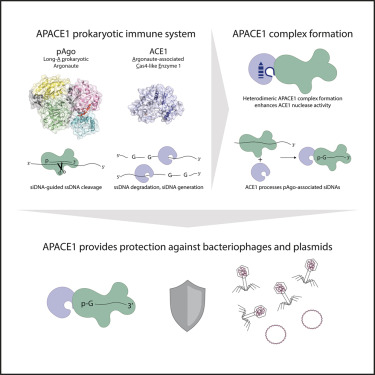

Out now in <a href="/MolecularCell/">Molecular Cell</a>: Cyanobacterial Argonautes and Cas4 family nucleases cooperate to interfere with invading DNA
cell.com/molecular-cell…

Most long-A pAgos interfere with invading DNA solo. Why then are cyanobacterial pAgos co-encoded with a Cas4-like protein? 

A 🧵
Microbiology Society (@microbiosoc) 's Twitter Profile Photo

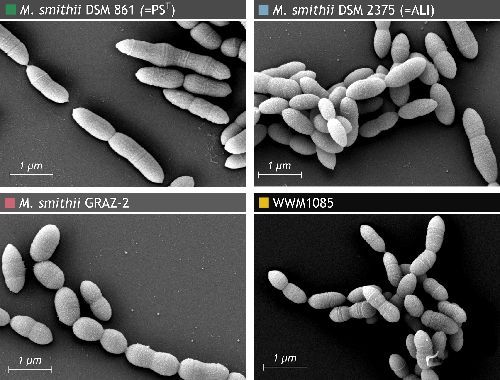
Expanding the cultivable human archaeome: Methanobrevibacter intestini sp. nov. and strain Methanobrevibacter smithii ‘GRAZ-2’ from human faeces. Available to read in #IJSEM: doi.org/10.1099/ijsem.…

Expanding the cultivable human archaeome: Methanobrevibacter intestini sp. nov. and strain Methanobrevibacter smithii ‘GRAZ-2’ from human faeces. Available to read in #IJSEM:
doi.org/10.1099/ijsem.…
Florian Hartig (@florianhartig) 's Twitter Profile Photo

Our new article “Advancing general ecosystem models (GEMs): Towards a mechanistic understanding of the biosphere in the light of the Anthropocene” let by Joachim Paul Töpper just out at Ecological Solutions and Evidence besjournals.onlinelibrary.wiley.com/doi/10.1002/26…

Hasindu Gamaarachchi (@hasindu2008) 's Twitter Profile Photo

For many of those who were asking on BLOW5 vs POD5 for nanopore signal data, here is a finally detailed benchmark we did: biorxiv.org/content/10.110… Summary: performance of BLOW5 is >= POD5 (from ~= to 100X, see below), with benefit of having ~3 dependencies instead of >50.

For many of those who were asking on BLOW5 vs POD5 for nanopore signal data, here is a finally detailed benchmark we did:
biorxiv.org/content/10.110…
Summary: performance of BLOW5 is &gt;= POD5 (from ~= to 100X, see below), with benefit of having ~3 dependencies instead of &gt;50.
Steve Kelly (@steve__kelly) 's Twitter Profile Photo

It has been a while… but an updated, faster & more accurate version of OrthoFinder is now out! Scales to thousands of species on conventional compute resources with higher accuracy than ever before and the same data rich fully phylogenetic outputs 👉biorxiv.org/content/10.110…

outside five sigma (@jwt0625) 's Twitter Profile Photo

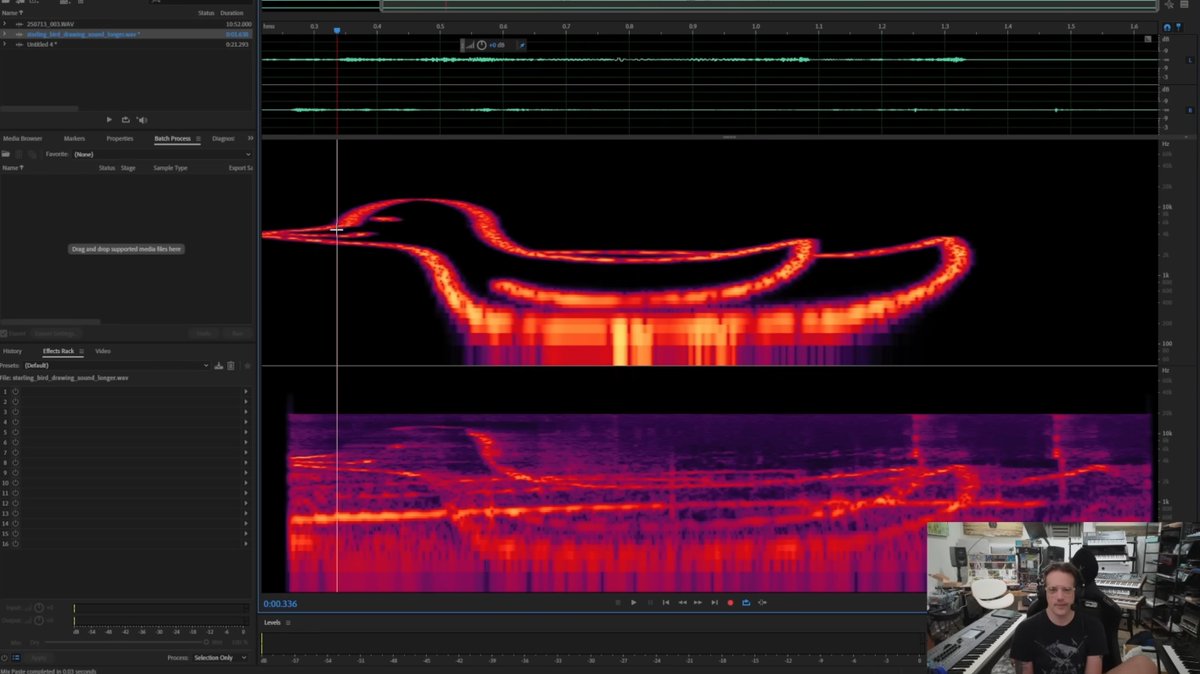
this is crazy (spectrogram of training data vs reproduced) now you think about it, birds probably also feel "this is crazy" when they hear us talking to each other

this is crazy (spectrogram of training data vs reproduced)

now you think about it, birds probably also feel "this is crazy" when they hear us talking to each other
Elisabeth Bik (@microbiomdigest) 's Twitter Profile Photo

McCullough Foundation No, it did not. At best, it found that people with cancer or other diseases have different expression profiles. But it absolutely does not show any relationship with mRNA vaccines. It is a severely flawed study. Read my review here: scienceintegritydigest.com/2025/07/25/pre…


George Bouras (@gb13faithless) 's Twitter Profile Photo

Stoked to finally have a preprint out for Phold, our tool that uses protein structural information to enhance phage genome annotation

Jim Shaw (@jim_elevator) 's Twitter Profile Photo

skani v0.3.0 is released. github.com/bluenote-1577/… * 30-40% potential reduction in memory * Breaking changes to indexing and searching databases Calculate ANI for contigs, genomes. Search vs > 140k genomes: pre-indexed GTDB-R226 available for download.

Sergii Pochekailov (@pochekailov) 's Twitter Profile Photo

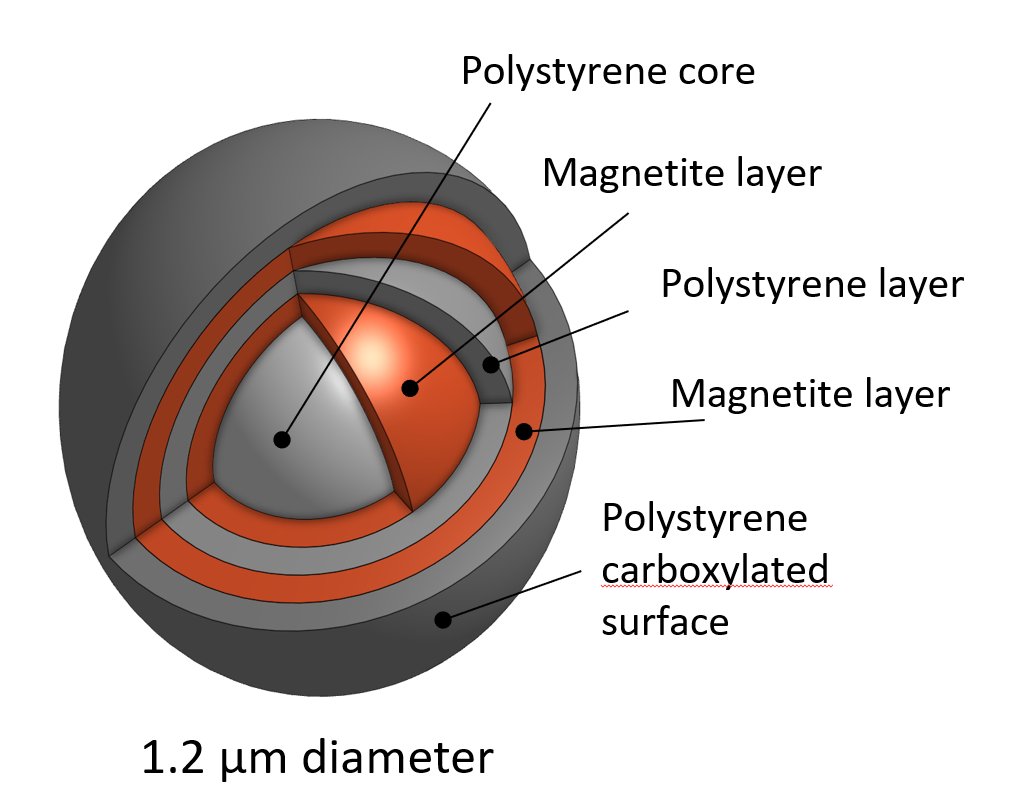
Our magnetic beads separate DNA based on its size. You can isolate the fraction, for example, of 200-700 bp, removing shorter and longer DNA strands. The DNA molecules stick to the carboxylated surface, and the strength of sticking depends on the size of the DNA. For some

Our magnetic beads separate DNA based on its size. You can isolate the fraction, for example, of 200-700 bp, removing shorter and longer DNA strands.

The DNA molecules stick to the carboxylated surface, and the strength of sticking depends on the size of the DNA. For some
Gabriel Rocklin (@grocklin) 's Twitter Profile Photo

New preprint! We measured temperature- and pH-induced aggregation for over 18,000 natural and de novo designed protein domains!

New preprint! We measured temperature- and pH-induced aggregation for over 18,000 natural and de novo designed protein domains!