
@PointFuse (@pointfuse) 's Twitter Profile
@PointFuse

@pointfuse

Fast, automatic conversion of #pointcloud data into intelligent as-built mesh models

ID: 1960460820

linkhttp://pointfuse.com calendar_today14-10-2013 11:24:38

1,1K Tweet

1,1K Followers

793 Following

@PointFuse (@pointfuse) 's Twitter Profile Photo

If you are curious about the benefits of classification, check out our new 'Why Classify?' mini-series. This one focuses on the clean-up of noise. Within a PointFuse mesh model, rather than in the point cloud, items such as people, cars and debris can be much more easily removed.

@PointFuse (@pointfuse) 's Twitter Profile Photo

In Part 2 of our 'Why Classify?' mini-series we show how a more advanced classification can be used to create a BIM structure similar to any design data. Advanced coordination tools, such as REVIZTO, can be now used to interrogate the data, so you can focus on what's important.

@PointFuse (@pointfuse) 's Twitter Profile Photo

We're glad that our 'Why Classify?' mini-series is hitting the mark for many. Here is #3 - we hope you enjoy it. This workflow shows a condenser and its connecting services being added to some custom layers. The mesh is then taken into @autodeskRevit to create a new design.

@PointFuse (@pointfuse) 's Twitter Profile Photo

Embracing reality capture technology will give you the edge over your sustainability goals, not only when constructing new builds, but also when looking to improve the carbon footprint of existing stock. In this blog, CEO Steve explains more: bit.ly/3Uv8pfW

@PointFuse (@pointfuse) 's Twitter Profile Photo

#ThowbackThursday - Today we look back on how customer IBKS took on a two-tower, 450k sq ft healthcare project where they tested an innovative NavVis VLX and PointFuse Pro workflow to deliver the biggest scan-to-BIM project they had undertaken. zurl.co/TYLj

@PointFuse (@pointfuse) 's Twitter Profile Photo

This week's 'Why Classify?' focuses on #clashdetection. Coordinating against #realitycapture data in a renovation helps ensure new designs fit, preventing costly reworks. But, doing this against a #pointcloud isn't easy. Creating a set of clashable layers in PointFuse can help.

@PointFuse (@pointfuse) 's Twitter Profile Photo

As a software company in Construction we're passionate about how tech can solve problems facing the industry and society. The biggest barrier is how to attract a new generation and fill the skills gap. This piece in Building News gives a great overview: bit.ly/3ulqmUX

@PointFuse (@pointfuse) 's Twitter Profile Photo

Our final 'Why Classify?' is about creating objects. Modeling complex objects, such as big MEP fittings, is time-consuming, requiring skill and experience. Such objects are easy to select from PointFuse, meaning that they can be quickly exported as objects into onward workflows.

@PointFuse (@pointfuse) 's Twitter Profile Photo

How do you manage importing large scale meshes into Autodesk Revit? This week's #ThowbackThursday reminds us how to use the out of the box collaboration tools in Revit to help manage large scale mesh projects. View the full tutuorial here: youtube.com/watch?v=uApvZ2…
@PointFuse (@pointfuse) 's Twitter Profile Photo

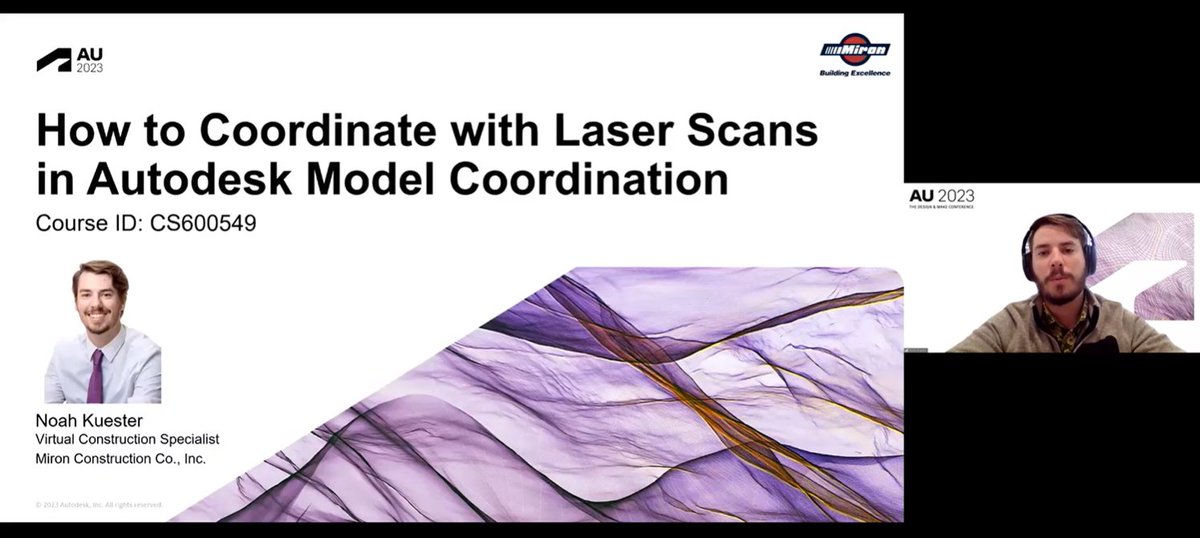
If you've ever wondered how best to incorporate #pointclouds into your #BIM coordination efforts, this presentation from Noah Kuester Miron Construction is a great one to watch. It was recorded during his recent presentation at Autodesk University. autode.sk/41jnbJN

If you've ever wondered how best to incorporate #pointclouds into your #BIM coordination efforts, this presentation from Noah Kuester <a href="/MironConstruct/">Miron Construction</a> is a great one to watch. It was recorded during his recent presentation at <a href="/autodesk/">Autodesk</a> University. 

autode.sk/41jnbJN
@PointFuse (@pointfuse) 's Twitter Profile Photo

The latest release of PointFuse includes an important, and useful, update to how we work with NWC files. As an Autodesk Construction Cloud Gold Partner our software now supports direct export to NWC, complete with texturing, classification layers and colors.

@PointFuse (@pointfuse) 's Twitter Profile Photo

Our latest PointFuse release supports direct export to Autodesk's NWC format for use across your entire Autodesk environment, allowing texturing, classification layers, colors, and more. Find out more in our short hints and tips video: zurl.co/ezn0

Our latest PointFuse release supports direct export to <a href="/autodesk/">Autodesk</a>'s NWC format for use across your entire Autodesk environment, allowing texturing, classification layers, colors, and more.

Find out more in our short hints and tips video: zurl.co/ezn0
@PointFuse (@pointfuse) 's Twitter Profile Photo

Our office is closed over the holiday period, so it may take a little longer than normal to respond to any support issues. For urgent support, please raise a ticket and it will be dealt with asap: zurl.co/9ibP zurl.co/cow4" See you in 2024!

Our office is closed over the holiday period, so it may take a little longer than normal to respond to any support issues. For urgent support, please raise a ticket and it will be dealt with asap: zurl.co/9ibP zurl.co/cow4"  

See you in 2024!
@PointFuse (@pointfuse) 's Twitter Profile Photo

A new year, a new update! Our latest release supports direct export to Autodesk's NWC format for use across your entire Autodesk environment, allowing texturing, classification layers, colors, and more. We wish you all a healthy, happy and successful 2024!

@PointFuse (@pointfuse) 's Twitter Profile Photo

We’re all aware that our industry accounts for 37% of energy-related CO2 emissions but what are we doing about it? The answer, as most of us now recognize, lies in a digital-first strategy. This article by World Economic Forum is a great little reminder. bit.ly/48IZf5P

@PointFuse (@pointfuse) 's Twitter Profile Photo

Adding meshes into Navisworks has huge benefits. This clip shows how to ensure your mesh model looks exactly like reality, a powerful tool for sharing existing conditions with others who may ordinarily struggle viewing point clouds. Full tutorial here: zurl.co/NVH5

@PointFuse (@pointfuse) 's Twitter Profile Photo

The evolution from CAD to BIM signifies a transformative period in construction technology. This article in Construction Dive gives a really nice overview of the journey we've taken from those early days of CAD to the latest technolgies. bit.ly/3S75uZZ
@PointFuse (@pointfuse) 's Twitter Profile Photo

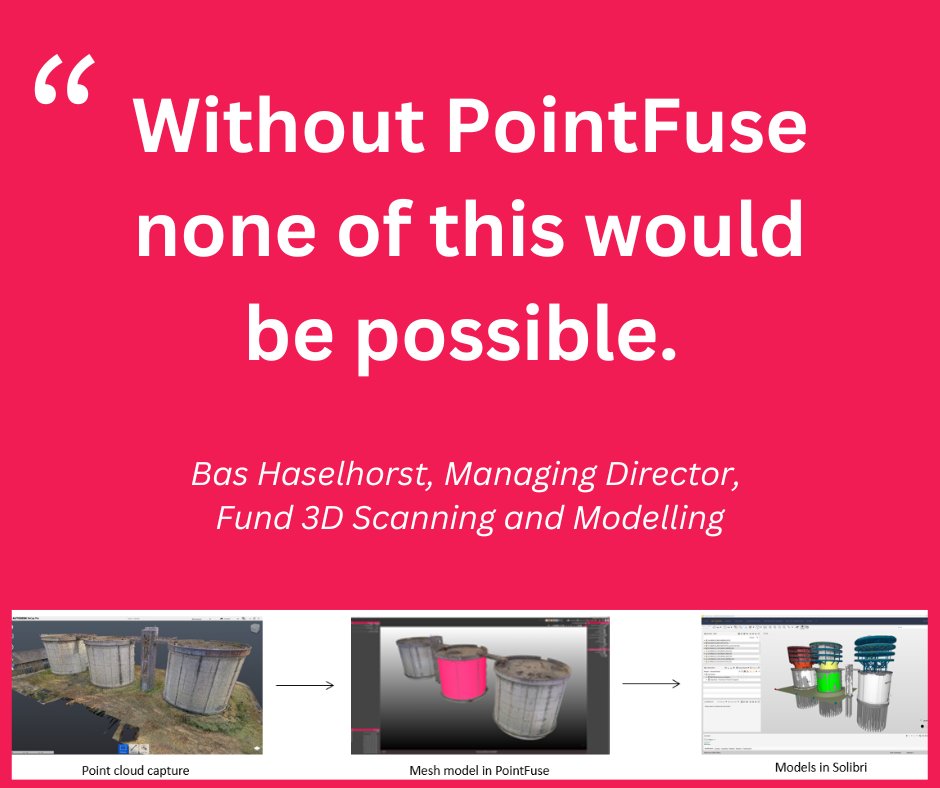
Find out why PointFuse was so integral to Fund Groep B.V: bit.ly/404rTuj "Without PointFuse none of this would be possible. By converting the point cloud into a mesh model, we can create an IFC file, allowing the client to run clash detection in Solibri"

Find out why PointFuse was so integral to Fund Groep B.V: bit.ly/404rTuj   

"Without PointFuse none of this would be possible. By converting the point cloud into a mesh model, we can create an IFC file, allowing the client to run clash detection in Solibri"
@PointFuse (@pointfuse) 's Twitter Profile Photo

As the AEC industry continues to embrace #DigitalTransformation, one of the biggest challenges it faces is finding and upskilling workers with expertise in these emerging technologies. This article is a healthy reminder of the key areas to focus on. bit.ly/3ORBVe2

@PointFuse (@pointfuse) 's Twitter Profile Photo

How do you manage importing large-scale meshes into Autodesk Revit? You can use the out-of-the-box collaboration tools in Revit to help manage large-scale mesh projects. Using worksets can keep the files running smoothly, and prevent you getting bogged down in too much data.