Institut für Humangenetik 🧬 | Uniklinik Leipzig
@hug_leipzig
Das Institut bietet genetische Diagnostik & ambulante Beratungen an. Zudem erfolgt Forschung zu seltenen Erkrankungen & studentische Lehre am @UKL_Leipzig.
ID: 1547202169291657219
https://www.uniklinikum-leipzig.de/einrichtungen/humangenetik 13-07-2022 12:52:52
383 Tweet
260 Followers
292 Following
Drosophila #WDFY3/Bchs overexpression impairs neural function. Currently, more studies are focusing on the loss of WDFY3/Bchs & its effects on the nervous system ➤ tandfonline.com/doi/full/10.10… by Julia Hentschel Rami Abou Jamra Diana Le Duc, etc. #neurogenetics


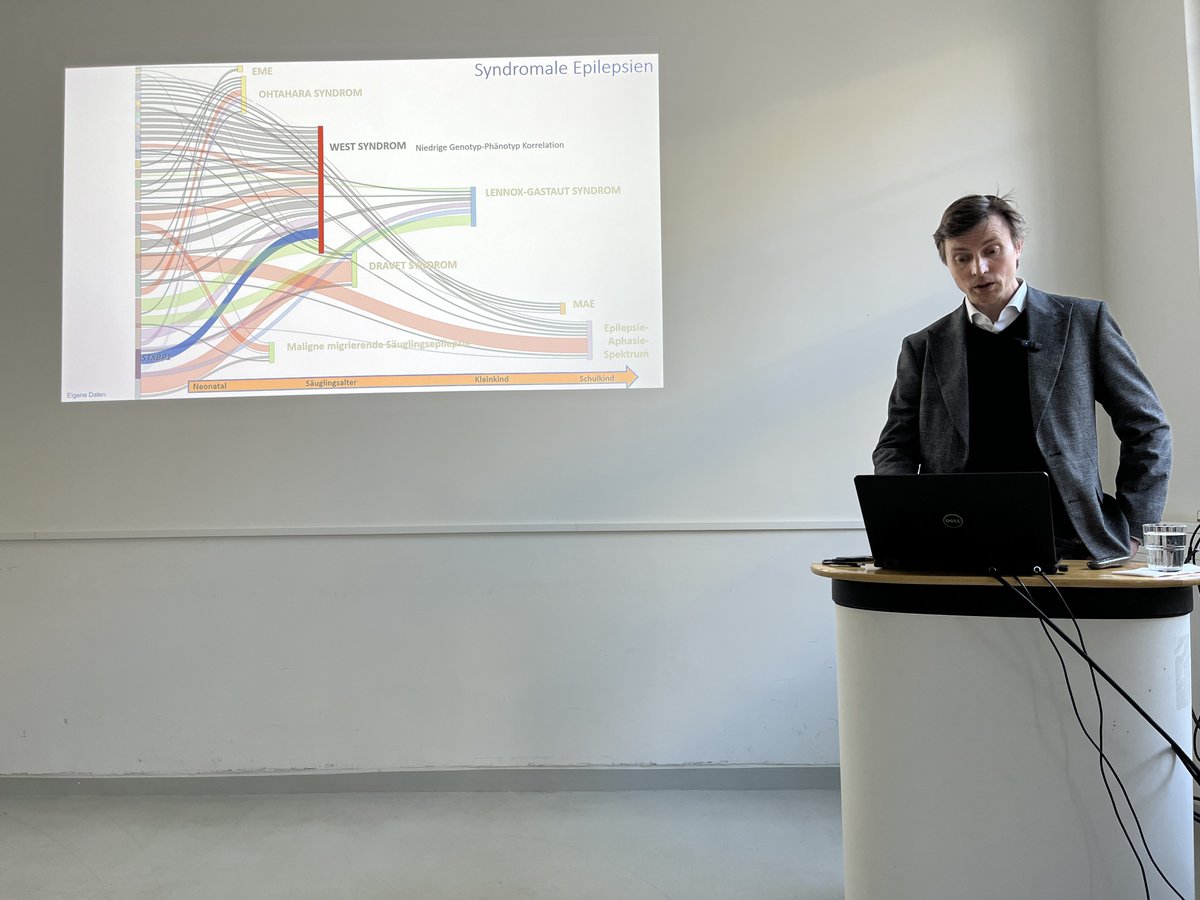
Heute um 16.00 Uhr findet das 11. Kolloquium der #Humangenetik statt. Prof. Dr. med. Steffen Syrbe spricht zum Thema: „Wachstumskontrolle und Hirnentwicklung – Zentrale Stoffwechselwege im Kindesalter". Hier können Sie an der Besprechung teilnehmen: is.gd/dvyisd 🖥️
This week we welcomed our very good collaborator Steffen Syrbe who gave us an overview on epilepsy syndromes due to variants in the MTOR & RAS/MAP kinase signaling pathways & the increasing treatment options. Dinner together later on closed out the evening. Thanks for the visit!
There has been a 🆕 Investigation of #ATM #missenseVariants of uncertain significance (#VUS) by integrating results from systematic functional tests into an acmg point-based framework - check it out: is.gd/XT33Zm #moderaterisk #cancer #susceptibility #gene Julia Hentschel
MBOAT7 encephalopathy: Characterizing the #neurology and #epileptology. We aimed to characterize the epilepsy phenotype in a cohort of patients affected by this #syndrome (15 patients with biallelic #MBOAT7 variants). ↪️ pubmed.ncbi.nlm.nih.gov/40116760/ Robin Jauss, Konrad Platzer
Now Ilona Krey of Institut für Humangenetik 🧬 | Uniklinik Leipzig presents her project on elderly patients with developmental & epileptic encephaloathy. Used exome seq of 1048 elderly patients (2016-2024), also incl. sanger seq of RNU4-2 in unsolved cases. Diagnostic yield of 37 %. #GfH2025
Final talk by Franziska Schnabel of Institut für Humangenetik 🧬 | Uniklinik Leipzig on real added value of srGS in diagnosing rare diseases compared to exomes. Meta-analysis of own cohort of 500 cases & published cases (2000+) results in a 5% added value in srGS. Aligns w/ other talks at this conference. #GfH2025
Happy to finally share our latest Mendelian gene discovery work on #KDM2A where de novo variants cause a syndromic neurodevelopmental disorder. A great collaboration incl. lab of Udai Pandey, Stephan Drukewitz Dr. Heather Mefford @hcmefford.bsky.social & many more. 👇 #MorbidGene medrxiv.org/content/10.110…


🆕Biallelic loss-of-function variants in #ZNF142. Our findings provide evidence that biallelic loss-of-function ZNF142 variants result in a specific and robust DNAm signature: nature.com/articles/s4143… 🔛nature by Ilona Krey, Konrad Platzer, Rami Abou Jamra
Hypothesis-free DNA 🧬methylation profiling in a 66-year-old male with unexplained neurodevelopmental disorder enabled the exclusion of ZNF142-related disease. #angelman #syndrome AngelmanSyndromeFdn PubMed Online🔵pubmed.ncbi.nlm.nih.gov/40518603/ by Konrad Platzer, Rami Abou Jamra & Ilona Krey👥
JCI - Mutations in spliceosomal gene #SNW1 cause neurodevelopment disorders with microcephaly jci.org/articles/view/… by Rami Abou Jamra, etc.
Pathogenic #XPO1 variants cause a dominant neurodevelopmental disorder. The gene is deleted in a subset of patients with the 2p15p16.1 microdeletion syndrome, however no monogenic XPO1-related disorder has been described to date. Results here: shorturl.at/MbvUn, Rami Abou Jamra
Three new unrelated cases of #CEP85L-associated LIS are presented, including the first prenatal diagnosis and a mosaic variant. Clinical, neuroimaging, and genetic analyses were recorded. Overview and expansion of CEP85L here: sciencedirect.com/science/articl… Rami Abou Jamra, Robin Jauss, etc.

Here are our latest publications from last week: ▶️jci.org/articles/view/… #PTBP1 variants displaying altered nucleocytoplasmic ▶️jci.org/articles/view/… Disrupting Integrator complex subunit #INTS6 by Konrad Platzer & Rami Abou Jamra