BeaconObservatory (@beaconobs) 's Twitter Profile
BeaconObservatory

@beaconobs

Conceived in 2014, build and opened in 2015 - observing ever since. Doing a lot of stuff for @HoysSpace .

ID: 1453372283096113157

linkhttps://research.kent.ac.uk/astrophysics-and-planetary-science/facilities/the-beacon-observatory/ calendar_today27-10-2021 14:45:45

125 Tweet

20 Followers

8 Following
BeaconObservatory (@beaconobs) 's Twitter Profile Photo

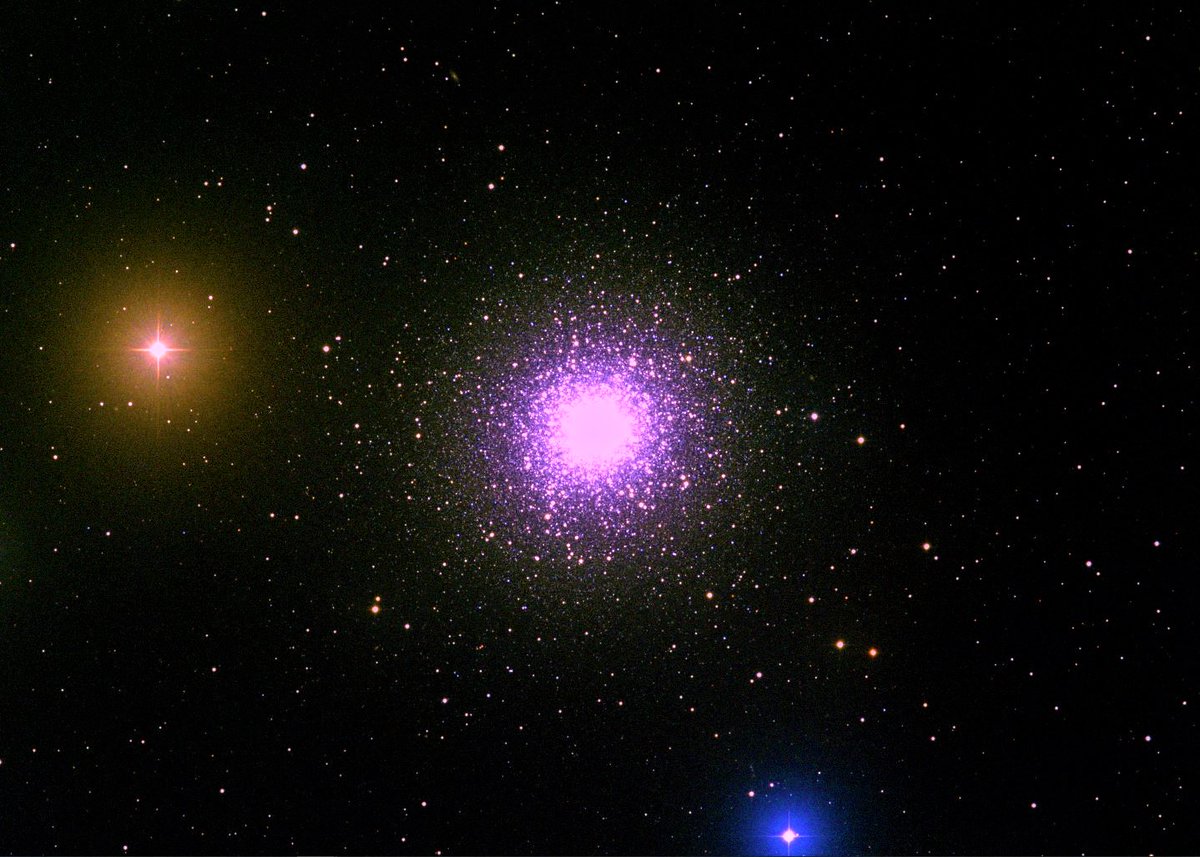
Two versions of a B,R,I colour composite of the M13 images from last night. One is 45'x32x and the other one 11'x8'. In the latter the colour stretch has been adapted to see the individual stars.

Two versions of a B,R,I colour composite of the M13 images from last night. One is 45'x32x and the other one 11'x8'. In the latter the colour stretch has been adapted to see the individual stars.
BeaconObservatory (@beaconobs) 's Twitter Profile Photo

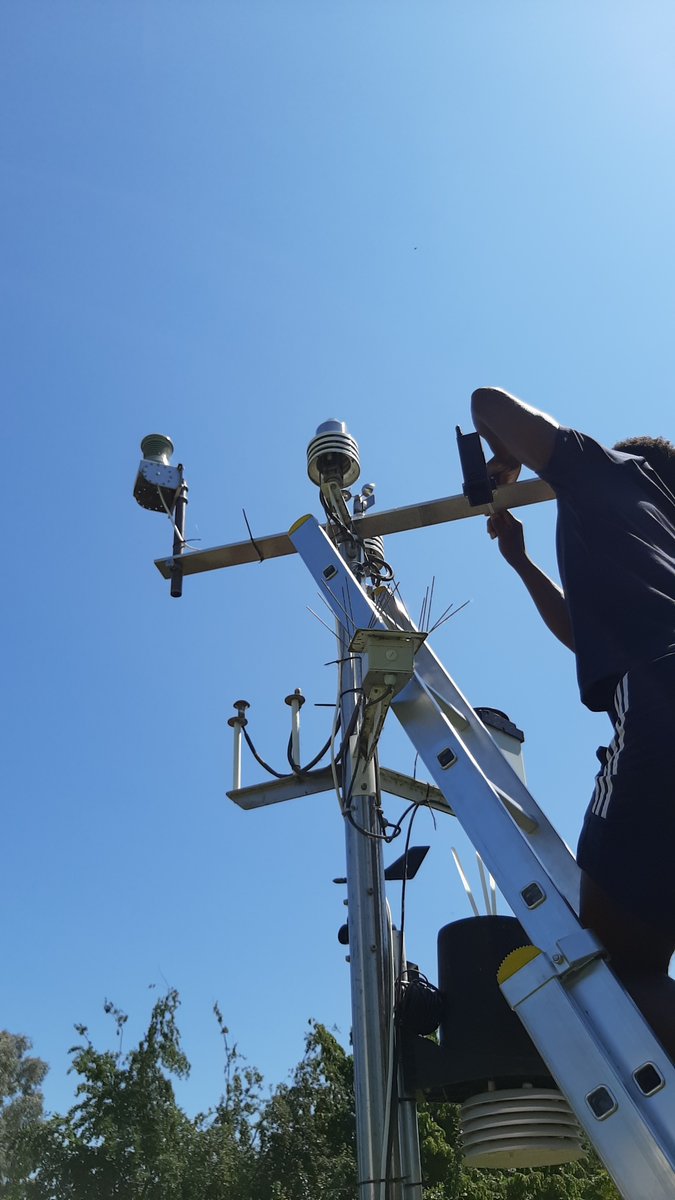
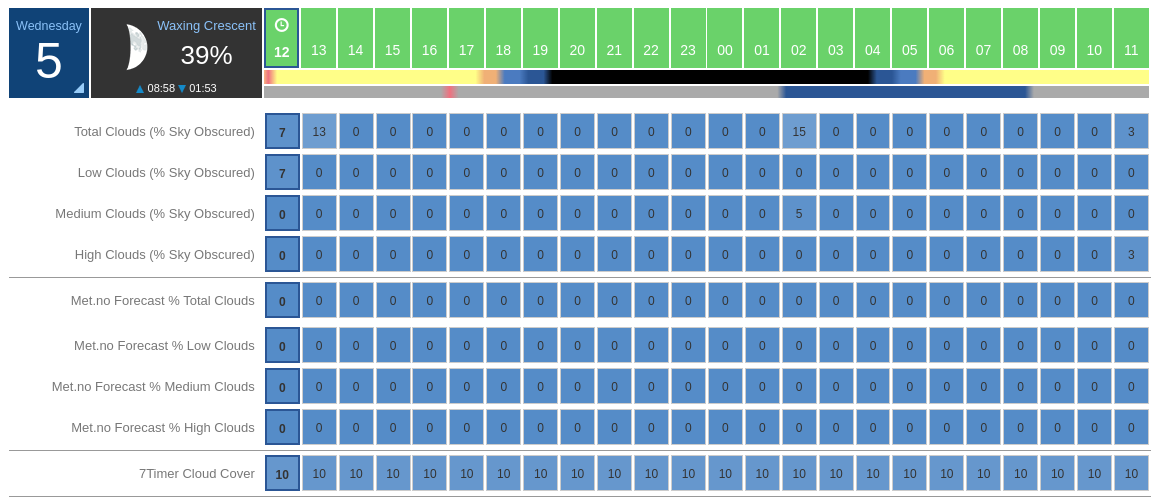
Thanks to Luke and Tosin. We have put the new cloud sensor onto the mast today and it is sending data. One step closer to making the observatory robotic.....

Thanks to Luke and Tosin. We have put the new cloud sensor onto the mast today and it is sending data. One step closer to making the observatory robotic.....
BeaconObservatory (@beaconobs) 's Twitter Profile Photo

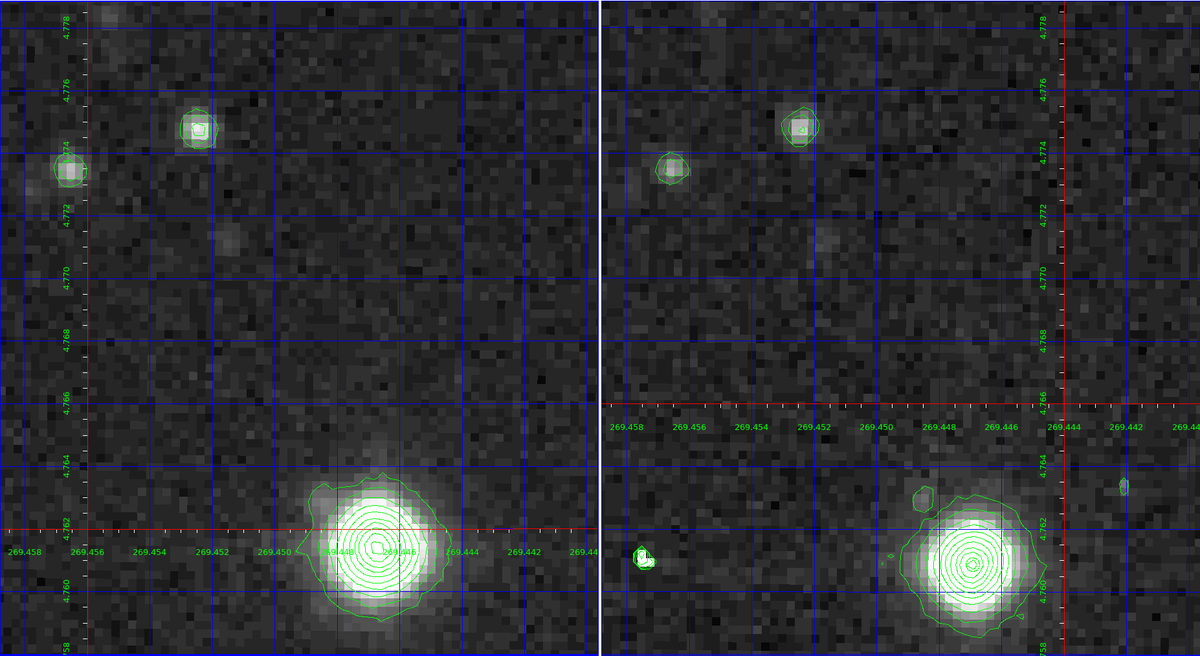
Barnard's Star (the bright one at the bottom) observed May 24th (right) and Aug 9th (left). A rough analysis shows it moved 2.1", i.e. it has a proper motion of 9.9"/yr. That's close to the real value of 10.4"/yr.

Barnard's Star (the bright one at the bottom) observed May 24th (right) and Aug 9th (left). A rough analysis shows it moved 2.1", i.e. it has a proper motion of 9.9"/yr. That's close to the real value of 10.4"/yr.
BeaconObservatory (@beaconobs) 's Twitter Profile Photo

We had a very good turnout for the Perseid watching on Saturday. The clouds even stayed away for a few hours, so plenty of shooting stars were seen.

BeaconObservatory (@beaconobs) 's Twitter Profile Photo

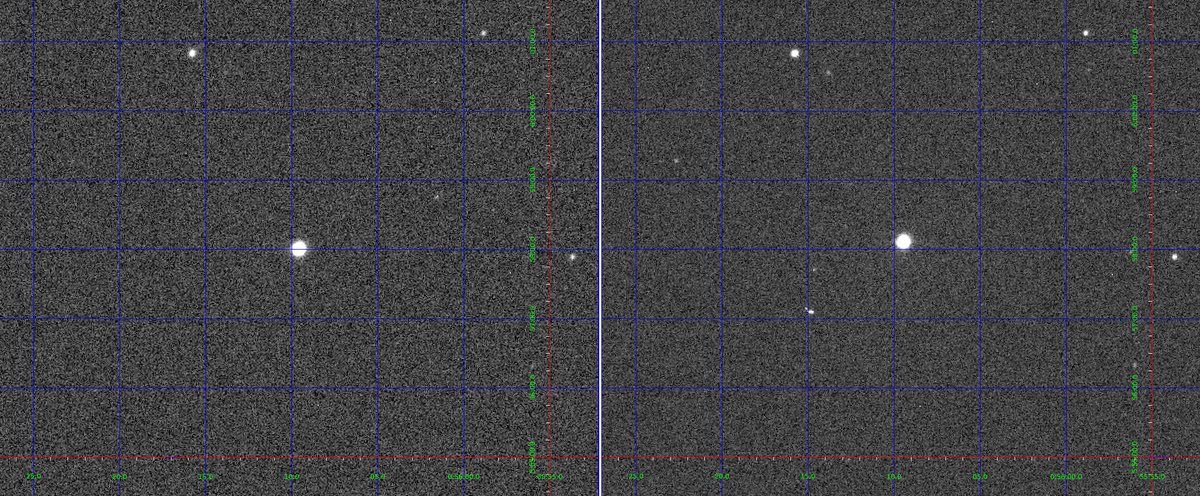
More data for the new Astro lab: Asteroid Amphitrite observed about one hour apart. Clearly moving - we observed it at the point of its slowest possible apparent motion. Task: Measure it's apparent motion on the sky.

More data for the new Astro lab: Asteroid Amphitrite observed about one hour apart. Clearly moving - we observed it at the point of its slowest possible apparent motion. Task: Measure it's apparent motion on the sky.
BeaconObservatory (@beaconobs) 's Twitter Profile Photo

Finally some good weather, and the mount has given up working again. We are exploring what might be wrong - first things unsuccessful. At the least it is still under warranty....

BeaconObservatory (@beaconobs) 's Twitter Profile Photo

Our Fireball Camera also picks up Auroras. Below are a few processed frames from the Aurora on May 10 this year (22UTC). This one did not ruin any observations as the humidity was far too high on that night ;-)

Our Fireball Camera also picks up Auroras. Below are a few processed frames from the Aurora on May 10 this year (22UTC). This one did not ruin any observations as the humidity was far too high on that night ;-)
BeaconObservatory (@beaconobs) 's Twitter Profile Photo

While the observatory remains under a constant blanket of clouds ☁️☁️☁️ since October 27th, that last observing night has pushed our total time of taking science data over 6000hrs. 🤓

BeaconObservatory (@beaconobs) 's Twitter Profile Photo

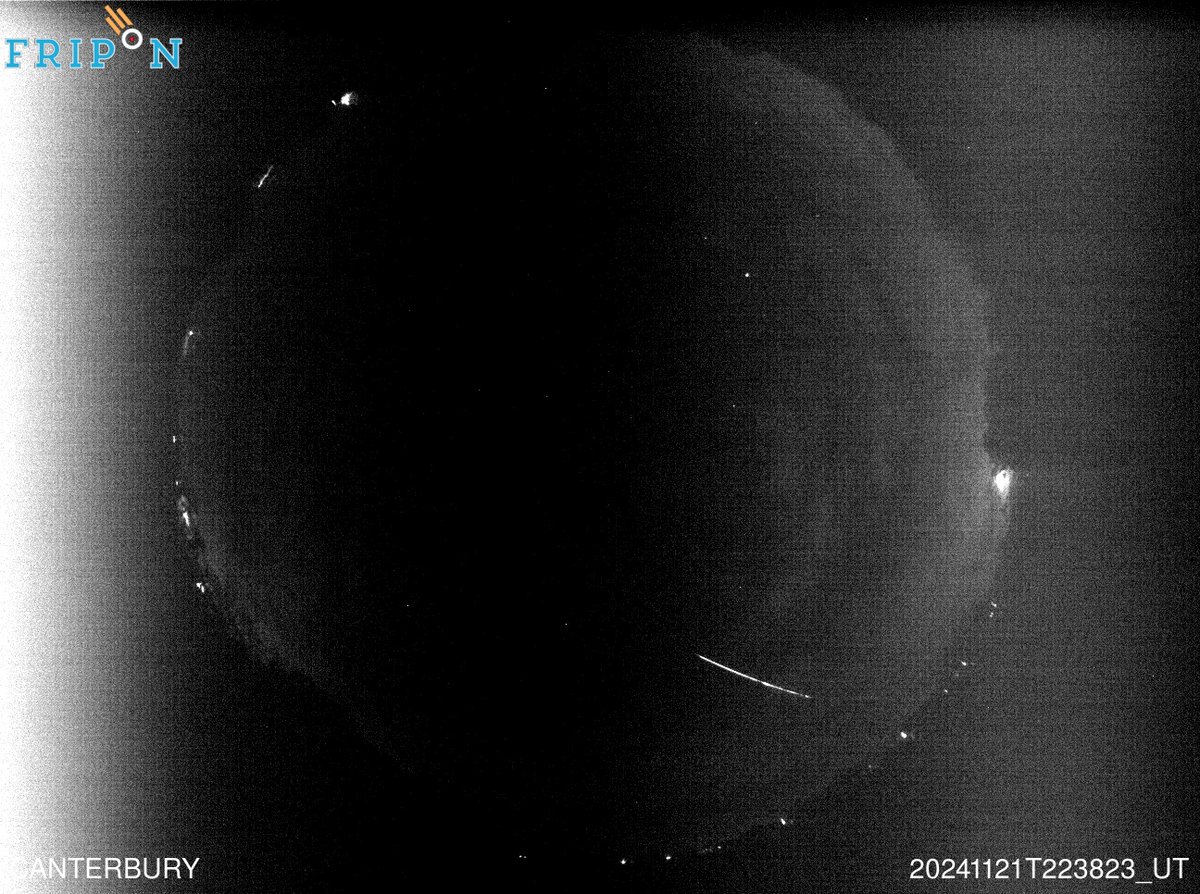
After a brief outage due to a problem with a cable, the fireball camera is now back operational since a week. And we detected a nice one on Thursday night.

After a brief outage due to a problem with a cable, the fireball camera is now back operational since a week. And we detected a nice one on Thursday night.
BeaconObservatory (@beaconobs) 's Twitter Profile Photo

I think we broke our record of consecutive nights with at least some observing. We have now had 14 nights where at least some (from 2.25hr up to 9.9hr) observations have taken place. We observed for a total of 94.7hr in those two weeks. 🤓

BeaconObservatory (@beaconobs) 's Twitter Profile Photo

Well, March had very good weather. We observed on 21 of the 31 nights and gathered data for a grand total of 131.39 hours. That is a new record for observing hours by month - beating February 2019 by 6 min 😁 - and more than twice the average for March.