Ashley Broadbent
@ash__broadbent
Climate scientist @niwa_nz | research professor @ASU_SGSUP | interested in climate change adaptation | urban climate | renewable energy
ID: 3021919334
16-02-2015 04:23:23
85 Tweet
251 Followers
571 Following



The 23th International Congress of Biometeorology will take place in Tempe, Arizona in 2023! Theme will focus on Urban to Global Sustainability. Special thanks to David M. Hondula et al. Home to Arizona State University Urban Climate Research Center, we look forward to seeing you there! #ICB2021


Critical reading for urban climate researchers: Iain Stewart's latest paper on the time evolution of the surface urban heat island. The paper brings together theory, modeling, and observations to conceptualize general forms of the diurnal SUHI. agupubs.onlinelibrary.wiley.com/doi/10.1029/20…


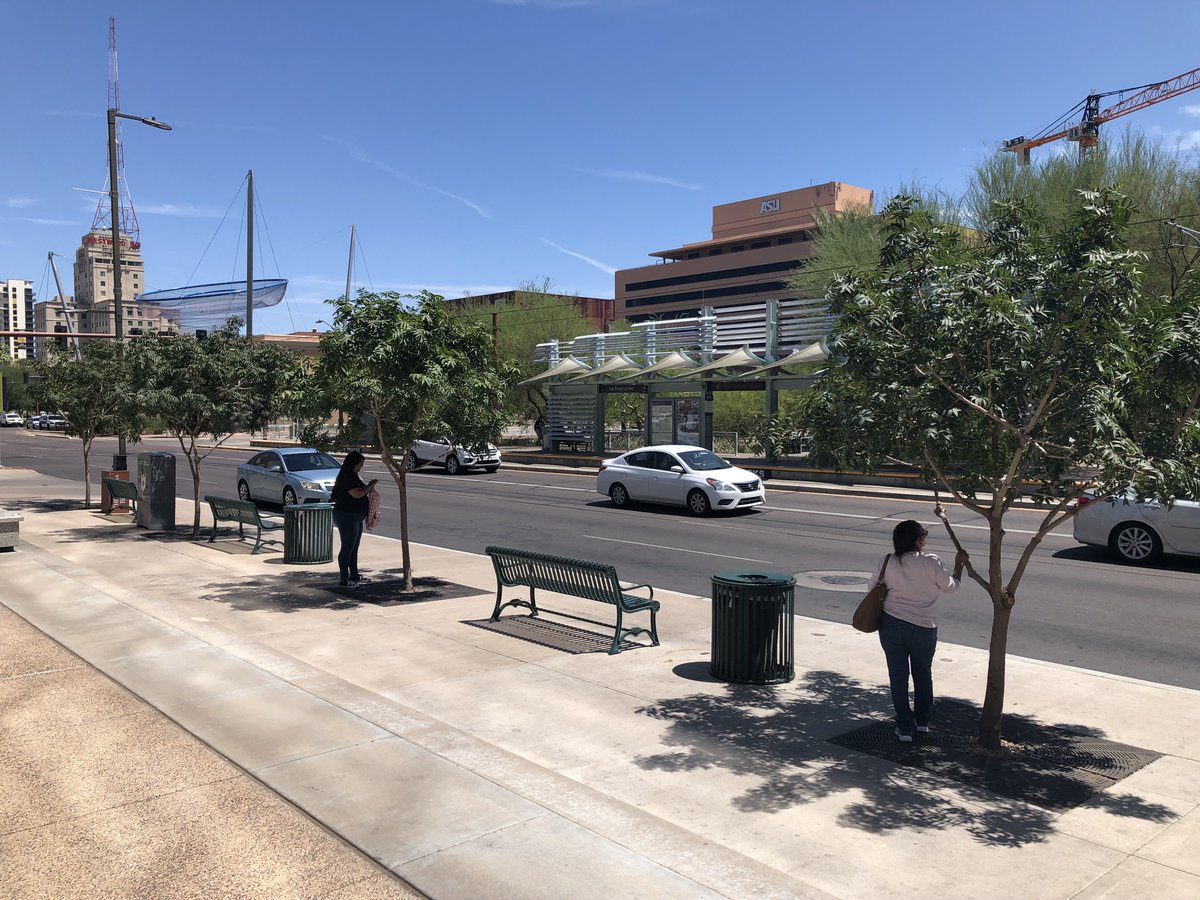
Trees are critical urban infrastructure. We're hiring an Urban Tree Program Manager City of Phoenix, AZ to lead our citywide efforts to increase tree canopy and achieve tree equity. Come join us! Applications are due Nov. 29. hcmprod.phoenix.gov/psc/hcmprodtam…
Detailed projections of marine heatwaves for the ocean around NZ are out now. Largest changes are projected around the North Island and over the Tasman Sea. To avoid the hot tub GHG emission need to come down now. @niwa_nz Deep South Challenge: Changing with our Climate frontiersin.org/articles/10.33…

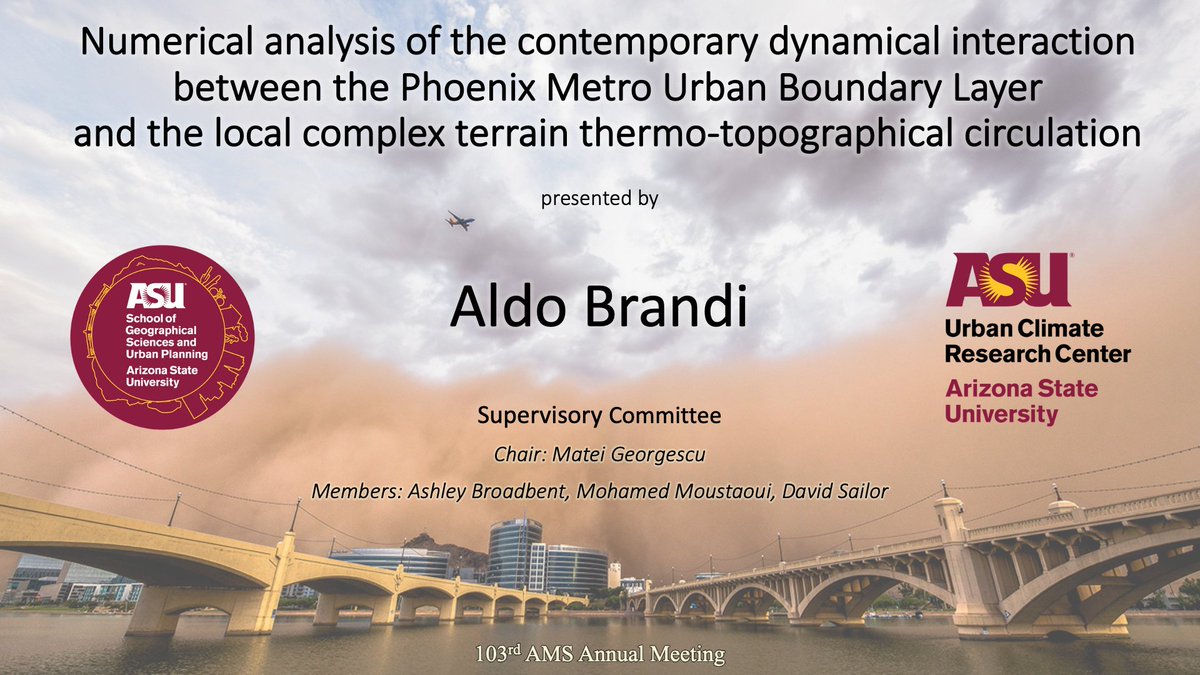
This coming Tuesday, January 10, at 1:45pm I will be presenting some preliminary results from my PhD dissertation within the Special Symposium on Urban Environments at #AMS2023 in Denver, CO. See you there, finally in person! AMS Board on the Urban Environment American Meteorological Society Urban Climate Research Center SGSUP at ASU

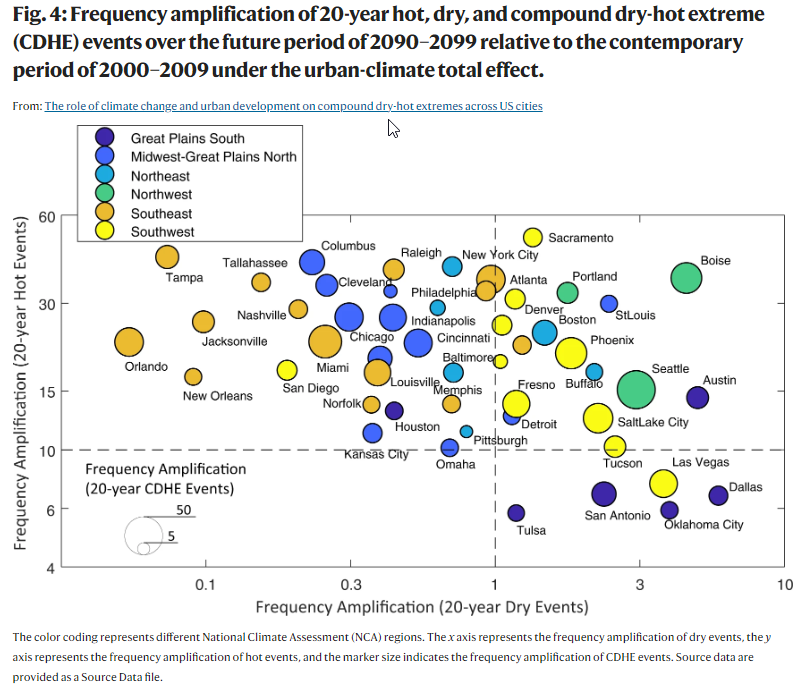
In our recently published paper in Nature Communications , we explore the impact of climate change and urban development on the compound dry-hot extreme events in cities across the United States. nature.com/articles/s4146… CSU Civil and Environmental Engineering UWIN

New study by Mahshid Ghanbari et al. projects a significant increase in frequency and duration of #compound #hotdry #extremes in major US cities during the 21st century. GHG-induced warming is the main driver, amplified by #urbandevelopment CSU Civil and Environmental Engineering UWIN nature.com/articles/s4146…
In today's edition of Fantastic Friday, we look at a paper appearing in Nature Cities that asks: At the spatial scale of cities: Adaptation or Mitigation? Which is more effective in reducing population heat exposure across US cities? nature.com/articles/s4428… #Urbanresilience