Active Edge Health & Performance (@activeedgest) 's Twitter Profile
Active Edge Health & Performance

@activeedgest

Your Performance Hub - Run Coaching. Injury and Pain Management. Sport & Exercise Psychology. Education and Development. @roneveryday @shanerobo

ID: 4091599918

linkhttp://www.activeedgesportstherapy.co.uk calendar_today01-11-2015 17:52:41

277 Tweet

146 Followers

398 Following

Ronny Wilson (@roneveryday) 's Twitter Profile Photo

Nice reminder that your perception can be more relevant AND effective than your watch/stats sportsmedicine-open.springeropen.com/articles/10.11…

Running-Physio (@tomgoom) 's Twitter Profile Photo

We can definitely over complicate things in physio. One of my appointments tonight just involved going for a run with someone. We established what was manageable for him and planned his training. Sometimes that’s all we need.

Active Edge Health & Performance (@activeedgest) 's Twitter Profile Photo

And… this sort of attitude often drives the ‘no pain no gain’ attitude subsequently leading to injury. ANY WORK is load. We get hurt through too much of an imbalance between load and capacity.

Matt Bourne (@mbourne5) 's Twitter Profile Photo

High-strain resistance training interventions are most effective for promoting ⬆️ #tendon stiffness + modulus. But adaptations do not appear to be influenced by training duration, relative intensity, contraction mode, or volume. Steph Lazarczuk 🇺🇦 Griffith University link.springer.com/article/10.100…


High-strain resistance training interventions are most effective for  promoting ⬆️ #tendon stiffness + modulus. But adaptations do not appear to be influenced by training duration, relative intensity, contraction mode, or volume. <a href="/StephLaz_/">Steph Lazarczuk 🇺🇦</a> <a href="/Griffith_Uni/">Griffith University</a> link.springer.com/article/10.100…
Pratik Patel (@pratikxpatel) 's Twitter Profile Photo

No evaluation = no way of getting better No feedback = no way of getting better Not being open to either = no way of getting better

Running-Physio (@tomgoom) 's Twitter Profile Photo

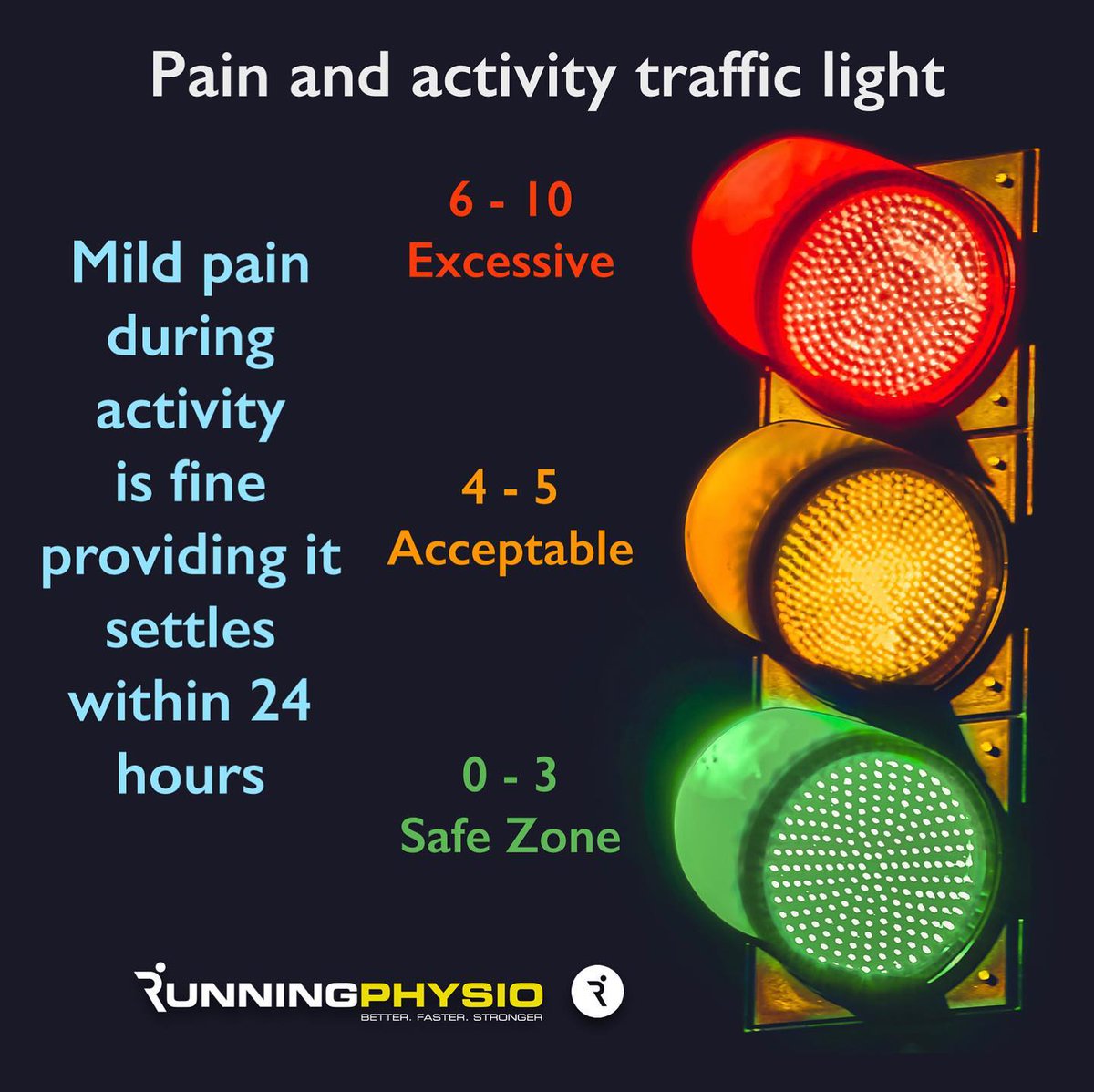
A pain traffic light is a simple but effective way to provide guidance on staying active during injury. Surprisingly lots of patients identify such guidance as an unmet need!

A pain traffic light is a simple but effective way to provide guidance on staying active during injury. Surprisingly lots of patients identify such guidance as an unmet need!
The Sp⚽️rts Physio (@adammeakins) 's Twitter Profile Photo

So-called ‘quick fix’ interventions undermine long-term behavior change, impede the pursuit of performance, and lead to serious downstream consequences for clinical practice! 😎🍿 link.springer.com/article/10.100…
Alan Couzens (@alan_couzens) 's Twitter Profile Photo

I don't think that the link between the musculoskeletal system and the Autonomic Nervous System is respected enough. Bad (soft tissue) things consistently happen when the athlete attempts to load when the ANS is fatigued/stressed by other things Best bet: Don't load when HRV⬇️

Tim Gabbett (@timgabbett) 's Twitter Profile Photo

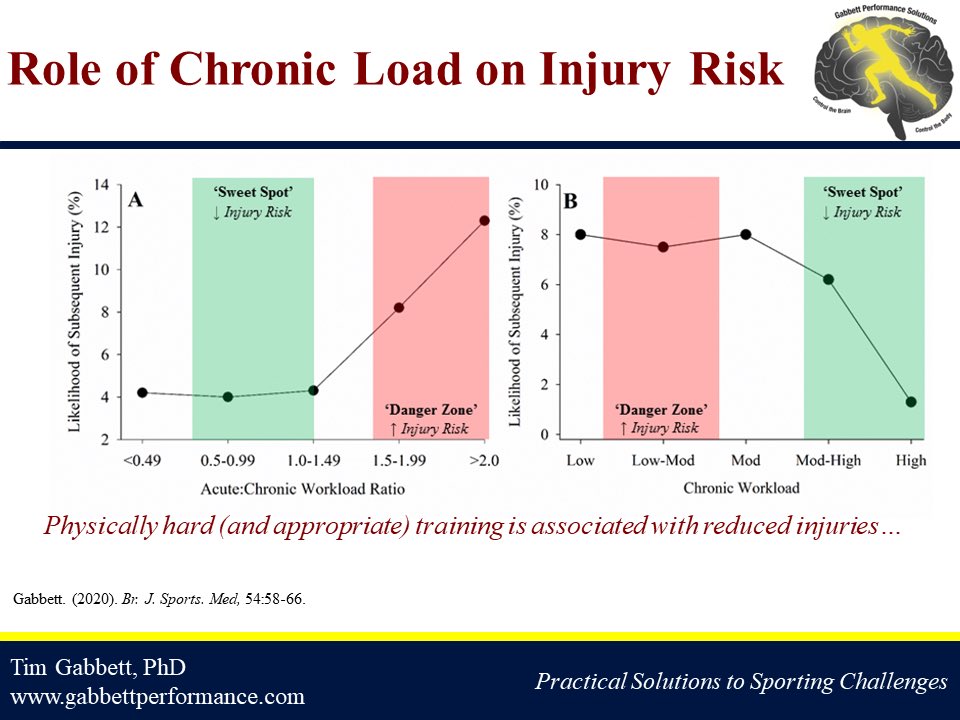
I often hear people say “I’m training smarter not harder!” But look at the graph on the right - higher training loads are associated with lower injury risk! This is the true paradox because it goes against everything the textbook tells us. Training harder is training smarter!!

I often hear people say “I’m training smarter not harder!” But look at the graph on the right - higher training loads are associated with lower injury risk! This is the true paradox because it goes against everything the textbook tells us.

Training harder is training smarter!!
Ben Cormack (@corkinetic) 's Twitter Profile Photo

Too often the question of diagnosis is split into a binary of “does it or does it not matter” This often creates a dichotomy & polarity between the 2 groups Maybe the concept of granularity is a better perspective than the binary one, but how does it apply here? Here is a 🧵

Too often the question of diagnosis is split into a binary of “does it or does it not matter”

This often creates a dichotomy &amp; polarity between the 2 groups 

Maybe the concept of granularity is a better perspective than the binary one, but how does it apply here?

Here is a 🧵
Ronny Wilson (@roneveryday) 's Twitter Profile Photo

This is why I do it. Moments like this bring more rewards than I’ve found anywhere else. Developing confidence is a priceless tool ❤️#coaching #performance #growth #confidence

This is why I do it. Moments like this bring more rewards than I’ve found anywhere else. Developing confidence is a priceless tool ❤️#coaching #performance #growth #confidence
Alan Couzens (@alan_couzens) 's Twitter Profile Photo

When I hear... "I tried the low intensity thing and it didn't work" My first two thoughts.. a) what you were doing wasn't low intensity b) you weren't tracking if it 'worked' in any measurable way That's how confident I am that 'easier' is the answer for most.

Ronny Wilson (@roneveryday) 's Twitter Profile Photo

Our ability to be the talker and the listener within our own heads is remarkable. However, we can have a natural tendency to overthink. This can impact our performance, especially in phases such as the taper.

Daniel Rowland (@dwrowland) 's Twitter Profile Photo

David Jakl There's definitely value to SIT training although the first study suggests that perhaps it wouldn't be a priority if the goal was to improve VO2 Max. For me, the goal is choosing the best stimulus for the adaption and improvement that is an athlete's current focus.

Steve Magness (@stevemagness) 's Twitter Profile Photo

Recovery in sport is vital. There are a hundreds of gadgets, supplements, tools designed to 'enhance' recovery. Seldom do we realize how you recover depends on what you are recovering from. My 4 types of fatigue & how to recover from each: -Flatness -Soreness -Stress -Lethargy