
Thomas D. Kühne
@dynamicscondmat
Founding Director of the Center for Advanced Systems Understanding (CASUS) @CASUSscience
ID: 3812658255
https://www.casus.science 29-09-2015 08:27:05
1,1K Tweet
2,2K Followers
4,4K Following

Understanding the Wettability of C1N1 (Sub)Nanopores: Implications for Porous Carbonaceous Electrodes (Mateusz Odziomek and co-workers) Nieves López-Salas, Mateusz Odziomek, Max Planck Institute of Colloids and Interfaces, Thomas D. Kühne #OpenAccess onlinelibrary.wiley.com/doi/10.1002/an…
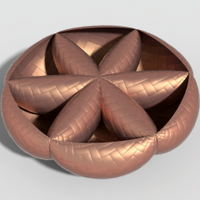

We often think of an "equilibrium" as something standing still, like a scale in perfect balance. But many equilibria are dynamic, like a flowing river which is never changing—yet never standing still. These dynamic equilibria are nicely described by so-called "detailed balance"

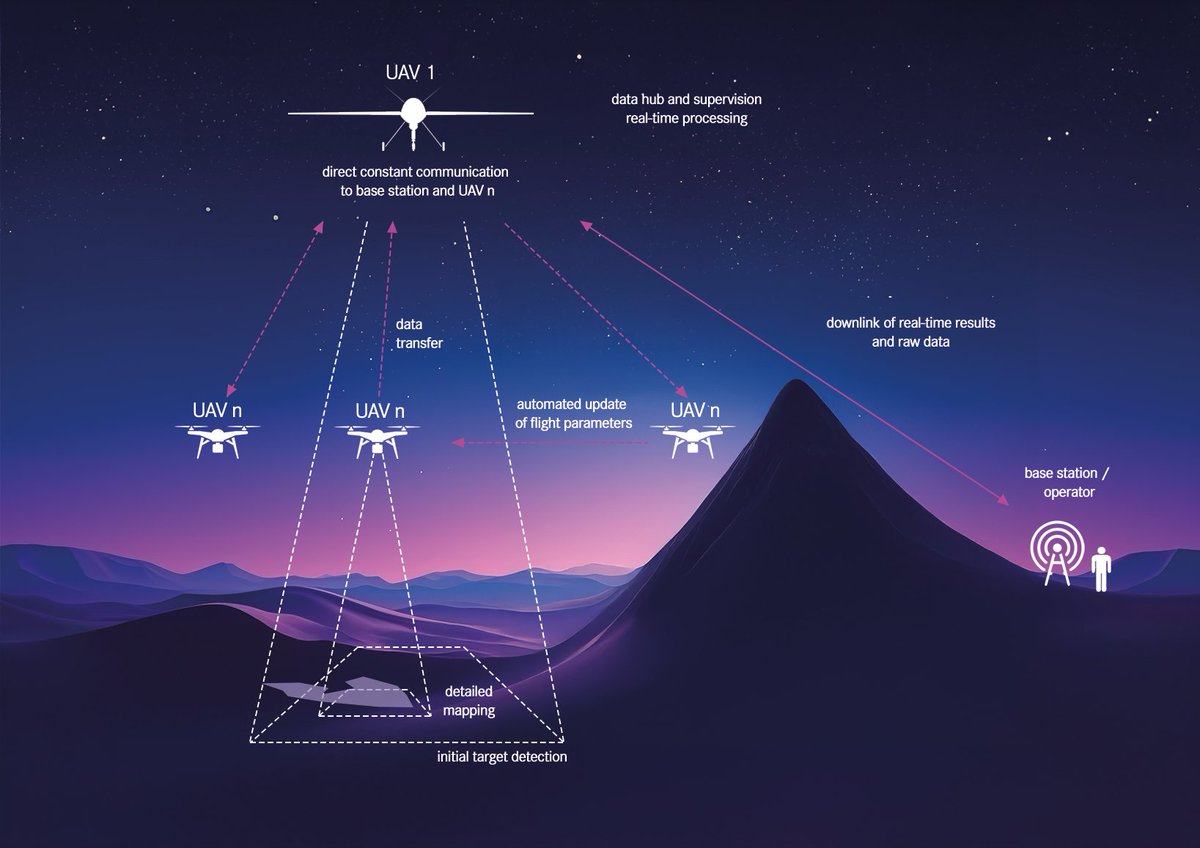
First results from our project with Helmholtz Institute Freiberg for Resource Technology (#HIF) 🎆: The new conceptual framework for an autonomous #UAV (aka #drone) swarm is especially suitable to efficiently scan complex 🏔 environments. HZDR @[email protected] ⏩ casus.science/?page_id=12224

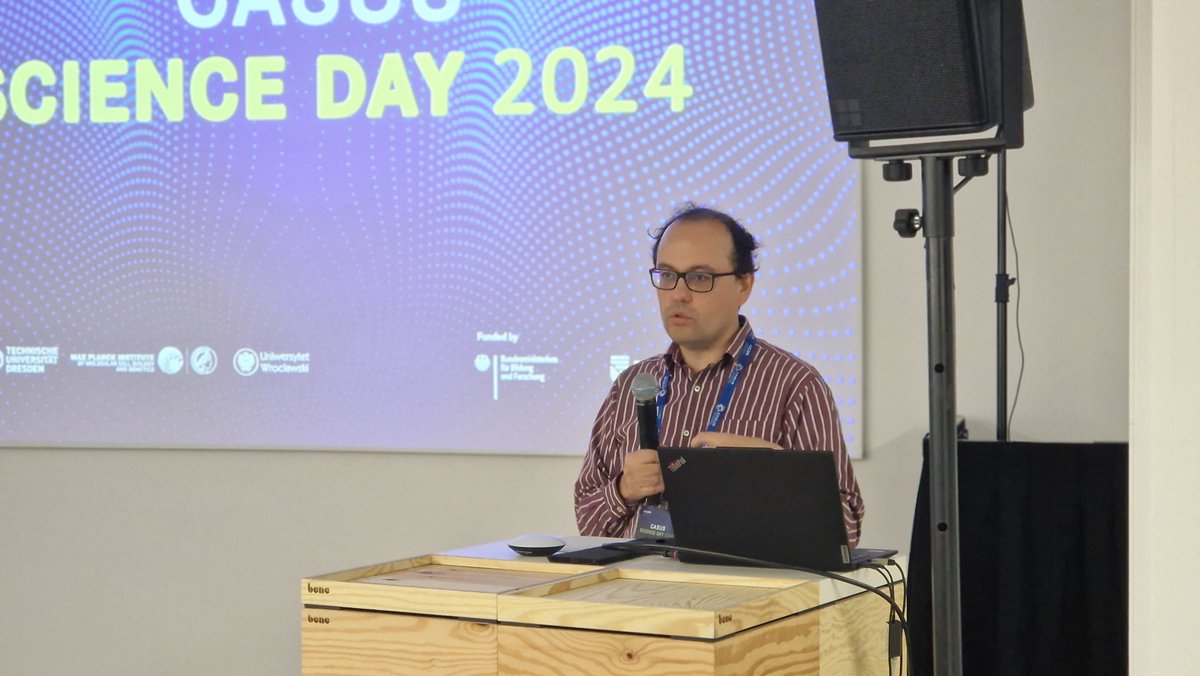
We are delighted to welcome our partners UFZ, MPI-CBG Dresden, TU Dresden & UNIWROC in December to talk about the achievements we have accomplished & the challenges we want to tackle next. Five years of Center for Advanced Systems Understanding at HZDR is a great occasion to do so, isn't it? HZDR @[email protected] #Görlitz

Yesterday, State Secretary Dr. Andreas Handschuh @SMWK_SN opened the new Data Center HZDR @[email protected]. With the #IT infrastructure, the HZDR responds to the growing need for computing power for scientific activities in the field of artificial intelligence. #AI Center for Advanced Systems Understanding at HZDR #HAICORE
Welcome 🤗 Center for Advanced Systems Understanding at HZDR, Werner Werner Dobrautz! Coming from Chalmers University of Technology, he will start his own group “AI4Quantum” focusing on e.g. #catalysis & #superconductivity challenges. ScaDS.AI DRESDEN-concept HZDR @[email protected] TU Dresden More about him & his plans: bit.ly/welcomedobrautz
In 1952, about to do a PhD at Cambridge University, Roger Penrose made a tetrahedral puzzle to break the ice with his fellow graduate students. 72 years later he shows us how. Watch the full video. As soothing as watching reindeer trekking across the snow: youtu.be/CD-21ytpCJU