

Douglas Feitosa Tomé
@douglasftome
ID: 826296312345788417
31-01-2017 05:09:27
34 Tweet
46 Takipçi
97 Takip Edilen


Excited to share our Nature Communications paper that aimed to identify memory engrams distributed throughout the brain. 7 years in the making. This one needed a lot of help from so many fantastic authors! rdcu.be/cKDwn


Dear #neurotwitter, we dropped this onto bioRxiv Neuroscience for your perusal. It's an unusual piece from my lab & I really, really enjoyed working on it with @chc1987. Here it is: Metabolically spikes serve neuronal energy homeostasis (and protect neurons). doi.org/10.1101/2022.1…

A recent preprint from the Rajasethupathy lab found a thalamo-cortical circuit critical for systems consolidation that supports key predictions of our previous computational model with Douglas Feitosa Tomé and Sadra Sadeh! Computational model: nature.com/articles/s4146…

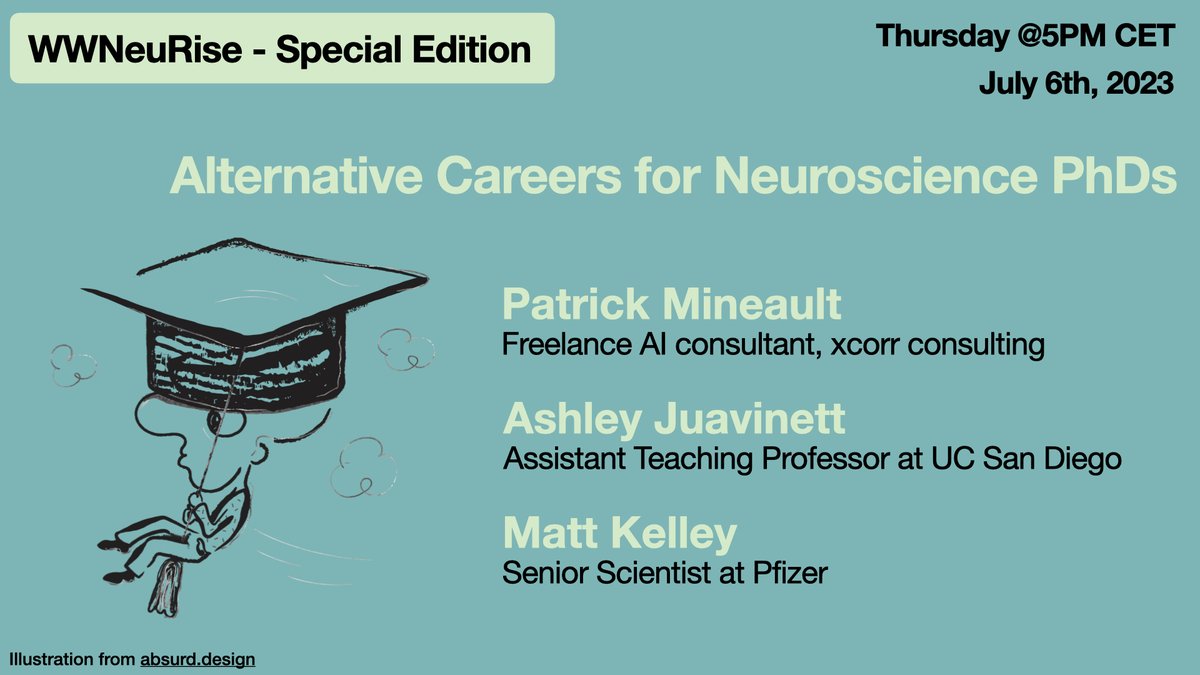
Next Thursday World Wide Neuro 🧠🗺️! With dr. ashley juavinett, Matt Kelley, Patrick Mineault Join us here: world-wide.org/Neuro/WWNeuRise
Our new study on the temporal evolution of memory engrams is out in Nature Neuroscience! Check out the full paper with Douglas Feitosa Tomé, Ying Zhang, Tomomi Aida, Olivia Mosto, Yifeng Lu, Mandy Chen, Sadra Sadeh, Dheeraj Roy and ClopathLab! nature.com/articles/s4159…

#Memory engrams are dynamic, and changes in engram composition mediated by inhibitory plasticity are crucial for the emergence of memory selectivity Douglas Feitosa Tomé Dheeraj Roy ClopathLab nature.com/articles/s4159…

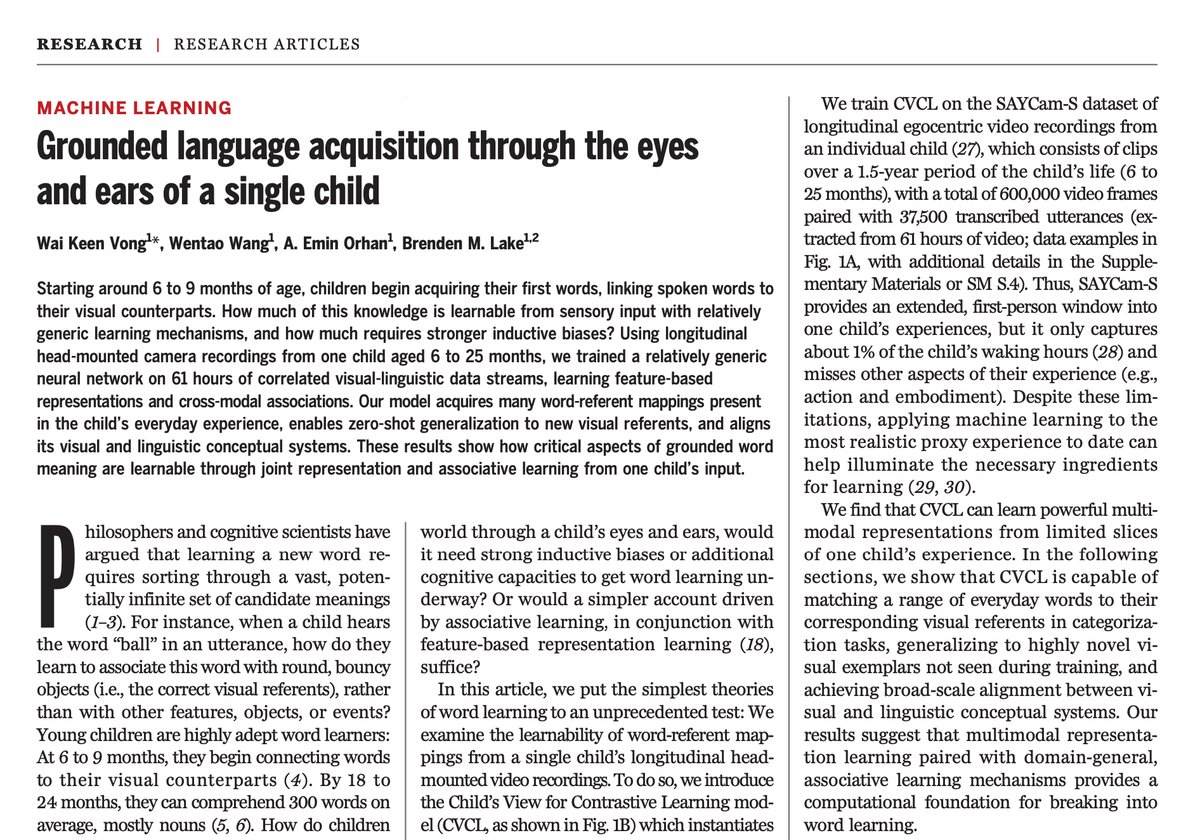
1/ Today in Science, we train a neural net from scratch through the eyes and ears of one child. The model learns to map words to visual referents, showing how grounded language learning from just one child's perspective is possible with today's AI tools. science.org/doi/10.1126/sc…


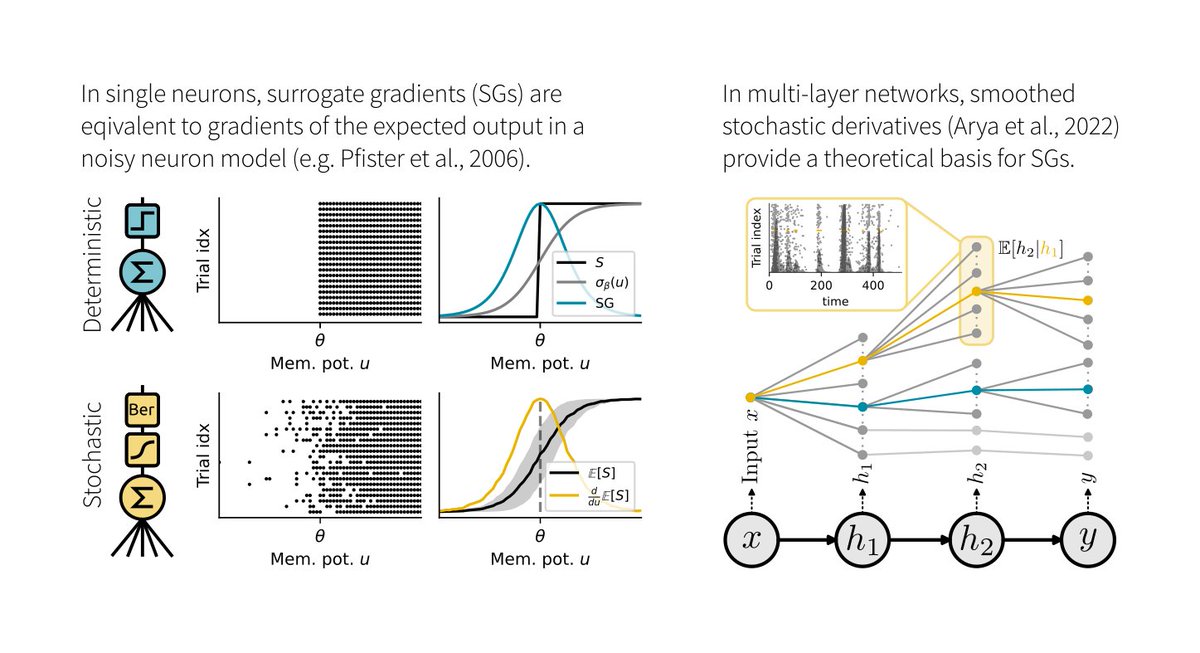
1/6 Surrogate gradients (SGs) are empirically successful at training spiking neural networks (SNNs). But why do they work so well, and what is their theoretical basis? In our new preprint led by Julia Gygax, we provide the answers: arxiv.org/abs/2404.14964
![Come check out my poster at COSYNE 2025 later tonight: [1-012] Parallel memory generalization and discrimination across brain regions. Looking forward to engaging discussions! #cosyne2025 #cosyne25 - via #Whova event app](https://pbs.twimg.com/media/GnCwmZOXIAAfM27.jpg "Douglas Feitosa Tomé (@douglasftome) on Twitter photo Come check out my poster at COSYNE 2025 later tonight: [1-012] Parallel memory generalization and discrimination across brain regions. Looking forward to engaging discussions! #cosyne2025 #cosyne25 - via #Whova event app")
