
Rabah Arezki
@rabah_arezki
former chief economist & VP @AfDB, former chief economist @WB MENA, & former chief commodities @IMF Research, & now @CNRS & @Harvard U Kennedy School
ID: 2950626263
https://ideas.repec.org/e/par153.html 30-12-2014 04:53:31
685 Tweet
1,1K Followers
6,6K Following

As China’s labor costs have increased, many analysts anticipated a massive expansion in India’s industrial base. Why hasn't it happened? ask CNRS 🌍’ Rabah Arezki and Delhi School of Economics’s Partha Sen. bit.ly/3PKqCnY
Removing the trade barriers that hinder India’s industrialization is no easy task, as its business and political elites have a vested interest in maintaining the current status quo, note CNRS 🌍’ Rabah Arezki and Delhi School of Economics’s Partha Sen. bit.ly/3PKqCnY
India’s industrial woes can be attributed to a form of “Dutch disease,” where exchange-rate appreciation has increased import demand and generated rents for domestic monopolists, write CNRS 🌍’ Rabah Arezki and Delhi School of Economics’s Partha Sen. bit.ly/4h2hJSN

📢 New Publication! 📝 In his latest Atlantic Council op-ed, Rabah Arezki examines escalating tensions between Algeria and France and highlights the need for the two countries to cooperatively reinvent their relationship. ⬇️ Read the full piece ⬇️ t.ly/fgpIB

🇩🇿 🇫🇷 A growing rift between Algeria and France has escalated as verbal attacks and threats between politicians have been exchanged on both sides. Rabah Arezki explains why it is time to lower the temperature between the two. atlanticcouncil.org/blogs/new-atla…

Tensions have escalated between Algerian and French politicians over the past few months. “The two countries have everything to lose if tensions escalate further,” writes Rabah Arezki. atlanticcouncil.org/blogs/new-atla…

Rabah Arezki for Atlantic Council suggests France and #Algeria to restore their relations as much more beneficial to both than the current tension and a model to emulate in North-South relations atlanticcouncil.org/blogs/new-atla…

A tug-of-war between governments and illegal miners is igniting conflict. To avoid the worst, states must make room for legal artisanal mining, Rabah Arezki writes. foreignpolicy.com/2025/03/06/afr…
From Brazil and the Democratic Republic of Congo to Sudan and Indonesia, a new gold rush is spreading. But unlike the Californian gold rush, no accommodation is made for artisanal miners, Rabah Arezki writes. foreignpolicy.com/2025/03/06/afr…

.Donald J. Trump's latest tariffs target the EU, China, and many others, but the true victims will be developing economies. As Rabah Arezki warned, rising costs and economic fragmentation will fuel inflation, reduce foreign investment, and worsen inequality.

New CEPR DP20346 Taxation and Industrialization: Global Evidence from the Introduction of the Value Added Tax Rabah Arezki, Frederick Van Der Ploeg Department of Economics, Oxford UvA Amsterdam, Grégoire Rota-Graziosi UCA, Van Dao Le ow.ly/MvE550W8Ysu #CEPR_MG #EconTwitter

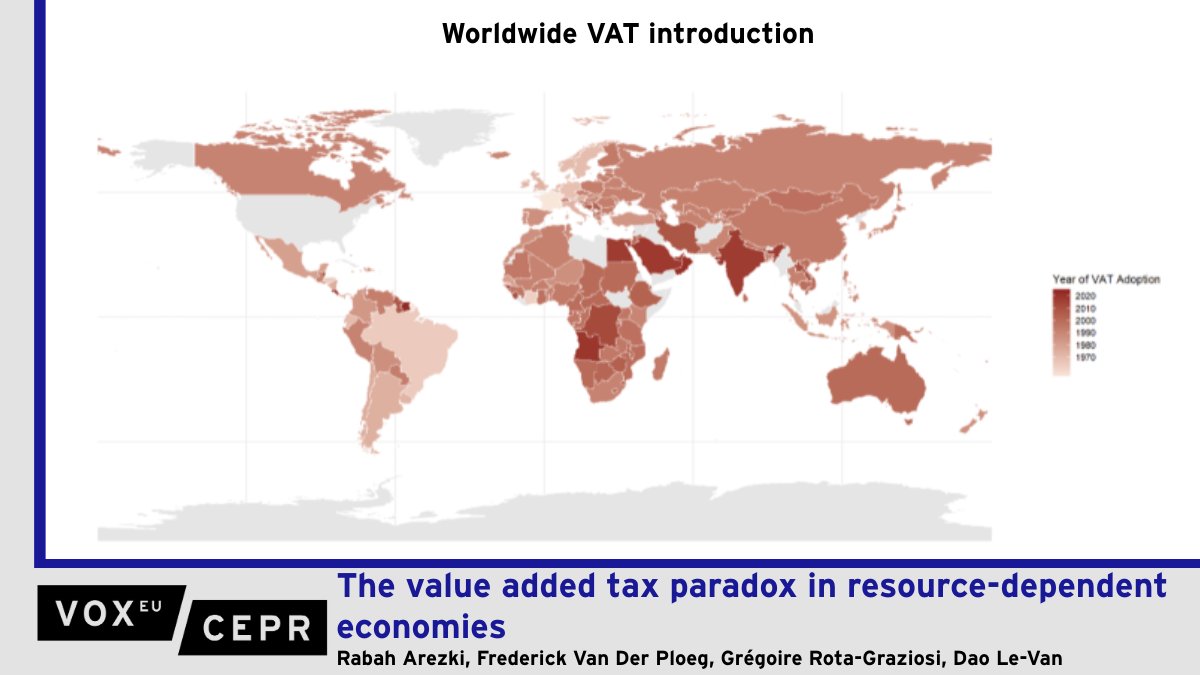
The value added tax paradox in resource-dependent economies Rabah Arezki, Frederick Van Der Ploeg Department of Economics, Oxford, Grégoire Rota-Graziosi UCA, Dao Le-Van (Vietnam National University) ow.ly/9JuV50WibKI
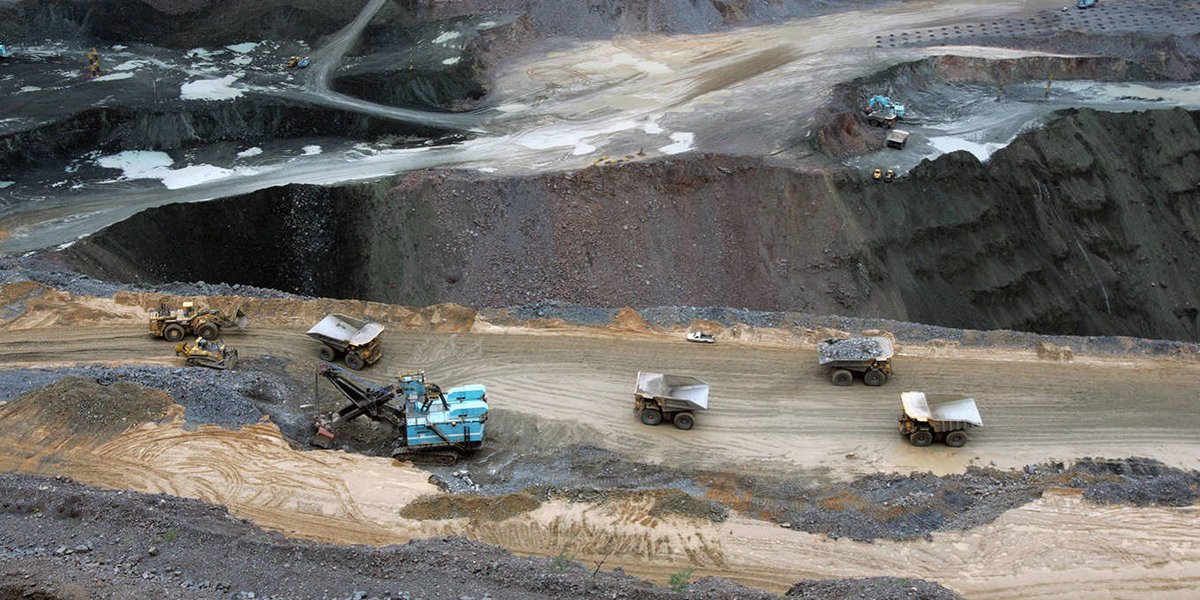
.Rabah Arezki (CNRS 🌍) and Rick van der Ploeg (University of Oxford) consider how mineral-rich countries can defend their interests amid rising demand for their endowments. bit.ly/46U6zx5
With demand for critical minerals rising, developing-country governments must recognize that the resource curse is not inescapable, note Rabah Arezki (CNRS 🌍) and Rick van der Ploeg (University of Oxford) – especially for countries with strong institutions. bit.ly/46U6zx5

Rabah Arezki & Rick van der Ploeg argue: Vast natural-resource endowments have proven to be more of a curse than a blessing, with resource-rich African countries often developing more slowly than their resource-poor developed counterparts. Project Syndicate 👉👉🔗bit.ly/3HgcmTm