Aditya Makkar (@makkaraditya) 's Twitter Profile
Aditya Makkar

@makkaraditya

Interested in mathematics and ML.

ID: 2761059984

linkhttps://makkar.github.io/ calendar_today24-08-2014 01:40:18

175 Tweet

241 Followers

615 Following

Aryeh Kontorovich (@aryehazan) 's Twitter Profile Photo

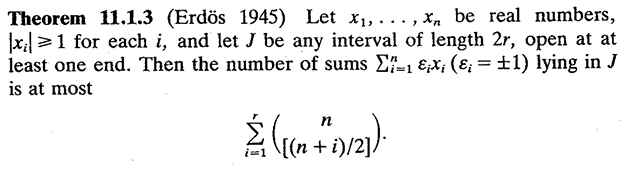
By popular demand (n=3), a brief 🧵on anti-concentration. 1. Littlewood-Offord-Erdős ecroot.math.gatech.edu/8803/littlewoo… some applications to random matrices are given here: math.iisc.ac.in/~manju/anti-co…

By popular demand (n=3), a brief 🧵on anti-concentration.

1.  Littlewood-Offord-Erdős

ecroot.math.gatech.edu/8803/littlewoo…

some applications to random matrices are given here:
math.iisc.ac.in/~manju/anti-co…
Jascha Sohl-Dickstein (@jaschasd) 's Twitter Profile Photo

Have you ever done a dense grid search over neural network hyperparameters? Like a *really dense* grid search? It looks like this (!!). Blueish colors correspond to hyperparameters for which training converges, redish colors to hyperparameters for which training diverges.

jack morris (@jxmnop) 's Twitter Profile Photo

first i thought scaling laws originated in OpenAI (2020) then i thought they came from Baidu (2017) now i am enlightened: Scaling Laws were first explored at Bell Labs (1993)

first i thought scaling laws originated in OpenAI (2020)

then i thought they came from Baidu (2017)

now i am enlightened:
Scaling Laws were first explored at Bell Labs (1993)
Eugene Vinitsky 🍒🦋 (@eugenevinitsky) 's Twitter Profile Photo

We're finally out of stealth: percepta.ai We're a research / engineering team working together in industries like health and logistics to ship ML tools that drastically improve productivity. If you're interested in ML and RL work that matters, take a look 😀

Sam Power (@sp_monte_carlo) 's Twitter Profile Photo

With Giorgos Vasdekis, we have written a manuscript - arxiv.org/abs/2511.21563 - which surveys the state of affairs within this literature, outlining principles for improving robustness and detailing examples of contemporary methods which confront these issues.

Eugene Vinitsky 🍒🦋 (@eugenevinitsky) 's Twitter Profile Photo

I'll be at NeurIPS this year to talk about self-driving, RL, and all the fun bottlenecks to scaling it up. Come chat with myself or my students: Daphne Cornelisse, Aditya Makkar, Riccardo Savorgnan

Gappy (Giuseppe Paleologo) (@__paleologo) 's Twitter Profile Photo

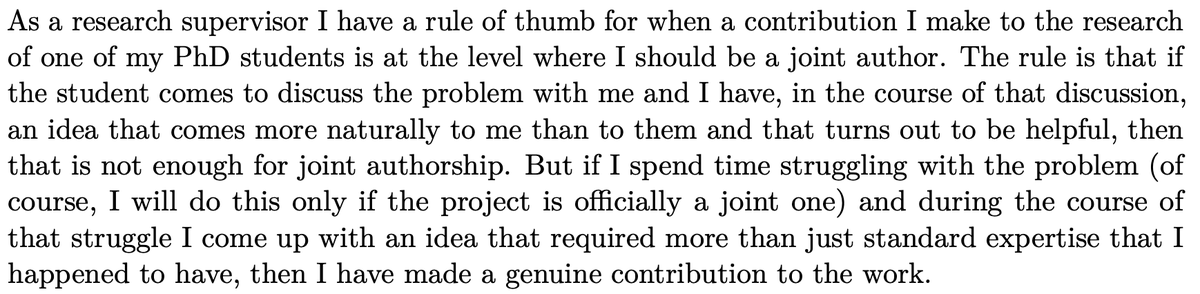
1. Ridge regression is heavily used in systematic investing both in the p << n and in the p >> n cases (last one, less so). I don't think that the use is very deeply motivated, other than the old standard argument in favor (see, e.g., El. Stat. Learning).

Almost Sure (@almost_sure) 's Twitter Profile Photo

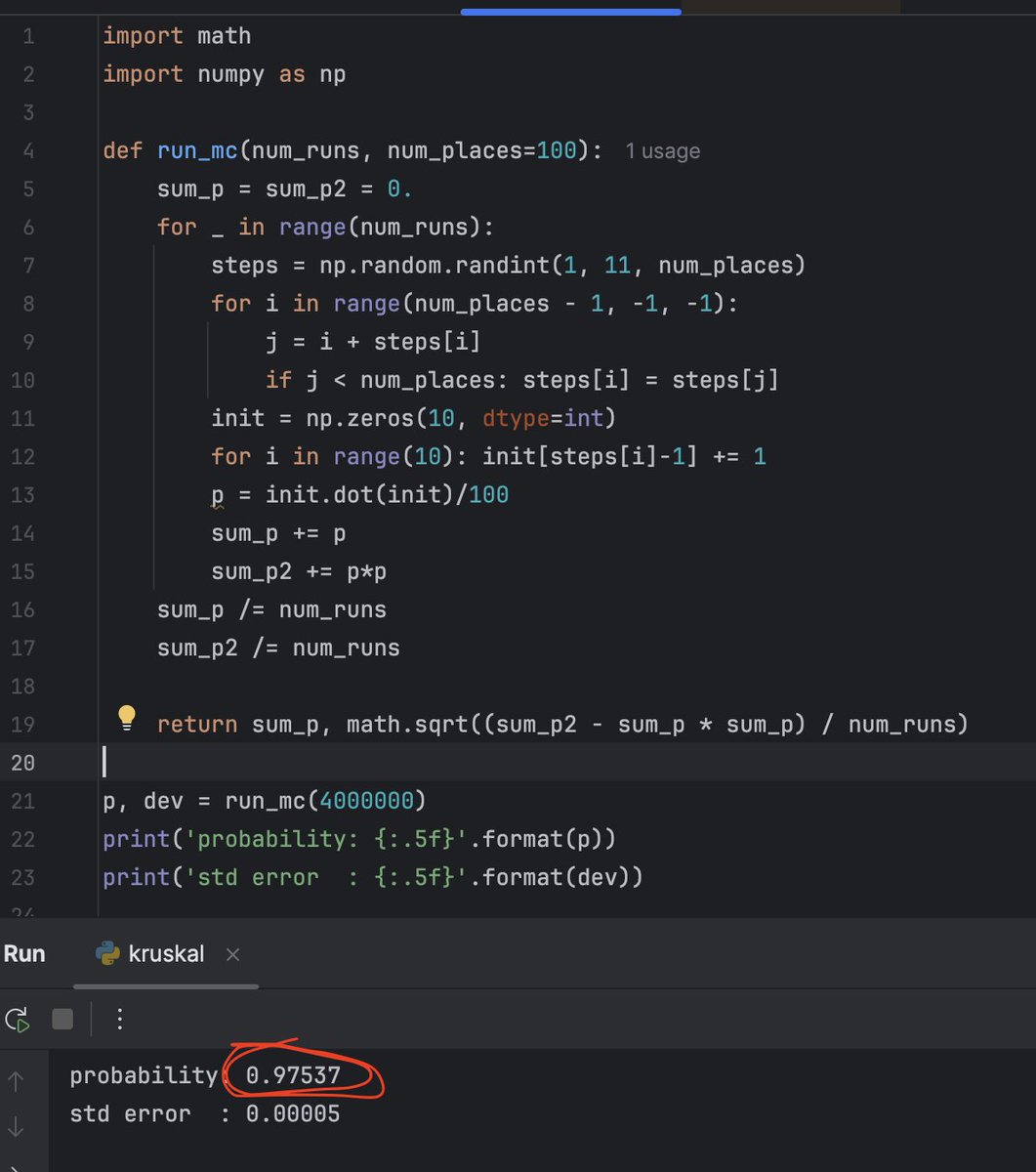
The poll is now closed - the correct answer is: nearly 100% The players almost always end on the same digit! just under 1/3 of you got it correct. The reason is coupling (see included details), giving about a 97.5% chance of them ending on the same digit. Also: see simulation

The poll is now closed - the correct answer is:

nearly 100%

The players almost always end on the same digit! just under 1/3 of you got it correct.

The reason is coupling (see included details), giving about a 97.5% chance of them ending on the same digit. Also: see simulation
Yang Liu (@yangpliu) 's Twitter Profile Photo

1/ Technical thread on #1stProof Problem 6: finding “spectrally light” vertex subsets in a graph, and how its solution fits into the landscape of spectral sparsification + restricted invertibility. Original thread: x.com/yangpliu/statu…

Mufan Li (@mufan_li) 's Twitter Profile Photo

Wasserstein geometry = quotient geometry of permutation invariance. In this blog, I explain why this is the natural language for exchangeable particles—and why mean-field neural network training shows up as a W2 gradient flow. mufan-li.github.io/OT2/