JaysmooveV2 (@jaysmoovev2) 's Twitter Profile
JaysmooveV2

@jaysmoovev2

ID: 1449781470885724168

calendar_today17-10-2021 16:57:03

3,3K Tweet

299 Followers

1,1K Following

Daniel O'Connor (@singularitarian) 's Twitter Profile Photo

You can discover the generalized Stokes’s theorem using the same type of intuitive argument that physicists use to derive the classical Stokes and Divergence theorems. These notes are my best attempt to explain how it works: github.com/danielvoconnor…

You can discover the generalized Stokes’s theorem using the same type of intuitive argument that physicists use to derive the classical Stokes and Divergence theorems. 

These notes are my best attempt to explain how it works:  github.com/danielvoconnor…
Probability and Statistics (@probnstat) 's Twitter Profile Photo

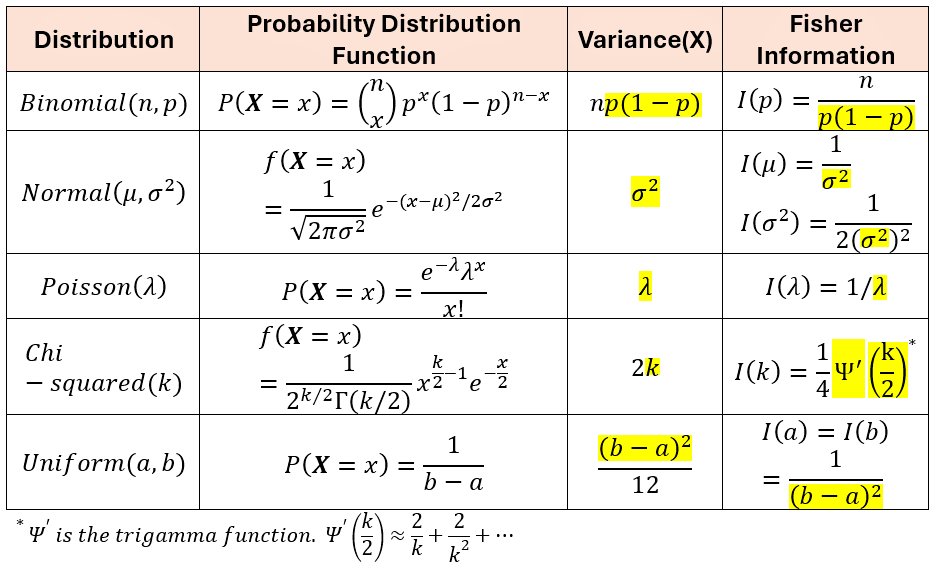
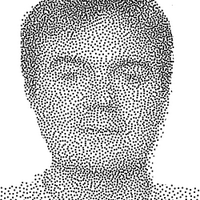
Fisher information measures how much information an observable random variable carries about an unknown parameter, quantifying how sensitive a probability model is to changes in that parameter. In probability and statistics, it underlies the Cramér–Rao lower bound, setting

Fisher information measures how much information an observable random variable carries about an unknown parameter, quantifying how sensitive a probability model is to changes in that parameter. In probability and statistics, it underlies the Cramér–Rao lower bound, setting
The Principia (@theprincipiaa) 's Twitter Profile Photo

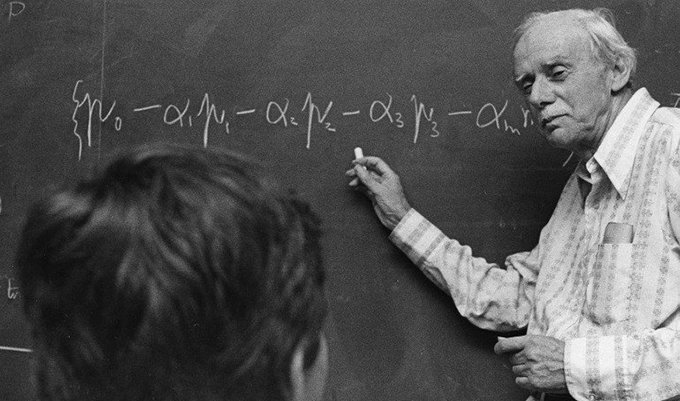
The mathematician plays a game in which he himself invents the rules while the physicist plays a game in which the rules are provided by nature, but as time goes on it becomes increasingly evident that the rules which the mathematician finds interesting are the same as those

The mathematician plays a game in which he himself invents the rules while the physicist plays a game in which the rules are provided by nature, but as time goes on it becomes increasingly evident that the rules which the mathematician finds interesting are the same as those
Hiroaki Nishikawa (@hironishikawa) 's Twitter Profile Photo

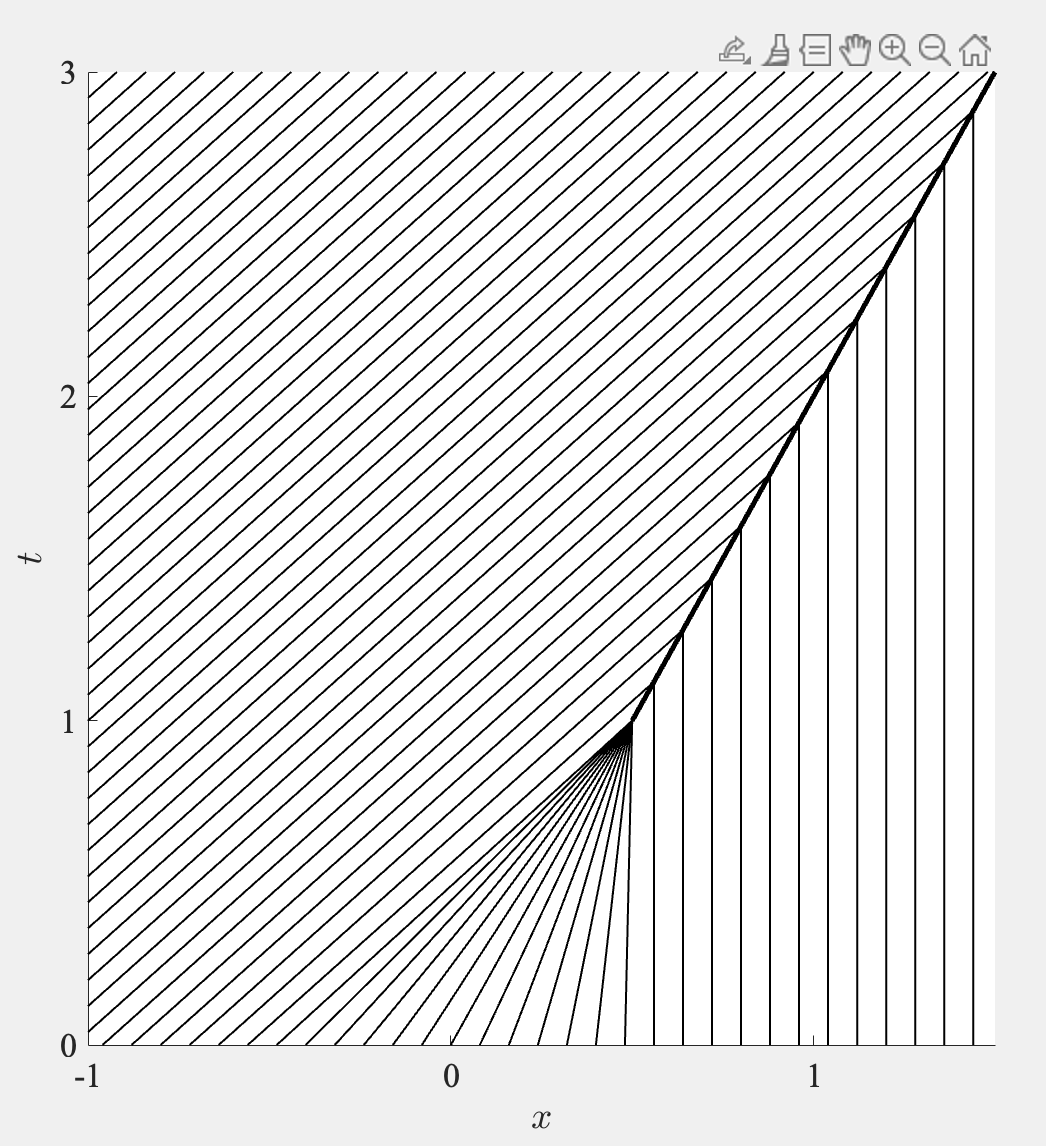
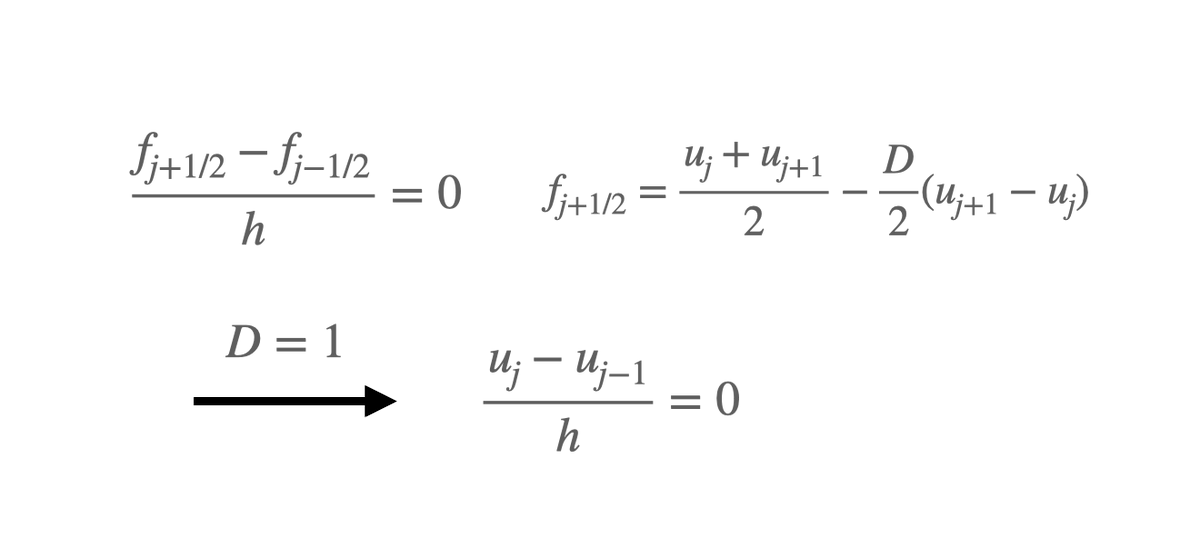
Given a boundary condition u_0 = 1, the 1st-order upwind scheme (D=1) generates the exact solution u(x)=1 in all cells as expected. Trying to see if the scheme will produce the same exact solution for other values of D.

Given a boundary condition u_0 = 1,  the 1st-order upwind scheme (D=1) generates the exact solution u(x)=1 in all cells as expected. Trying to see if the scheme will produce the same exact solution for other values of D.
Mathelirium (@mathelirium) 's Twitter Profile Photo

Once you’ve accepted that Brownian motion doesn’t have a classical dX/dt but does have this rigid quadratic variation, you’re ready for the first real Itô vs chain rule punch: take X_t = B_t and look at f(x) = x². In ordinary calculus you’d write d(B_t²) = 2 B_t dB_t and move

Mathelirium (@mathelirium) 's Twitter Profile Photo

Let’s now see how to perform integration using Itô Calculus and we'll be ready to look at Stochastic Differential Equations. In classical calculus you’re secretly relying on dX/dt existing: you write dX/dt, you form Riemann sums f(Xₜᵢ)·(Xₜᵢ₊₁ − Xₜᵢ), and in the limit

Frank Nielsen (@frnknlsn) 's Twitter Profile Photo

Plot exactly relative entropic balls: Parametric equations of the extended Kullback-Leibler sphere or Itakura-Saito sphere can be expressed on the orthants using branches of the Lambert W function (W0 and W_{-1}). tinyurl.com/BregmanManifold

Plot exactly relative entropic balls: 

Parametric equations of the extended Kullback-Leibler sphere or Itakura-Saito sphere can be expressed on the orthants using branches of the Lambert W function (W0 and W_{-1}).

 tinyurl.com/BregmanManifold
Mathelirium (@mathelirium) 's Twitter Profile Photo

When we move into Itô Calculus you have to give up the fantasy that you’ll evaluate stochastic integrals in closed form. Forget it! 😏 The notation is compact, but the objects are brutal. Even something that looks harmless like Xₜ = X₀ + ∫₀ᵗ (sin(Xₛ³) + s² e^{Xₛ}) ds +

spike (@spikedoanz) 's Twitter Profile Photo

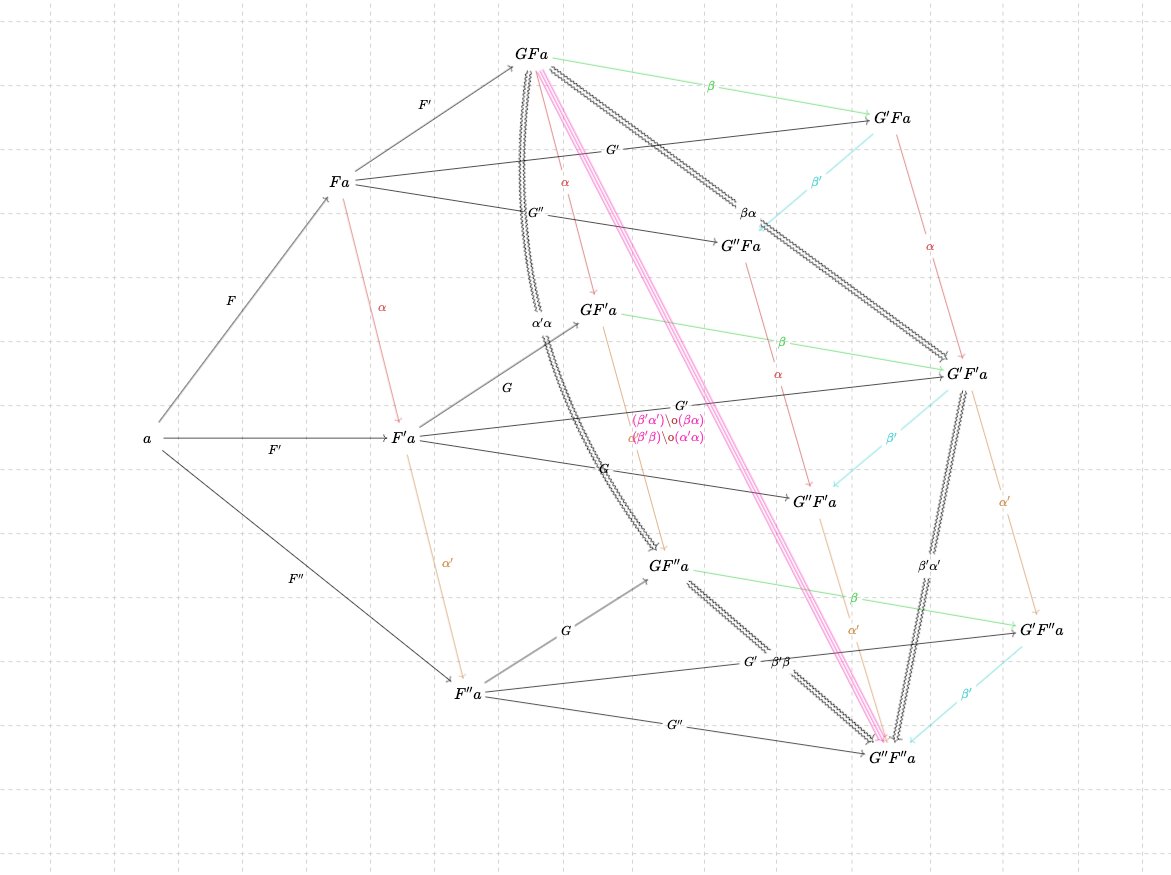
this is what a proof looks like in (native) category theory specifically, it's the proof of the interchange law for 4 natural transformations: (β' ⋅ α') ∘ (β ⋅ α) = (β' ∘ β) ⋅ (α' ∘ α) just connect arrows together until they join. sparks joy.

this is what a proof looks like in (native) category theory

specifically, it's the proof of the interchange law for 4 natural transformations:

(β' ⋅ α') ∘ (β ⋅ α) = (β' ∘ β) ⋅ (α' ∘ α)

just connect arrows together until they join. sparks joy.
Mathelirium (@mathelirium) 's Twitter Profile Photo

Today we introduce Stochastic Differential Equations (SDEs). I find that the best way to introduce these complex concepts is to look at an application. This is part I of the lecture🙂 We look at the theory behind electromagnetic scattering/radar clutter which leads to anomaly

Mathelirium (@mathelirium) 's Twitter Profile Photo

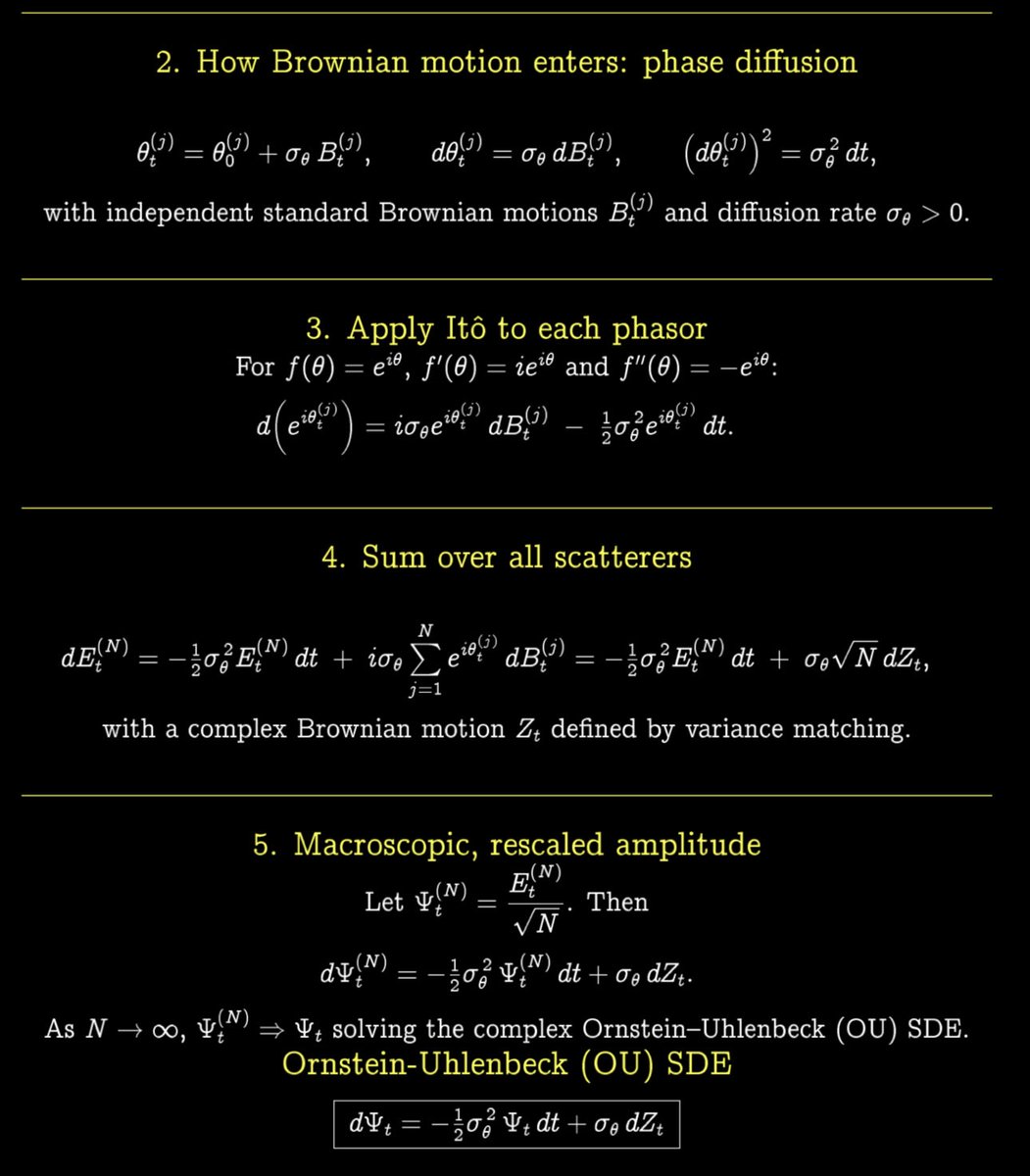
Part II of our SDE lecture Now we do the next honest step: Once each scatterer’s phase is allowed to wander in time as a Brownian diffusion, the total field stops being a static random phasor sum and turns into a stochastic process with its own dynamics. Take one phasor

Part II of our SDE lecture

Now we do the next honest step: 

Once each scatterer’s phase is allowed to wander in time as a Brownian diffusion, the total field stops being a static random phasor sum and turns into a stochastic process with its own dynamics. 

Take one phasor
Frank Nielsen (@frnknlsn) 's Twitter Profile Photo

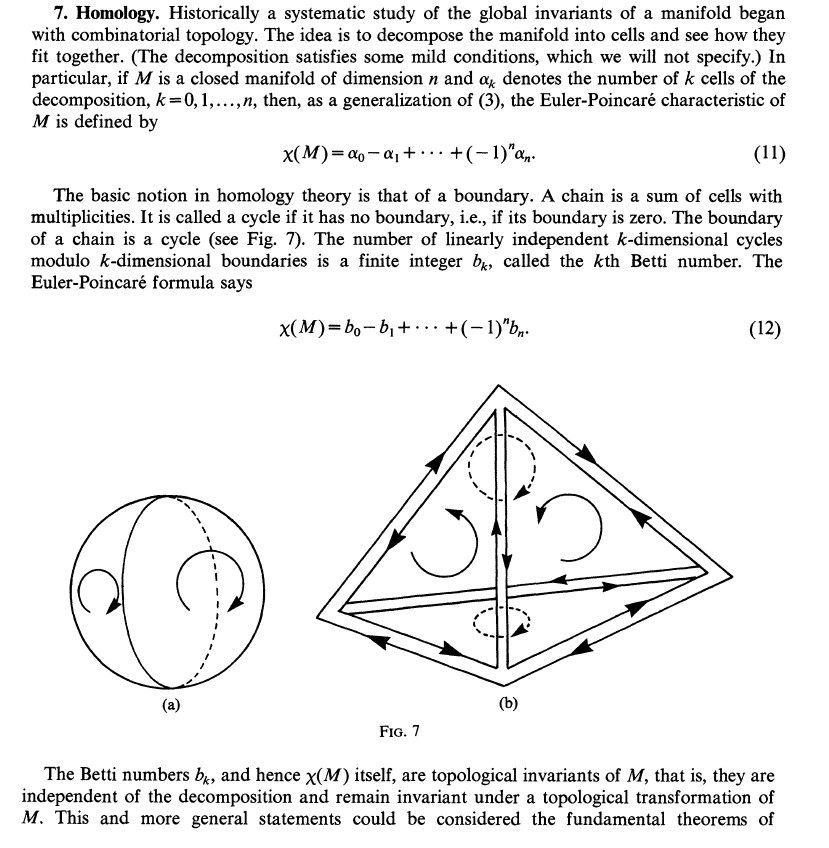
Yet another excellent "popular geometry" article: "From Triangles to Manifolds" by Shing-Shen Chern Great introduction to homology, homotopy, cohomology and vector bundles!

Yet another excellent "popular geometry" article:

"From Triangles to Manifolds"
by Shing-Shen Chern 

Great introduction to homology, homotopy, cohomology and vector bundles!
Probability and Statistics (@probnstat) 's Twitter Profile Photo

Hugo Duminil-Copin is a leading mathematician in probability and mathematical physics and a 2022 Fields Medalist for his groundbreaking work on phase transitions and critical phenomena. His research focuses on percolation, Ising models, and random cluster models, where he

Hugo Duminil-Copin is a leading mathematician in probability and mathematical physics and a 2022 Fields Medalist for his groundbreaking work on phase transitions and critical phenomena. His research focuses on percolation, Ising models, and random cluster models, where he