Dan Walker (@360maths) 's Twitter Profile
Dan Walker

@360maths

I'm a secondary school maths teacher from Hastings UK, looking to share ideas about maths teaching resources and pedagogy.

ID: 990210047526559745

calendar_today28-04-2018 12:44:07

789 Tweet

1,1K Followers

118 Following

Dan Walker (@360maths) 's Twitter Profile Photo

A mundane looking question that my year 7s are doing now. A pupil decided to convert the numbers to decimals first. Rather than stop them and do the obvious fraction arithmetic, I let them carry on...

A mundane looking question that my year 7s are doing now. A pupil decided to convert the numbers to decimals first. Rather than stop them and do the obvious fraction arithmetic, I let them carry on...
Dan Walker (@360maths) 's Twitter Profile Photo

We discussed how x and y were recurring decimals, which made the multiplication seem absurd. But they did get to 4.999..., at which point we discussed how this is equal to 5, by considering the difference between 4.999... and 5

Dan Walker (@360maths) 's Twitter Profile Photo

Factorising is a lot more conceptually challenging than we give it credit for. Factors of a term like 6n^2 are very fiddly to explain because n is not necessarily an integer. Any suggestions on how to do this?

Dan Walker (@360maths) 's Twitter Profile Photo

One of my students was struggling to understand rotation about a point today, so I made this in desmos: desmos.com/calculator/yre… I'd like to upgrade it to rotating about an arbitrary point but it's restricted to rotations about the origin for now

Dan Walker (@360maths) 's Twitter Profile Photo

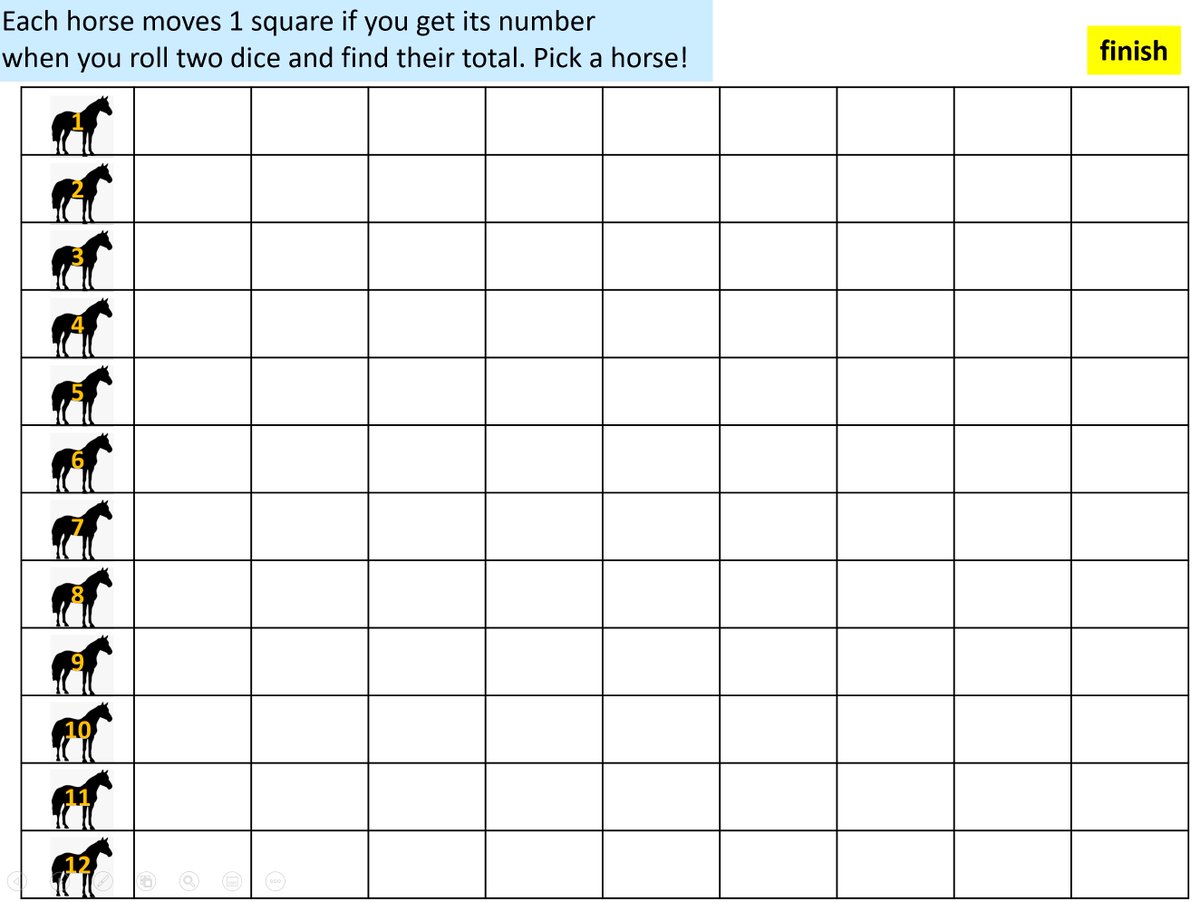
Just found a nice simulator for two-dice totals: geogebra.org/m/UsoH4eNl Should go well with this classic probability task that's long been my go-to when teaching sample space diagrams:

Just found a nice simulator for two-dice totals: geogebra.org/m/UsoH4eNl 
Should  go well with this classic probability task that's long been my go-to when teaching sample space diagrams:
Dan Walker (@360maths) 's Twitter Profile Photo

The image is from the GCSE maths specification. Please could someone explain the difference between estimation and approximation?

The image is from the GCSE maths specification. Please could someone explain the difference between estimation and approximation?
Dan Walker (@360maths) 's Twitter Profile Photo

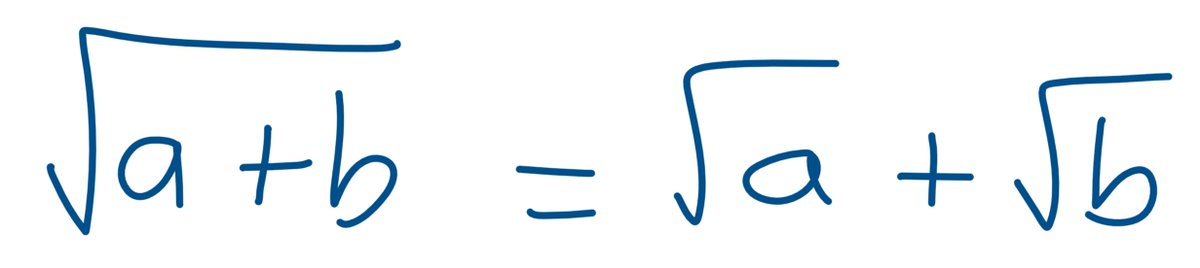
In a lesson today, the misconception in the image came up. I usually just say "it's simply not true" and use the numerical example that root(3^2+4^2) does not equal root(3^2)+root(4^2). But this still seems a bit of a weak response to me. Any suggestions?

In a lesson today, the misconception in the image came up. I usually just say "it's simply not true" and use the numerical example that root(3^2+4^2) does not equal root(3^2)+root(4^2). But this still seems a bit of a weak response to me. Any suggestions?