Daniel Chang (@danielchang2002) 's Twitter Profile
Daniel Chang

@danielchang2002

Genetics PhD student @Stanford | Prev @UMNComputerSci | Genomics + ML

ID: 1058949309025132544

linkhttp://danielchang2002.github.io calendar_today04-11-2018 05:09:24

55 Tweet

178 Followers

262 Following
James Zou (@james_y_zou) 's Twitter Profile Photo

💡IMO one of the best use of AI Scientist is to reanalyze data to find new insights. Introducing #CellVoyager: AI Compbio Agent that makes new discoveries by autonomously analyzing papers/data, which we then validate🚀 New findings on aging, Covid, scRNAseq etc. Open source!

Matt Durrant (@mgdurrant) 's Twitter Profile Photo

Excited to announce that I’m starting a new position as a senior fellow FutureHouse. I’ll be working on applying AI agents to metagenomic workflows. Very grateful for the opportunity to learn and explore my scientific interests. Please reach out if you’d like to collaborate!

Garyk Brixi (@garykbrixi) 's Twitter Profile Photo

Evo 2 update: new dependency versions (torch, transformer engine, flash attn) and a docker option mean it should be easy to setup without needing to compile locally. Happy ATGC-ing! github.com/ArcInstitute/e…

Kevin K. Yang 楊凱筌 (@kevinkaichuang) 's Twitter Profile Photo

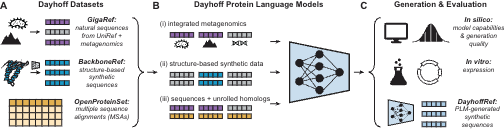
In 1965, Margaret Dayhoff published the Atlas of Protein Sequence and Structure, which collated the 65 proteins whose amino acid sequences were then known. Inspired by that Atlas, today we are releasing the Dayhoff Atlas of protein sequence data and protein language models.

In 1965, Margaret Dayhoff published the Atlas of Protein Sequence and Structure, which collated the 65 proteins whose amino acid sequences were then known. 

Inspired by that Atlas, today we are releasing the Dayhoff Atlas of protein sequence data and protein language models.
Yuya Kiguchi, PhD (@yuyakiguchi) 's Twitter Profile Photo

We are happy to announce that our latest manuscript has been published in Nature Communications! We identified the highly abundant and prevalent giant extrachromosomal element in the human mouth, named "Inocle". nature.com/articles/s4146…

Goodfire (@goodfireai) 's Twitter Profile Photo

Arc Institute trained their foundation model Evo 2 on DNA from all domains of life. What has it learned about the natural world? Our new research finds that it represents the tree of life, spanning thousands of species, as a curved manifold in its neuronal activations. (1/8)

Jatin Nainani Z 🍃 (@zephyr_wade) 's Twitter Profile Photo

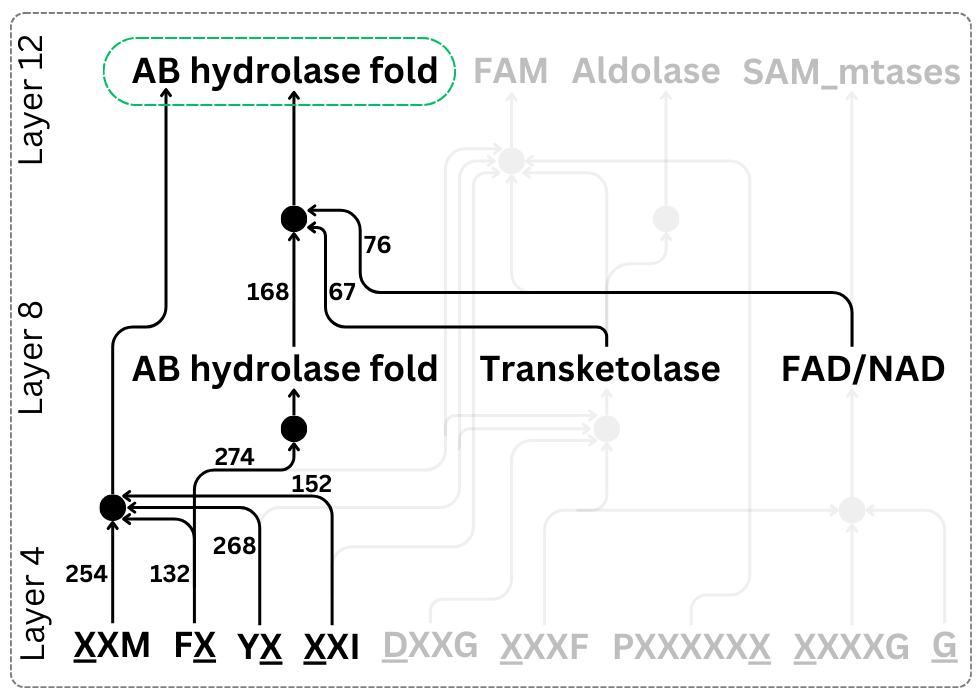
Can protein LMs reveal scientific knowledge? We start by asking how pLMs turn sequences into structure signals. We map a contact prediction circuit: early motif features gate later domain features. Spurious or science? We can now test. 🧵(1 of N)

Can protein LMs reveal scientific knowledge? We start by asking how pLMs turn sequences into structure signals. We map a contact prediction circuit: early motif features gate later domain features. Spurious or science? We can now test. 🧵(1 of N)
Rayan Chikhi (@rayanchikhi) 's Twitter Profile Photo

🌎👩‍🔬 For 15+ years biology has accumulated petabytes (million gigabytes) of🧬DNA sequencing data🧬 from the far reaches of our planet.🦠🍄🌵 Logan now democratizes efficient access to the world’s most comprehensive genetics dataset. Free and open. doi.org/10.1101/2024.0…

🌎👩‍🔬 For 15+ years biology has accumulated petabytes (million gigabytes) of🧬DNA sequencing data🧬 from the far reaches of our planet.🦠🍄🌵

Logan now democratizes efficient access to the world’s most comprehensive genetics dataset. Free and open.

doi.org/10.1101/2024.0…
Samuel King (@samuelhking) 's Twitter Profile Photo

Many of the most complex and useful functions in biology emerge at the scale of whole genomes. Today, we share our preprint “Generative design of novel bacteriophages with genome language models”, where we validate the first, functional AI-generated genomes 🧵

Brian Hie (@brianhie) 's Twitter Profile Photo

Welcome to the age of generative genome design! In 1977, Sanger et al. sequenced the first genome—of phage ΦX174. Today, led by Samuel King, we report the first AI-generated genomes. Using ΦX174 as a template, we made novel, high-fitness phages with genome language models. 🧵
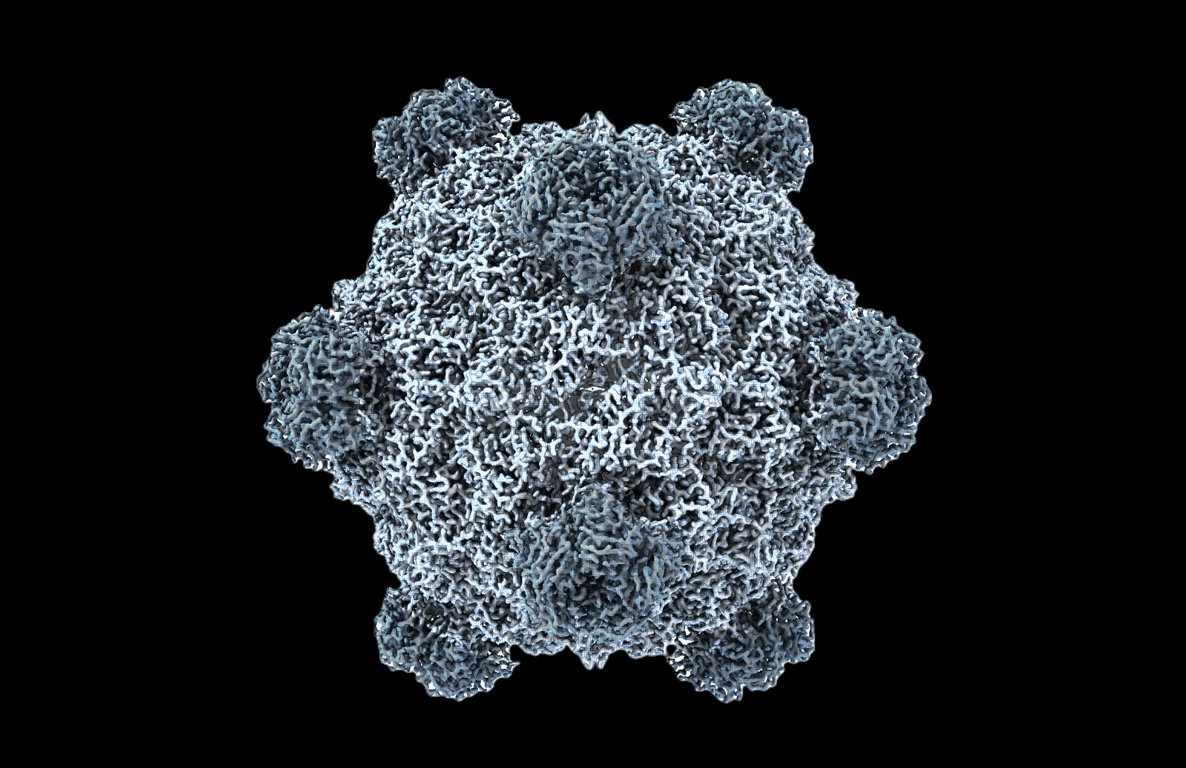

Welcome to the age of generative genome design!

In 1977, Sanger et al. sequenced the first genome—of phage ΦX174.

Today, led by <a href="/samuelhking/">Samuel King</a>, we report the first AI-generated genomes. Using ΦX174 as a template, we made novel, high-fitness phages with genome language models. 🧵
David Li (@_david_li) 's Twitter Profile Photo

Had fun solving the cryo structure of Evo-Φ36 with the awesome team of Samuel King, Claudia Driscoll, and Max Wilkinson! Samuel is a beast and the reason there is a 'skevophage' react on Stanford slack.
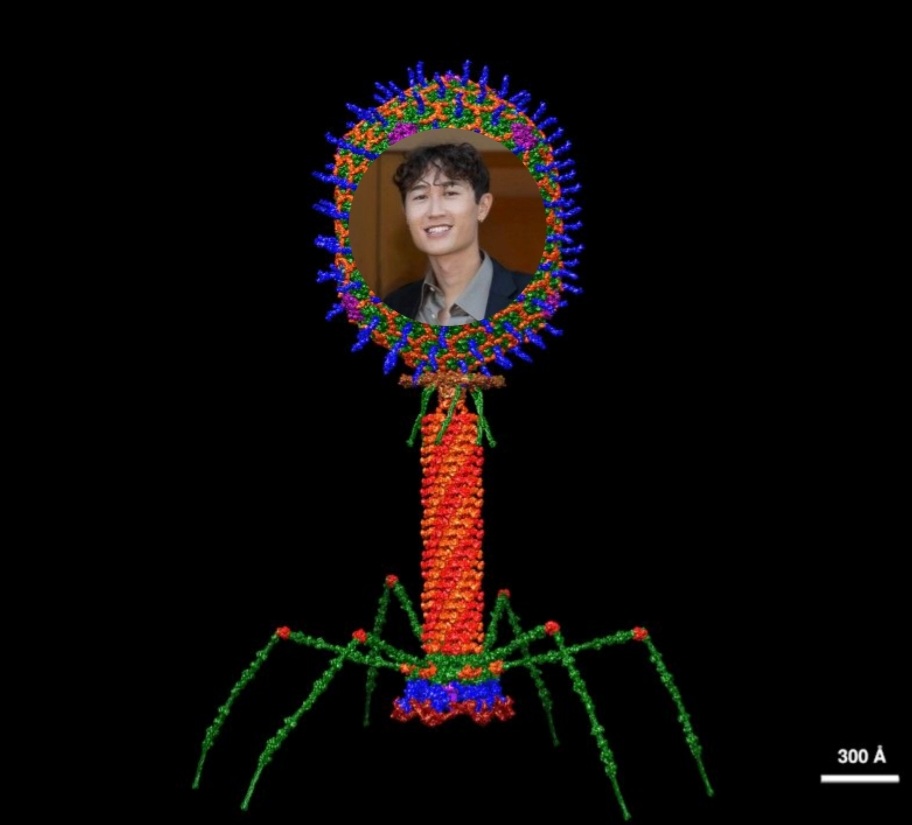
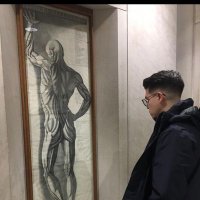
Had fun solving the cryo structure of Evo-Φ36 with the awesome team of <a href="/samuelhking/">Samuel King</a>,  <a href="/driscoll_cl/">Claudia Driscoll</a>, and <a href="/maxewilkinson/">Max Wilkinson</a>! Samuel is a beast and the reason there is a 'skevophage' react on Stanford slack.
Santiago Mille (@santimillef) 's Twitter Profile Photo

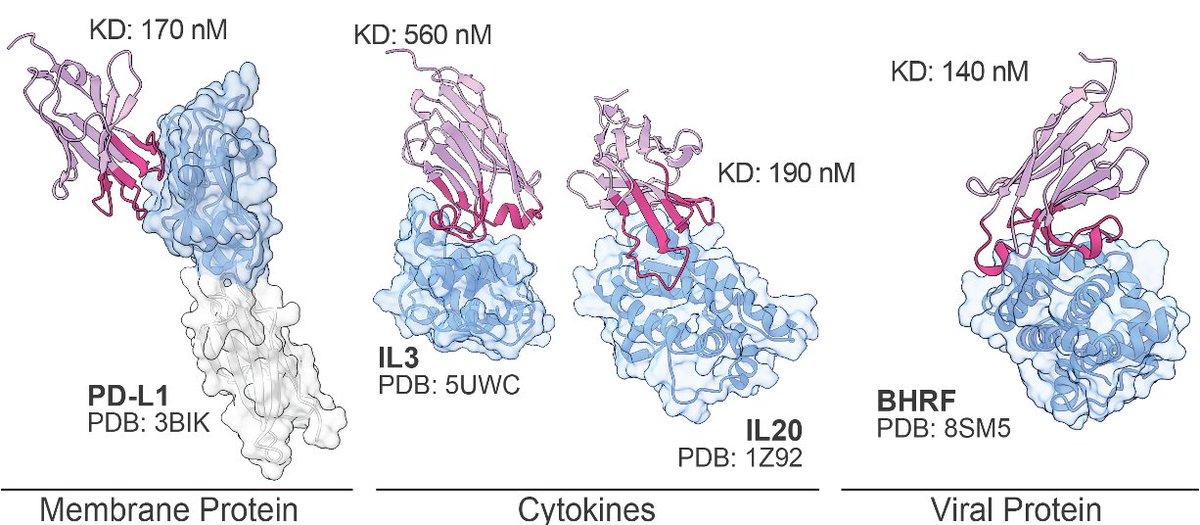
The ability to design antibodies against any protein of interest has major implications for medicine, biotech, and basic science. Today, we introduce Germinal, a pipeline for epitope-targeted de novo antibody design achieving  4–22% success rates with efficient experimental

The ability to design antibodies against any protein of interest has major implications for medicine, biotech, and basic science. 

Today, we introduce Germinal, a pipeline for epitope-targeted de novo antibody design achieving  4–22% success rates with efficient experimental
Brian Hie (@brianhie) 's Twitter Profile Photo

Today, we report Germinal, a method for efficient de novo antibody design, with Santiago Mille and Xiaojing Gao. Germinal achieves success rates of 4-22% across diverse epitopes. We make the work fully open, without doing lame things like posting a preprint without methods. 🧵

Today,  we report Germinal, a method for efficient de novo antibody design, with <a href="/santimillef/">Santiago Mille</a> and <a href="/SynBioGaoLab/">Xiaojing Gao</a>.

Germinal achieves success rates of 4-22% across diverse epitopes.

We make the work fully open, without doing lame things like posting a preprint without methods. 🧵
John Wang (@_jnwang) 's Twitter Profile Photo

Super excited to share what we’ve been working on in collaboration with Xiaojing Gao over the past few months on de novo antibody design. Check out this great thread by our team lead Santiago Mille highlighting the technical aspects of the pipeline!


Talal Widatalla (@talaldotpdb) 's Twitter Profile Photo

Entering my PhD, de novo antibody design was a grand challenge I thought would not be solved without huge increases in affinity data and Ab-Ag structure. Only 2 years later, we provide the first open-source recipe to get antibody binders, almost magically, out of a computer (1/3)

Elana Simon (@elanapearl) 's Twitter Profile Photo

Published! 🎉 Paper now has more feature analysis and higher quality figures - thanks to great reviewer feedback! Code also got a major upgrade - v1.0.0 is way more modular so you can easily swap in different protein embeddings or SAE architectures: github.com/ElanaPearl/Int…

Garyk Brixi (@garykbrixi) 's Twitter Profile Photo

Excited to share Phalanx, our new layer for sequence modeling! Each block communicates with its neighbor, like the shield cover of a neighboring hoplite. Phalanx can replace sliding window attention and trains faster than optimized baselines while maintaining quality.

Owen Queen (@oq_35) 's Twitter Profile Photo

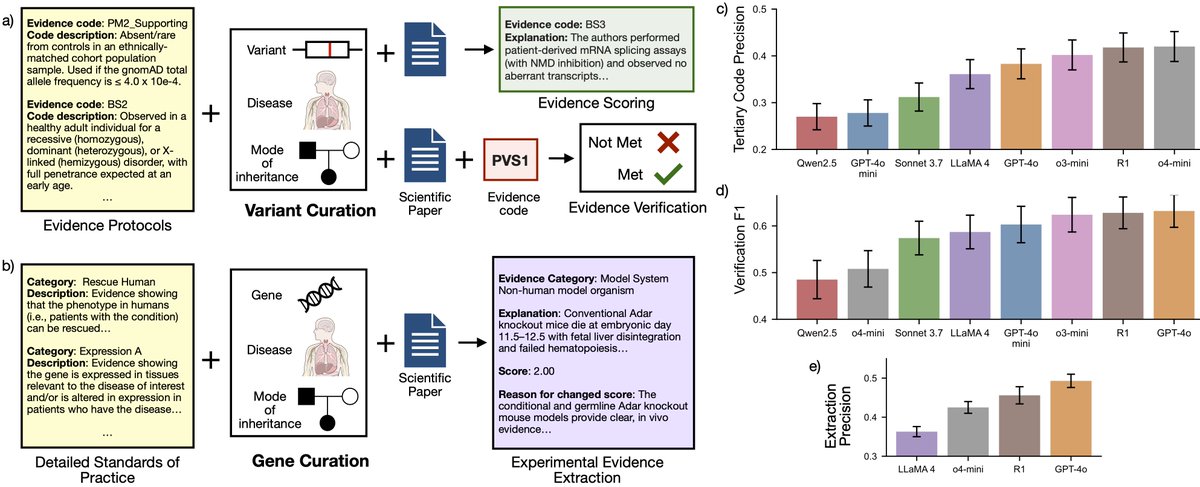
🚀 Excited to share our new paper: CGBench — Benchmarking Language Model Scientific Reasoning for Clinical Genetics Research Can AI truly understand scientific papers? We explore how LLMs interpret real biomedical literature — not just multiple-choice questions.🧵

🚀 Excited to share our new paper: CGBench — Benchmarking Language Model Scientific Reasoning for Clinical Genetics Research

Can AI truly understand scientific papers? We explore how LLMs interpret real biomedical literature — not just multiple-choice questions.🧵
Stephen Tang (@stephentang23) 's Twitter Profile Photo

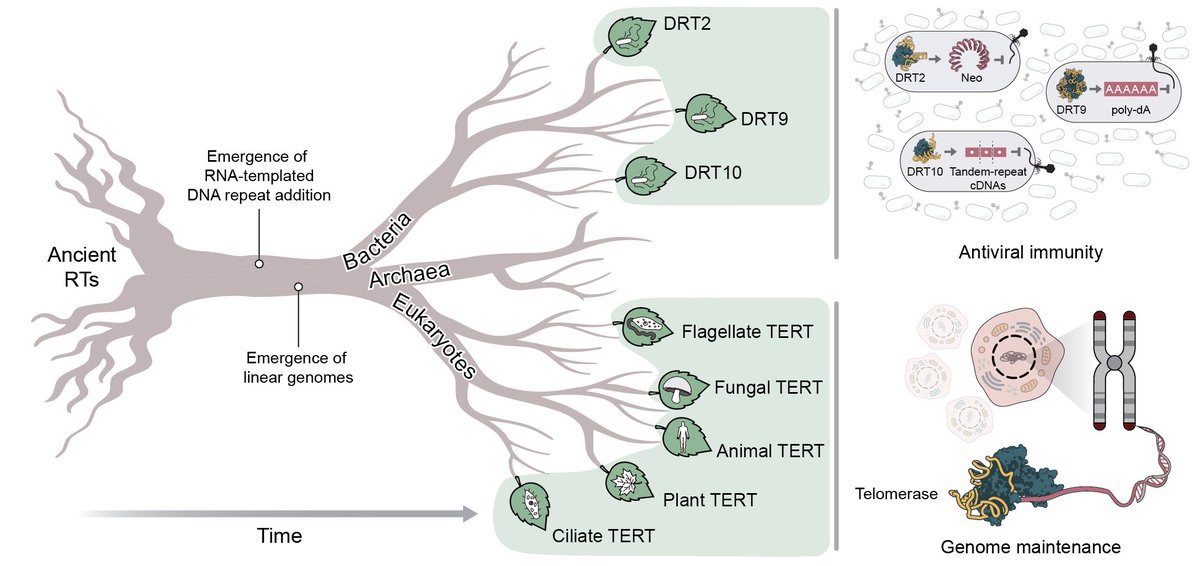
Genome maintenance by telomerase is a fundamental process in nearly all eukaryotes. But where does it come from? Today, we report the discovery of telomerase homologs in a family of antiviral RTs, revealing an unexpected evolutionary origin in bacteria. doi.org/10.1101/2025.1…

Genome maintenance by telomerase is a fundamental process in nearly all eukaryotes. But where does it come from?

Today, we report the discovery of telomerase homologs in a family of antiviral RTs, revealing an unexpected evolutionary origin in bacteria.

doi.org/10.1101/2025.1…
Yunha Hwang (@micro_yunha) 's Twitter Profile Photo

We're thrilled to announce SeqHub, an AI-enabled platform for biological sequence analysis. SeqHub brings together sequence search, genome annotation, and data sharing in one place. I dreamed of a single place where I could learn everything about my sequences. Today, a much more