

Dale Copeland (@copela1492) 's Twitter Profile
Dale Copeland

@copela1492

Professor, UVa. Author: A World Safe for Commerce (Princeton UP, 2024); Economic Interdependence and War (PUP, 2015); Origins of Major War (Cornell UP, 2000).

ID: 1755281768159006720

calendar_today07-02-2024 17:26:17

1,1K Tweet

5,5K Takipçi

6,6K Takip Edilen
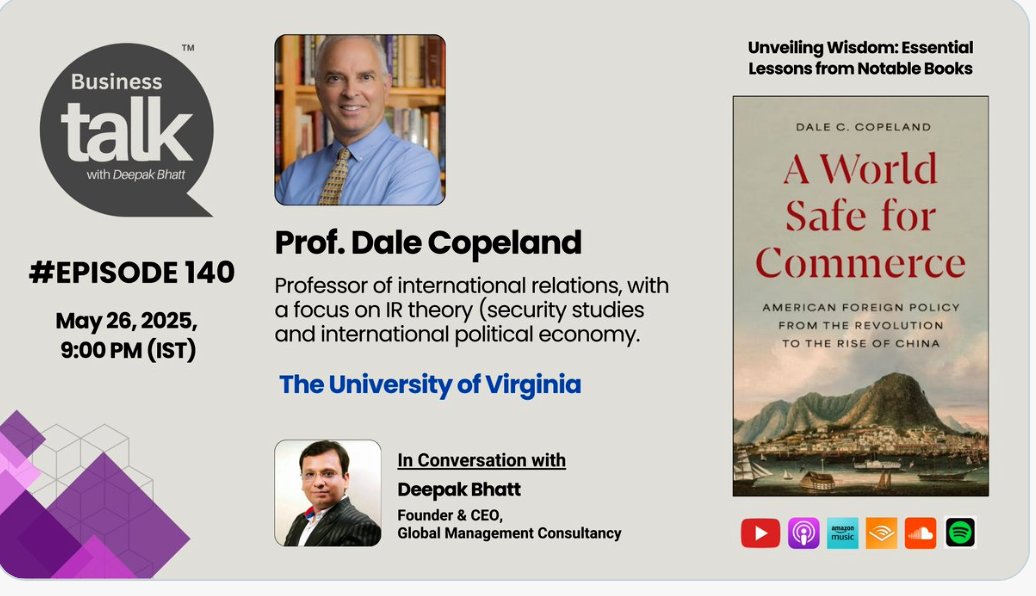
Dale Copeland (@copela1492) 's Twitter Profile Photo

Hi All. Sorry I've been quiet for a couple of weeks -- been doing research on a new book on lessons from history for US-China relations. I'll be posting some thoughts about this project soon. But I thought in the meantime some might like to hear a podcast discussion on both

Hi All.   Sorry I've been quiet for a couple of weeks -- been doing research on a new book on lessons from history for US-China relations.  I'll be posting some thoughts about this project soon.   But I thought in the meantime some might like to hear a podcast discussion on both
Dale Copeland (@copela1492) 's Twitter Profile Photo

Part 1 of a new series, "Lessons from China's Imperial History for Contemporary U.S.-China Relations." Today's episode: Why Understanding China's Past is the Key to Understanding Its Future. Hi All. Today I start a new series that I believe will help us see why should be both

Part 1 of a new series, "Lessons from China's Imperial History for Contemporary U.S.-China Relations."  Today's episode: Why Understanding China's Past is the Key to Understanding Its Future.

Hi All. Today I start a new series that I believe will help us see why should be both
Dale Copeland (@copela1492) 's Twitter Profile Photo

野口和彦(Kazuhiko Noguchi) Thanks for the comments, Kazu. You make a good point: if governments face guns-butter trade-offs, and China is going through some major structural adjustments at home, due to an aging population, an inability to achieve a truly convertible currency, and growing inequalities

<a href="/kazzubc/">野口和彦(Kazuhiko Noguchi)</a> Thanks for the comments, Kazu.   You make a good point:  if governments face guns-butter trade-offs, and China is going through some major structural adjustments at home, due to an aging population, an inability to achieve a truly convertible currency, and growing inequalities
Dale Copeland (@copela1492) 's Twitter Profile Photo

野口和彦(Kazuhiko Noguchi) Hi Kazu, Thanks again for your last set of excellent comments. (See above.) Let me see if I can replicate the thrust of your posting, which I see as two larger points, and respond to each of them. (1) I believe you are suggesting that even if China is at least somewhat
<a href="/kazzubc/">野口和彦(Kazuhiko Noguchi)</a> Hi Kazu,   Thanks again for your last set of excellent comments.  (See above.)  Let me see if I can replicate the thrust of your posting, which I see as two larger points, and respond to each of them. 

(1)  I believe you are suggesting that even if China is at least somewhat
Dale Copeland (@copela1492) 's Twitter Profile Photo

Part 2 of a new series, "Lessons from China's Imperial History for Contemporary U.S.-China Relations." Today's episode: How China's Previous Periods of 'Globalization' Tell Us Much about the Way China will Deal with Current Globalization (Part "A"). By my reading of Chinese

Part 2 of a new series, "Lessons from China's Imperial History for Contemporary U.S.-China Relations."  Today's episode: How China's Previous Periods of 'Globalization' Tell Us Much about the Way China will Deal with Current Globalization (Part "A").

By my reading of Chinese
Dale Copeland (@copela1492) 's Twitter Profile Photo

野口和彦(Kazuhiko Noguchi) A few quick thoughts: 1. If John Mearsheimer's theory is only good when there are "more than two great powers," it is highly limited, yes? Now of course he does cover "bipolarity" (two great powers) but because the theory is static, not dynamic -- it takes snapshots of
<a href="/kazzubc/">野口和彦(Kazuhiko Noguchi)</a> A few quick thoughts: 

1.  If John Mearsheimer's theory is only good when there are "more than two great powers," it is highly limited, yes?   Now of course he does cover "bipolarity" (two great powers) but because the theory is static, not dynamic -- it takes snapshots of
Dale Copeland (@copela1492) 's Twitter Profile Photo

野口和彦(Kazuhiko Noguchi) Hi Kazu, I only got to respond briefly last night because of the hockey game, and tonight I'm again running out of time. But let me try to quickly respond to one main issue, the value of John J. Mearsheimer's work. You suggest that Mearsheimer has no real argument about
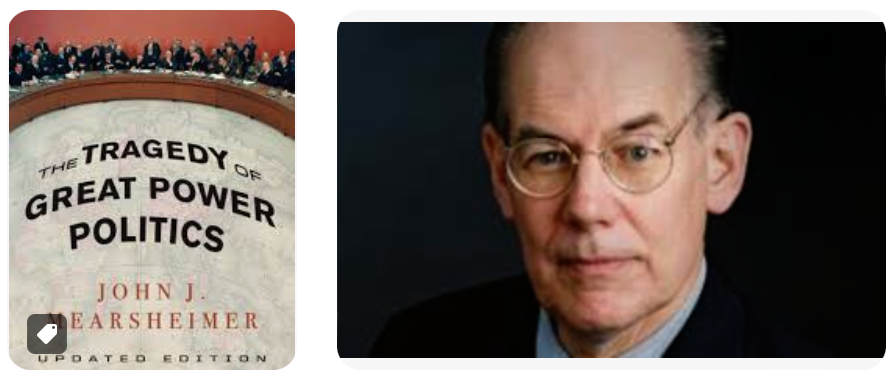
<a href="/kazzubc/">野口和彦(Kazuhiko Noguchi)</a> Hi Kazu,   I only got to respond briefly last night because of the hockey game, and tonight I'm again running out of time.  But let me try to quickly respond to one main issue, the value of John J. Mearsheimer's work.  

You suggest that Mearsheimer has no real argument about
Dale Copeland (@copela1492) 's Twitter Profile Photo

Part 3 of a new series, "Lessons from China's Imperial History for Contemporary U.S.-China Relations." Today's episode: How Chinese Leaders Know that Foreign Ideas Can Undermine Chinese Domestic Stability. Hi All. I was going to write up my initial thoughts on the Ming

Part 3 of a new series, "Lessons from China's Imperial History for Contemporary U.S.-China Relations."  Today's episode: How Chinese Leaders Know that Foreign Ideas Can Undermine Chinese Domestic Stability. 

Hi All.   I was going to write up my initial thoughts on the Ming
Dale Copeland (@copela1492) 's Twitter Profile Photo

The Long-Term Geopolitical Implications of U.S. Strikes on Iran's Nuclear Facilities. Before I post Part 4 of my new series on lessons from Chinese imperial history for U.S.-China relations (today or tomorrow), I thought I'd comment briefly on the main front-page news

The Long-Term Geopolitical Implications of U.S. Strikes on Iran's Nuclear Facilities.  
         Before I post Part 4 of my new series on lessons from Chinese imperial history for U.S.-China relations (today or tomorrow),  I thought I'd comment briefly on the main front-page news
Dale Copeland (@copela1492) 's Twitter Profile Photo

Ian Cameron Great question, Ian. I'm definitely going to think on this over the next week. Love to hear your thoughts... Let me throw a few things out now, just to get us all thinking. First, we need to start from where China is coming from. If it is true that Xi Jinping and his
<a href="/easyout/">Ian Cameron</a> Great question, Ian.   I'm definitely going to think on this over the next week.  Love to hear your thoughts...

Let me throw a few things out now, just to get us all thinking.   

First, we need to start from where China is coming from.    If it is true that Xi Jinping and his
Dale Copeland (@copela1492) 's Twitter Profile Photo

Ian Cameron An excellent set of comments, Ian. Lots of things to discuss here, so let me just hit a few high points: --Absolutely right that even if there is a trade deal with China, US-China trade probably won't go above $700 billion again (inflation-adjusted). China, quite smartly,

Dale Copeland (@copela1492) 's Twitter Profile Photo

Lane Kendall Very interesting thoughts, Lane. And like you, there are things I agree with and disagree with (!). First, totally agree that the U.S. strikes on Iran probably won't change Putin's behavior one way or another. (Your points re R's weak response re Syria and Iran are well
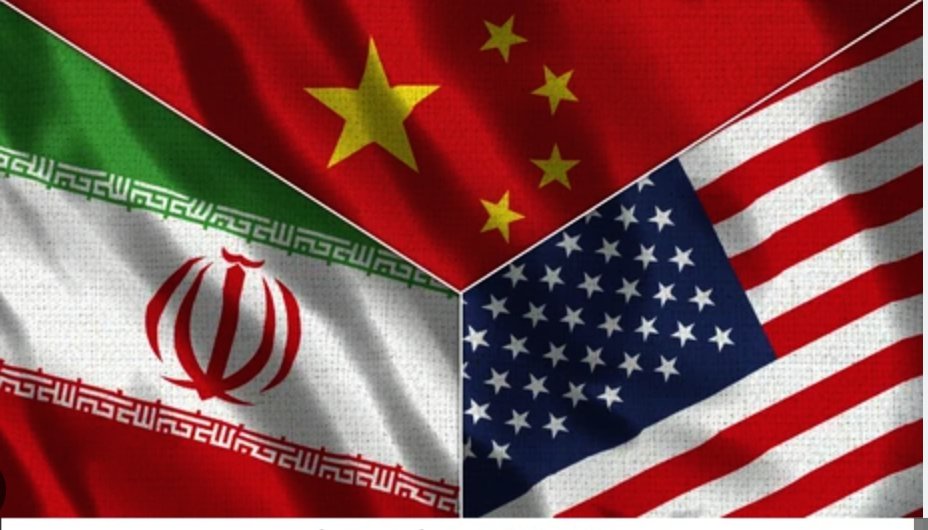
<a href="/lanedeankendall/">Lane Kendall</a> Very interesting thoughts, Lane.   And like you, there are things I agree with and disagree with (!).   

First, totally agree that the U.S. strikes on Iran probably won't change Putin's behavior one way or another.   (Your points re R's weak response re Syria and Iran are well
Dale Copeland (@copela1492) 's Twitter Profile Photo

Part 4 of the new series, "Lessons from China's Imperial History for Contemporary U.S.-China Relations." Today's episode: Buddhism versus Confucianism in the Domestic Stability of the Ming Empire, and Lessons for Xi Jinping Hi All. Last time (part 3) I talked about the role

Part 4 of the new series, "Lessons from China's Imperial History for Contemporary U.S.-China Relations."  Today's episode:  Buddhism versus Confucianism in the Domestic Stability of the Ming Empire, and Lessons for Xi Jinping

Hi All.  Last time (part 3) I talked about the role
Dale Copeland (@copela1492) 's Twitter Profile Photo

I should have mentioned that in future posts in the series, I will be connecting the CCP's obsession with repressing foreign philosophies and religions that start with the individual and his/her inner insights and spiritual connections to Dao/"world" and the inability of China to

I should have mentioned that in future posts in the series, I will be connecting the CCP's obsession with repressing foreign philosophies and religions that start with the individual and his/her inner insights and spiritual connections to Dao/"world" and the inability of China to
Dale Copeland (@copela1492) 's Twitter Profile Photo

Dan Pollak Straightforwardly, my point draws from two fundamentals: that short-term implications can be different from long-term implications; and that within great power politics there is a tension between needing to have power (for good deterrence and as a hedge against problems later)
<a href="/PollakDan/">Dan Pollak</a> Straightforwardly, my point draws from two fundamentals:   that short-term implications can be different from long-term implications; and that within great power politics there is a tension between needing to have power (for good deterrence and as a hedge against problems later)
Dale Copeland (@copela1492) 's Twitter Profile Photo

Dan Pollak The key passages and logic that I mentioned are up on line for free under Amazon's "read sample", so that may be the place to start! (Of course, buying the book is good too!). Here's the link. 🙂 amazon.com/World-Safe-Com…
Dale Copeland (@copela1492) 's Twitter Profile Photo

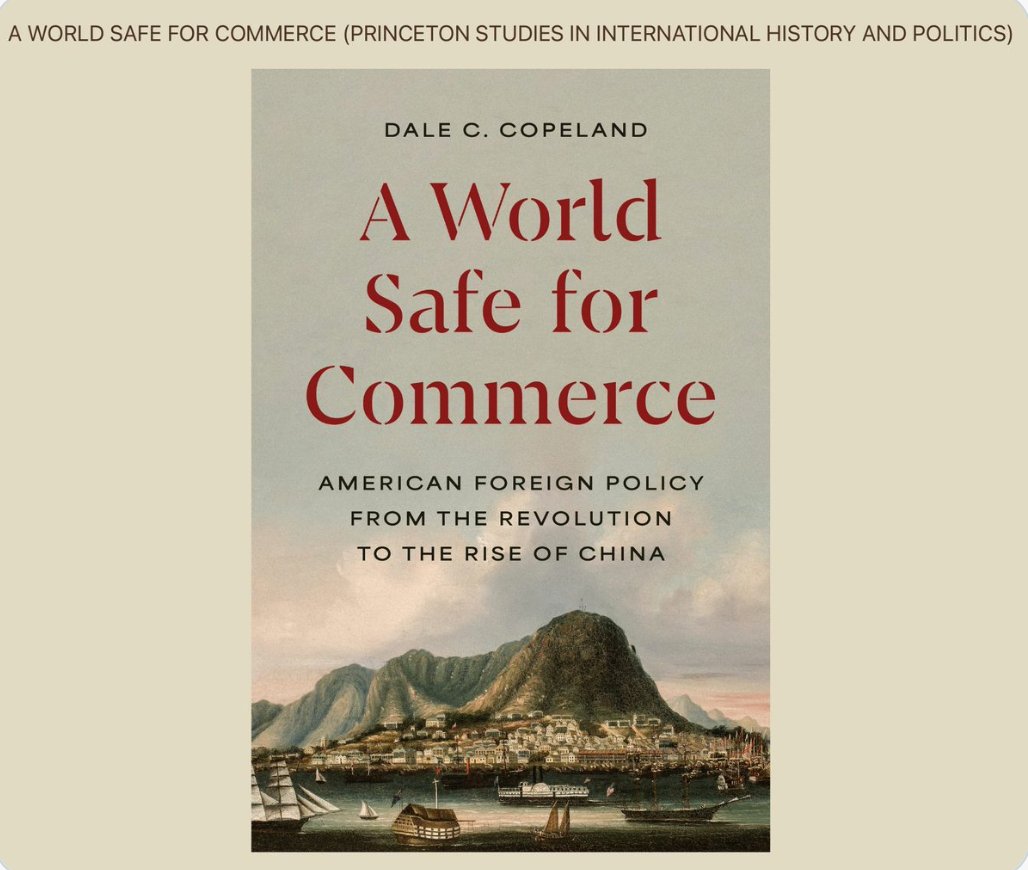
I'm excited to report that, in terms of sales, A World Safe for Commerce is the second-ranked book in Amazon's "International Relations" category, behind Walter Russell Mead's ever-popular Special Providence (a great book on ideologies of American foreign policy I briefly discuss

I'm excited to report that, in terms of sales, A World Safe for Commerce is the second-ranked book in Amazon's "International Relations" category, behind Walter Russell Mead's ever-popular Special Providence (a great book on ideologies of American foreign policy I briefly discuss
Dale Copeland (@copela1492) 's Twitter Profile Photo

Zaki Laidi Sciences Po Great to hear, Zaki. Merci beaucoup! And of course I love to hear critiques of the larger argument or of my interpretations of the cases of American foreign policy behavior from 1750 to US-China today. This is the only way to improve the theory and to understand the