
Chronicle watch (@chronicle_watch) 's Twitter Profile
Chronicle watch

@chronicle_watch

Indologist, Epigraphs, folk culture

ID: 1197797185368100864

linkhttps://sahityaorsanskriti.blogspot.com/?m=1 calendar_today22-11-2019 08:41:32

4,4K Tweet

3,3K Followers

177 Following

Monidipa Bose - Dey (মণিদীপা) (@monidipadey) 's Twitter Profile Photo

The concept of Devi Durga Ki!!ng a mahisa is there in our SSVC, as seen on a seal found in Harappa. In one passage of the Durga-saptasati, while describing the fight between the goddess Durga and Mahisasura the lines run as: “sarudh tam mulasuram padenakramya kanthe ca

The concept of Devi Durga Ki!!ng a mahisa is there in our SSVC, as seen on a seal found in Harappa. 

In one passage of the Durga-saptasati, while describing the fight between the goddess Durga and Mahisasura the lines run as:
“sarudh tam mulasuram padenakramya kanthe ca
Chronicle watch (@chronicle_watch) 's Twitter Profile Photo

statue obtained from Gandhara bears a Kharoshthi inscription in the Prakrit language reading “Shirish Padima,” meaning an image or idol of Shri (Lakshmi). Here, the word Padima is used for “image” or “idol.” The Prakrit word Padima for “idol” is also found in the play

statue obtained from Gandhara bears a Kharoshthi inscription in the Prakrit language reading “Shirish Padima,” meaning an image or idol of Shri (Lakshmi). Here, the word Padima is used for “image” or “idol.” The Prakrit word Padima for “idol” is also found in the play
Chronicle watch (@chronicle_watch) 's Twitter Profile Photo

This peg is crafted from ivory. It is unlikely to be from the Harappan period, as it is held privately and lacks provenance from any archaeological excavation or scholarly investigation. Furthermore, it has not been documented in any peer-reviewed or archaeological literature.

This peg is crafted from ivory. It is unlikely to be from the Harappan period, as it is held privately and lacks provenance from any archaeological excavation or scholarly investigation. Furthermore, it has not been documented in any peer-reviewed or archaeological literature.
Chronicle watch (@chronicle_watch) 's Twitter Profile Photo

Among the sixty-four arts (kalās) enumerated in the Kamasutra, one is Śukasārikāpralāpanam, referring specifically to the teaching of speech to parrots and mynas. In antiquity, these birds were housed in specialized cages termed Śukapañjara or simply Pañjara. The illustrious poet

Among the sixty-four arts (kalās) enumerated in the Kamasutra, one is Śukasārikāpralāpanam, referring specifically to the teaching of speech to parrots and mynas. In antiquity, these birds were housed in specialized cages termed Śukapañjara or simply Pañjara. The illustrious poet
Chronicle watch (@chronicle_watch) 's Twitter Profile Photo

From a grave belonging to the Chalcolithic culture at Uṭwāḍ, Madhya Pradesh, an impression of a Palāśa (Butea monosperma) leaf was found on a pot. In the Kauśika Sūtra of the Atharvaveda, there is a mention that during the preparation of a cremation ground, the vessels placed

From a grave belonging to the Chalcolithic culture at Uṭwāḍ, Madhya Pradesh, an impression of a Palāśa (Butea monosperma) leaf was found on a pot. In the Kauśika Sūtra of the Atharvaveda, there is a mention that during the preparation of a cremation ground, the vessels placed
Daniel | דניאל 🇮🇱 (@danithesett) 's Twitter Profile Photo

Good morning. Daily archaeology #21 The LMLK seal ("to the king" in Hebrew) appears on the handles of several storage jars from the Kingdom of Judah, where it was first issued during the reign of Hezekiah ~700 BCE. Around 2000 seals(!) bearing these four Hebrew letters have

Good morning. 
Daily archaeology #21 

The LMLK seal ("to the king" in Hebrew) appears on the handles of several storage jars from the Kingdom of Judah, where it was first issued during the reign of Hezekiah ~700 BCE.

Around 2000 seals(!) bearing these four Hebrew letters have
Archaeological Survey of India (@asigoi) 's Twitter Profile Photo

‼️DISCLAIMER‼️ The photo, currently circulating online, that shows restoration work at the Konark Sun Temple with highlighted pink patches is MISLEADING and does not represent any such conservation or restoration work been done there. DELIBERATE circulation of such misleading

Chronicle watch (@chronicle_watch) 's Twitter Profile Photo

Devdatt Patnaik is an author who denies Indian archaeologists about horses in the Indus Valley Civilization, calls Chanakya imaginary, and claims the bullock cart found at Sanauli was used in warfare. However, he sees the Gupta period instead of the Shunga period around 200 BCE.

Devdatt Patnaik is an author who denies Indian archaeologists about horses in the Indus Valley Civilization, calls Chanakya imaginary, and claims the bullock cart found at Sanauli was used in warfare. However, he sees the Gupta period instead of the Shunga period around 200 BCE.
Chronicle watch (@chronicle_watch) 's Twitter Profile Photo

Where were depictions of the Sun God not found in ancient times, especially during the Shunga and Kushan periods? In caves, on terracotta plaques, on trays, on bone fragments, on Indo-Greek statues, on pillars, on clay statues, on temple statues." महाप्रभु (मुकूंद) Anshika Shukla

Where were depictions of the Sun God not found in ancient times, especially during the Shunga and Kushan periods?
In caves, on terracotta plaques, on trays, on bone fragments, on Indo-Greek statues, on pillars, on clay statues, on temple statues."
<a href="/Aatma_the_soul4/">महाप्रभु (मुकूंद)</a> <a href="/anshikashukla_/">Anshika Shukla</a>
Chronicle watch (@chronicle_watch) 's Twitter Profile Photo

The wind instrument known today as the Pan Flute is depicted in a statue recovered from Pompeii, Rome. In this sculpture, the goat-faced god Pan is shown teaching Daphnis how to play the instrument. It is believed that the original statue was created around 200 BCE, while this

The wind instrument known today as the Pan Flute is depicted in a statue recovered from Pompeii, Rome. In this sculpture, the goat-faced god Pan is shown teaching Daphnis how to play the instrument. It is believed that the original statue was created around 200 BCE, while this
Shipreeta.... (@svicharsheel) 's Twitter Profile Photo

The amount of mocking and down showing of #DevratMaheshRekhe over social media is so uncalled for... First and foremost I am not someone who would claim that his Dandakarma Pranayama would make India or the world a much better place to live .. No doubt that the youth should ++

Chronicle watch (@chronicle_watch) 's Twitter Profile Photo

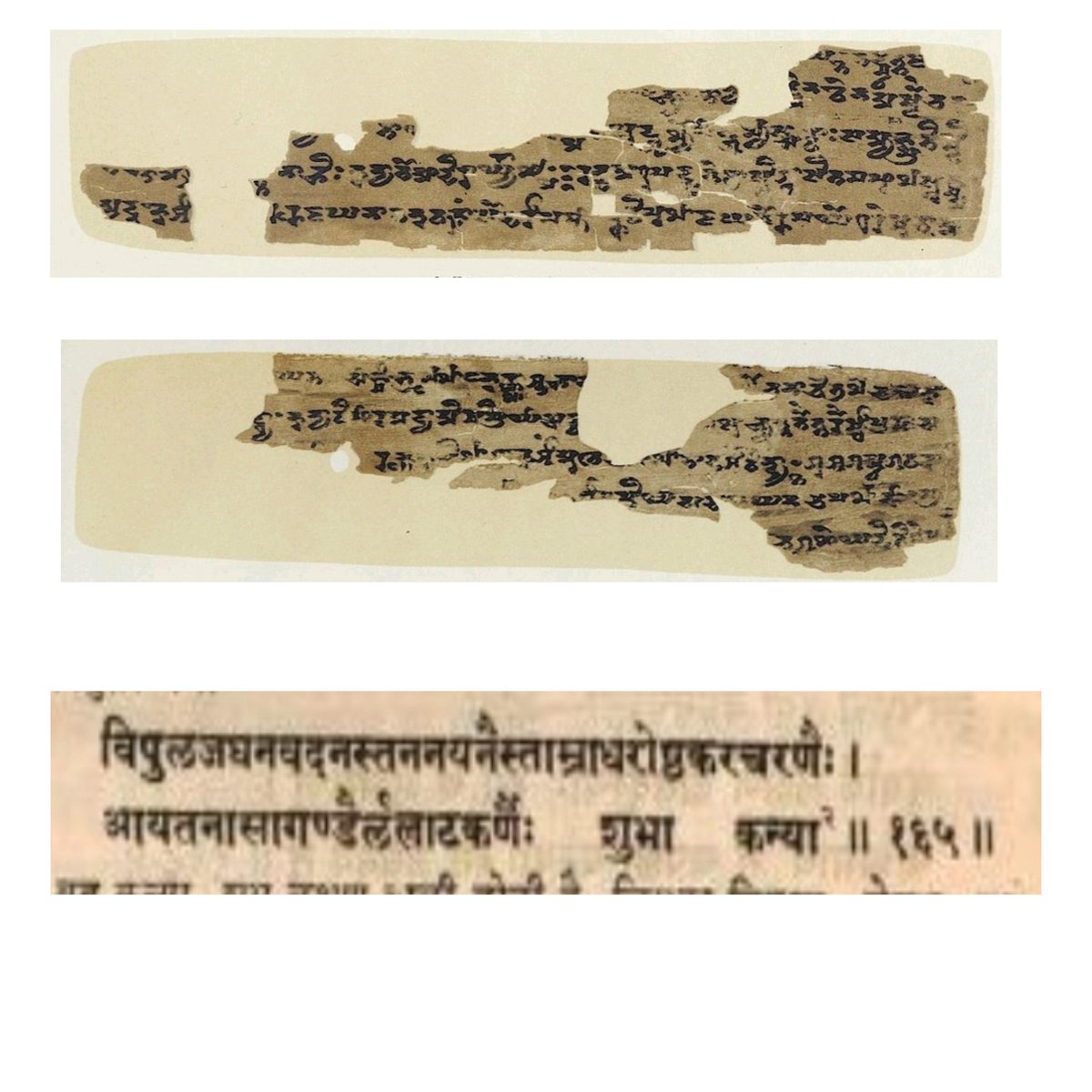
Of course The Nāṭyaśāstra is indeed older than the Kushan period. This is evident because a Kushan - gupta -era manuscript of a text called Chhandovichiti, written in Brahmi script, includes a verse from the Nāṭyaśāstra as an example. This clearly shows that the Nāṭyaśāstra

Of course The Nāṭyaśāstra is indeed older than the Kushan period. This is evident because a Kushan - gupta -era manuscript of a text called Chhandovichiti, written in Brahmi script, includes a verse from the Nāṭyaśāstra as an example. This clearly shows that the Nāṭyaśāstra