

Francesca Bulian
@bulianfrancesca
Geologist and micropaleontologist #foraminifera #geochemistry
Groningen Institute of Archeology
@SaltGiant @SaltandPower
ID: 1064577054161682433
19-11-2018 17:52:03
138 Tweet
116 Takipçi
217 Takip Edilen
New paper out! Tells the evolution of salt production along Italy's coast between Bronze Age to Roman era! 🧂 Highlights the environmental, technological, and geopolitical factors in Italy's ancient salt economy 🌊 #SaltProduction Salt and Power sciencedirect.com/science/articl…
🚨 New Paper Alert! 🚨 We present preliminary results of stratigraphic, paleomagnetic, micropaleontologic, & geochronologic investigations on boreholes in Rome as part of the Predict Project. 🏛️🌍 #QuaternaryScience #Geology #Seismology #GIS #EarthScience annalsofgeophysics.eu/index.php/anna…

Very nice core with 2000 year old volcanic ash sampled during our fieldwork i Lazio (Italy) Salt and Power #fieldwork #Italy #eruptions

Join us this afternoon in the Academy building of the RUG (room 8) to hear all about Early Mycenaean Burials! Also online: meet.google.com/ers-gybs-jfm Faculty of Arts - Radboud University


🎙️ Join us tomorrow 14th January for an exciting talk by Youri van den Hurk! Discover fascinating insights into the history of this lost whale population! 🐋 #Archaeology #MarineBiology #GreyWhale Faculty of Arts - University of Groningen In person and online: meet.google.com/sqm-oijr-syb


📢 Join us for the next GIA Research Seminar on June 4th at 16:00 in Room A902 (Broerstraat 9) or online! 🌍 Topic: The Guarda Archaeological Project (GAP) 🥂 Drinks after at the GIA canteen! 🔗 meet.google.com/nsn-xewt-vfc Faculty of Arts - University of Groningen

Very happy to have this published today in Science Advances We may have a detailed picture of how the Mediterranean level evolved. "Kilometric sea level changes during the Messinian salinity crisis caused by river erosion and climate" science.org/doi/10.1126/sc… w/ Francesca Bulian

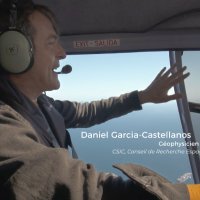
☀️“Durante el aislamiento del Mediterráneo su nivel habría caído hasta dos kilómetros por debajo del actual, y entonces habría comenzado a oscilar por los cambios orbitales en la insolación de la Tierra”, explica Daniel G. Castellanos (Daniel García-Castellanos), investigador de GEO3BCN - CSIC 👇