Black Bird Group (@black_birdgroup) 's Twitter Profile
Black Bird Group

@black_birdgroup

Finnish OSINT group. Currently following the Russian invasion of Ukraine.

Don't DM, Email us:
[email protected]

Map:
tinyurl.com/BlackbirdMap

ID: 1558958764501483520

linkhttps://blackbirdgroup.fi/ calendar_today14-08-2022 23:31:08

226 Tweet

30,30K Takipçi

19 Takip Edilen

Black Bird Group (@black_birdgroup) 's Twitter Profile Photo

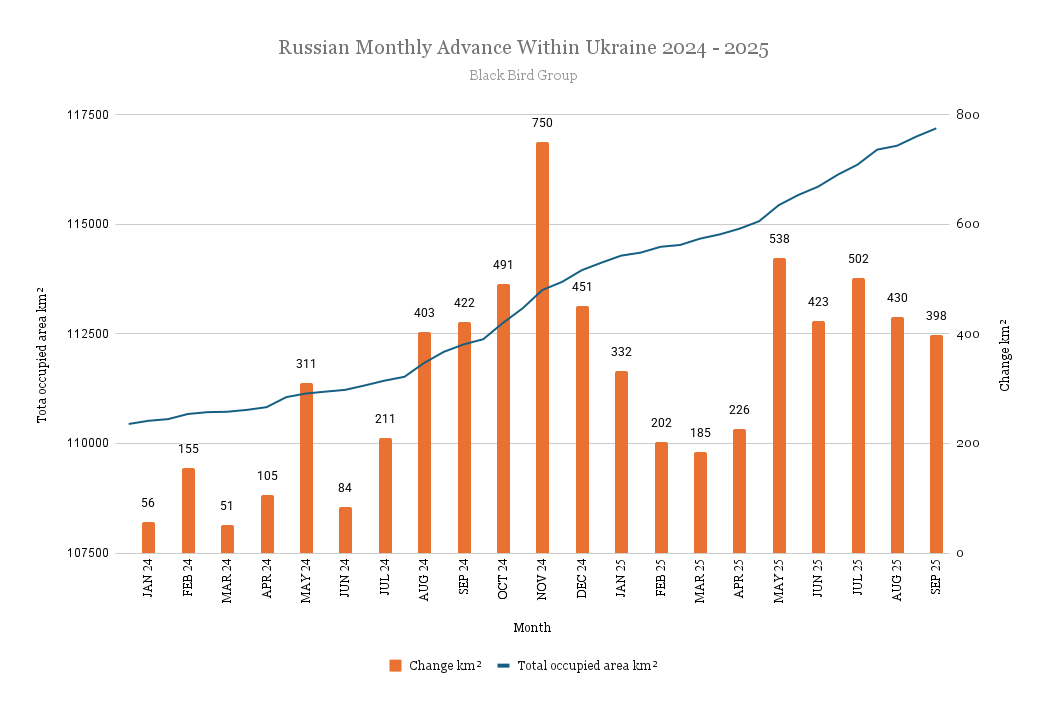
In August the Russians occupied 430 sqkm of Ukrainian territory. This is down from the 502 sqkm in July. However, looking at the numbers alone does not give a full picture of the Russian operations. Over the second half of August the situation became increasingly dynamic.

In August the Russians occupied 430 sqkm of Ukrainian territory. This is down from the 502 sqkm in July.

However, looking at the numbers alone does not give a full picture of the Russian operations. Over the second half of August the situation became increasingly dynamic.
John Helin (@j_jhelin) 's Twitter Profile Photo

To put it clearly: As of tonight our team has no reliable and non-contradictory information nor strong indications that the Russian forces in the Dobropillya salient have been, or are in immediate danger of being, encircled. This is why on our map the salient remains a salient.

John Helin (@j_jhelin) 's Twitter Profile Photo

The distinction between Russian summer and autumn offensive is academic, considering how the Russians seem to be avoiding a single decisive battle and maintain constant offensive pressure. Their recruitment numbers don't (yet) show signs of this dynamic coming to an end.

Black Bird Group (@black_birdgroup) 's Twitter Profile Photo

In September the Russians occupied 398 km² of Ukrainian territory. The Russian rate of advance is on a slight downward trajectory, although this is likely affected by the recent reorganization. Largest change was recorded in the Dnipropetrovsk-Zaporizhzhia direction.

In September the Russians occupied 398 km² of Ukrainian territory.

The Russian rate of advance is on a slight downward trajectory, although this is likely affected by the recent reorganization.

Largest change was recorded in the Dnipropetrovsk-Zaporizhzhia direction.
John Helin (@j_jhelin) 's Twitter Profile Photo

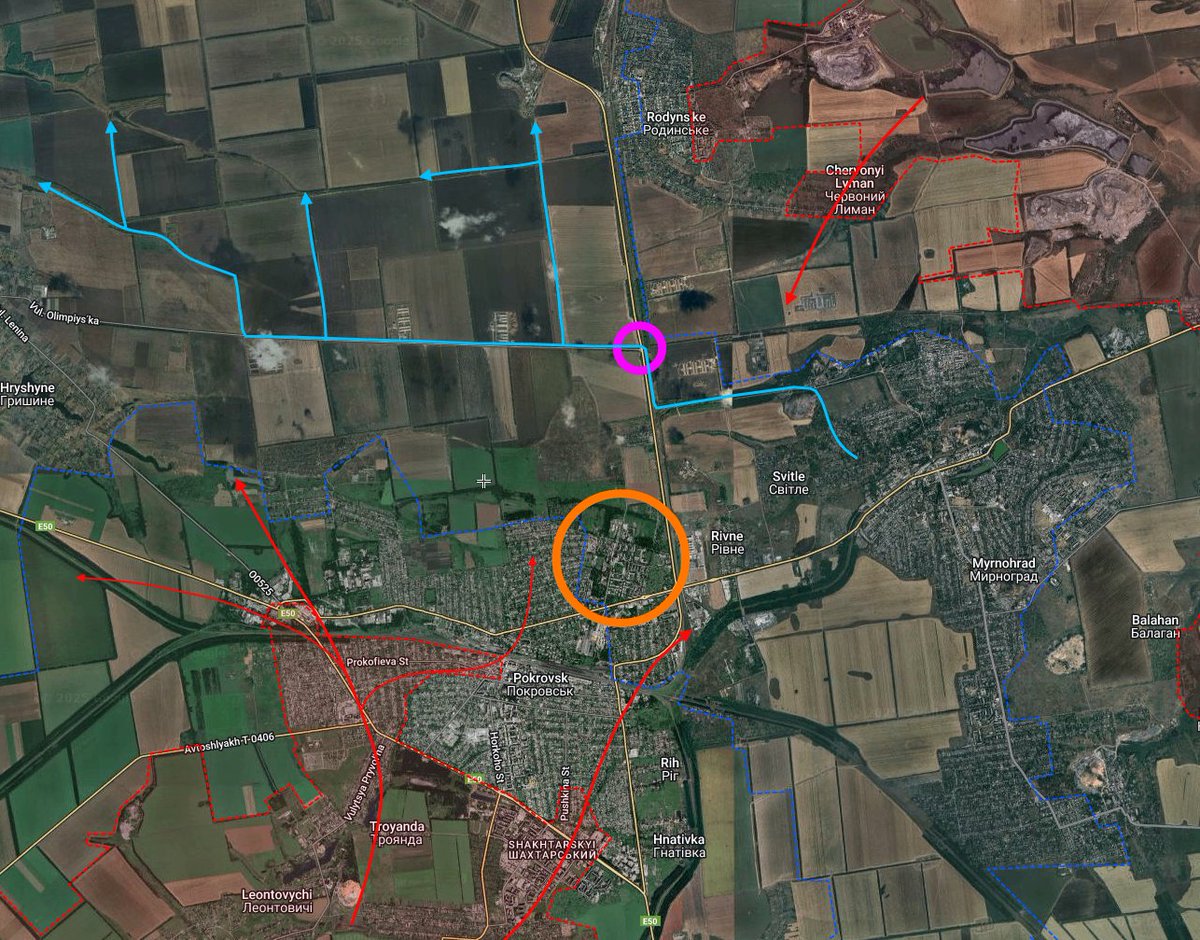
While the roads into the Pokrovsk-Myrnohrad agglomeration are already under constant drone observation, much of the remaining UA access to the extreme ends of the salient is likely hinging on the control of a suburb of high-rises in NE Pokrovsk. (orange).

While the roads into the Pokrovsk-Myrnohrad agglomeration are already under constant drone observation, much of the remaining UA access to the extreme ends of the salient is likely hinging on the control of a suburb of high-rises in NE Pokrovsk. (orange).
Black Bird Group (@black_birdgroup) 's Twitter Profile Photo

Over the month of October, the Russian armed forces occupied a total of 468km² of Ukrainian territory. This means the Russian pace of advance has once again increased after a short trend of diminishing gains in August and September.

Over the month of October, the Russian armed forces occupied a total of 468km² of Ukrainian territory.

This means the Russian pace of advance has once again increased after a short trend of diminishing gains in August and September.
Emil Kastehelmi (@emilkastehelmi) 's Twitter Profile Photo

Our numbers this month, and a few words about mapping the war in Ukraine currently. The trend of Russians gaining roughly 400-500 km2 per month continues. Last month, most of the land was lost in the Dnipropetrovsk-Eastern Zaporizhzhia direction. Even though the Russians

Emil Kastehelmi (@emilkastehelmi) 's Twitter Profile Photo

Ukraine may be repeating a costly mistake in Pokrovsk. It’s a recurring pattern, seen for example in Vuhledar and Kursk – a reluctance to conduct a controlled, militarily justified withdrawal from a threatened salient when the situation no longer favors the defender. 1/

Ukraine may be repeating a costly mistake in Pokrovsk.

It’s a recurring pattern, seen for example in Vuhledar and Kursk – a reluctance to conduct a controlled, militarily justified withdrawal from a threatened salient when the situation no longer favors the defender. 1/