

Arvind Subramanian
@arvindsubraman
Senior Fellow, Peterson Institute for International Economics; Former Chief Economic Adviser, Govt. of India
ID: 369680637
07-09-2011 19:22:00
2,2K Tweet
151,151K Takipçi
65 Takip Edilen
My Project Syndicate piece w/ Amrit Amirapu, drawing upon our research (cgdev.org/sites/default/…), on why & for whom manufacturing-led export strategies-challenged by fears of deglobalization & labor-saving technologies-remain important for long run development project-syndicate.org/commentary/man…


Accelerating deglobalization has driven a search for alternatives to the export-led model that underpinned China and South Korea’s rapid growth. But the leading options come with difficult trade-offs, write Amrit Amirapu and Peterson Institute’s Arvind Subramanian. bit.ly/4m8247c
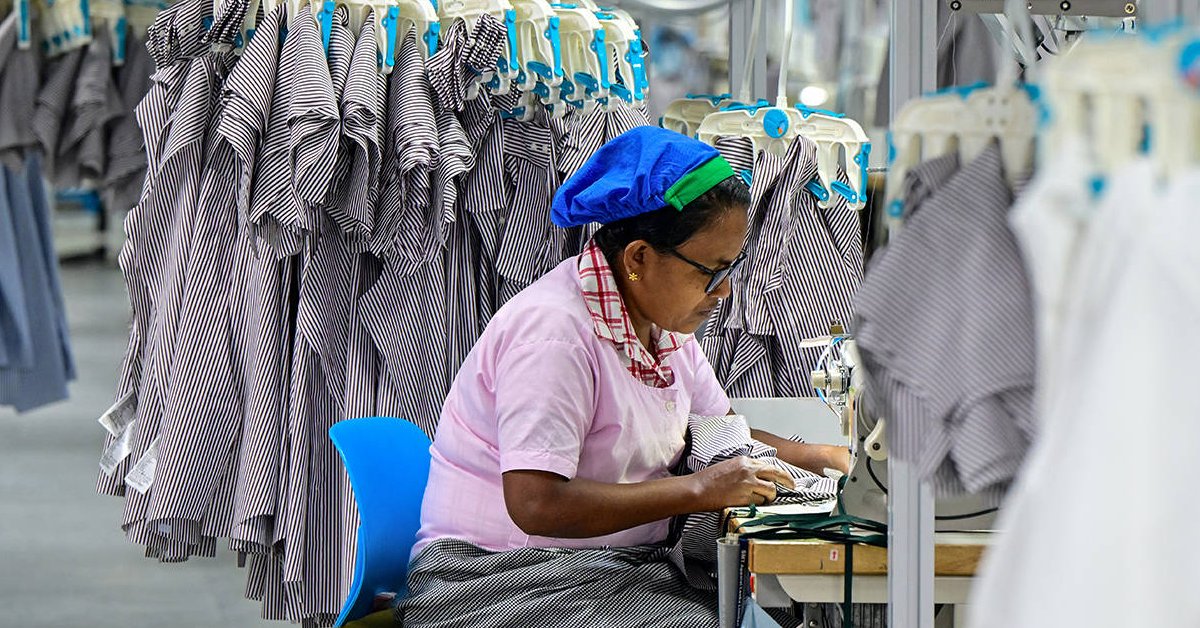
While deglobalization and technological change have made the traditional export-led growth model more challenging, they have not rendered it obsolete. Instead, they underscore the need for strategic adaptation, argue Amrit Amirapu and Arvind Subramanian. bit.ly/4m8247c
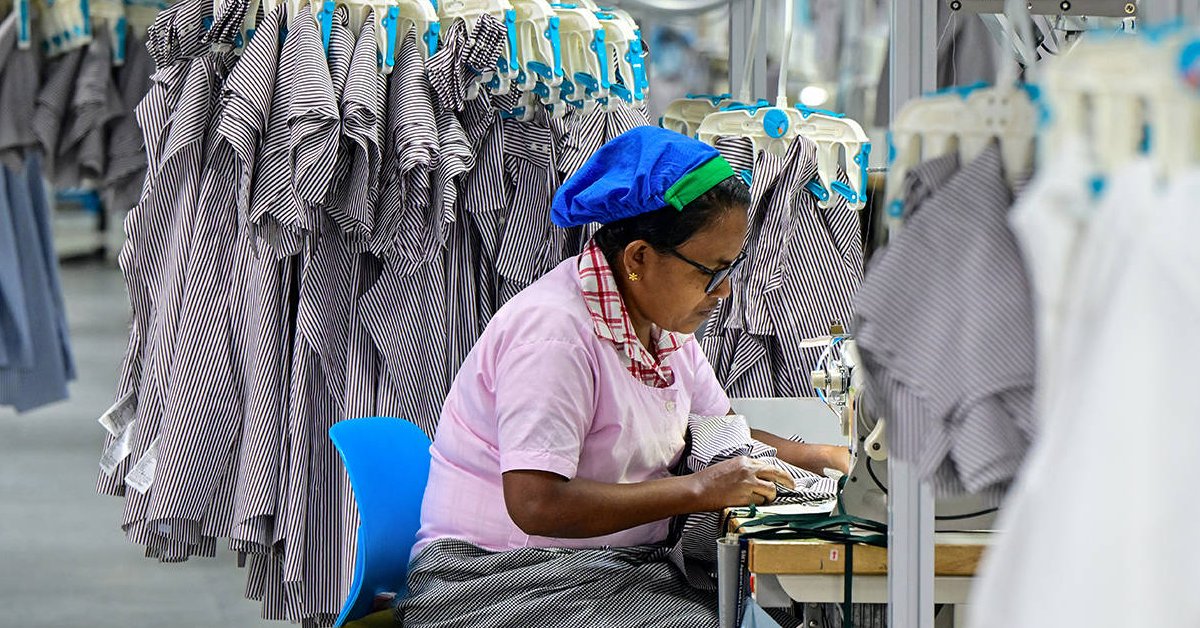

#Opinion | Amrit Amirapu and Arvind Subramanian argue that even as deglobalisation narrows options for developing economies, labour-intensive #Manufacturing still holds promise—if countries like #China & #Mexico move up the value chain, opening space for poorer nations to scale
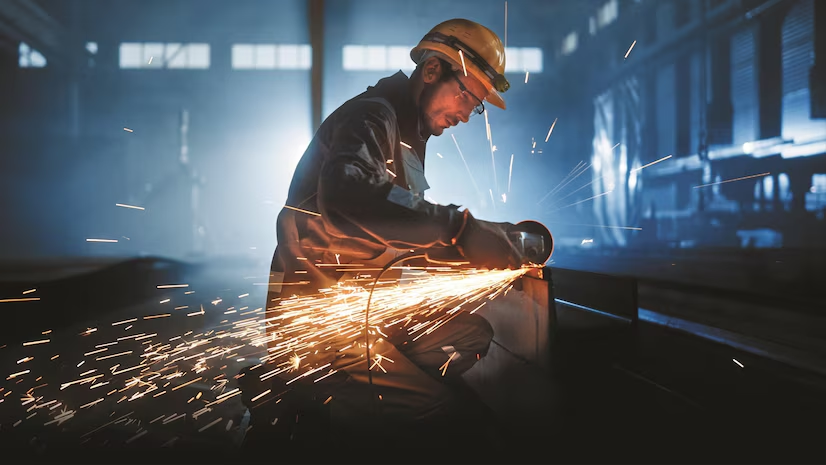
#Opinion | Rising protectionism challenges the traditional export-led, labour-intensive #manufacturing model, but it remains crucial for low-income countries aiming for inclusive growth, argue Amrit Amirapu and Arvind Subramanian mybs.in/2en1eSc

Some personal news… After 14 years (!) this is my last week at Center for Global Development. More later on what's next, but first a short thread of appreciation for a place which I think is not just special, but indispensable. (This is a bit grandiose, but I'm leaving, so permit me this once.) 1/


Hearty congratulations to you and Open Philanthropy for this terrific choice. Hard to understate the importance of sustained, inclusive growth in developing countries. Excited to see how Justin Sandefur will contribute to the growth agenda.

Good argument from Arvind Subramanian that low-income countries shouldn't give up on low-skill manufacturing-led growth; there's a lot of demand to fill and meaningful positive externalities from these jobs.
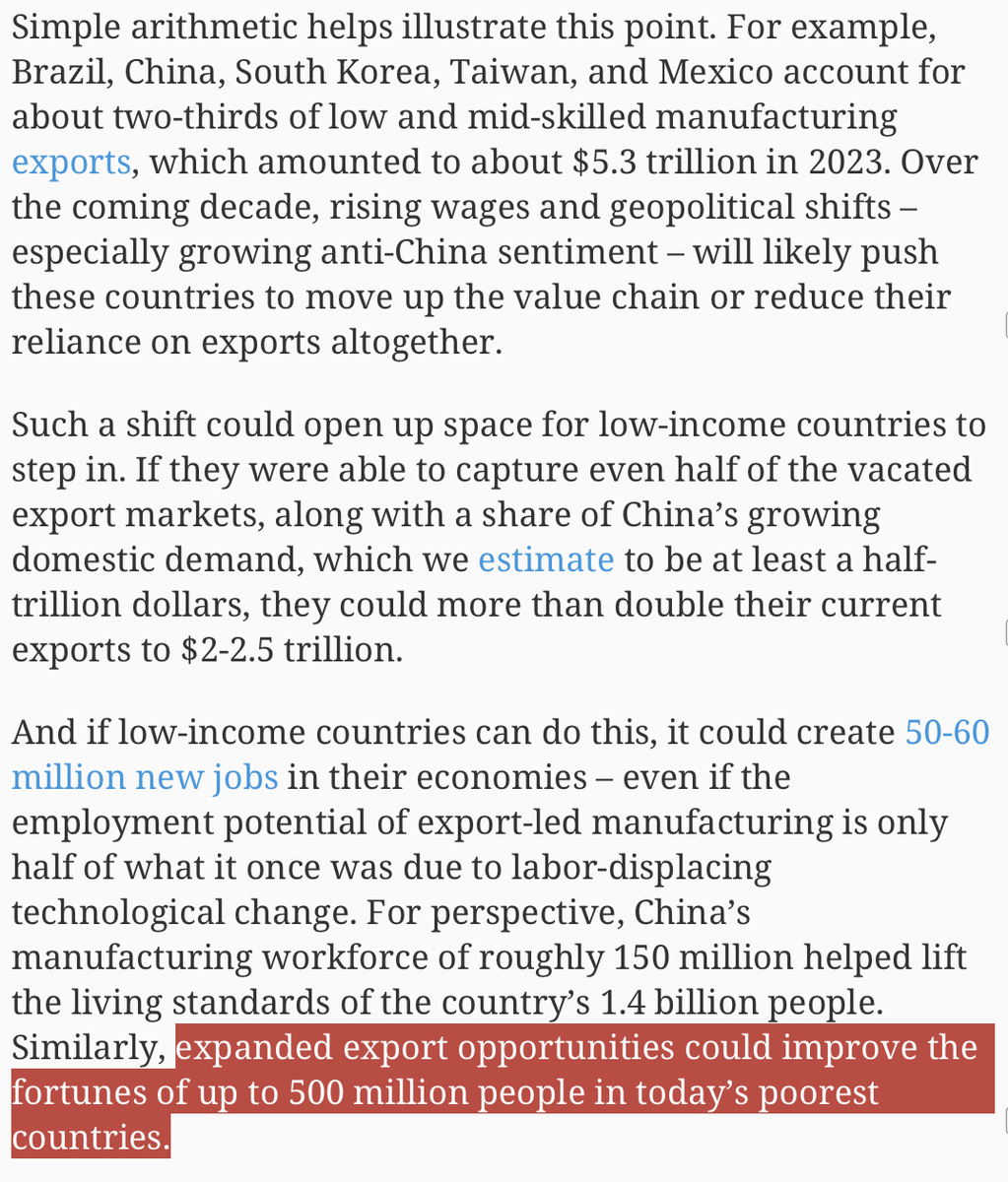
Rising wages and geopolitical shifts will likely push China and other middle-income countries up the value chain, creating space for today’s poorest countries to step in, note University of Kent's Amrit Amirapu and Peterson Institute’s Arvind Subramanian. bit.ly/43jwUlX


1/2 Barriers to Exit are barriers to Entry. Thanks for citing us Marginal Revolution & Alex Tabarrok. Last month the Supreme Court of India voided the buyout of a Power & Steel company that was deemed complete 4 years ago. ft.com/content/75d0af…



Piece in Project Syndicate with Navneeraj Sharma, Abhishek Anand and Praveen Ravi on exit by big businesses as a force for driving change in India’s electricity sector
The electrification of India’s economy remains a work in progress because transmission and distribution are in the hands of highly inefficient public-sector incumbents, note Arvind Subramanian, Abhishek Anand, and others. bit.ly/4mrTY9c
Large business groups in India are leveraging declining solar and storage costs to generate and transmit their own clean electricity, thereby exiting from the public system, explain Arvind Subramanian, Abhishek Anand, and others. bit.ly/4mrTY9c

Electrifying India’s economy is a work in progress b/c transmission & distribution are by inefficient public utilities. But large business groups generating & distributing their own electricity could upend the status quo, Arvind Subramanian & coauthors write:project-syndicate.org/commentary/bus…