Matt Nolan (@zjubnz) 's Twitter Profile
Matt Nolan

@zjubnz

Research Manager @E61Institute. Average economist, poor runner, football fan. Does all of the above enthusiastically. tvhe.substack.com

ID: 3127933117

linkhttp://tvhe.co.nz calendar_today01-04-2015 20:25:46

973 Tweet

352 Takipçi

547 Takip Edilen

henry cooke (@henrycooke) 's Twitter Profile Photo

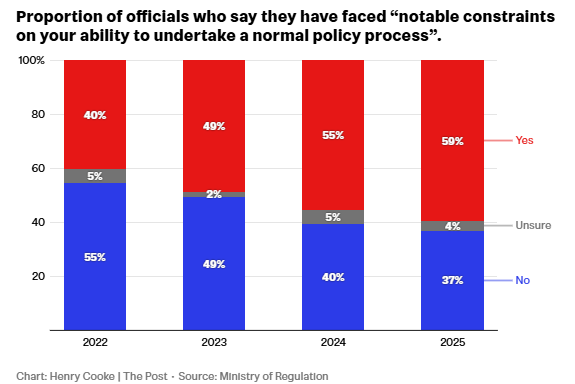
Officials drafting Government policy say more than half of the time they are being "constrained" from following a normal policy process. New story from me in The Post:

Officials drafting Government policy say more than half of the time they are being "constrained" from following a normal policy process.

New story from me in The Post:
🦊🚙🦘 (@foxcar_joey) 's Twitter Profile Photo

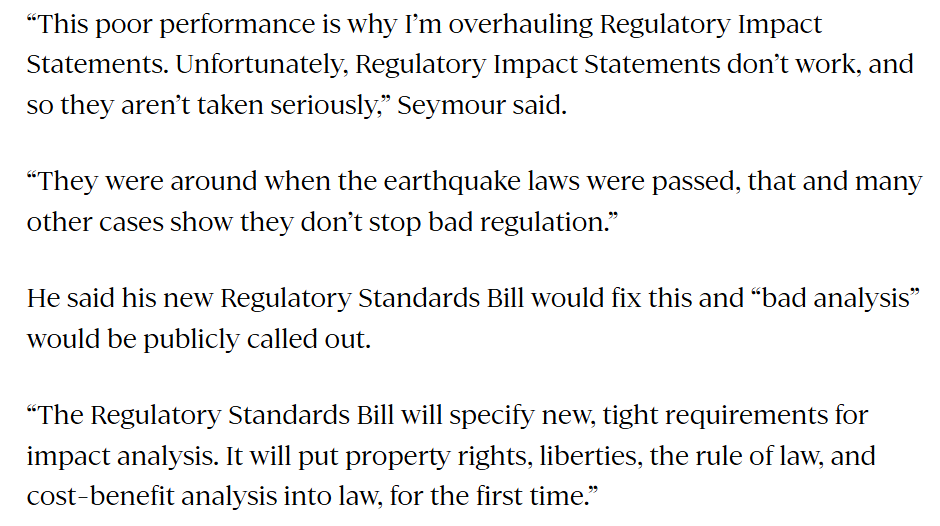
This is nonsensical. There was a CBA for the earthquake laws and it should they were bad. The property rights implications were self evident. It wasn't that there was insufficient regulatory impact analysis. It's that the government of the day didn't care.

This is nonsensical. There was a CBA for the earthquake laws and it should they were bad. The property rights implications were self evident. It wasn't that there was insufficient regulatory impact analysis. It's that the government of the day didn't care.
🦊🚙🦘 (@foxcar_joey) 's Twitter Profile Photo

Yeah no shit, technocratic analysis can't stop a sovereign parliament from making bad decisions, very good luck solving that problem.

Economissive (@economissive) 's Twitter Profile Photo

Seymour's right that regulatory impact statements don't stop bad law The RIS on his regulatory standards bill said it would be bad law and it seems to be going ahead

Joseph Richardson (@josephlabour) 's Twitter Profile Photo

I'm happy to share my job market paper. It asks a simple but classic question: to what extent are graduate wages affected by the supply of graduate labour in the economy?🧵

I'm happy to share my job market paper.
It asks a simple but classic question: to what extent are graduate wages affected by the supply of graduate labour in the economy?🧵
Pontus Rendahl (@pontus_rendahl) 's Twitter Profile Photo

Ivan Werning I once heard Peter Diamond say: “They say, ‘why don’t you take the model seriously?’ But that’s not what they want. They want me to take the model literally. And taking a model literally is *not* taking it seriously “

e61 Institute (@e61institute) 's Twitter Profile Photo

The RBA embarked on one of the largest interest rate tightening cycles in 2022-23, and many economic commentators expected a sharp slowdown in household spending. But consumer spending was surprisingly resilient. In a new e61 working paper, Matthew Elias (e61 and The University of Chicago),

Matthew Maltman (@1finaleffort) 's Twitter Profile Photo

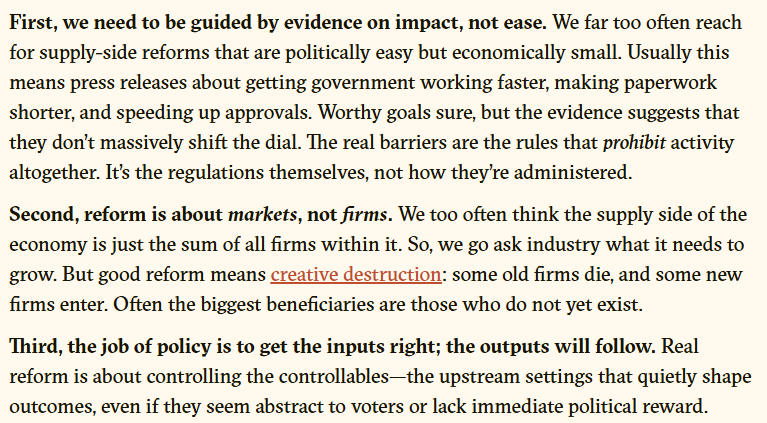
I’ve got an essay out in Inflection Points this morning arguing we can improve our supply-side conversation. I also argue we should see zoning reform in the same vein of 1990s microeconomic reform: lowering prices, boosting productivity, and expanding markets.

I’ve got an essay out in Inflection Points this morning arguing we can improve our supply-side conversation.  I also argue we should see zoning reform in the same vein of 1990s microeconomic reform: lowering prices, boosting productivity, and expanding markets.
e61 Institute (@e61institute) 's Twitter Profile Photo

New e61 research by Gianni La Cava explores whether changing the frequency of unemployment benefit payments could improve financial wellbeing without increasing costs to taxpayers. Using banking data from Australia and New Zealand, he compares how JobSeeker recipients manage

e61 Institute (@e61institute) 's Twitter Profile Photo

The GST is a way government raises revenue whenever someone spends. However, due to the litany of exemptions people pay very different tax rates depending on what they buy. Recent work from the e61-UNSW Policy Research Partnership investigates this. 1/6

alberto bisin (@albertobisin) 's Twitter Profile Photo

This statement- which is a common attack to economics as a discipline - is correct in a literal sense. But I think it's important to unpack it to show that - while the statement is correct - the message that the statement implies fundamentally is not! Here's the unpacking:

Eric Crampton (@ericcrampton) 's Twitter Profile Photo

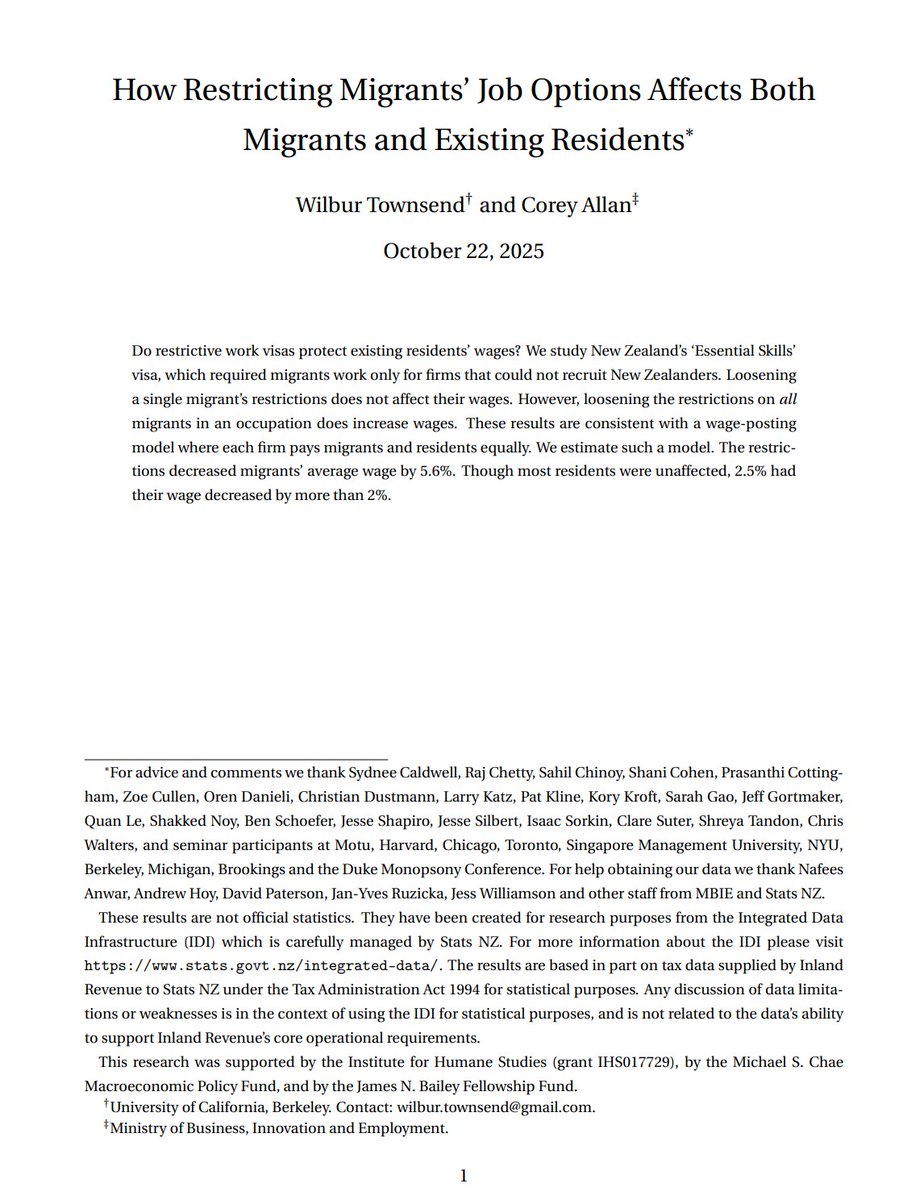
Making it hard for migrants to shift employers reduced those migrants' wages and also reduced wages of some New Zealand residents. From Wilbur, now Assistant Prof at Berkeley!, and Corey Allen. wilburtownsend.github.io/papers/visas.p…

Making it hard for migrants to shift employers reduced those migrants' wages and also reduced wages of some New Zealand residents. 

From <a href="/IAmWilbur/">Wilbur</a>, now Assistant Prof at Berkeley!, and Corey Allen. 

wilburtownsend.github.io/papers/visas.p…
Matt Nolan (@zjubnz) 's Twitter Profile Photo

This Friday is a good time to think about how inequitable GST exemptions are, and why Australia should consider taxing all final spending. If this sounds weird give the below article a read and share your thoughts!

Michael Reddell (@mhreddell) 's Twitter Profile Photo

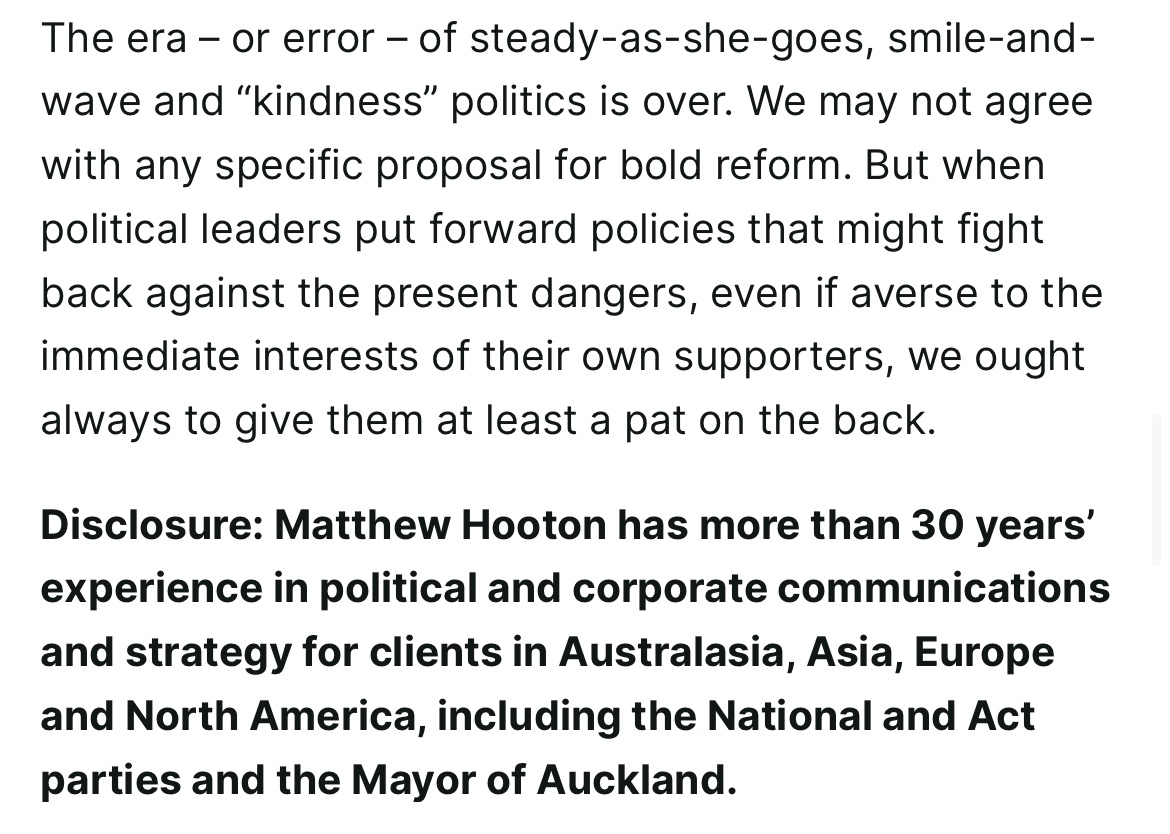
Muldoon (& a fair amount of establishment opinion at the time) thought of the early 80s Think Big as a bold strategy that might fight back against then present dangers. A pat on the back was not warranted.

Muldoon (&amp; a fair amount of establishment opinion at the time) thought of the early 80s Think Big as a bold strategy that might fight back against then present dangers.
A pat on the back was not warranted.
Derek Thompson (@dkthomp) 's Twitter Profile Photo

Deep down, I think everybody — literally everybody; even the health-data-neurotics; even Bryan — knows that something doesn’t … feel … right … about instructing people to eat like Oura-optimizing monks when surrounded by their friends and family during the one annual secular

Roger E. A. Farmer (@farmerrf) 's Twitter Profile Photo

I’m beginning to wonder that myself. The serious answer is that MMT contains some half truths that are extremely attractive to politicians looking for a semi-literate justification to expand government programs without considering the resource costs of those programs. These

Stephen P. Jenkins (@stephenpjenkin1.bsky.social) (@stephenpjenkin1) 's Twitter Profile Photo

Tom Calver You need to take a longitudinal perspective for the full picture. The welfare state is like a piggy bank. We put in at various stages of our life and draw out at others. Pensions are a good example. Focusing entirely on the cross-sectional picture is misleading

Josh Barro (@jbarro) 's Twitter Profile Photo

On Central Air I got into what really annoys me about the "$140,000 is poor" discourse: it's a logical extension of "$400,000 is middle class," an idea that has warped our fiscal politics and entrenched subsidies for the affluent like the 529 program. centralairpodcast.com/p/140000-is-no…