Kevin Earp πŸ”­πŸŒœβ˜€οΈπŸͺβ­ (@kevinastrokev) 's Twitter Profile
Kevin Earp πŸ”­πŸŒœβ˜€οΈπŸͺβ­

@kevinastrokev

Astrophotography, Wildlife and occasional random stuff.

Paint the soul, never mind the legs and arms.

ID: 1042407928555339776

calendar_today19-09-2018 13:39:51

21,21K Tweet

4,4K TakipΓ§i

994 Takip Edilen

Kevin Earp πŸ”­πŸŒœβ˜€οΈπŸͺβ­ (@kevinastrokev) 's Twitter Profile Photo

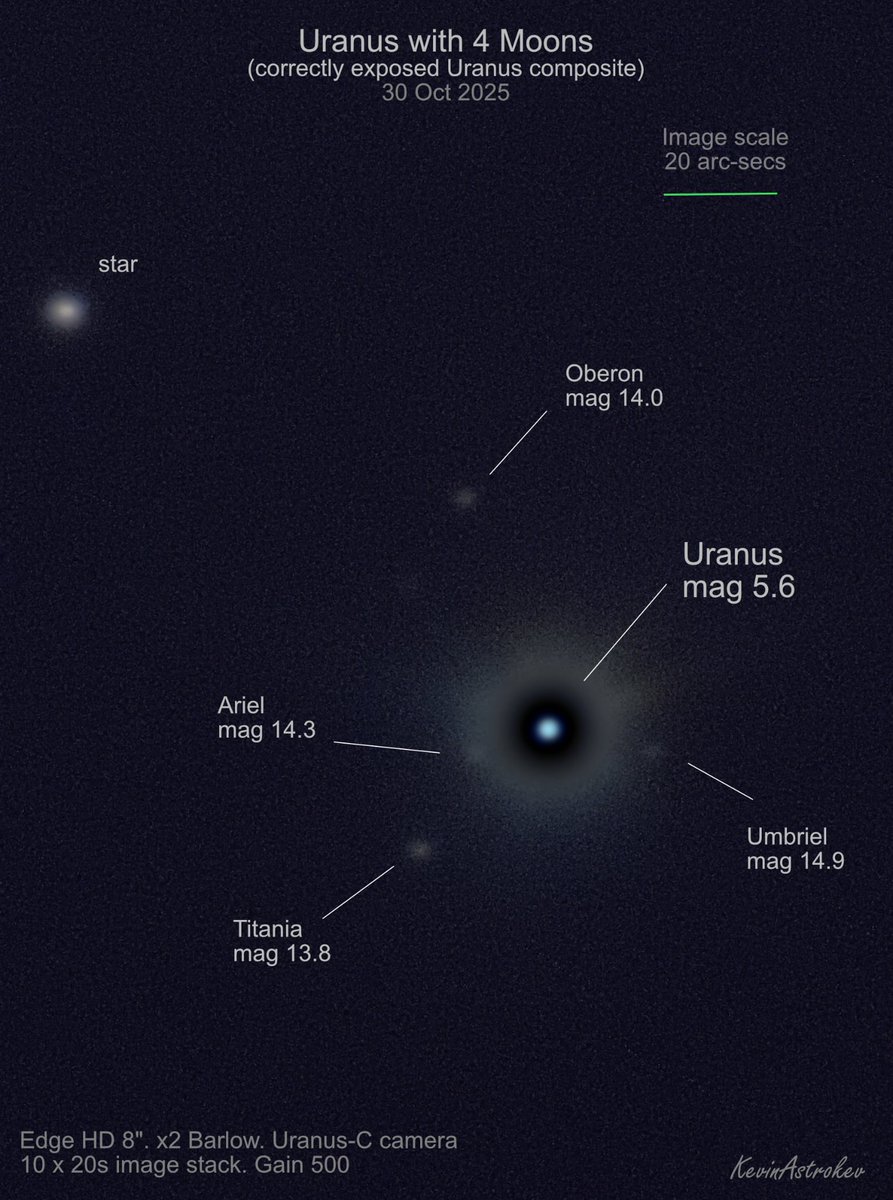
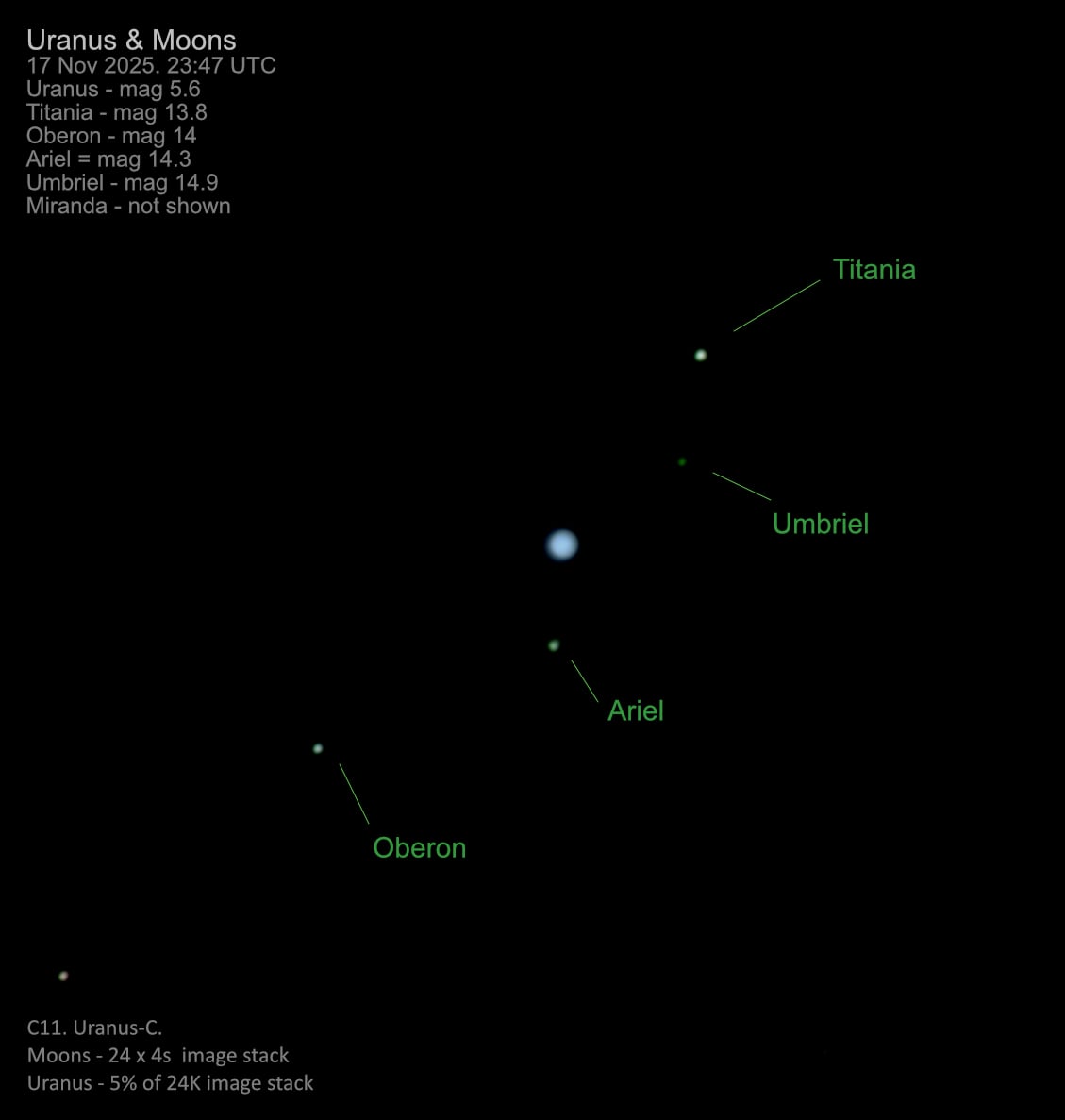
Rework of my image of Uranus' moons. I've superimposed a correctly exposed image of the planet to show its true size. In my previous moon image it was over-exposed, to help record the moons, and looked huge

Rework of my image of Uranus' moons. I've superimposed a correctly exposed image of the planet to show its true size. In my previous moon image it was over-exposed, to help record the moons, and looked huge
Kevin Earp πŸ”­πŸŒœβ˜€οΈπŸͺβ­ (@kevinastrokev) 's Twitter Profile Photo

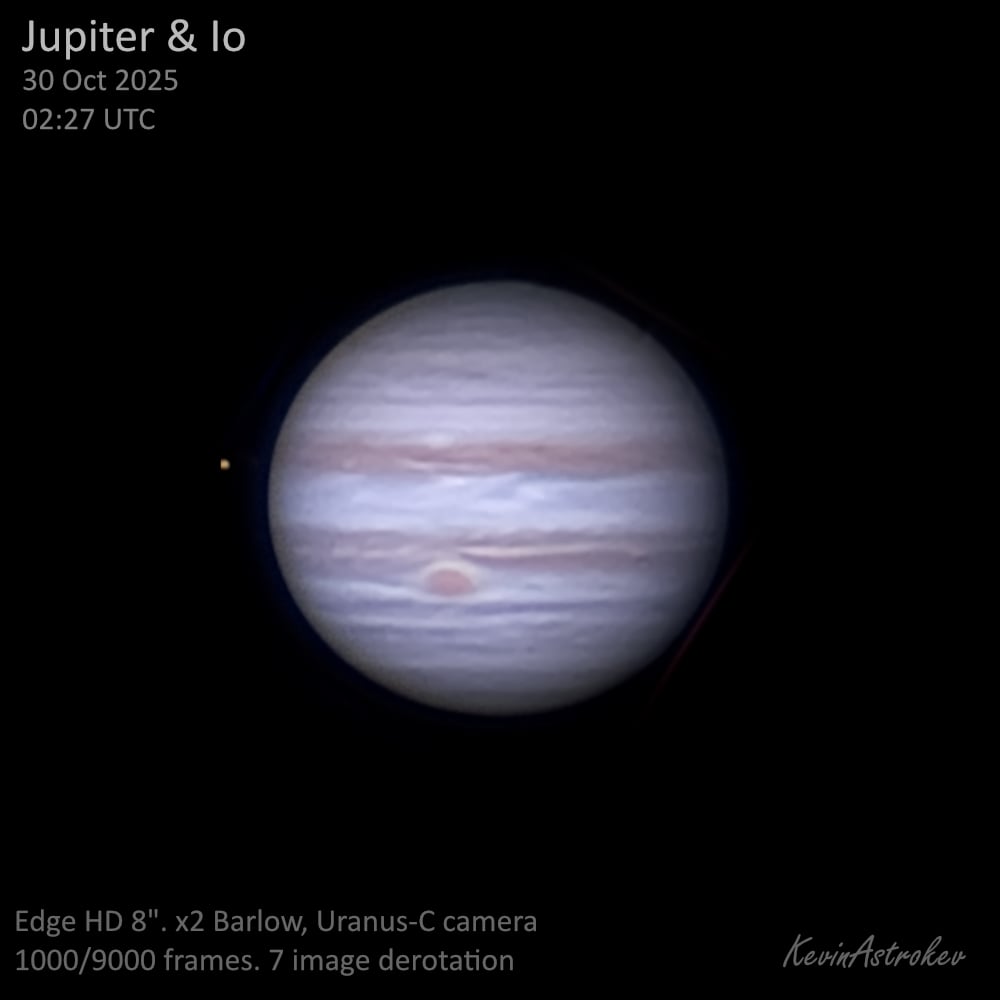
Jupiter, imaged a few nights ago with the volcanic moon Io; the first time this season. Seeing wasn't the best, but good to get back on the king of planets.

Jupiter, imaged a few nights ago with the volcanic moon Io; the first time this season.
Seeing wasn't the best, but good to get back on the king of planets.
Kevin Earp πŸ”­πŸŒœβ˜€οΈπŸͺβ­ (@kevinastrokev) 's Twitter Profile Photo

Saturn on Saturday evening using the Celestron C11 at prime focus, with a Uranus-C camera. Seeing wasn't great and I struggled to get decent data using a Barlow. 6 images derotated in winjupos.

Saturn on Saturday evening using the Celestron C11 at prime focus, with a Uranus-C camera.
Seeing wasn't great and I struggled to get decent data using a Barlow.
6 images derotated in winjupos.
Kevin Earp πŸ”­πŸŒœβ˜€οΈπŸͺβ­ (@kevinastrokev) 's Twitter Profile Photo

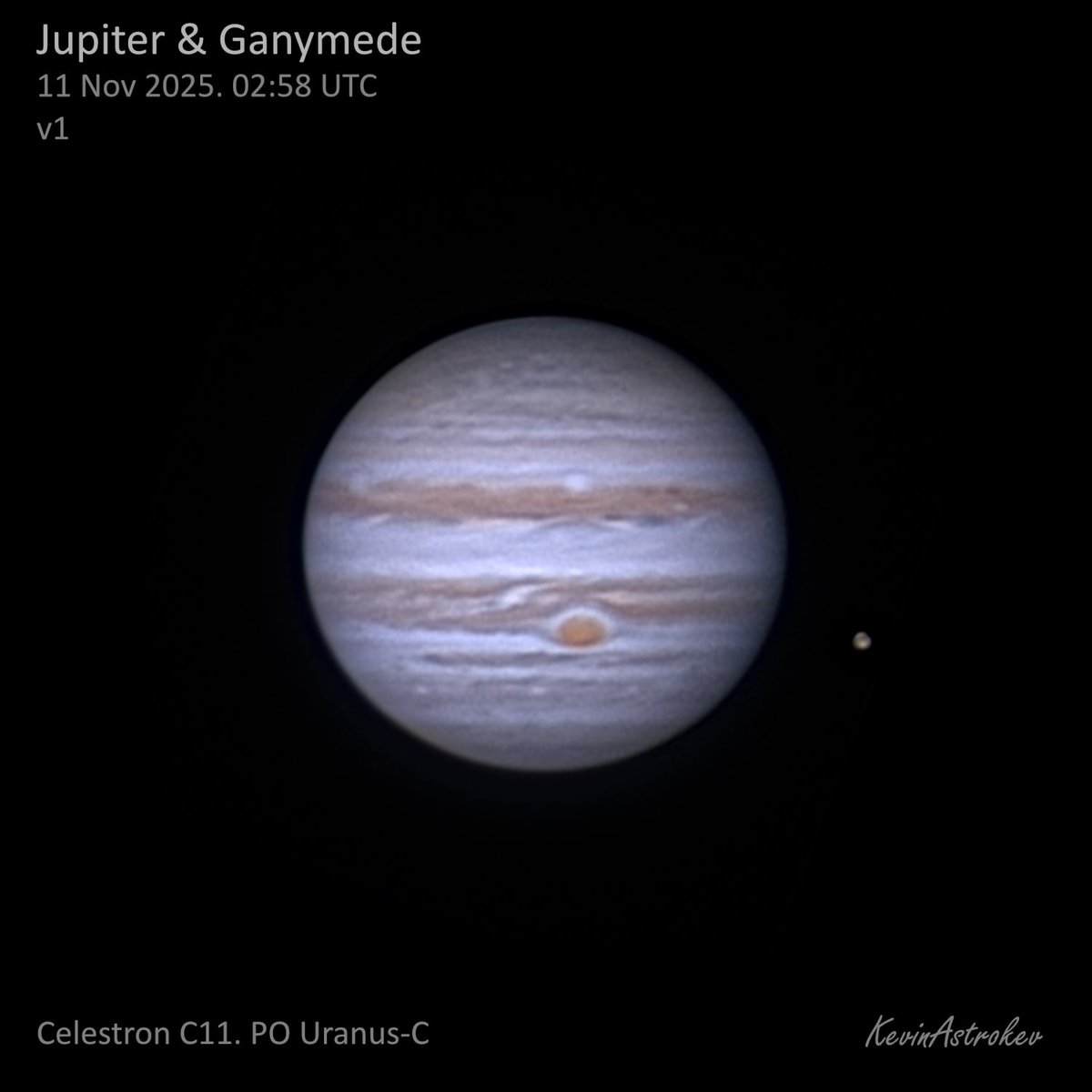
Jupiter imaged on Tuesday morning in good seeing, with the C11. I think this is the first time I've captured vague albedo features on Ganymede, it's largest moon, which I was pleased about

Jupiter imaged on Tuesday morning in good seeing, with the C11.
I think this is the first time I've captured vague albedo features on Ganymede, it's largest moon, which I was pleased about
Kevin Earp πŸ”­πŸŒœβ˜€οΈπŸͺβ­ (@kevinastrokev) 's Twitter Profile Photo

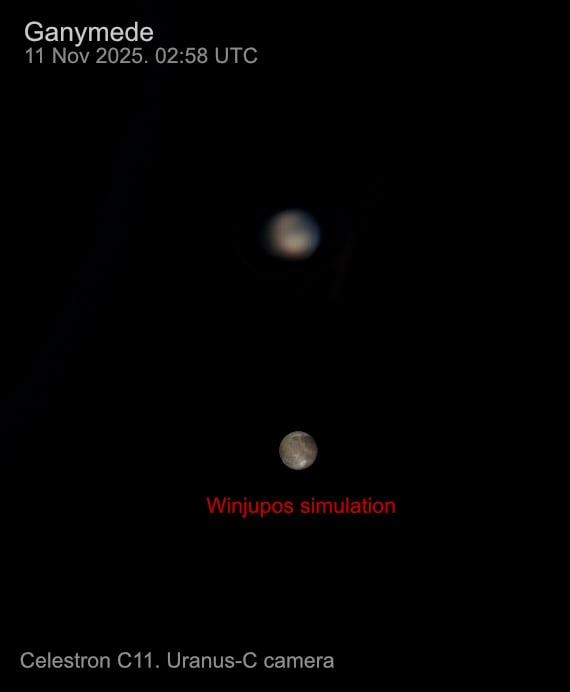
Closer view of Ganymede, Jupiter's largest moon, and the biggest Moon in the solar system. First time I've been able to capture vague surface markings, which I was pleased with. The lower image is a Winjupos computer simulation for the same time, which shows reasonable agreement

Closer view of Ganymede, Jupiter's largest moon,  and the biggest Moon in the solar system.
First time I've been able to capture vague surface markings, which I was pleased with. The lower image is a Winjupos computer simulation for the same time, which shows reasonable agreement
Kevin Earp πŸ”­πŸŒœβ˜€οΈπŸͺβ­ (@kevinastrokev) 's Twitter Profile Photo

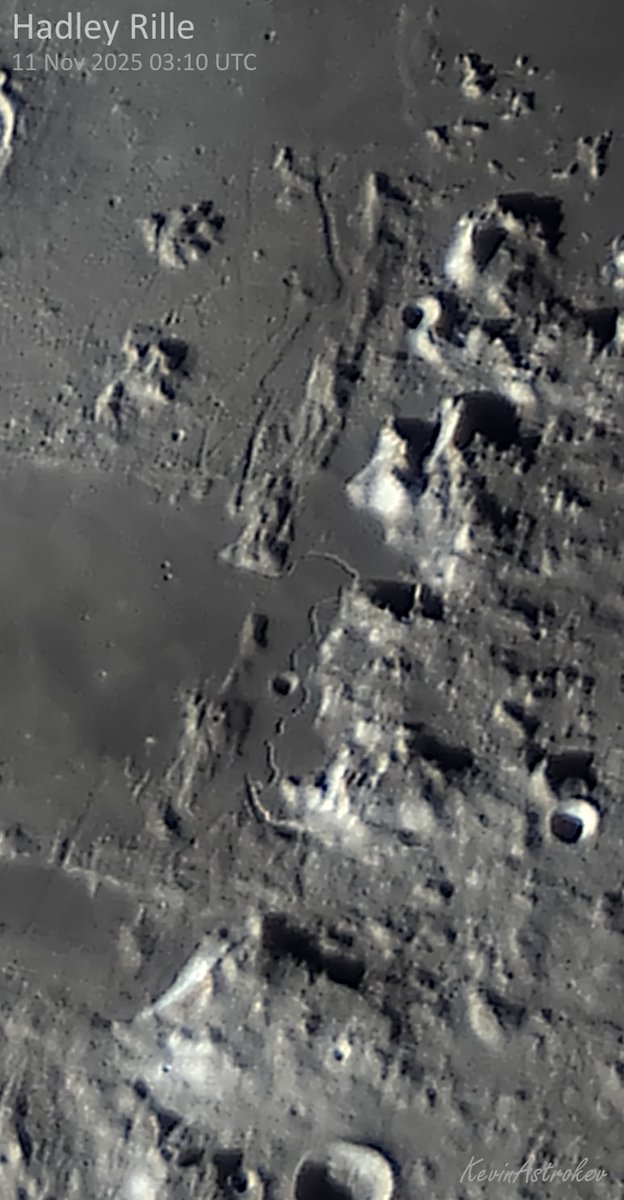
Hadley Rille, landing site of the Apollo 15 mission, and one of my favourite features to try and image. It's quite tiny, nestled in the foothills of the Apennine mountains, and needs good seeing to get a decent shot. Taken on Tuesday morning with a C11 scope

Hadley Rille, landing site of the Apollo 15 mission, and one of my favourite features to try and image.
It's quite tiny, nestled in the foothills of the Apennine mountains, and needs good seeing to get a decent shot.
Taken on Tuesday morning with a C11 scope
Kevin Earp πŸ”­πŸŒœβ˜€οΈπŸͺβ­ (@kevinastrokev) 's Twitter Profile Photo

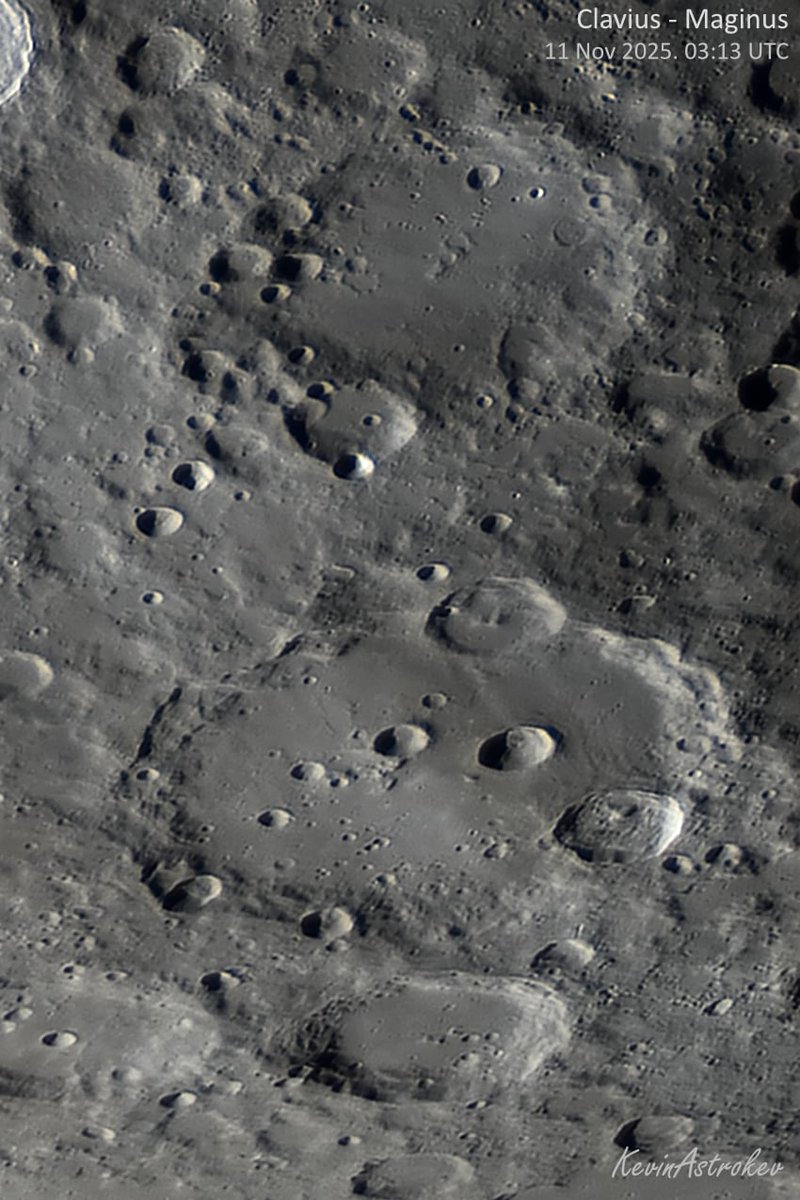
Clavius crater in the Moon's Southern highlands. I love this crater as its so distinctive, and the many craters within it, with a wide range of sizes, makes it a great test of imaging and scope resolution. The smallest features visible in this image are around 1 mile across

Clavius crater in the Moon's Southern highlands. I love this crater as its so distinctive, and the many craters within it, with a wide range of sizes, makes it a great test of imaging and scope resolution.
The smallest features visible in this image are around 1 mile across
Kevin Earp πŸ”­πŸŒœβ˜€οΈπŸͺβ­ (@kevinastrokev) 's Twitter Profile Photo

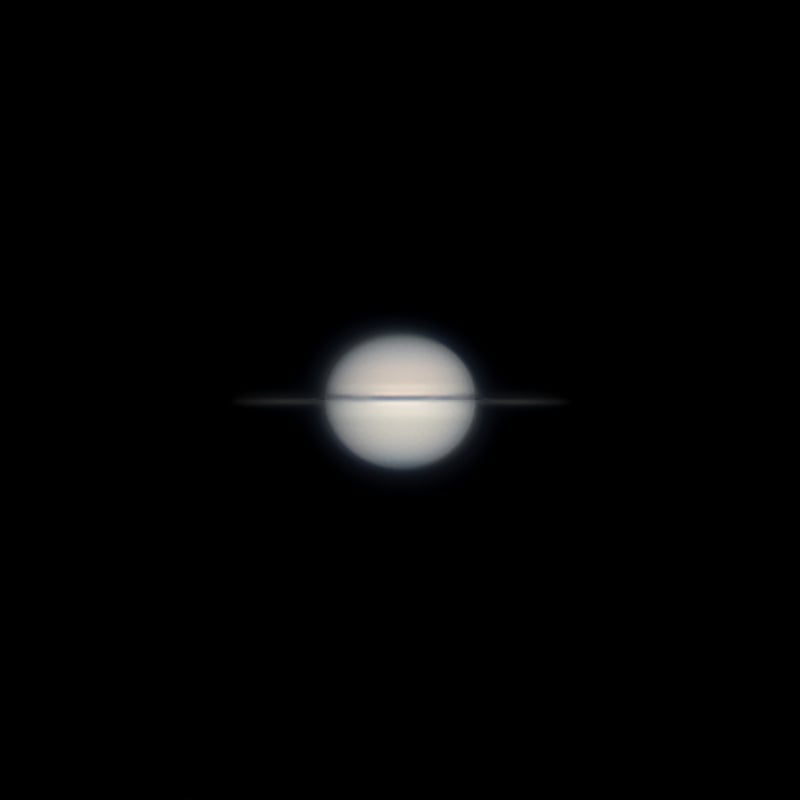
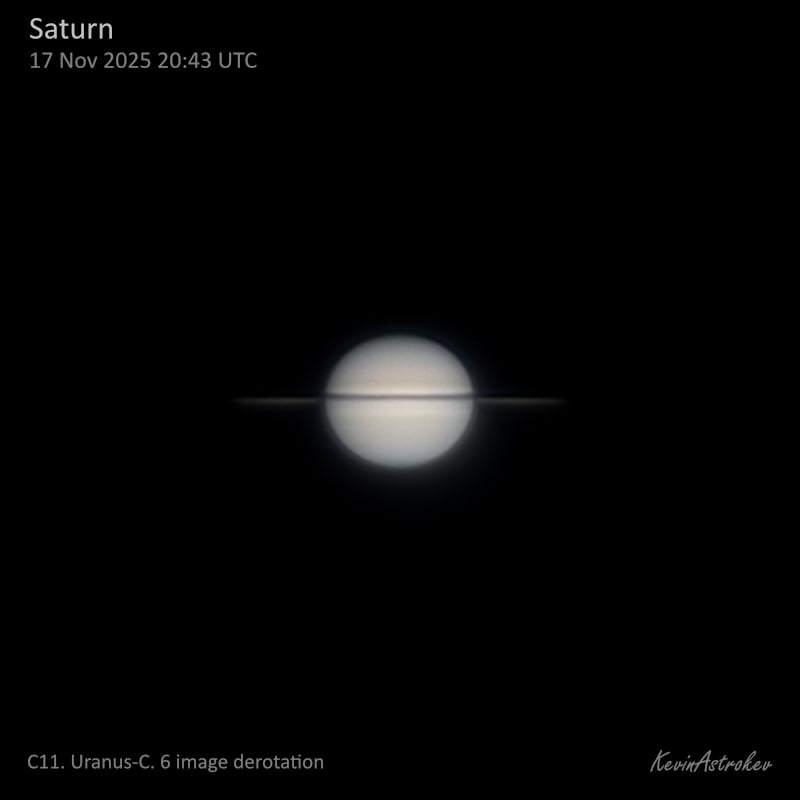
Saturn, imaged a few nights ago. Seeing wasn't great but quite pleased with the result. Although not quite edge-on, the rings are just about at their narrowest for this season, at 0.39Β° open with the South face in view. They'll be st their narrowest next week

Saturn, imaged a few nights ago.
Seeing wasn't great but quite pleased with the result.
Although not quite edge-on, the rings are just about at their narrowest for this season, at 0.39Β° open with the South face in view.
They'll be st their narrowest next week
Kevin Earp πŸ”­πŸŒœβ˜€οΈπŸͺβ­ (@kevinastrokev) 's Twitter Profile Photo

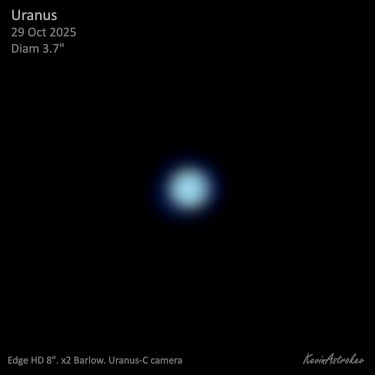
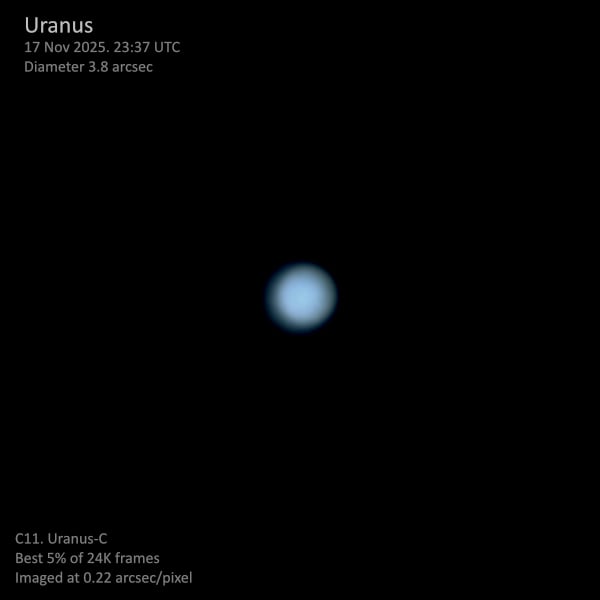
Uranus imaged on the 17th Nov with my Celestron C11 and Uranus-C camera at prime focus. No detail is visible on this distant world, at least not without appropriate filters, which I dont have! Quite pleased with the result though

Uranus imaged on the 17th Nov with my Celestron C11 and Uranus-C camera at prime focus.
No detail is visible on this distant world, at least not without appropriate filters, which I dont have!
Quite pleased with the result though
Kevin Earp πŸ”­πŸŒœβ˜€οΈπŸͺβ­ (@kevinastrokev) 's Twitter Profile Photo

Final image of the Uranus system from the 17th This is a composite since the brightness difference between planet and moons is too big to record them all in one image without over-exposing Uranus. Miranda is not shown as it was too close to the glare of Uranus to show separately

Final image of the Uranus system from the 17th
This is a composite since the brightness difference between planet and moons is too big to record them all in one image without over-exposing Uranus.
Miranda is not shown as it was too close to the glare of Uranus to show separately
Kevin Earp πŸ”­πŸŒœβ˜€οΈπŸͺβ­ (@kevinastrokev) 's Twitter Profile Photo

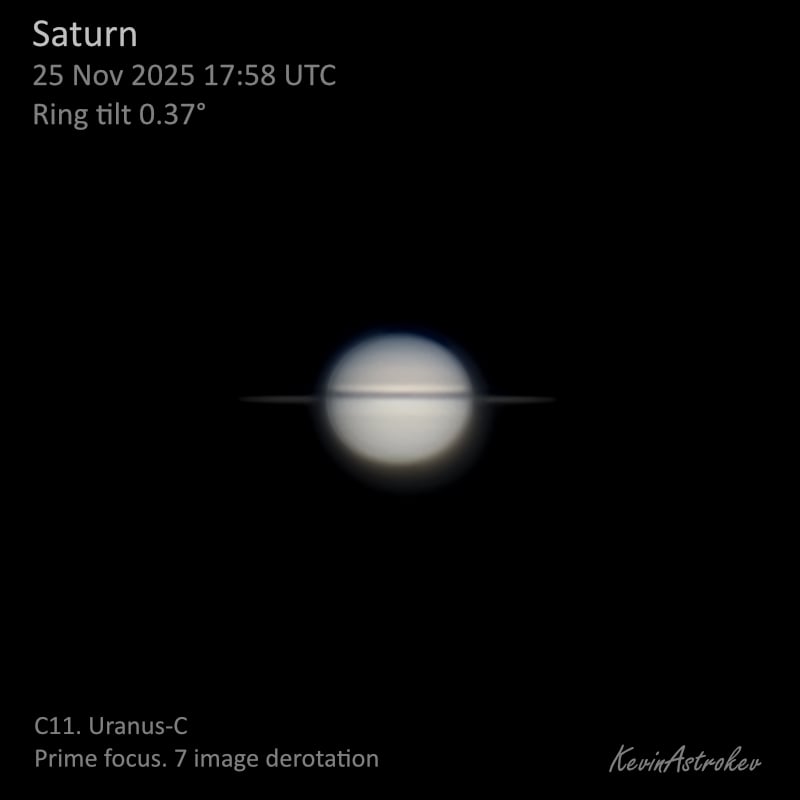
Saturn imaged on the 25th in fairly poor seeing. This is just a few hours after the rings were at their narrowest angle to us, being tilted at only 0.37Β°. They will now begin to slowly open up again over the next several years until they're fully open in 2032. Can hardly wait πŸ˜„

Saturn imaged on the 25th in fairly poor seeing.
This is just a few hours after the rings were at their narrowest angle to us, being tilted at only 0.37Β°.
They will now begin to slowly open up again over the next several years until they're fully open in 2032.
Can hardly wait πŸ˜„
Kevin Earp πŸ”­πŸŒœβ˜€οΈπŸͺβ­ (@kevinastrokev) 's Twitter Profile Photo

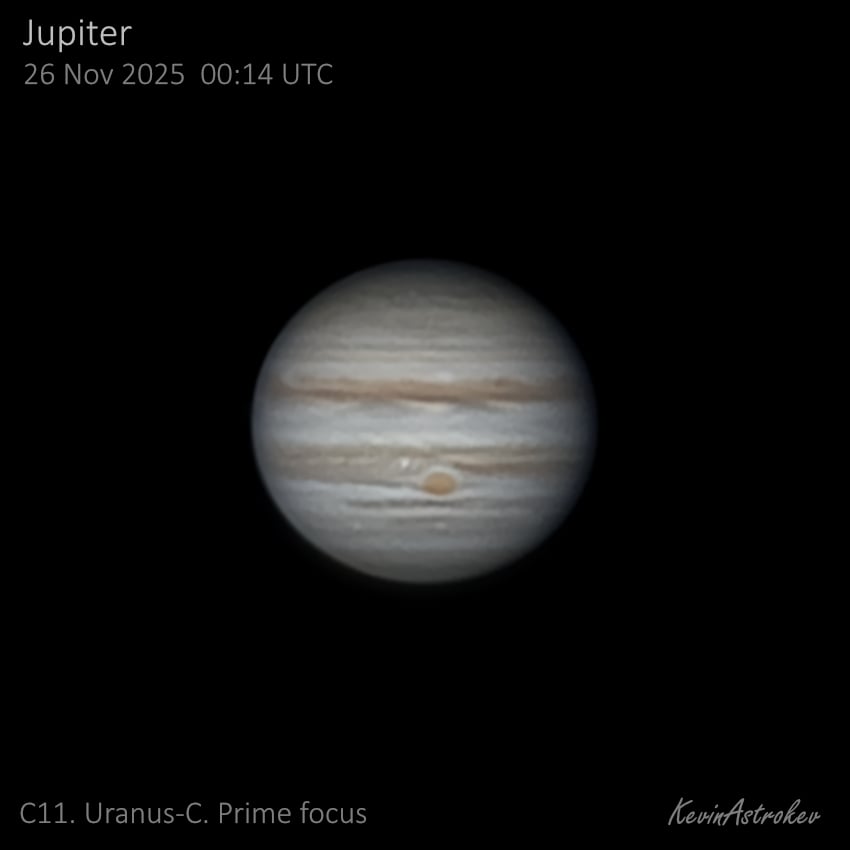
Jupiter, just after midnight on 26th Nov. The seeing wasn't the best but was slowly improving as the night progressed. Taken with my Celestron C11 and Player One Uranus colour camera

Jupiter, just after midnight on 26th Nov.
The seeing wasn't the best but was slowly improving as the night progressed.
Taken with my Celestron C11 and Player One Uranus colour camera
Kevin Earp πŸ”­πŸŒœβ˜€οΈπŸͺβ­ (@kevinastrokev) 's Twitter Profile Photo

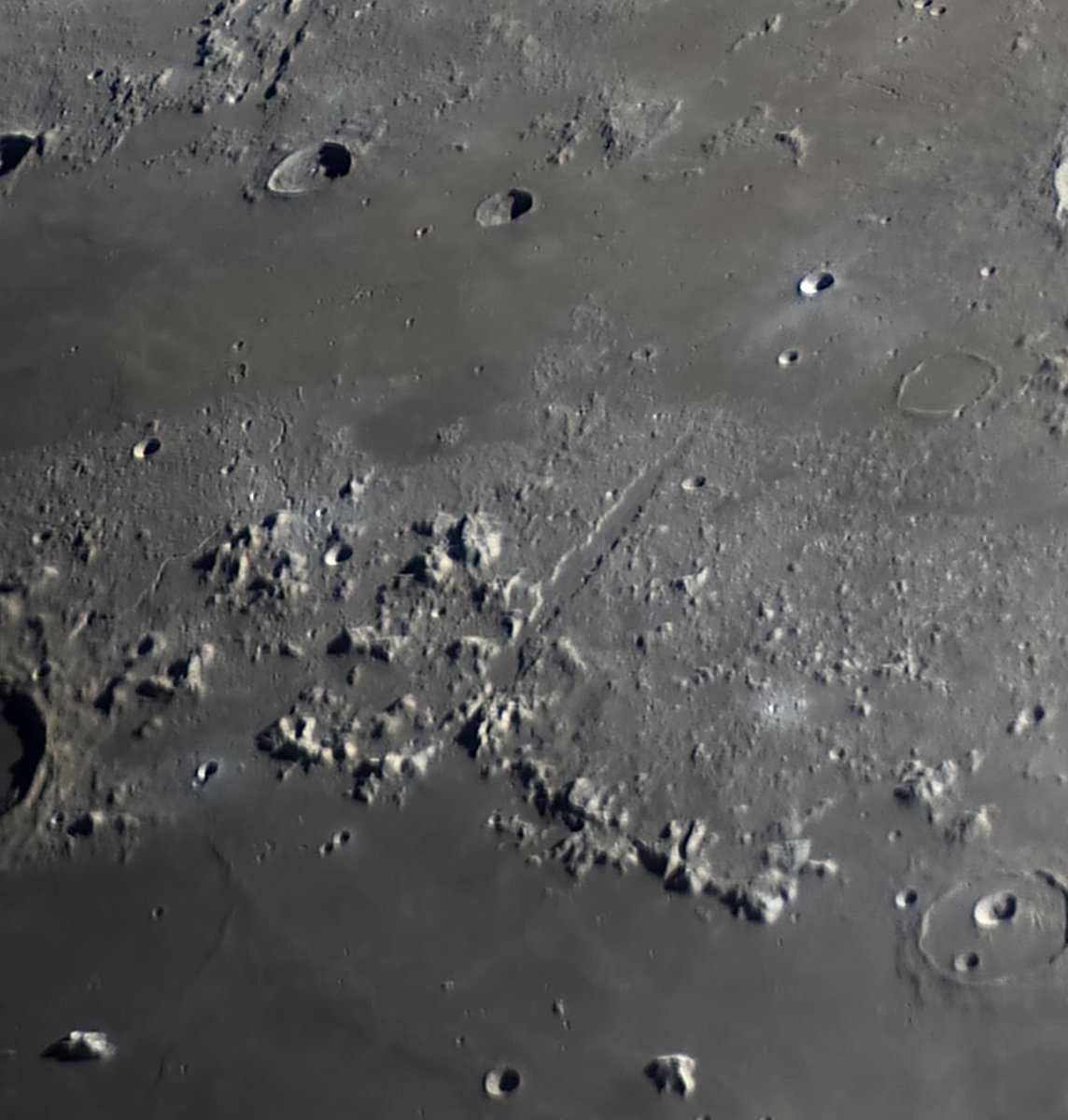
The Alpine Valley. The only shot I got of the Moon last night before cloud moved in 😫. A faint trace of the central rille is just visible. The scope was still cooling down so the seeing was quite wobbly. Sometimes you take what you can get.

The Alpine Valley.
The only shot I got of the Moon last night before cloud moved in 😫.
A faint trace of the central rille is just visible.

The scope was still cooling down so the seeing was quite wobbly. Sometimes you take what you can get.
Kevin Earp πŸ”­πŸŒœβ˜€οΈπŸͺβ­ (@kevinastrokev) 's Twitter Profile Photo

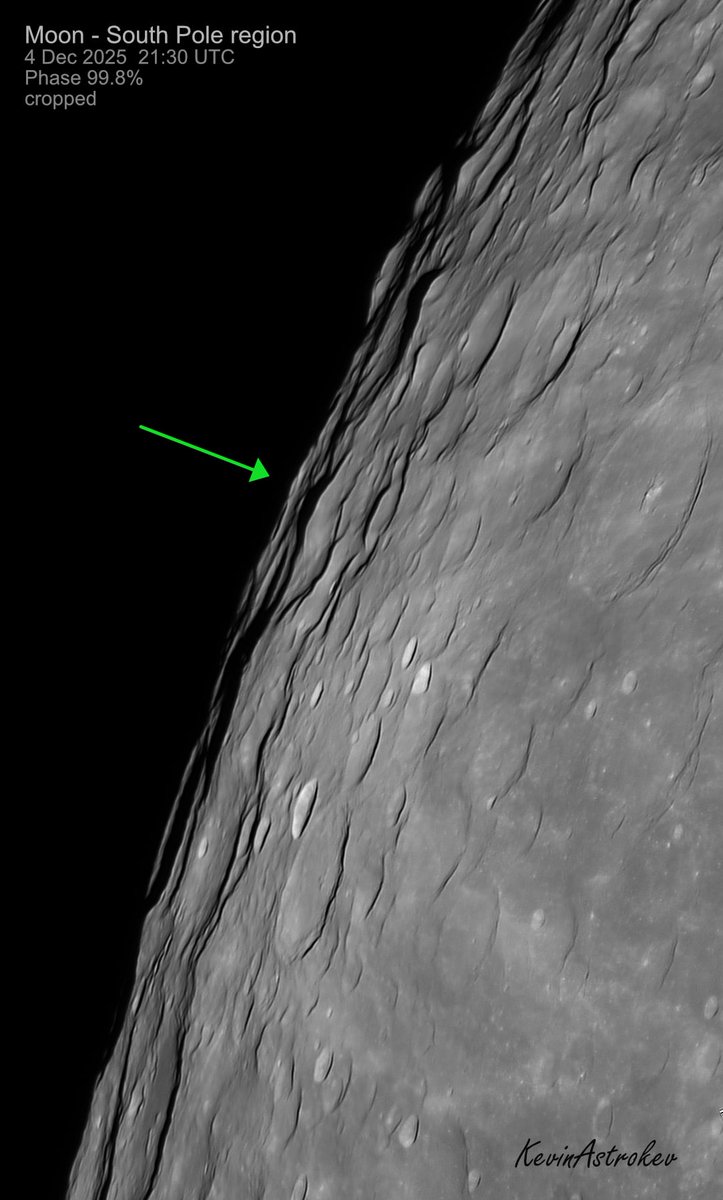
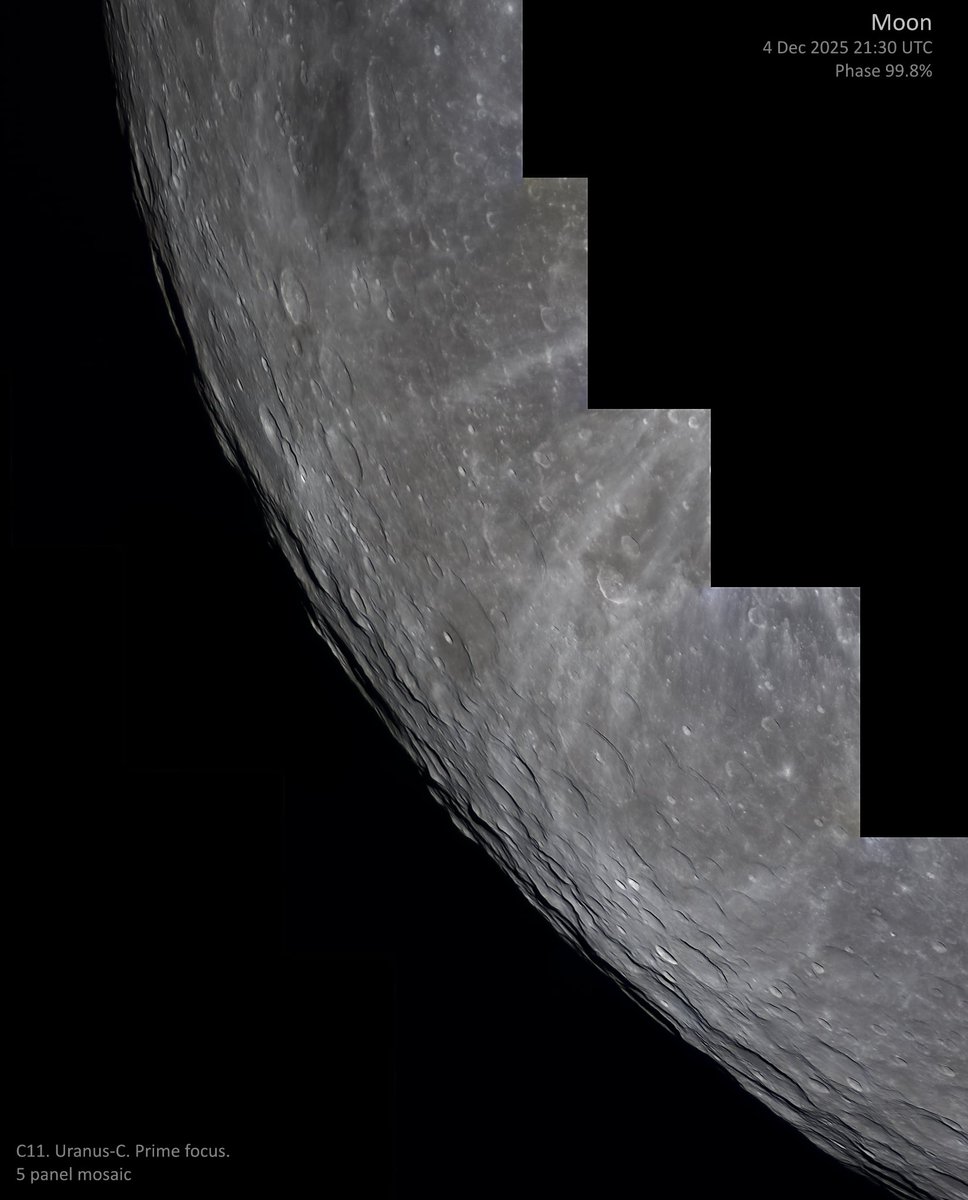
Full Moon a few nights ago. A favourable libration and good seeing allowed some great views of the region around the South Pole (roughly indicated by the arrow) Imaged with an 11" SCT at prime focus

Full Moon a few nights ago. A favourable libration and good seeing allowed some great views of the region around the South Pole (roughly indicated by the arrow)

Imaged with an 11" SCT at prime focus