

APOGEE Survey
@apogeesurvey
Mapping Stars in the Galaxy as part of the Sloan Digital Sky Survey @sdssurveys
#ScienceForAll
ID: 2676559771
http://www.sdss.org/sdss-surveys/apogee-2/ 24-07-2014 11:16:25
8,8K Tweet
2,2K Takipçi
463 Takip Edilen

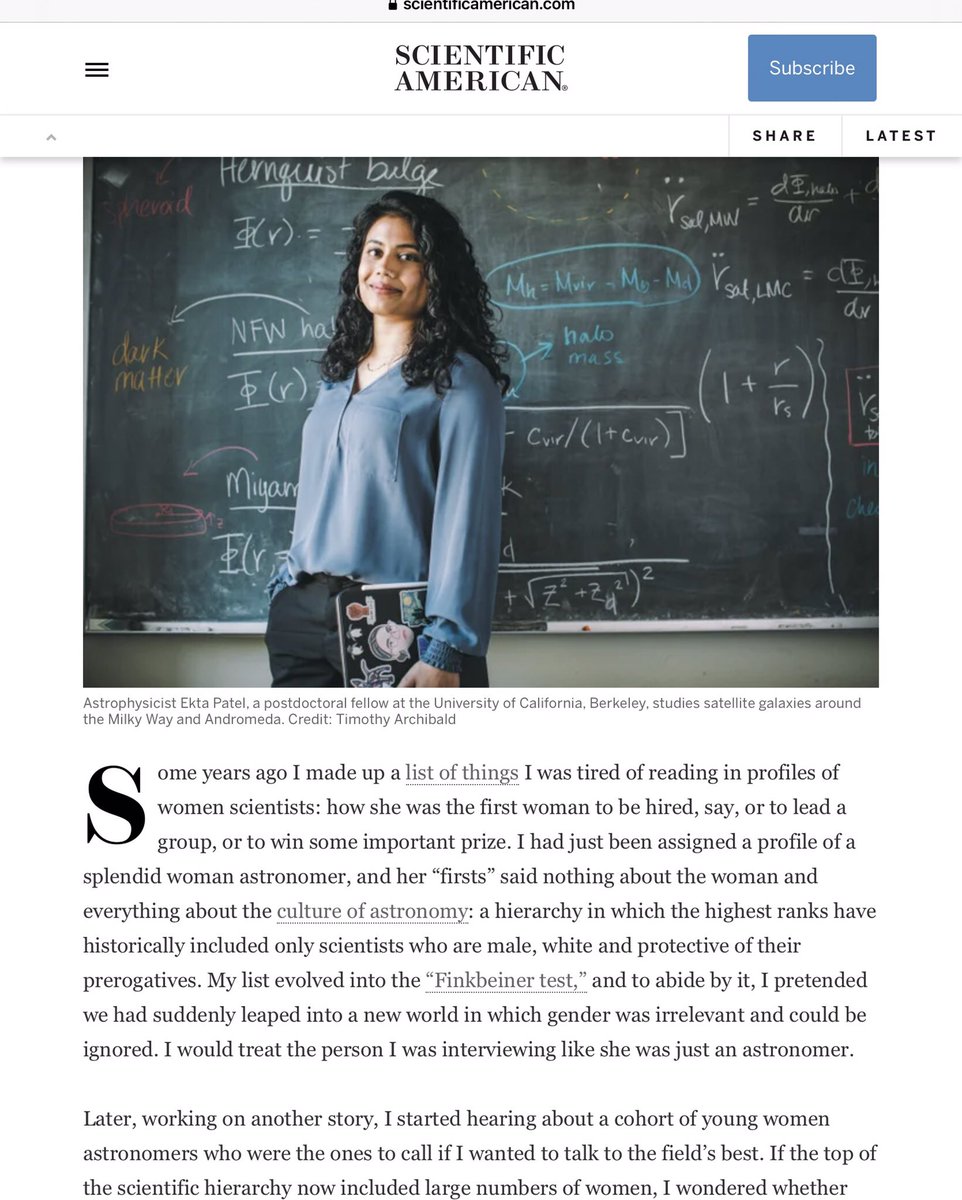
Interesting article: Women Are Creating a New Culture for Astronomy scientificamerican.com/article/women-… #astronomy #Science #Space #Physics #WomenInScience #WomenInSTEM #NASA Sloan Digital Sky Surveys APOGEE Survey ESA Gaia ESO European ALMA Regional Centre Galaxy Map (@[email protected]) GALAH Survey Center for Astrophysics | Harvard & Smithsonian TESS at MIT James Webb Space Telescope /fan&art

Looking forward to talk this evening under the big dinosaur at @mfnberlin about Galactic Archaeology with a Billion stars ESA Gaia APOGEE Survey Wissenschaft im Sauriersaal: Galaktische Archäologie – Ausgrabungen mit einer Milliarde Sternen museumfuernaturkunde.berlin/de/museum/vera… via @mfnberlin

Where I learned that 50% of sun-like stars are binary stars. Very cool program and grateful to Erin Graves, Catawba Science Center, & APOGEE Survey for the support in organizing it.
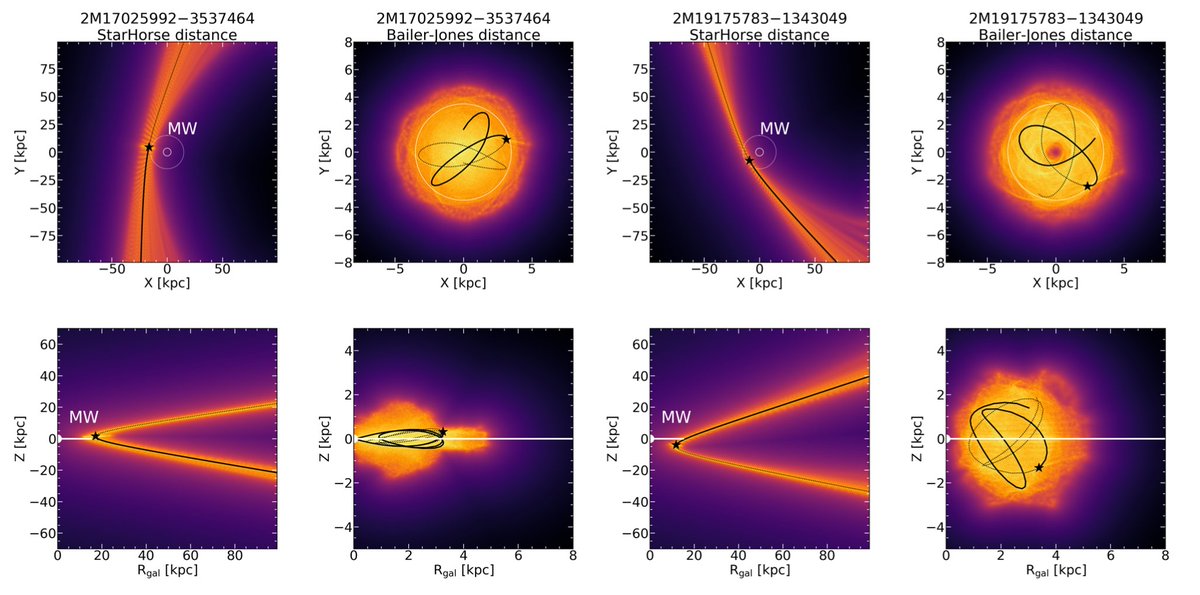
I've a new accepted first author paper that I titled: "Galactic ArchaeoLogIcaL ExcavatiOns (GALILEO) I. An updated census of APOGEE Survey N-rich Giants Across the Milky Way" - We also identified two possible Hypervelocity N-rich star (HVNS) candidates with StarHorse, but ...

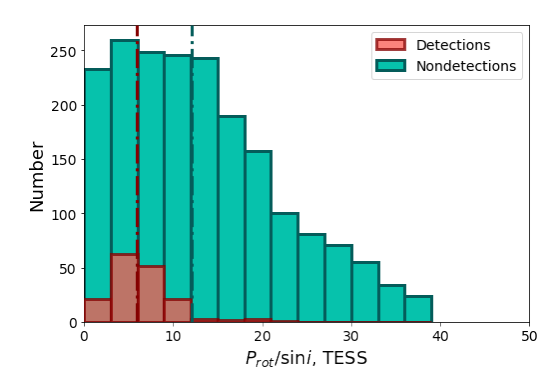
Looking at how rotation evolves with time is hard in this regime, but you can see it if you are careful especially with the help of spectroscopy like APOGEE Survey. We actually ended up using vsini+ Rgaia => P/sini, validated against the rotation periods we could measure for this

Whoever wrote the Sloan Digital Sky Surveys APOGEE Survey DR17 caveats page is a poet. It bears a close read. sdss.org/dr17/irspec/ca…

Paper day! In this paper we examine the chemical compositions of halo substructures identified in recent years with the wealth of large-scale stellar surveys (Gaia, APOGEE, H3, LAMOST) in order to further understand their nature. A thread 1/11 Link: ui.adsabs.harvard.edu/abs/2022arXiv2…
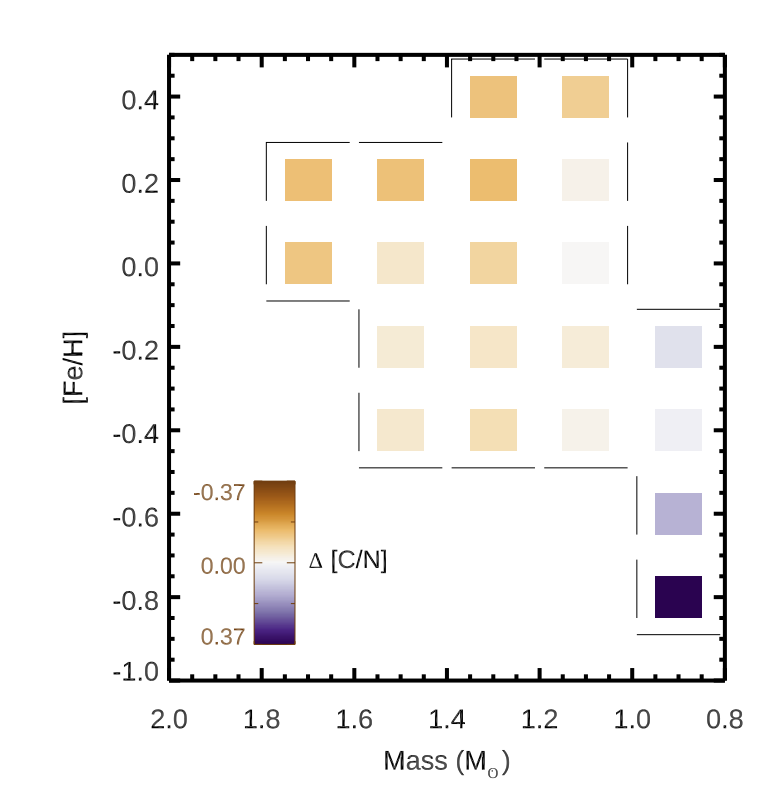
And then of course in surveys like APOGEE Survey we can actually measure the amount of mixing as a function of stellar mass and metallicity

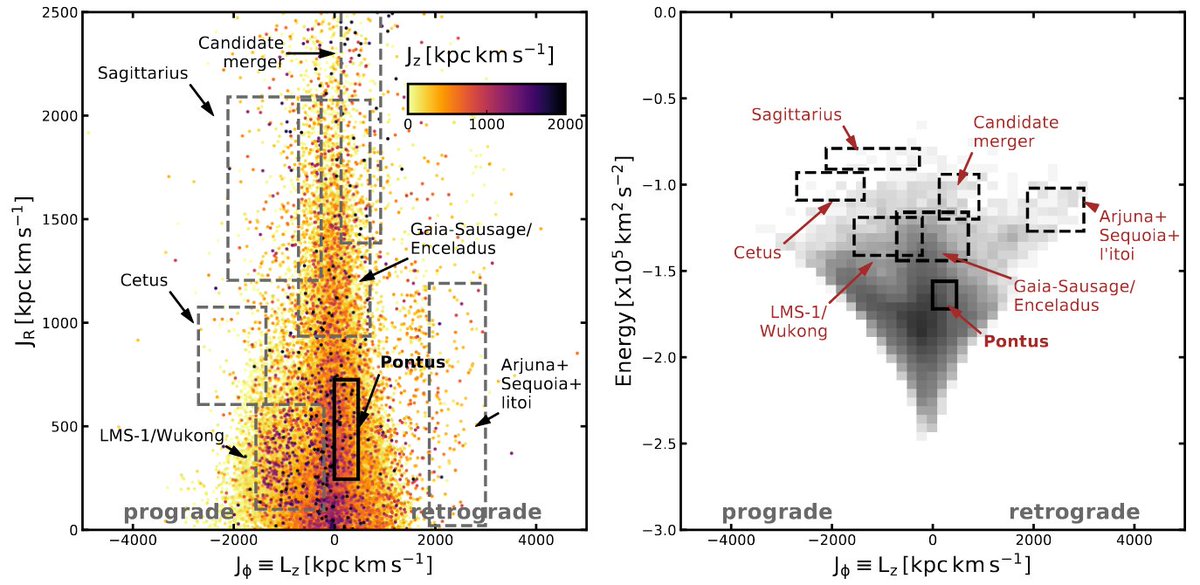
I'm excited about my first 'single-author' paper, now accepted for publication in ApJ. I study the characteristics of the "Pontus" merger of the Milky Way using #GaiaEDR3 and APOGEE Survey data. arxiv.org/abs/2204.09058 ESA Gaia Max-Planck-Institut für Astronomie Humboldt-Stiftung International Astronomical Union (IAU) The GruberFoundation
Conveniently, with optical spectroscopy from clusters and APOGEE Survey, we can now infer empirically the location of the red giant branch bump (purple), and infer where (at what logg) the lithium (green) and [C/N] (blue) drop due to extra mixing at a particular metallicity.
![Conveniently, with optical spectroscopy from clusters and <a href="/APOGEEsurvey/">APOGEE Survey</a>, we can now infer empirically the location of the red giant branch bump (purple), and infer where (at what logg) the lithium (green) and [C/N] (blue) drop due to extra mixing at a particular metallicity.](https://pbs.twimg.com/media/FTdAcWFUYAAfByr.jpg "Jamie Tayar (@stellartayar) on Twitter photo Conveniently, with optical spectroscopy from clusters and <a href=\"/APOGEEsurvey/\">APOGEE Survey</a>, we can now infer empirically the location of the red giant branch bump (purple), and infer where (at what logg) the lithium (green) and [C/N] (blue) drop due to extra mixing at a particular metallicity.")

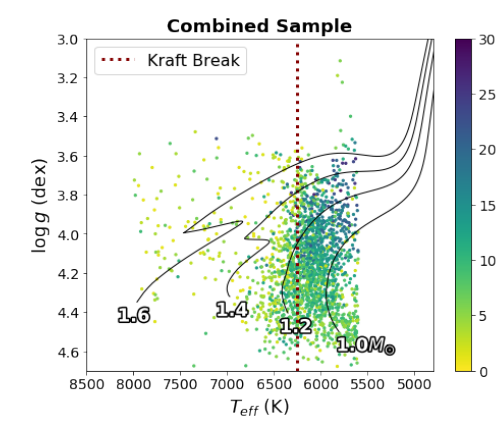
Looking forward to #AAS240 in a week! I'll be talking about parameter derived stellar distances and masses using data from APOGEE Survey


APOGEE in Fire Mock Catalogs from 3 Latte Galaxies go live at #AAS240. 50+ Tb of simulated Milky Way goodness in a server-side platform. 🤓 Arik from IDIES will be on hand with cool 😎 notebooks to play around that show server-side awesome. Sloan Digital Sky Surveys APOGEE Survey

The awesome Dr Gail Zasowski giving a plenary now at AAS! Sloan Digital Sky Surveys APOGEE Survey
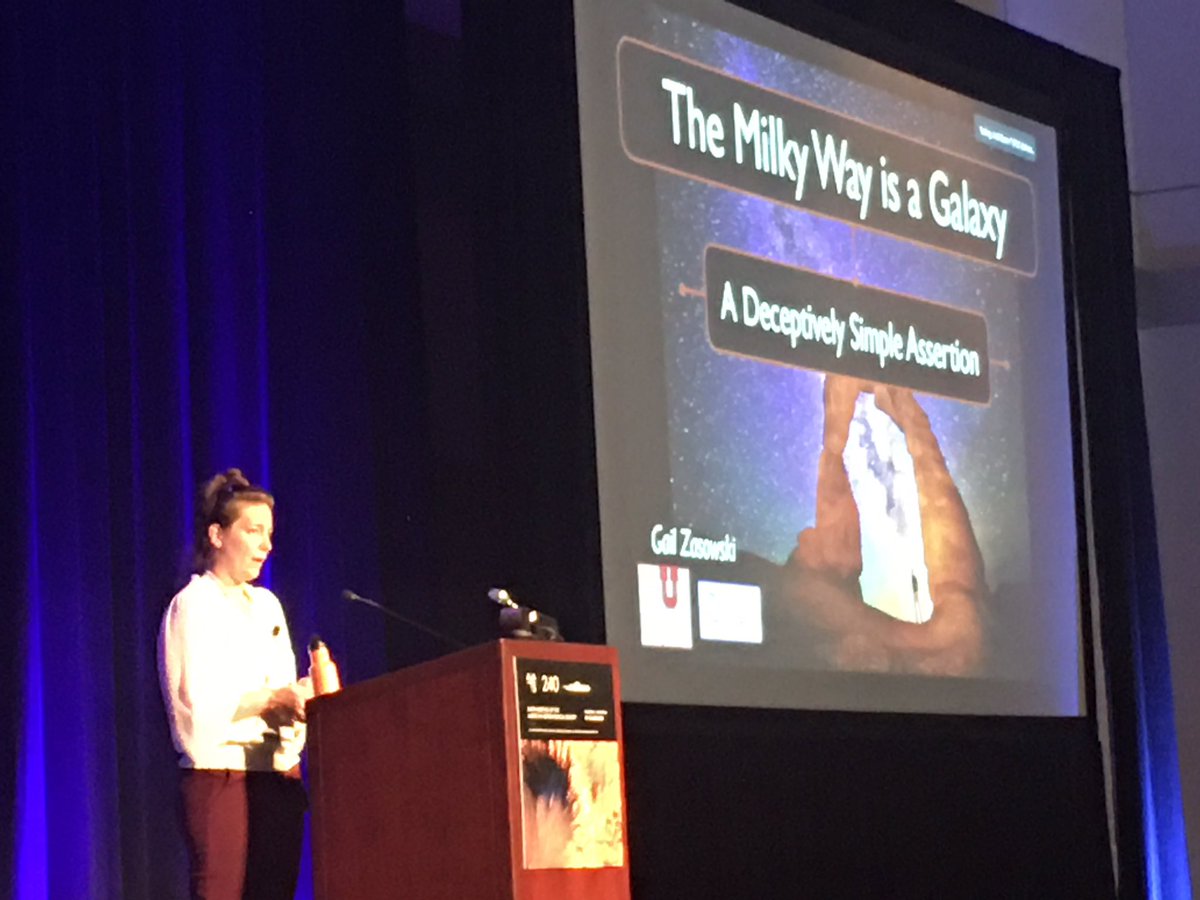

MasterClass by Dr Gail Zasowski on the Milky Way at #AAS240. A mind-blowingly rich data set telling us about the idiosyncrasies of our the #galaxy we call home. 🤯👏 Sloan Digital Sky Surveys APOGEE Survey