Witney Antiques (@witney_antiques) 's Twitter Profile
Witney Antiques

@witney_antiques

Witney Antiques specialises in 17th-century needlework & 17th- through 19th-century samplers. Open Wednesday 12-5, Thursday 10-5, Friday 10-5, and Saturday 10-2

ID: 1309075065250762752

linkhttp://www.witneyantiques.com/index.php calendar_today24-09-2020 10:20:10

2,2K Tweet

3,3K Followers

74 Following
Witney Antiques (@witney_antiques) 's Twitter Profile Photo

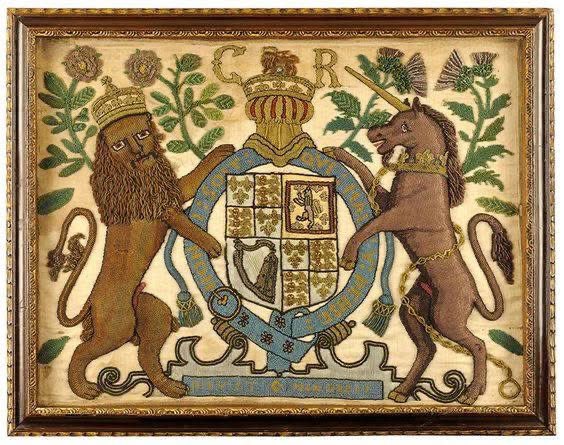
This rendition of King Charles II's coat of arms is made entirely out of minuscule glass beads. The initials "CR" and the coat of arms itself tell us this object was made during his reign, sometime between 1660 and 1685. The lion and unicorn's manes are made of layers of thread

This rendition of King Charles II's coat of arms is made entirely out of minuscule glass beads. The initials "CR" and the coat of arms itself tell us this object was made during his reign, sometime between 1660 and 1685. The lion and unicorn's manes are made of layers of thread
Witney Antiques (@witney_antiques) 's Twitter Profile Photo

This delicate nineteenth-century sampler, with its urn and weeping willow trees, is typical of mourning embroidery of the period. Anna Maria Brown (1822-1900) stitched this around 1835 to commemorate the passing of her siblings, Eliza, Joseph, and Mary Elizabeth

This delicate nineteenth-century sampler, with its urn and weeping willow trees, is typical of mourning embroidery of the period. Anna Maria Brown (1822-1900) stitched this around 1835 to commemorate the passing of her siblings, Eliza, Joseph, and Mary Elizabeth
Witney Antiques (@witney_antiques) 's Twitter Profile Photo

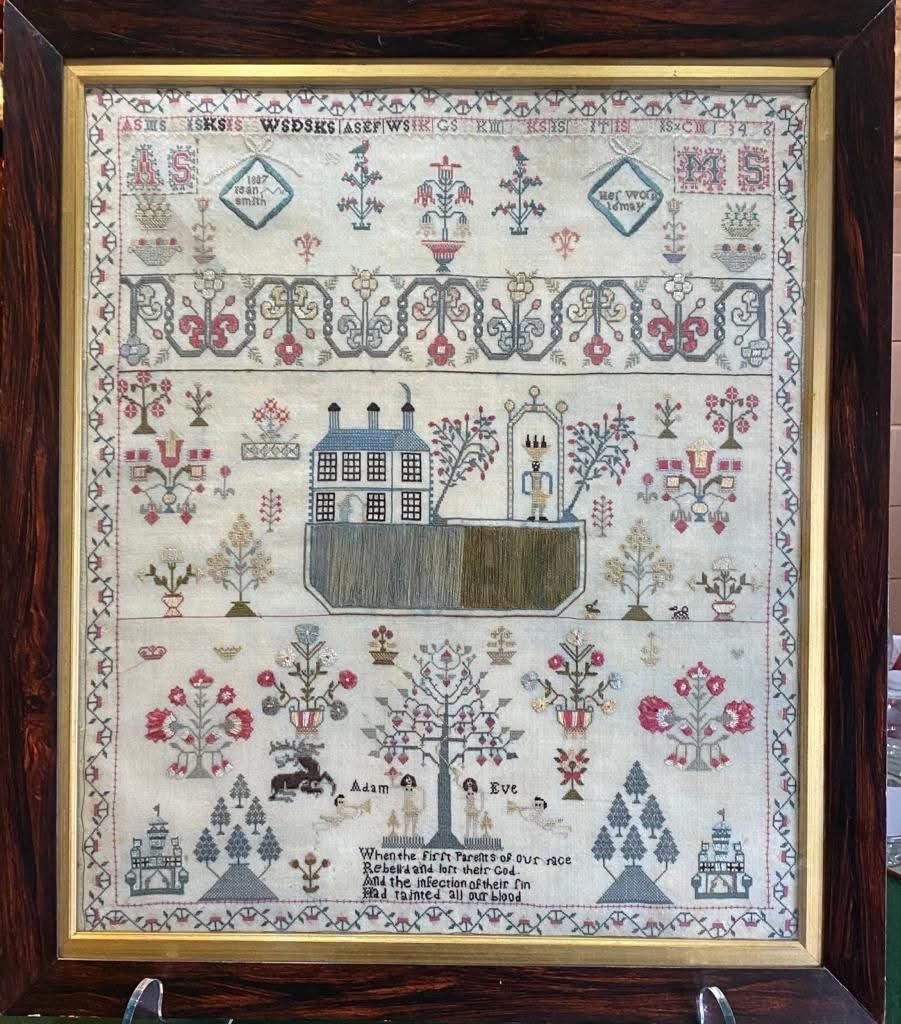
This very fine Scottish sampler retains its lovely original colours. Jean Smith completed her charming sampler on 16 May 1807. She included a wide variety of motifs and her family members' initials at the top of the sampler

This very fine Scottish sampler retains its lovely original colours. Jean Smith completed her charming sampler on 16 May 1807. She included a wide variety of motifs and her family members' initials at the top of the sampler
Witney Antiques (@witney_antiques) 's Twitter Profile Photo

This seventeenth-century beadwork panel with flowers and insects is rare for its inclusion of both initials and a year of production. It was made by someone with the initials "E.B." in 1655

This seventeenth-century beadwork panel with flowers and insects is rare for its inclusion of both initials and a year of production. It was made by someone with the initials "E.B." in 1655
Witney Antiques (@witney_antiques) 's Twitter Profile Photo

Ann Hammond completed this darning sampler on the 22nd of May 1831. Worked with nine darned crosses and four pansy motifs, this sampler presents a striking sense of symmetry. Ann was quite the skilled stitcher!

Ann Hammond completed this darning sampler on the 22nd of May 1831. Worked with nine darned crosses and four pansy motifs, this sampler presents a striking sense of symmetry. Ann was quite the skilled stitcher!
Witney Antiques (@witney_antiques) 's Twitter Profile Photo

Jane Walton worked this sampler in Sunderland and completed it on 12 February 1767. Jane may have been the daughter of Mary and William Walton, baptised in Sunderland on 26 September 1756

Jane Walton worked this sampler in Sunderland and completed it on 12 February 1767. Jane may have been the daughter of Mary and William Walton, baptised in Sunderland on 26 September 1756
Witney Antiques (@witney_antiques) 's Twitter Profile Photo

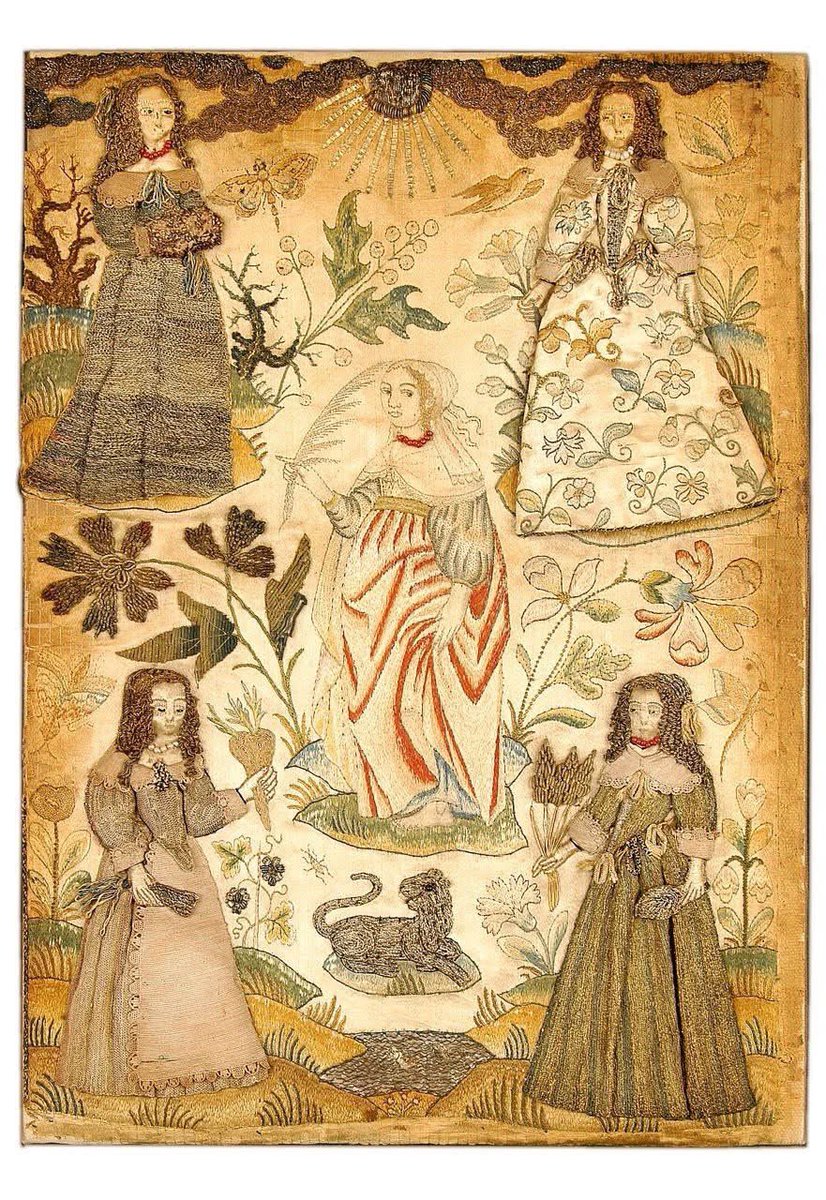
This 17th-century embroidered picture depicts female personifications of the seasons. The four figures in the corners are made three dimensional with raised work embroidery. The women stand in a landscape full of flowers, insects, and animals

This 17th-century embroidered picture depicts female personifications of the seasons. The four figures in the corners are made three dimensional with raised work embroidery. The women stand in a landscape full of flowers, insects, and animals
Witney Antiques (@witney_antiques) 's Twitter Profile Photo

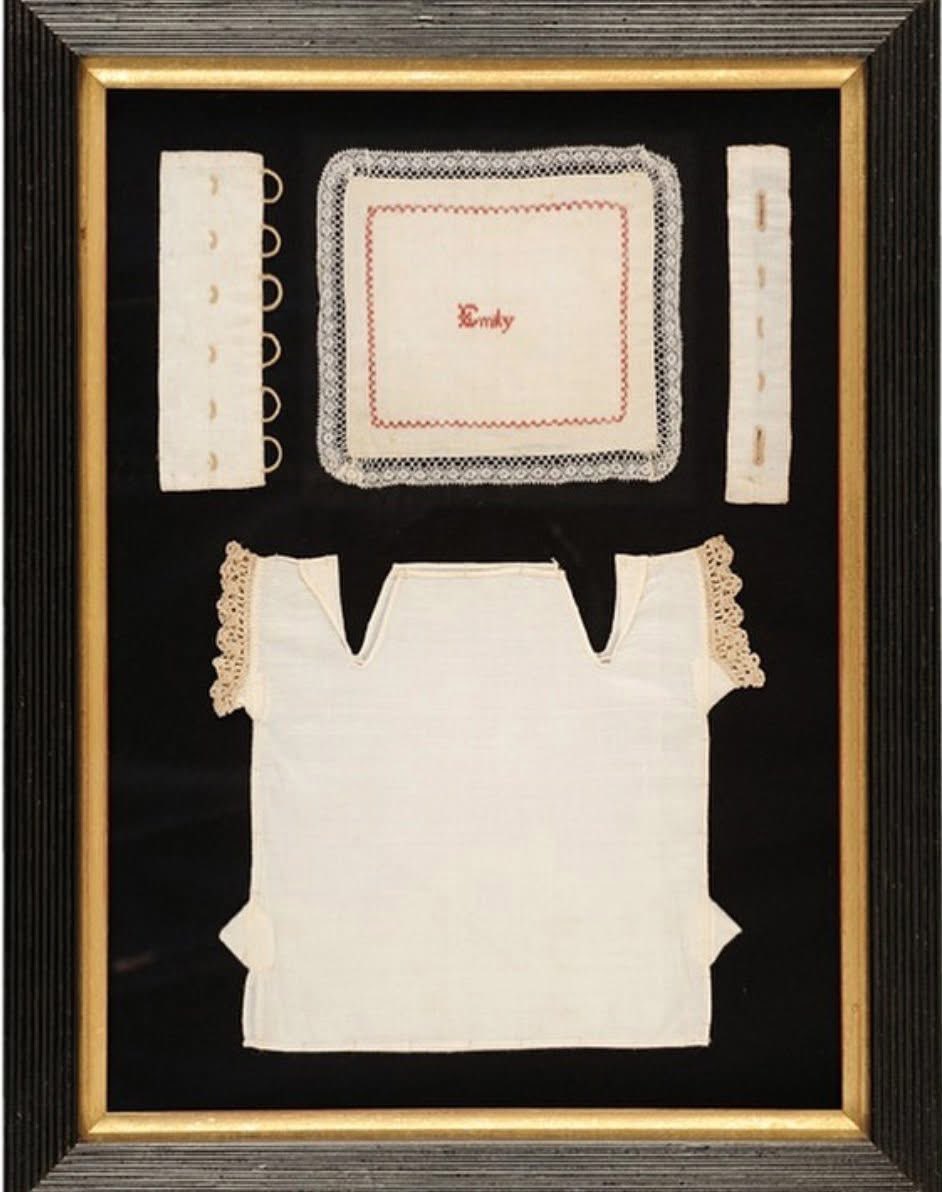
These late 19th-century miniature workbook sewing samples demonstrating various techniques and stitches were sewn by a girl named Emily. She perhaps worked these pieces at an orphan or charity school and tucked them into the blank pages of her instruction book

These late 19th-century miniature workbook sewing samples demonstrating various techniques and stitches were sewn by a girl named Emily. She perhaps worked these pieces at an orphan or charity school and tucked them into the blank pages of her instruction book
Witney Antiques (@witney_antiques) 's Twitter Profile Photo

This mid-17th-century picture from the archive depicts Judith holding Holofernes’ head. The coat of arms at the top of the picture is that of Luke Lloyd of Hanmer, Flintshire and Katherine Whitely of Aston, Flintshire. “KIL” and “EIL” were likely family member initials

This mid-17th-century picture from the archive depicts Judith holding Holofernes’ head. The coat of arms at the top of the picture is that of Luke Lloyd of Hanmer, Flintshire and Katherine Whitely of Aston, Flintshire. “KIL” and “EIL” were likely family member initials
Witney Antiques (@witney_antiques) 's Twitter Profile Photo

Mary Allcorn, born 26 March 1764, stitched this charming sampler circa 1775. Included are initials of her family members, as well as "EH," which may be the initials of her teacher. The verse, beginning, "During the time of life allotted to me..." is common on 18th-c. samplers

Mary Allcorn, born 26 March 1764, stitched this charming sampler circa 1775. Included are initials of her family members, as well as "EH," which may be the initials of her teacher. The verse, beginning, "During the time of life allotted to me..." is common on 18th-c. samplers
Witney Antiques (@witney_antiques) 's Twitter Profile Photo

Quaker girl Jane Ashby finished this absolutely lovely and delicate sampler in 1786. The central inscription is the Ten Commandments, which are framed by spot motifs of birds, hearts, crowns, geometric shapes, flowers, and two tiny dogs.

Quaker girl Jane Ashby finished this absolutely lovely and delicate sampler in 1786. The central inscription is the Ten Commandments, which are framed by spot motifs of birds, hearts, crowns, geometric shapes, flowers, and two tiny dogs.
Witney Antiques (@witney_antiques) 's Twitter Profile Photo

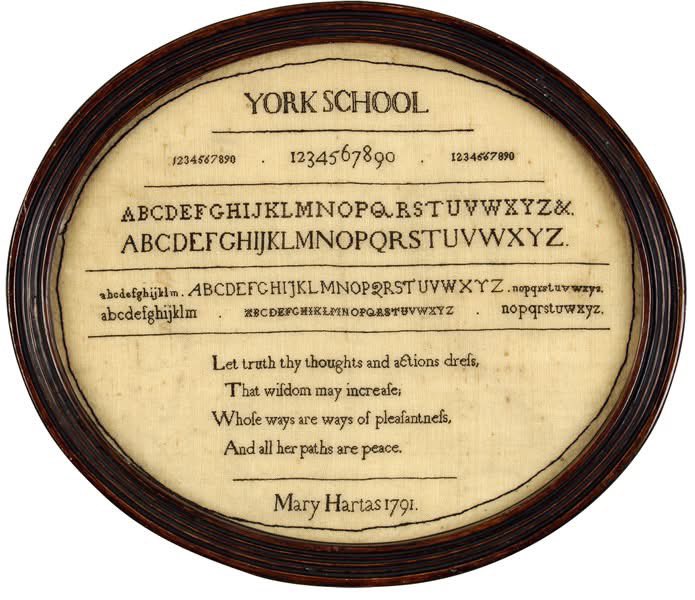
Mary Hartas worked this sampler in 1791 while at the York School, a Quaker school in Trinity Lane, York which opened in 1785. Mary, from Spaunton, North Yorkshire, was a member of the Hartas family, who had been Quakers in the north of England from the early days of Quakerism

Mary Hartas worked this sampler in 1791 while at the York School, a Quaker school in Trinity Lane, York which opened in 1785. Mary, from Spaunton, North Yorkshire, was a member of the Hartas family, who had been Quakers in the north of England from the early days of Quakerism
Witney Antiques (@witney_antiques) 's Twitter Profile Photo

Happy #WorldEmbroideryDay! Every day is embroidery day here at Witney Antiques. Here are some floral details from our stock past and present. We have a very large selection of 17th-19th-century embroidery and related crafts available for sale, which you can see at our gallery

Happy #WorldEmbroideryDay! Every day is embroidery day here at Witney Antiques. Here are some floral details from our stock past and present. We have a very large selection of 17th-19th-century embroidery and related crafts available for sale, which you can see at our gallery
Witney Antiques (@witney_antiques) 's Twitter Profile Photo

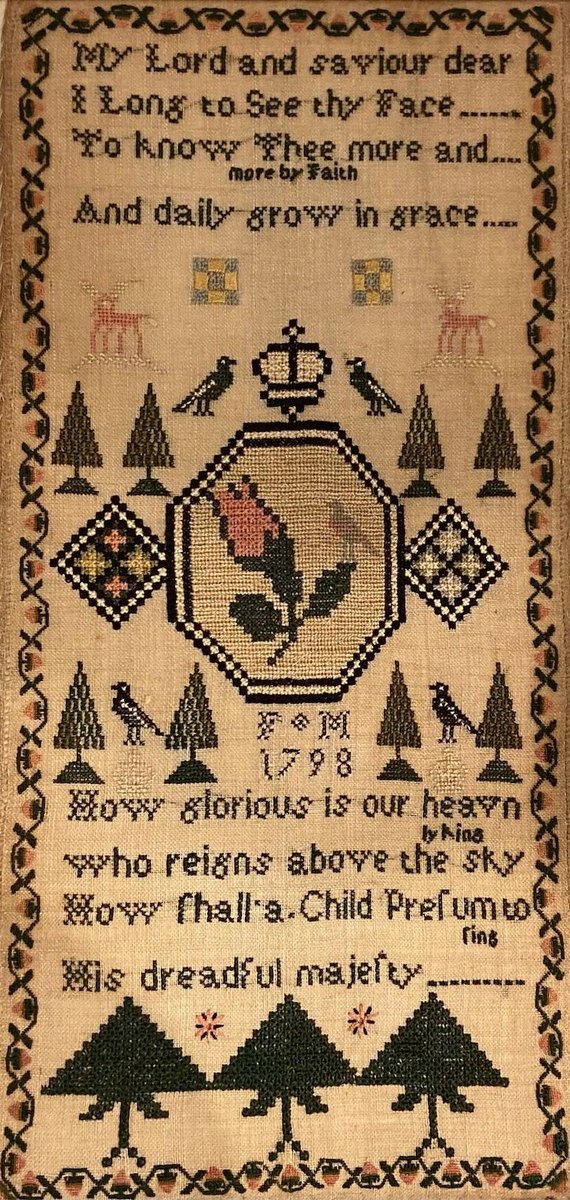
This sampler, with a central medallion which looks quite modern, was stitched by a girl with the initials "FM" in 1798. In the centre is a pink rose in an octagonal frame, flanked by diamonds, trees, birds, and a crown. The sampler's use of pink and black makes it extra striking

This sampler, with a central medallion which looks quite modern, was stitched by a girl with the initials "FM" in 1798. In the centre is a pink rose in an octagonal frame, flanked by diamonds, trees, birds, and a crown. The sampler's use of pink and black makes it extra striking
Witney Antiques (@witney_antiques) 's Twitter Profile Photo

From our archive comes this lovely sampler, stitched by seven-year-old Mary Ann Dowdeswell in 1779. Mary Ann was likely born in Bermondsey, then part of Surrey but now part of London, in 1772. She was the daughter of Mary and Benjamin Dowdeswell

From our archive comes this lovely sampler, stitched by seven-year-old Mary Ann Dowdeswell in 1779. Mary Ann was likely born in Bermondsey, then part of Surrey but now part of London, in 1772. She was the daughter of Mary and Benjamin Dowdeswell
Witney Antiques (@witney_antiques) 's Twitter Profile Photo

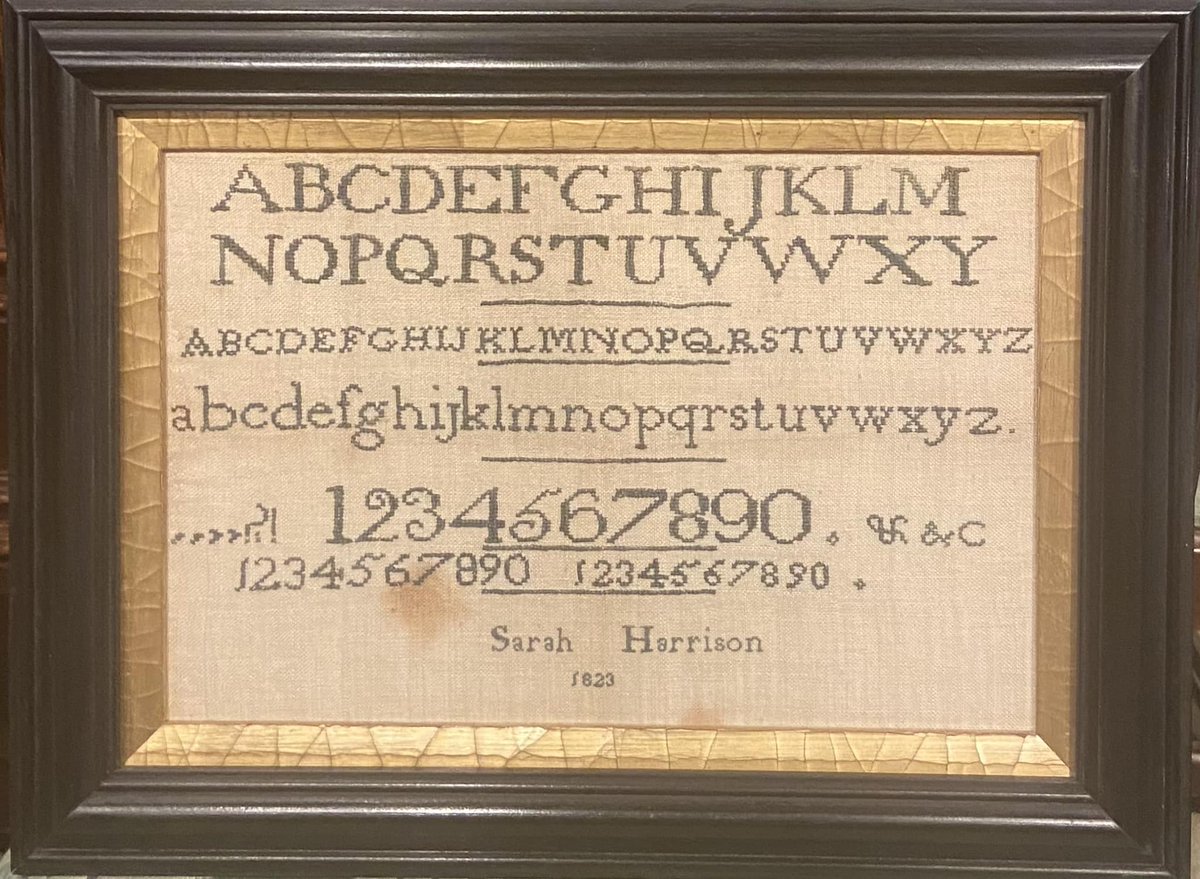
Sarah Harrison worked this very typically Quaker sampler in 1823. The simplicity, single colour, and serifed font all appear often on text-heavy samplers stitched by girls at schools run by the Religious Society of Friends

Sarah Harrison worked this very typically Quaker sampler in 1823. The simplicity, single colour, and serifed font all appear often on text-heavy samplers stitched by girls at schools run by the Religious Society of Friends
Witney Antiques (@witney_antiques) 's Twitter Profile Photo

Charlotte Donald completed this lovely sampler on 23 December 1800. Her verse about Adam and Eve is accompanied by an image of the pair flanked by various flora and fauna. The inscription and imagery are framed by a very charming floral border

Charlotte Donald completed this lovely sampler on 23 December 1800. Her verse about Adam and Eve is accompanied by an image of the pair flanked by various flora and fauna. The inscription and imagery are framed by a very charming floral border
Witney Antiques (@witney_antiques) 's Twitter Profile Photo

This lovely English sampler was worked by Martha Gray in Oxford in 1811. Martha depicts a scene of village life, with a red brick house with grazing fields and a church with a burial ground. She has worked her sampler in high-quality coloured silks on a fine linen ground

This lovely English sampler was worked by Martha Gray in Oxford in 1811. Martha depicts a scene of village life, with a red brick house with grazing fields and a church with a burial ground. She has worked her sampler in high-quality coloured silks on a fine linen ground
Witney Antiques (@witney_antiques) 's Twitter Profile Photo

Although this sampler made at Ackworth School lacks a stitched name, it was almost certainly made by Mary Storr, who attended the school from 1789 to 1791. Mary's sampler is typical of Quaker samplers, with medallions, initials of classmates, and a relatively muted colour palette

Although this sampler made at Ackworth School lacks a stitched name, it was almost certainly made by Mary Storr, who attended the school from 1789 to 1791. Mary's sampler is typical of Quaker samplers, with medallions, initials of classmates, and a relatively muted colour palette
Witney Antiques (@witney_antiques) 's Twitter Profile Photo

It's time for us to say goodbye to this account. Thank you for your likes, comments, retweets, and follows over the years. You can find us on Instagram and Facebook and on our website witneyantiques.com