Harkirat Kaur (@wiscbadger_corn) 's Twitter Profile
Harkirat Kaur

@wiscbadger_corn

Corn Agronomy
Crop Science

ID: 1333236415648305152

calendar_today30-11-2020 02:28:34

18 Tweet

31 Takipçi

91 Takip Edilen

UW–Madison CALS (@uwmadisoncals) 's Twitter Profile Photo

Explore the latest in forage and cover crop management with discussions and field demonstrations on Tuesday, July 15 from 9:00 am–3:00 pm at Arlington Agricultural Research Station. Learn more at cals.wisc.edu/fielddays.

Explore the latest in forage and cover crop management with discussions and field demonstrations on Tuesday, July 15 from 9:00 am–3:00 pm at Arlington Agricultural Research Station. Learn more at cals.wisc.edu/fielddays.
Crop Protection Network (@cropnetwork) 's Twitter Profile Photo

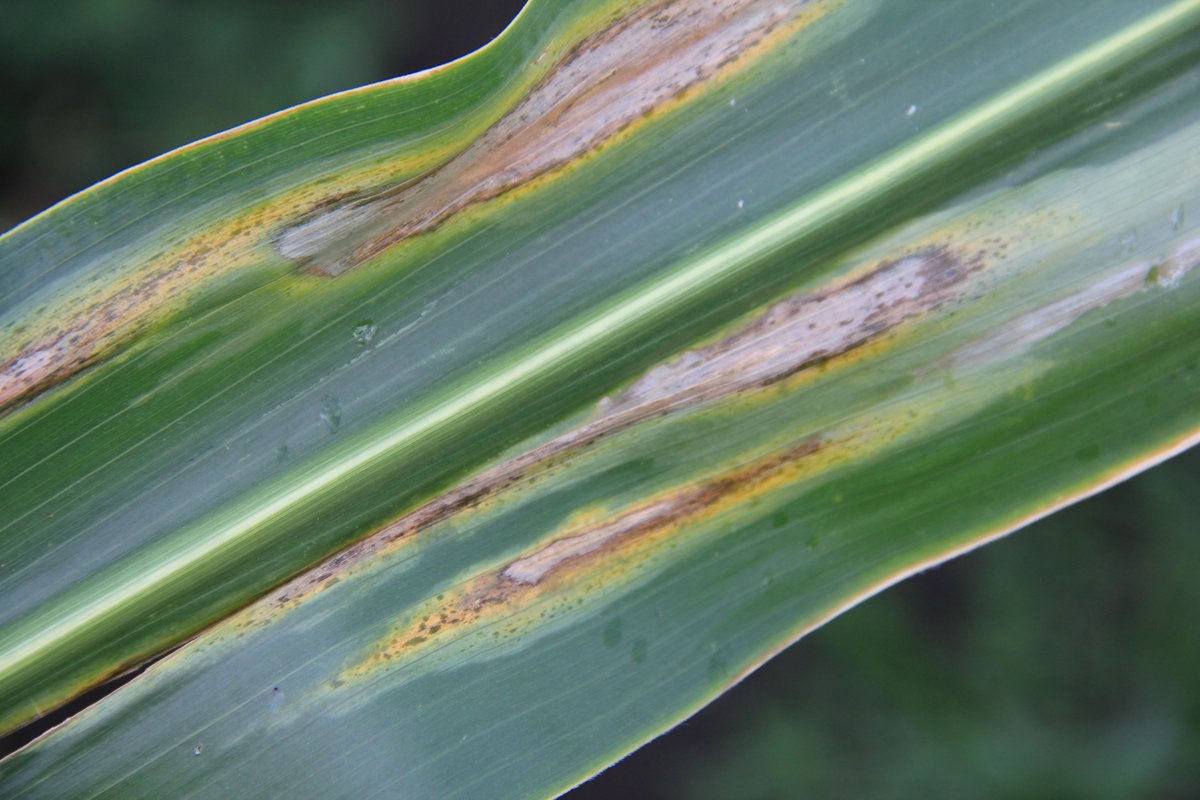
Goss's wilt bacteria can infect corn at any stage. Lesions are long, gray-green to black, water-soaked, and have wavy edges. Streaks resembling freckles in lesions are a distinctive symptom. Resistant hybrids are available. Crop rotation and tillage reduce bacterial survival.

Goss's wilt bacteria can infect corn at any stage. Lesions are long, gray-green to black, water-soaked, and have wavy edges. Streaks resembling freckles in lesions are a distinctive symptom.

Resistant hybrids are available. Crop rotation and tillage reduce bacterial survival.
Harkirat Kaur (@wiscbadger_corn) 's Twitter Profile Photo

Had a great time building up the vision and goals for corn agronomy research with some of the most amazing colleagues at the CORN annual meeting in St Louis. Looking forward to more exciting and inspiring conversations tomorrow morning!!

Crop Protection Network (@cropnetwork) 's Twitter Profile Photo

Scouting is similar for all corn ear rots. Begin scouting at late dent (R5) for presence and severity of ear rots. Select 100 plants across the field (20 ears each from 5 different areas). Peel back husks to see the entire ear. Get ID and management info in An Overview of Ear

Scouting is similar for all corn ear rots. Begin scouting at late dent (R5) for presence and severity of ear rots. Select 100 plants across the field (20 ears each from 5 different areas). Peel back husks to see the entire ear.

Get ID and management info in An Overview of Ear
Shawn Conley (@badgerbean) 's Twitter Profile Photo

It’s August 7th—mostly sunny and a toasty 88°F—so what the deuce, let’s talk about imbibitional chilling in soybean and corn! Fabiano Colet Tainá Harkirat Kaur badgercropnetwork.com/imbibitional-c…

Shawn Conley (@badgerbean) 's Twitter Profile Photo

#BattleoftheBelt northern exposure Spooner, WI. Soybeans range from almost R6 on the first planting to not quite R3 on the last. The corn is still milk in the first planting but the June 13th planting 94RM variety is still yet to tassel and silk. Laura Lindsey Harkirat Kaur


#BattleoftheBelt northern exposure Spooner, WI. Soybeans range from almost R6 on the first planting to not quite R3 on the last. The corn is still milk in the first planting but the June 13th planting 94RM variety is still yet to tassel and silk. <a href="/StepUpSoy/">Laura Lindsey</a> <a href="/WiscBadger_corn/">Harkirat Kaur</a>
Harkirat Kaur (@wiscbadger_corn) 's Twitter Profile Photo

It is almost here!! Join us for the Arlington Agronomy and Soils Field Day on Wednesday next week. cropsandsoils.extension.wisc.edu/events/agronom…

Rodrigo Werle (@wiscweeds) 's Twitter Profile Photo

The 2025 UW–Madison Agronomy & Soils Field Day at the Arlington Ag Research Station took place today! 🌱 A big thank you to everyone who joined us! UW–Madison CALS
Crop Protection Network (@cropnetwork) 's Twitter Profile Photo

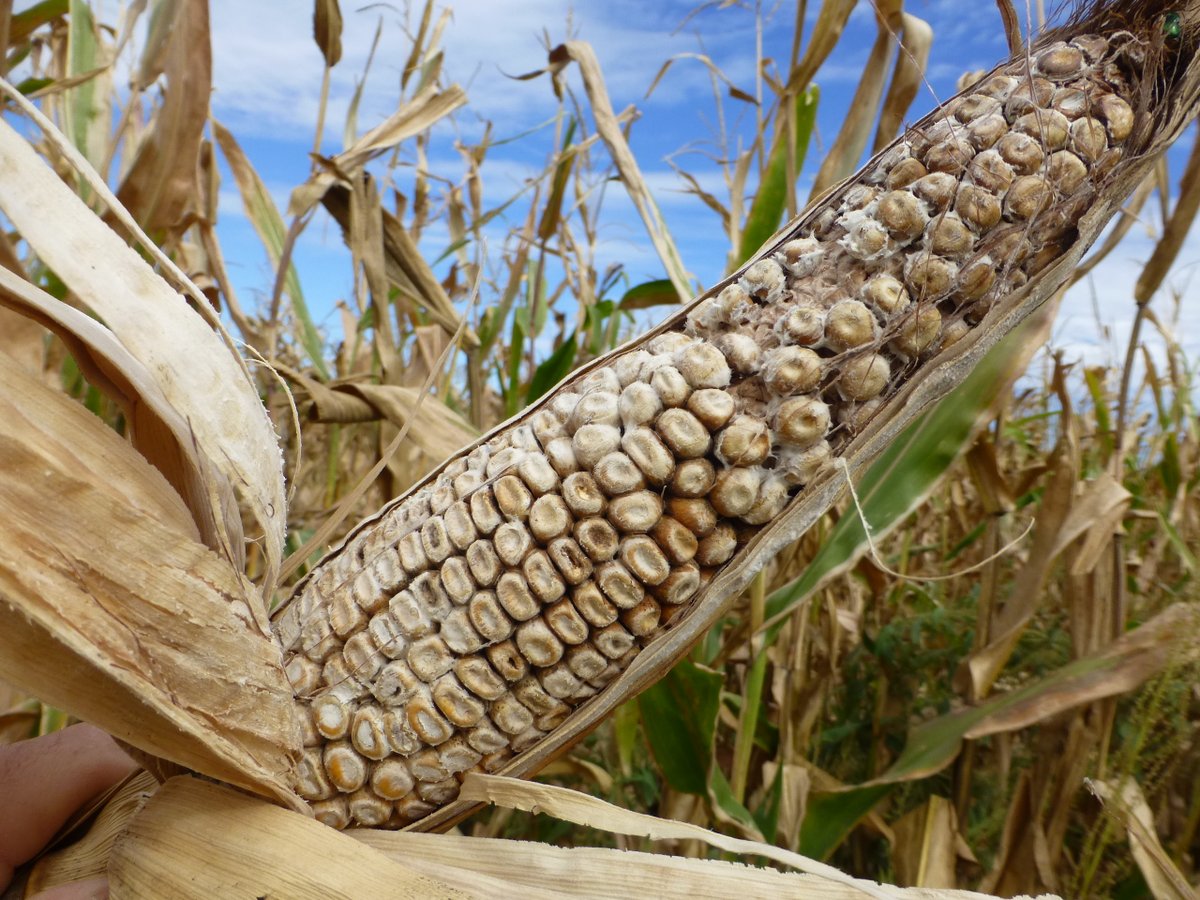
Scouting is similar for all corn ear rots. Starting at late dent stage (R5), choose 20 ears from 5 areas in the field. Pull back the husk to see the entire ear. It's critical to identify ear rots in the field as several ear rot fungi produce mycotoxins, which can harm livestock

Scouting is similar for all corn ear rots. Starting at late dent stage (R5), choose 20 ears from 5 areas in the field. Pull back the husk to see the entire ear.

It's critical to identify ear rots in the field as several ear rot fungi produce mycotoxins, which can harm livestock
Harkirat Kaur (@wiscbadger_corn) 's Twitter Profile Photo

How can the early fall weather chill affect silage and grain harvest decisions for corn? A new blog post from #CORNversationsWithKaur on BadgerCropNetwork explores different possibilities and scenarios in the harvest season. badgercropnetwork.com/cooler-late-au…

Crop Protection Network (@cropnetwork) 's Twitter Profile Photo

Corn leaves are turning brown or are already through the chaff spreader. But here's a poster you can print to keep your eyes tuned for corn disease ID next year. Download at cropprotectionnetwork.org/publications/c…. #corn #agtwitter

Corn leaves are turning brown or are already through the chaff spreader. But here's a poster you can print to keep your eyes tuned for corn disease ID next year.

Download at cropprotectionnetwork.org/publications/c….

#corn #agtwitter
Shawn Conley (@badgerbean) 's Twitter Profile Photo

Battle of the Belt way northern edition, Spooner WI update! Soybeans in the field are left to right 4/16, 5/30, 5/15, 5/1 & 6/13 ground are 4/16, 5/1, 5/15, 5/30 & 6/13 planting. Corn in the field is 4/16, 5/30, 6/13, 5/1, & 5/15.

Battle of the Belt way northern edition, Spooner WI update! Soybeans in the field are left to right 4/16, 5/30, 5/15, 5/1 &amp; 6/13 ground are 4/16, 5/1, 5/15, 5/30 &amp; 6/13 planting. Corn in the field is 4/16, 5/30, 6/13, 5/1, &amp; 5/15.
Crop Protection Network (@cropnetwork) 's Twitter Profile Photo

The presence of ear rot diseases should be a key consideration when determining harvest timing. Fungi that cause ear rots can continue to grow, spread, and produce mycotoxins after corn reaches maturity and during storage if grain is not dry. Read more at

The presence of ear rot diseases should be a key consideration when determining harvest timing.

Fungi that cause ear rots can continue to grow, spread, and produce mycotoxins after corn reaches maturity and during storage if grain is not dry.

Read more at
Shawn Conley (@badgerbean) 's Twitter Profile Photo

Fall harvest is usually a time to celebrate the fruits of your hard work. But this year, market challenges are weighing heavily on many farmers. Take a moment to check in with your neighbors. Ask them, “How are you really doing?” Responding to Stress - farms.extension.wisc.edu/farmstress/

Crop Protection Network (@cropnetwork) 's Twitter Profile Photo

"Results emphasize that fungicide applications occurring at VT/R1 and when disease severity exceeds 5%, are more likely to result in positive economic gain." Read more in the new PhytoFrontiers® article at apsjournals.apsnet.org/doi/pdf/10.109…. From Nabin K Dangal Damon L. Smith

"Results emphasize that fungicide applications occurring at VT/R1 and when disease severity exceeds 5%, are more likely to result in positive economic gain."

Read more in the new <a href="/phytofrontiers/">PhytoFrontiers®</a> article at apsjournals.apsnet.org/doi/pdf/10.109…. 

From <a href="/NabinKDangal/">Nabin K Dangal</a> <a href="/badgercropdoc/">Damon L. Smith</a>
Tamra Jackson-Ziems (@tjcksn) 's Twitter Profile Photo

WHY southern rust was so much worse in 2025? It may not be why you're hearing. Crush the myths and rumors. Mythbusters: Southern Rust Edition | CropWatch | Nebraska share.google/iOr1ZoaoVCS9pc…

WHY southern rust was so much worse in 2025? It may not be why you're hearing.  Crush the myths and rumors.
Mythbusters: Southern Rust Edition | CropWatch | Nebraska share.google/iOr1ZoaoVCS9pc…
Harkirat Kaur (@wiscbadger_corn) 's Twitter Profile Photo

Wisconsin Corn Performance Trials are now available at BadgerCropNetwork badgercropnetwork.com/wisconsin-corn… These are multi-location trials that provide unbiased information on current and new corn hybrids to help growers choose. Please reach out in case there are any questions.