TickReport (@tickreport) 's Twitter Profile
TickReport

@tickreport

Testing ticks for pathogens since 2006. Tick educators and researchers. Resources added here: linktr.ee/tickreport

ID: 741375059013607426

linkhttp://www.tickreport.com calendar_today10-06-2016 21:02:42

1,1K Tweet

1,1K Followers

233 Following
TickReport (@tickreport) 's Twitter Profile Photo

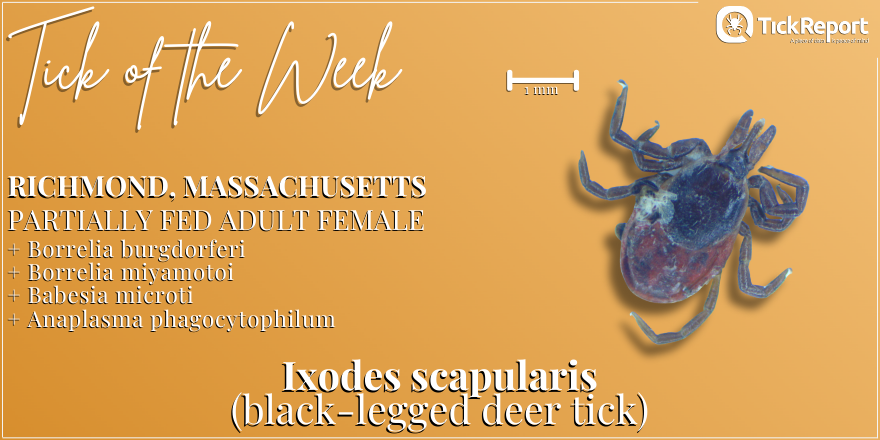
We detected four pathogens in this black-legged deer tick from Berkshire County, Massachusetts: Borrelia burgdorferi (Lyme disease), Borrelia miyamotoi (hard tick relapsing fever), Babesia microti (babesiosis), and Anaplasma phagocytophilum (anaplasmosis)!

We detected four pathogens in this black-legged deer tick from Berkshire County, Massachusetts: Borrelia burgdorferi (Lyme disease), Borrelia miyamotoi (hard tick relapsing fever), Babesia microti (babesiosis), and Anaplasma phagocytophilum (anaplasmosis)!
TickReport (@tickreport) 's Twitter Profile Photo

This western black-legged tick (Ixodes pacificus) from Marin County, California, was carrying both Borrelia burgdorferi and Anaplasma phagocytophilum!

This western black-legged tick (Ixodes pacificus) from Marin County, California, was carrying both Borrelia burgdorferi and Anaplasma phagocytophilum!
TickReport (@tickreport) 's Twitter Profile Photo

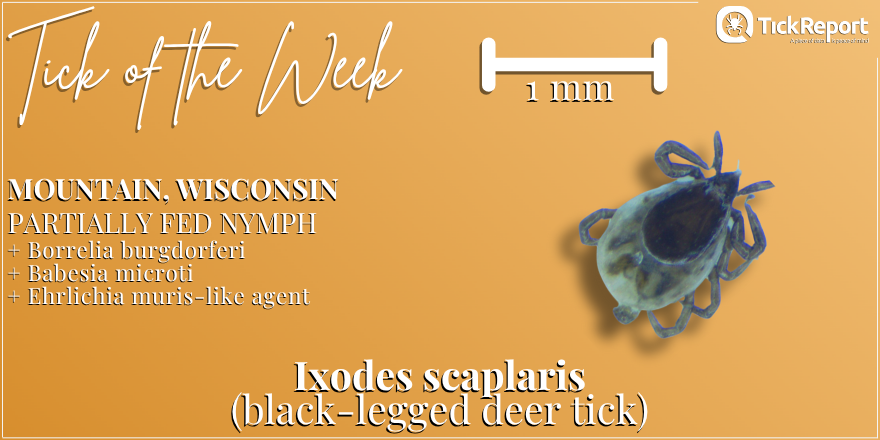
This black-legged deer tick from Oconto County, Wisconsin, was carrying three pathogens: Borrelia burgdorferi (Lyme disease), Babesia microti (babesiosis), and Ehrlichia muris-like agent (ehrlichiosis)!

This black-legged deer tick from Oconto County, Wisconsin, was carrying three pathogens: Borrelia burgdorferi (Lyme disease), Babesia microti (babesiosis), and Ehrlichia muris-like agent (ehrlichiosis)!
TickReport (@tickreport) 's Twitter Profile Photo

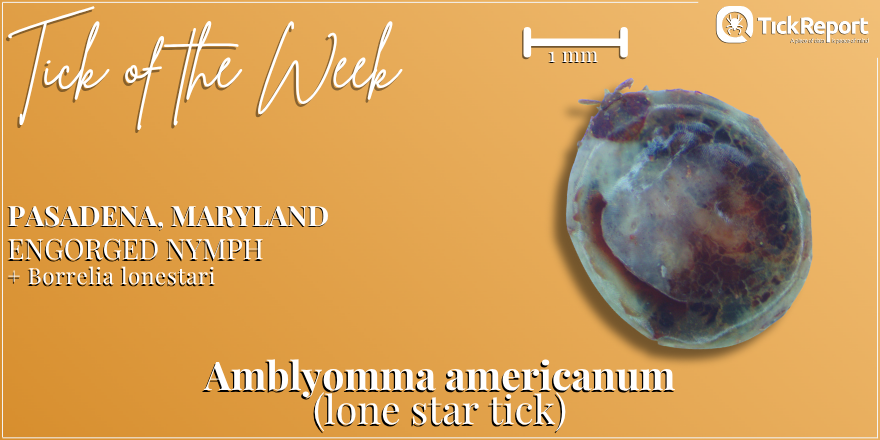
This nymphal lone star tick (Amblyomma americanum) from Anne Arundel County, Maryland, was carrying Borrelia lonestari, a bacterium that can cause southern tick-associated rash illness in its host.

This nymphal lone star tick (Amblyomma americanum) from Anne Arundel County, Maryland, was carrying Borrelia lonestari, a bacterium that can cause southern tick-associated rash illness in its host.
TickReport (@tickreport) 's Twitter Profile Photo

We detected Ehrlichia ewingii in this lone star tick (Amblyomma americanum) from Camden County, New Jersey! This pathogen can cause ehrlichiosis if transmitted to its host.

We detected Ehrlichia ewingii in this lone star tick (Amblyomma americanum) from Camden County, New Jersey! This pathogen can cause ehrlichiosis if transmitted to its host.
TickReport (@tickreport) 's Twitter Profile Photo

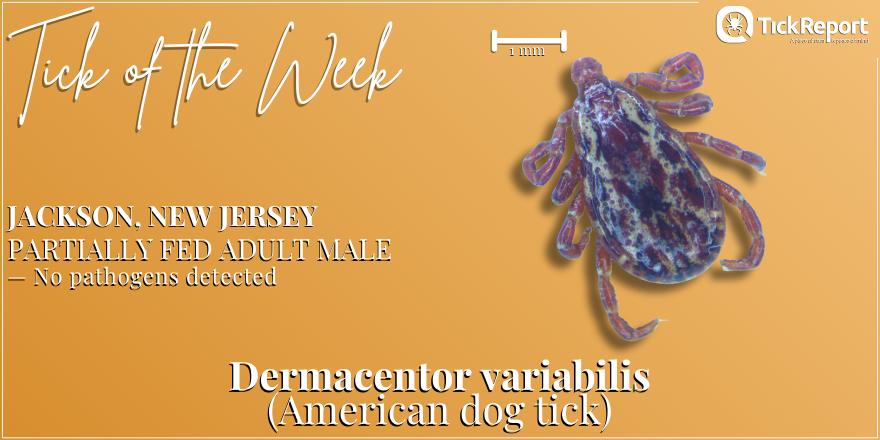
No pathogens detected in this adult, male American dog tick from Ocean County, New Jersey! However, we have previously detected Anaplasma phagocytophilum in Dermacentor ticks from the state.

No pathogens detected in this adult, male American dog tick from Ocean County, New Jersey! However, we have previously detected Anaplasma phagocytophilum in Dermacentor ticks from the state.
TickReport (@tickreport) 's Twitter Profile Photo

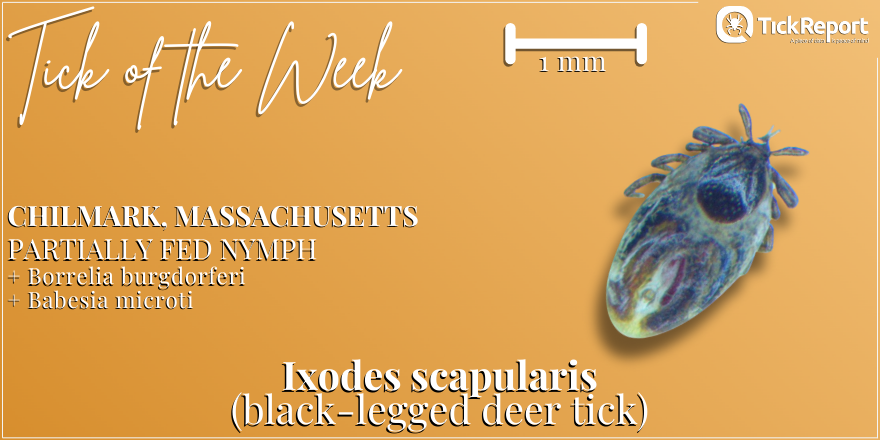
Two pathogens detected in this black-legged deer tick from Dukes County, Massachusetts: Borrelia burgdorferi (Lyme disease) and Babesia microti (babesiosis)!

Two pathogens detected in this black-legged deer tick from Dukes County, Massachusetts: Borrelia burgdorferi (Lyme disease) and Babesia microti (babesiosis)!
TickReport (@tickreport) 's Twitter Profile Photo

We detected Borrelia miyamotoi in this black-legged deer tick from Carroll County, New Hampshire! B. miyamotoi is a bacterium that can cause hard tick relapsing fever if transmitted to the tick's host.

We detected Borrelia miyamotoi in this black-legged deer tick from Carroll County, New Hampshire! B. miyamotoi is a bacterium that can cause hard tick relapsing fever if transmitted to the tick's host.
TickReport (@tickreport) 's Twitter Profile Photo

Borrelia burgdorferi was detected in this black-legged deer tick from our neighbors in Franklin County, Massachusetts! B. burgdorferi is the most common causative agent of Lyme disease.

Borrelia burgdorferi was detected in this black-legged deer tick from our neighbors in Franklin County, Massachusetts! B. burgdorferi is the most common causative agent of Lyme disease.
TickReport (@tickreport) 's Twitter Profile Photo

#FlashbackFriday (May 2025): the Tick of the Week is a female American dog tick from DuPage County, Illinois, that was carrying Francisella tularensis. F. tularensis is a rare bacterium that can cause tularemia, a potentially serious illness, in its host.

#FlashbackFriday (May 2025): the Tick of the Week is a female American dog tick from DuPage County, Illinois, that was carrying Francisella tularensis. F. tularensis is a rare bacterium that can cause tularemia, a potentially serious illness, in its host.
TickReport (@tickreport) 's Twitter Profile Photo

This black-legged deer tick from Worcester County, Massachusetts, was carrying Borrelia burgdorferi, the most common causative agent of Lyme disease.

This black-legged deer tick from Worcester County, Massachusetts, was carrying Borrelia burgdorferi, the most common causative agent of Lyme disease.
TickReport (@tickreport) 's Twitter Profile Photo

Our Tick of the Week comes to us from Norfolk County, Massachusetts! It was carrying Borrelia miyamotoi, a bacterium that can cause hard tick relapsing fever.

Our Tick of the Week comes to us from Norfolk County, Massachusetts! It was carrying Borrelia miyamotoi, a bacterium that can cause hard tick relapsing fever.
TickReport (@tickreport) 's Twitter Profile Photo

This female black-legged deer tick from Chittenden County, Vermont, was carrying THREE pathogens: Borrelia burgdorferi (Lyme disease), Babesia microti (babesiosis), and Anaplasma phagocytophilum (anaplasmosis).

This female black-legged deer tick from Chittenden County, Vermont, was carrying THREE pathogens: Borrelia burgdorferi (Lyme disease), Babesia microti (babesiosis), and Anaplasma phagocytophilum (anaplasmosis).
TickReport (@tickreport) 's Twitter Profile Photo

This black-legged deer tick from Sheboygan County, Wisconsin, was carrying two pathogens. Borrelia burgdorferi is a bacterium that can cause Lyme disease and Babesia microti is a red blood cell parasite that can cause babesiosis.

This black-legged deer tick from Sheboygan County, Wisconsin, was carrying two pathogens. Borrelia burgdorferi is a bacterium that can cause Lyme disease and Babesia microti is a red blood cell parasite that can cause babesiosis.
TickReport (@tickreport) 's Twitter Profile Photo

This female black-legged deer tick from Middlesex County, Massachusetts, was carrying three pathogens: Borrelia burgdorferi (Lyme disease), Babesia microti (babesiosis), and Powassan virus!

This female black-legged deer tick from Middlesex County, Massachusetts, was carrying three pathogens: Borrelia burgdorferi (Lyme disease), Babesia microti (babesiosis), and Powassan virus!
TickReport (@tickreport) 's Twitter Profile Photo

Our Tick of the Week is a female black-legged deer tick from Washington County, Rhode Island, carrying THREE pathogens: Borrelia burgdorferi (Lyme disease), Borrelia miyamotoi (hard tick relapsing fever), and Anaplasma phagocytophilum (anaplasmosis)!

Our Tick of the Week is a female black-legged deer tick from Washington County, Rhode Island, carrying THREE pathogens: Borrelia burgdorferi (Lyme disease), Borrelia miyamotoi (hard tick relapsing fever), and Anaplasma phagocytophilum (anaplasmosis)!
TickReport (@tickreport) 's Twitter Profile Photo

The Tick of the Week is a female black-legged deer tick from Steuben County, New York. We detected three pathogens in this specimen: Borrelia burgdorferi (Lyme disease), Borrelia miyamotoi (hard tick relapsing fever), and Anaplasma phagocytophilum (anaplasmosis). Spooky! 👻

The Tick of the Week is a female black-legged deer tick from Steuben County, New York. We detected three pathogens in this specimen: Borrelia burgdorferi (Lyme disease), Borrelia miyamotoi (hard tick relapsing fever), and Anaplasma phagocytophilum (anaplasmosis). Spooky! 👻
TickReport (@tickreport) 's Twitter Profile Photo

Our Tick of the Week is a female black-legged deer tick from Hillsborough County, New Hampshire. We detected two pathogens: Borrelia burgdorferi (Lyme disease) and Anaplasma phagocytophilum (anaplasmosis)!

Our Tick of the Week is a female black-legged deer tick from Hillsborough County, New Hampshire. We detected two pathogens: Borrelia burgdorferi (Lyme disease) and Anaplasma phagocytophilum (anaplasmosis)!
TickReport (@tickreport) 's Twitter Profile Photo

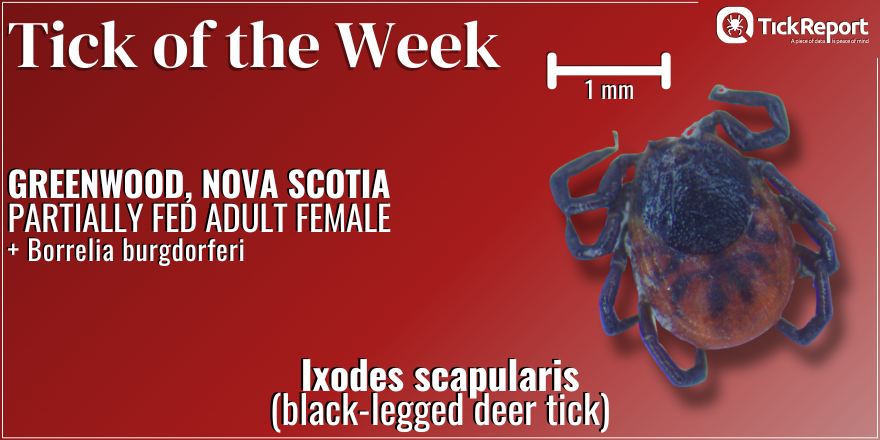
Our Tick of the Week is a female black-legged deer tick from Nova Scotia! We detected Borrelia burgdorferi, a bacterium that can cause Lyme disease.

Our Tick of the Week is a female black-legged deer tick from Nova Scotia! We detected Borrelia burgdorferi, a bacterium that can cause Lyme disease.
TickReport (@tickreport) 's Twitter Profile Photo

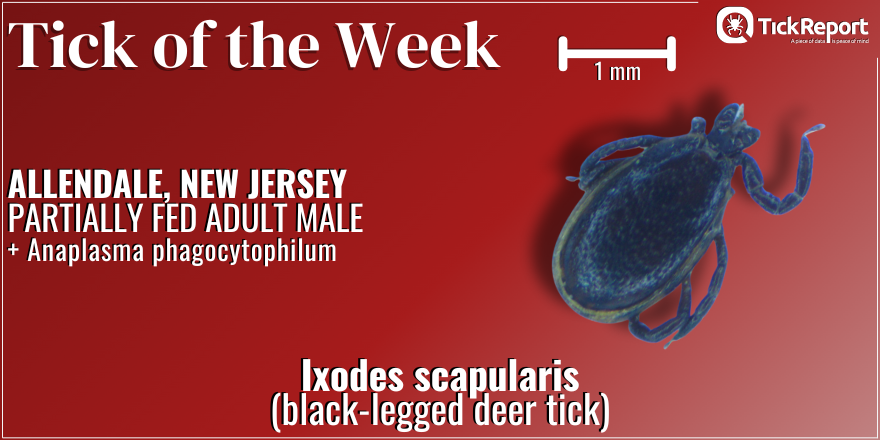
We detected Anaplasma phagocytophilum, a bacterium that can cause anaplasmosis, in this male black-legged deer tick from Bergen County, New Jersey!

We detected Anaplasma phagocytophilum, a bacterium that can cause anaplasmosis, in this male black-legged deer tick from Bergen County, New Jersey!