Stefan Payne-Wardenaar (@stefanpwinc) 's Twitter Profile
Stefan Payne-Wardenaar

@stefanpwinc

I make astronomy visualizations in Blender. Scientific Visualizer at @HdAstro. he/him.

Also on bsky.app/profile/stefan…

ID: 3403382105

linkhttps://www.youtube.com/user/stefanpwinc calendar_today04-08-2015 22:33:21

629 Tweet

1,1K Followers

1,1K Following
Galaxy Map (@galaxy_map@mastodon.social) (@galaxy_map) 's Twitter Profile Photo

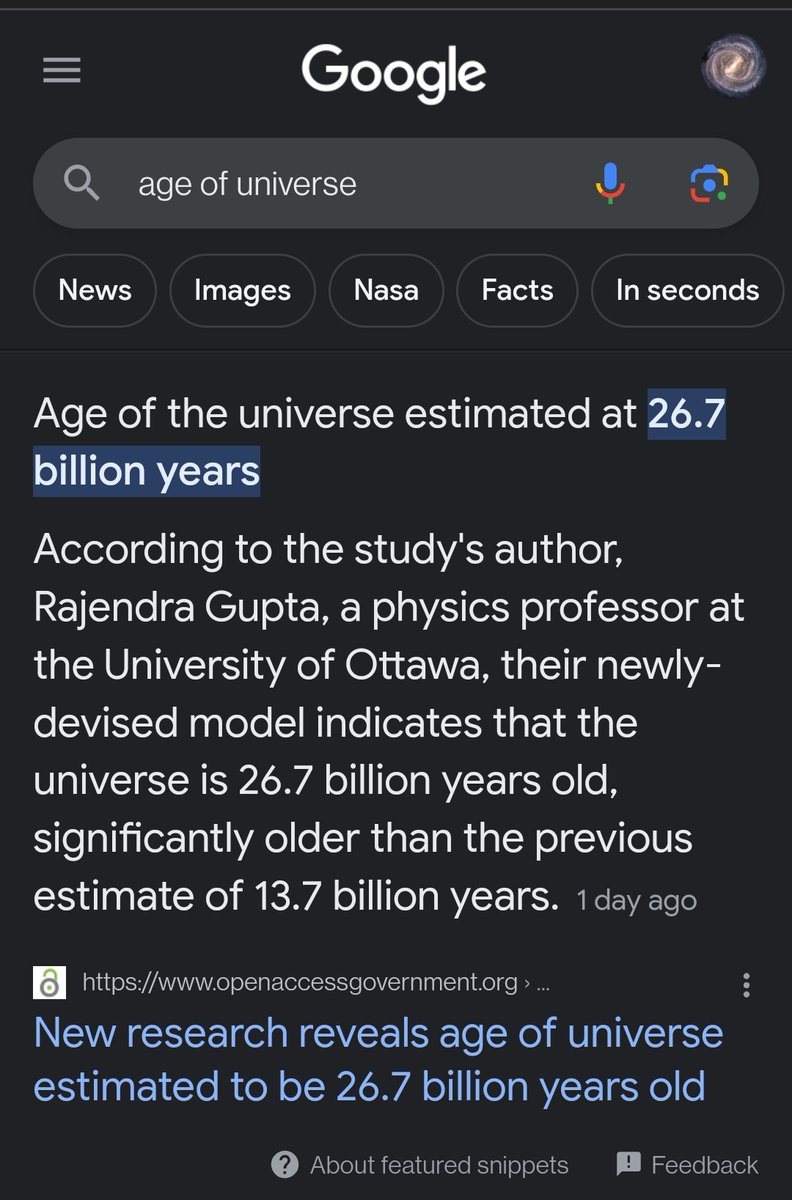
Astronomers are hating the current Google search result for "age of universe", which promotes a controversial tired light cosmology theory that doubles the actual consensus age of the universe (the consensus is 13.8 billion years). Google search has the fundamental problem ...

Astronomers are hating the current Google search result for "age of universe", which promotes a controversial tired light cosmology theory that doubles the actual consensus age of the universe (the consensus is 13.8 billion years).

Google search has the fundamental problem ...
ESA Gaia (@esagaia) 's Twitter Profile Photo

#GaiaDPAC celebrates with us Gaia's 10th launch anniversary! youtu.be/MyQWmNA3tfk Full stories on Gaia's impact in many fields, from stellar occultation to the Milky Way to cosmology with Gaia... cosmos.esa.int/web/gaia/iow_2…

Max-Planck-Institut für Astronomie (@mpi_astro) 's Twitter Profile Photo

Nice new result from Khyati Malhan and Hans-Walter Rix: sets of stars that look like they might be from two of the earliest galactic "building blocks" for our Milky Way: mpia.de/news/science/2…

Stefan Payne-Wardenaar (@stefanpwinc) 's Twitter Profile Photo

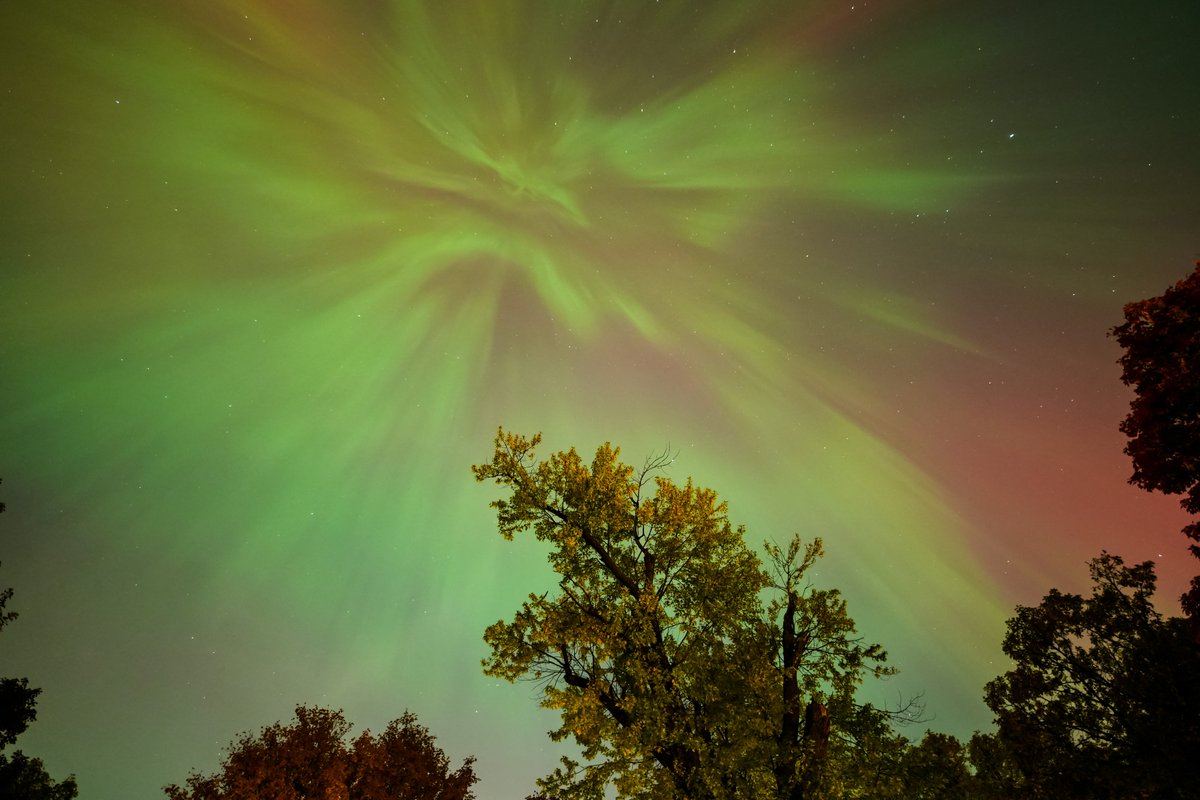
The Aurora last night was brighter than I've ever seen it, with an intense burst at 9pm, but continuing all night long. Taken in and around Northfield MN

Stefan Payne-Wardenaar (@stefanpwinc) 's Twitter Profile Photo

Comet C/2023 A3, visible for the next few days in the west shortly after sunset. 70 million km away. 120x timelapse. The visible portion of the tail in this video is roughly 5 million km long.

ESA Gaia (@esagaia) 's Twitter Profile Photo

Today marks Gaia's end of observations: cosmos.esa.int/en/web/gaia/en…. Gaia now performs a set of technology tests to help future missions: cosmos.esa.int/en/web/gaia/te…. The most up to date view of our Milky Way was created thanks to Gaia, with much more to come with #GaiaDR4 + #GaiaDR5.


Today marks Gaia's end of observations: cosmos.esa.int/en/web/gaia/en…. Gaia now performs a set of technology tests to help future missions: cosmos.esa.int/en/web/gaia/te…. The most up to date view of our Milky Way was created thanks to Gaia, with much more to come with #GaiaDR4 + #GaiaDR5.
ESA Science (@esascience) 's Twitter Profile Photo

📢 Gaia delivers the best Milky Way maps to date and takes its last starlight before spacecraft retirement. But the science is far from over. Discover what's coming next for the mission and how you could wave ESA Gaia farewell if you own a telescope 👉 esa.int/Science_Explor…

📢 Gaia delivers the best Milky Way maps to date and takes its last starlight before spacecraft retirement.

But the science is far from over.

Discover what's coming next for the mission and how you could wave <a href="/ESAGaia/">ESA Gaia</a> farewell if you own a telescope 👉 esa.int/Science_Explor…
ESA Science (@esascience) 's Twitter Profile Photo

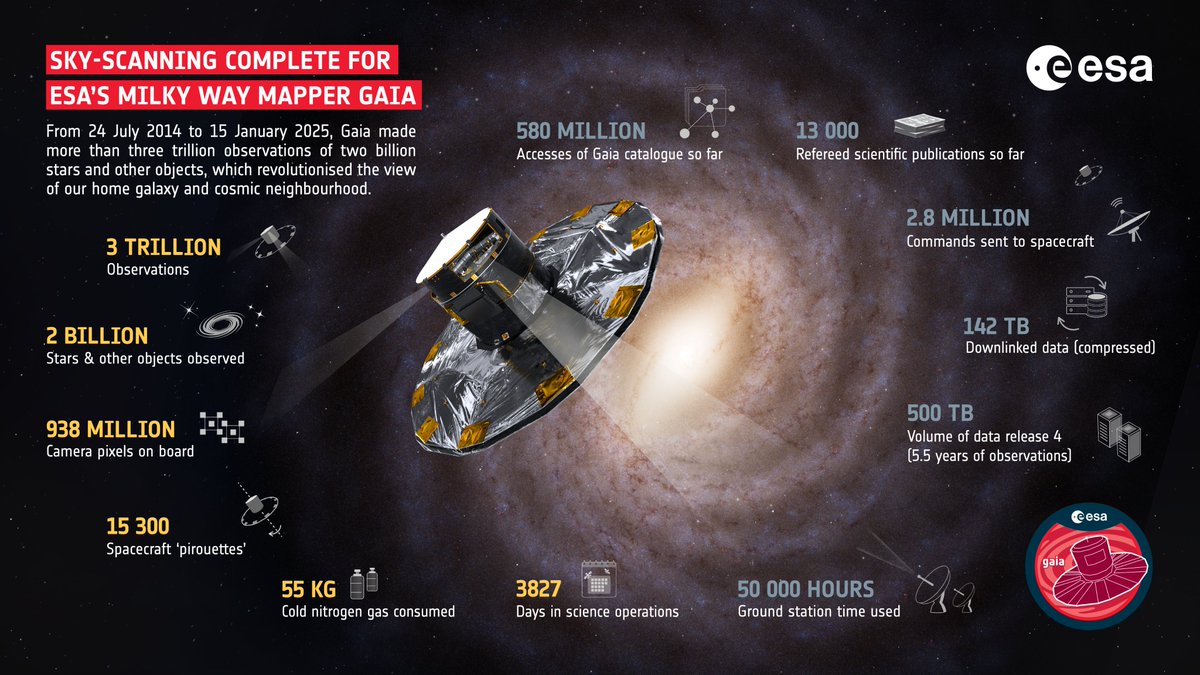
Our Milky Way-mapper ESA Gaia has completed the sky-scanning phase of its mission. Over the last decade, it has made more than three trillion observations of about two billion stars and other objects, revolutionising the view of our home galaxy and cosmic neighbourhood.

Our Milky Way-mapper <a href="/ESAGaia/">ESA Gaia</a> has completed the sky-scanning phase of its mission. Over the last decade, it has made more than three trillion observations of about two billion stars and other objects, revolutionising the view of our home galaxy and cosmic neighbourhood.
Stefan Payne-Wardenaar (@stefanpwinc) 's Twitter Profile Photo

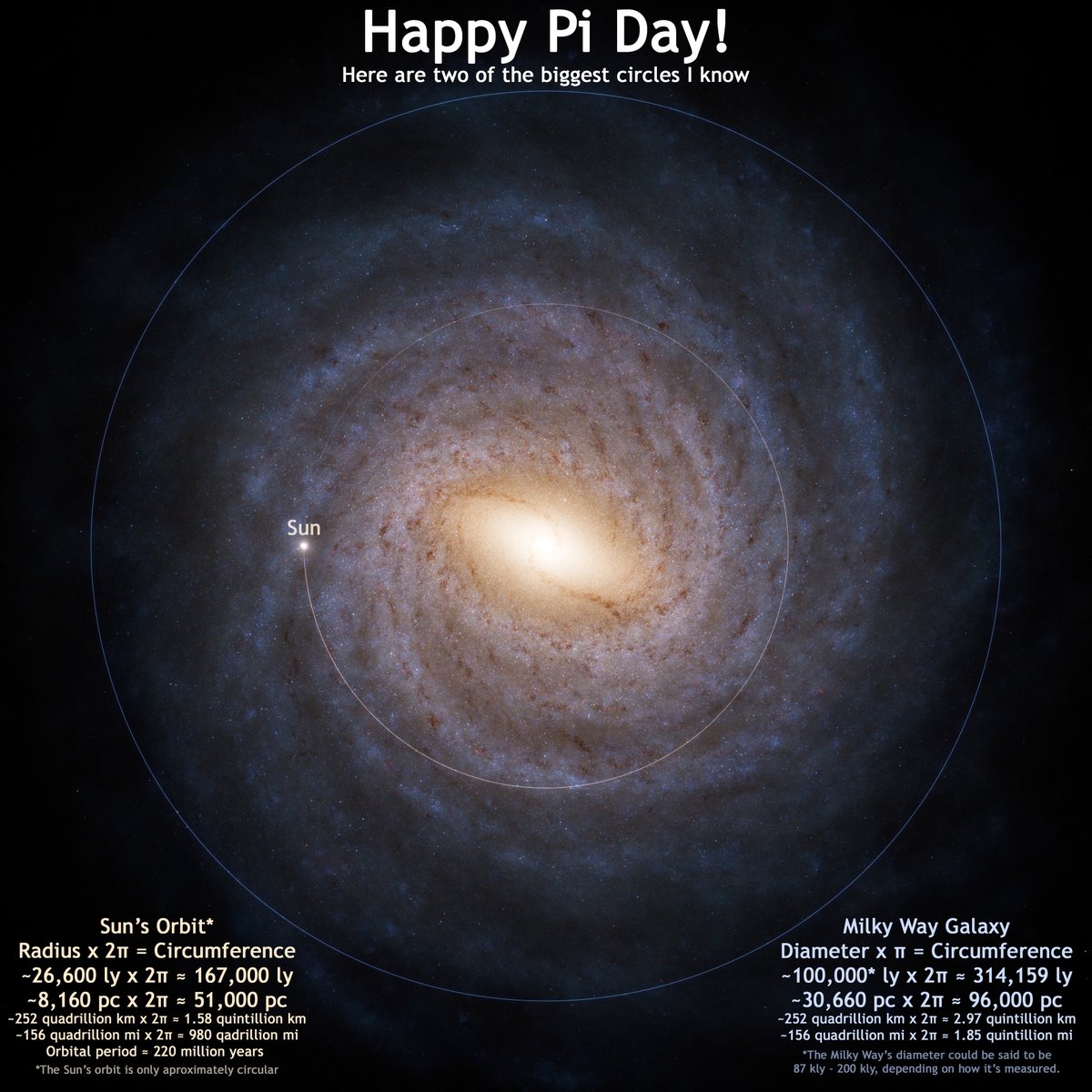
My current best guess at what the Milky Way looks like, based in large part on ESA Gaia Data! See ESA Science for more details and Haus der Astronomie 💫 for more Milky Way and other visualizations coming soon...

My current best guess at what the Milky Way looks like, based in large part on <a href="/ESAGaia/">ESA Gaia</a> Data! 
See <a href="/esascience/">ESA Science</a> for more details and <a href="/HdAstro/">Haus der Astronomie 💫</a> for more Milky Way and other visualizations coming soon...
ESA Gaia (@esagaia) 's Twitter Profile Photo

This brand-new animation gives you the most up to date view of our Milky Way. A full set of Milky Way visuals can be found from our webpage: cosmos.esa.int/en/web/gaia/mi… youtu.be/wEZBNsU4dMU

ESA Science (@esascience) 's Twitter Profile Photo

🐦 Fly through a 3D map of stellar nurseries ✨ Scientists have created the most accurate 3D map of star-formation regions in our Milky Way galaxy, based on data from #ESAGaia. The map extends to a distance of 4000 light-years from us, with the Sun at the centre 👉

Stefan Payne-Wardenaar (@stefanpwinc) 's Twitter Profile Photo

From European Space Agency, an update of this classic diagram with my model using updated Hα from McCallum et. al. 2025, and a new side-view from a different angle than previous ones to show the Sun's location. From this angle the disk is warping "down" towards the camera esa.int/ESA_Multimedia…
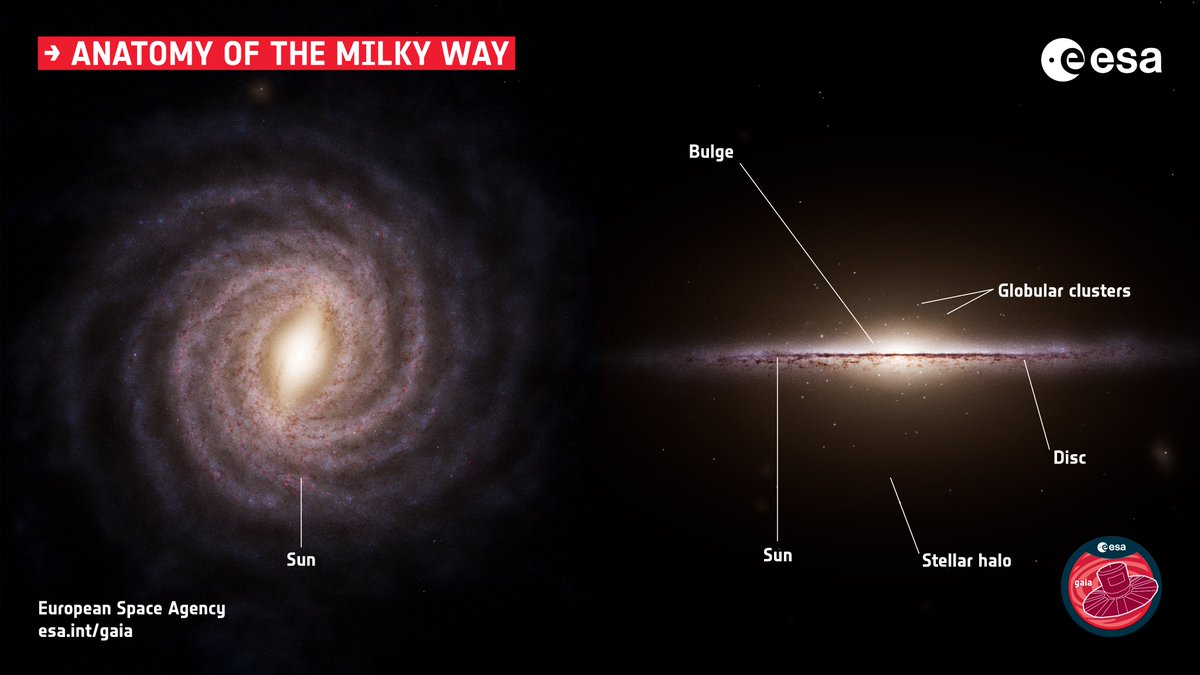
From <a href="/esa/">European Space Agency</a>, an update of this classic diagram with my model using updated Hα from McCallum et. al. 2025, and a new side-view from a different angle than previous ones to show the Sun's location. From this angle the disk is warping "down" towards the camera

esa.int/ESA_Multimedia…