Grace Telford (@ogracetelford) 's Twitter Profile
Grace Telford

@ogracetelford

Carnegie-Princeton Fellow at @PU_Astro 🌌 previously at @RutgersU, @uwastronomy, and @PhyAstro_Pitt

ID: 1483569168964280321

linkhttp://ogtelford.github.io calendar_today18-01-2022 22:37:14

41 Tweet

80 Followers

84 Following

JWST Resolved Stellar Populations (@jwst_stars) 's Twitter Profile Photo

The very first science data taken with #JWST were images of the globular cluster M92. There's a lot of exciting science we can (& will!) do with these images, but they also provide a great opportunity to test the calibration of the NIRCam instrument: arxiv.org/abs/2209.03348 [1/]

W. M. Keck Observatory (@keckobservatory) 's Twitter Profile Photo

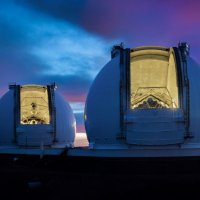
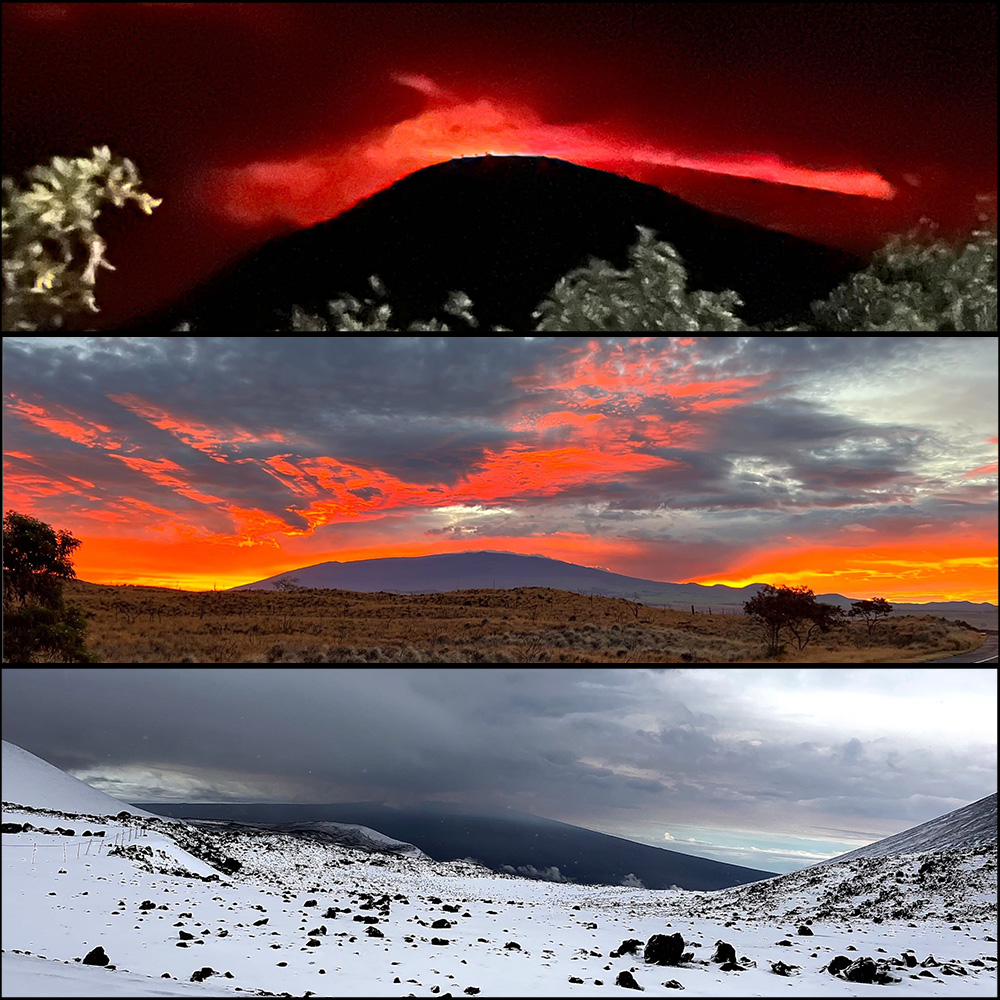
We are safe and remain vigilant as 🌋#MaunaLoa continues to erupt. Activity started last night, a first since 1984! Lava is flowing to the NE flank but no threat to residents right now. Our staff shot these fire & ice photos of the awakening volcano. Stay safe everyone!

We are safe and remain vigilant as 🌋#MaunaLoa continues to erupt. Activity started last night, a first since 1984! Lava is flowing to the NE flank but no threat to residents right now. Our staff shot these fire & ice photos of the awakening volcano. Stay safe everyone!
NASA (@nasa) 's Twitter Profile Photo

Here it is: NASA Webb Telescope’s one-year anniversary image. Called Rho Ophiuchi, this area shows about 50 young stars in a cocoon of gas and dust. At 390 light-years away, it's the closest star-forming region to Earth: go.nasa.gov/3rqX8Tl Webb continues to #UnfoldTheUniverse.
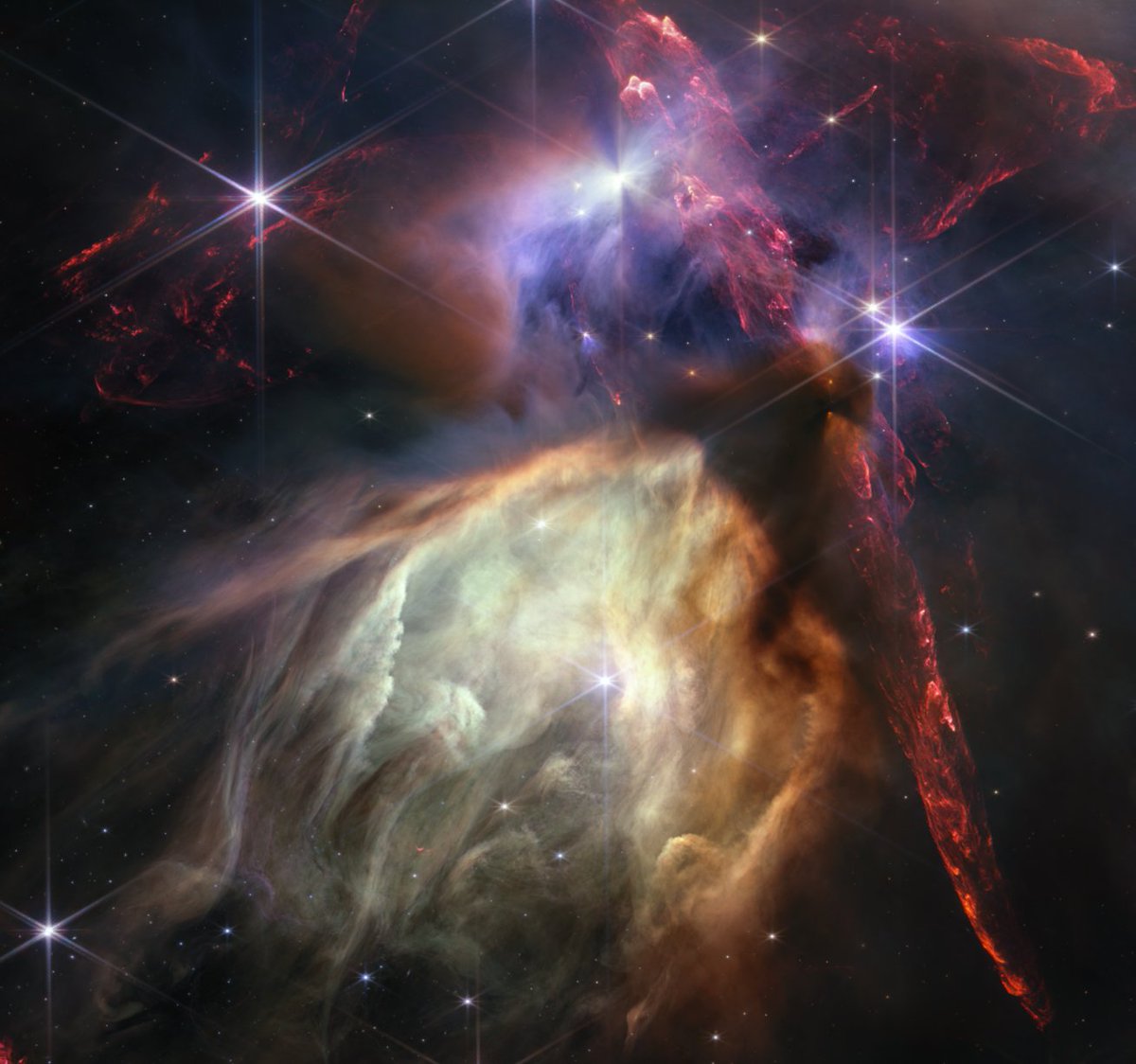
Here it is: <a href="/NASAWebb/">NASA Webb Telescope</a>’s one-year anniversary image. Called Rho Ophiuchi, this area shows about 50 young stars in a cocoon of gas and dust. At 390 light-years away, it's the closest star-forming region to Earth: go.nasa.gov/3rqX8Tl

Webb continues to #UnfoldTheUniverse.
Andreas Sander (@astroandreas) 's Twitter Profile Photo

Superluminous supernovae, black hole mergers, and many more astrophysical puzzles are connected to massive stars at subsolar metallicities, which we investigate in the X-Shooting ULLYSES collaboration. Paper I has officially been published today: aanda.org/articles/aa/fu…

Superluminous supernovae, black hole mergers, and many more astrophysical puzzles are connected to massive stars at subsolar metallicities, which we investigate in the X-Shooting ULLYSES collaboration. Paper I has officially been published today: aanda.org/articles/aa/fu…
Space Telescope Science Institute (@spacetelescope) 's Twitter Profile Photo

STScI has appointed Dr. Kristen McQuinn as its #NASARoman mission head. Dr. McQuinn will be responsible for the continued development and operations of the Roman Science Operations Center at STScI. Launch is currently planned for late 2026: bit.ly/3rcQQqv

STScI has appointed Dr. Kristen McQuinn as its #NASARoman mission head. Dr. McQuinn will be responsible for the continued development and operations of the Roman Science Operations Center at STScI. Launch is currently planned for late 2026: bit.ly/3rcQQqv
Carnegie Science (@carnegiescience) 's Twitter Profile Photo

#OTD 100 years ago, Carnegie astronomer Edwin Hubble discovered the existence of the universe beyond our own Milky Way galaxy LEARN MORE abou the famous VAR! plate where he recorded this breakthrough: obs.carnegiescience.edu/PAST/m31var

#OTD 100 years ago, Carnegie astronomer Edwin Hubble discovered the existence of the universe beyond our own Milky Way galaxy LEARN MORE abou the famous VAR! plate where he recorded this breakthrough: obs.carnegiescience.edu/PAST/m31var
Karin Sandstrom (@karinsandstrom) 's Twitter Profile Photo

Come join our new A&A department at UCSD and work with me on JWST observations of nearby galaxies!! Postdoc job ad now up on the AAS Register: jobregister.aas.org/ad/a61d3c64

Rachael (@rareflwr41) 's Twitter Profile Photo

Just so folks know -- the process for community input to NASA is the Astrophysics Program Advisory Committee. The next meeting is March 20/21, 2024 cor.gsfc.nasa.gov/news/2024/27_A…

Erin Kado-Fong (@erin_kadofong) 's Twitter Profile Photo

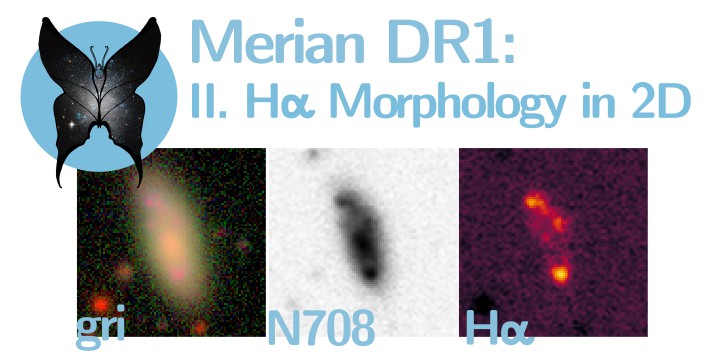
And in the second Merian 🦋 paper out today: Princeton student Abby Mintz develops methods to turn medium-band imaging into Hα maps, and shows that low-mass starbursts tend to be more compact than their more massive counterparts. Read the paper here! arxiv.org/abs/2410.01886

And in the second Merian 🦋 paper out today:

Princeton student Abby Mintz develops methods to turn medium-band imaging into Hα maps, and shows that low-mass starbursts tend to be more compact than  their more massive counterparts.

Read the paper here! arxiv.org/abs/2410.01886