Paul P. Murphy (@murphy) 's Twitter Profile
Paul P. Murphy

@murphy

Reporter | I love the @RedSox

ID: 801411938

calendar_today03-09-2012 23:17:08

8,8K Tweet

2,2K Takipçi

5,5K Takip Edilen
Paul P. Murphy (@murphy) 's Twitter Profile Photo

This was the missing piece. In the hours before the attack, Iran essentially entombed Fordow, using bulldozers (first seen by @Maxar on June 21) to cover its entrances with dirt.

Paul P. Murphy (@murphy) 's Twitter Profile Photo

This hole that mera points out is almost 10 feet/a little over three meters. Which makes it the smallest crater generated by US strikes on Iran, so far. It's definitely a crater from a strike, but not convinced it's a crater from a GBU-57 at the moment.

Paul P. Murphy (@murphy) 's Twitter Profile Photo

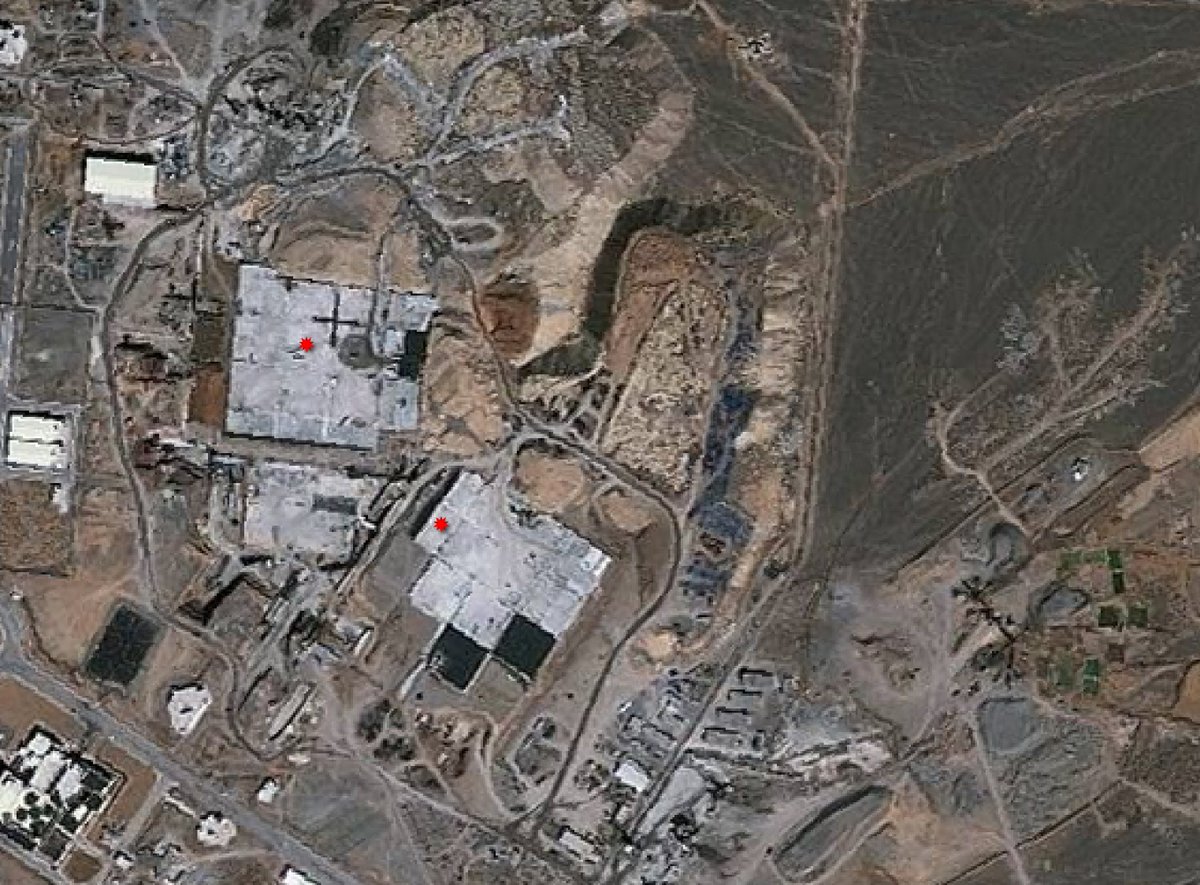
What was hit by the US at Natanz? A 2003 image from when @Maxar was known as DigitalGlobe lets us see. The second image, shows what the Iranians built underground at Natanz. And it shows the second crater was targeting a second underground section of that facilities there.

What was hit by the US at Natanz?  A 2003 image from when @Maxar was known as DigitalGlobe lets us see.

The second image, shows what the Iranians built underground at Natanz.  And it shows the second crater was targeting a second underground section of that facilities there.
Paul P. Murphy (@murphy) 's Twitter Profile Photo

How did we get from a bit of remote land in rural Iran to the US bombing what's now the Natanz Nuclear Facility? Construction began in April 2000. Imagery from the since decommissioned Landsat 7 shows us the construction of the project over time.

Paul P. Murphy (@murphy) 's Twitter Profile Photo

Fordow is dramatically different from Natanz, where the Iranians constructed an underground structure and then buried it. All of the construction at Fordow, as seen in Landsat 7 images, was underground. And it was very, very deep. Hence why the US engineer the GBU-57.

Paul P. Murphy (@murphy) 's Twitter Profile Photo

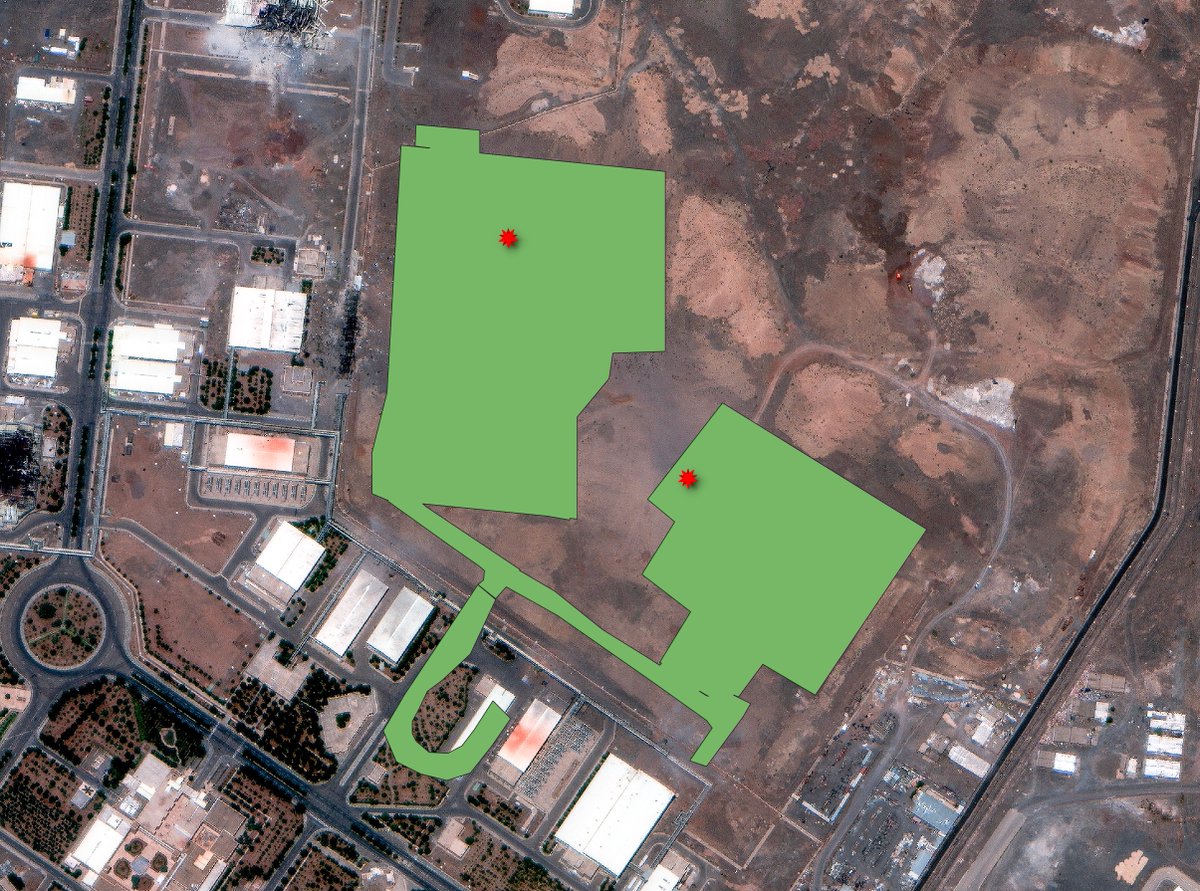
Digging further into the archival Maxar QuickBird imagery, a rough layout of the visible underground infrastructure at Natanz appears (in green). The strike locations are in red. Notably, the entrance building to these has not yet been targeted by a strike.

Digging further into the archival Maxar QuickBird imagery, a rough layout of the visible underground infrastructure at Natanz appears (in green).  The strike locations are in red.  

Notably, the entrance building to these has not yet been targeted by a strike.
Paul P. Murphy (@murphy) 's Twitter Profile Photo

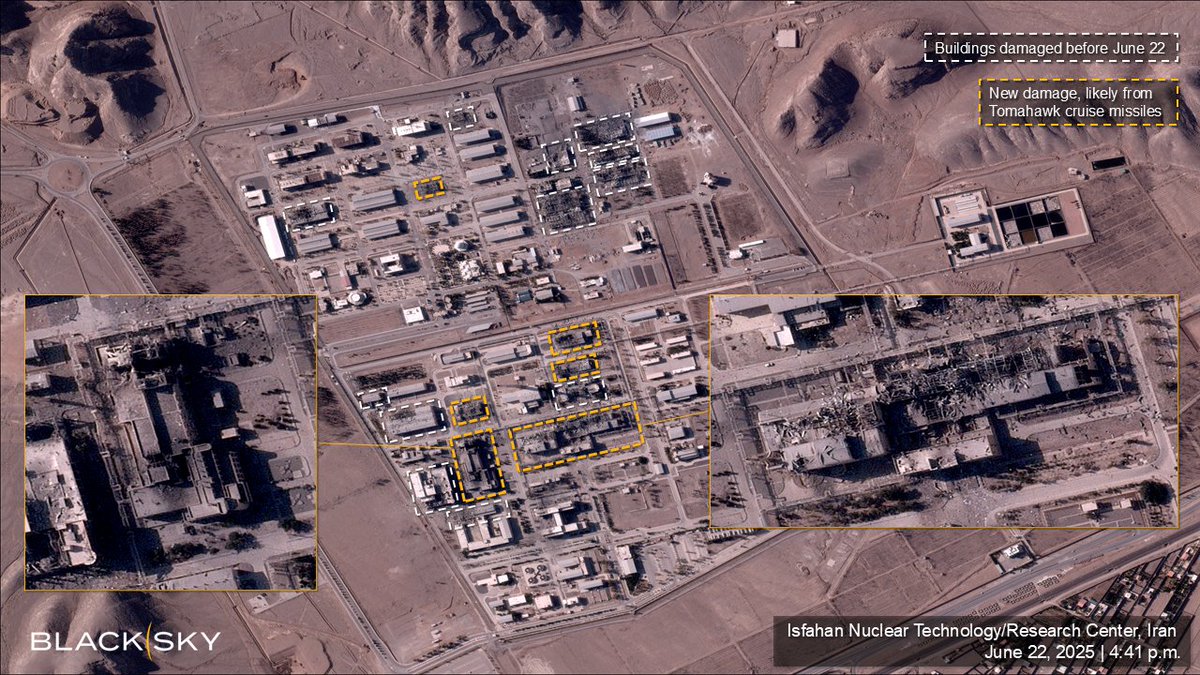
.BlackSky IDs additional damage at Isfahan Nuclear Technology Center, likely from US Tomahawks. The images are taken by their new Gen-3 sats (35cm), so can see a lot more detail. Have to wonder what was so important about the building the US hit at 32.583, 51.824

.<a href="/BlackSky_Inc/">BlackSky</a> IDs additional damage at Isfahan Nuclear Technology Center, likely from US Tomahawks.  The images are taken by their new Gen-3 sats (35cm), so can see a lot more detail.  

Have to wonder what was so important about the building the US hit at 32.583, 51.824