
Li-Fang (Jack) Chu (@lifangjackchu1) 's Twitter Profile
Li-Fang (Jack) Chu

@lifangjackchu1

Assistant Professor @ucalgaryvetmed @UCalgary

Pluripotent stem cell biology, developmental biology, gene oscillation, developmental clock

ID: 1324800517818572801

linkhttp://www.chulaboratory.org calendar_today06-11-2020 19:48:42

22 Tweet

30 Followers

42 Following

Miki Ebisuya (@ebisuyamiki) 's Twitter Profile Photo

Our Mitsuhiro Matsuda&Hanako Hayashi's "Human Time vs Mouse Time" project has been published Science Magazine Human segmentation clock(5h oscillation period) is slower than mouse (2h period) because multiple biochemical reactions are slower in human cells science.sciencemag.org/content/369/65…

Teresa Rayon (@t_rayon) 's Twitter Profile Photo

Our work #aboutime "Species-specific pace of development is associated with differences in protein stability" is now published science.sciencemag.org/content/369/65…. What determines the pace of embryonic development?

Eileen Furlong (@eileen_furlong) 's Twitter Profile Photo

Yes - The amazing observation by Denis Denis Duboule and others (hourglass model), where morphological features are more similar at mid-embryogenesis (roughly) between species, holds true at the level of developmental enhancers. Fun collab with Marc Marc RobinsonRechavi @[email protected] and Jialin Jialin.Liu

Teresa Rayon (@t_rayon) 's Twitter Profile Photo

A changing waddingtonian landscape in vivo versus in vitro? Conserved developmental trajectories in vitro across species can vary in vivo due to extraembryonic signals or morphological constrains (geometry). Interesting proposal to be tested in space and time

Cole Trapnell (@coletrapnell) 's Twitter Profile Photo

Four years' work, 178 billion sequencing reads, and nearly 5 million cells went into constructing atlases of gene expression and chromatin accessibility in human development, out now.

Dylan Burnette (@mag2art) 's Twitter Profile Photo

The Citizen Kane of Cell Division Walther Flemming published this time-lapse of a dividing cell in 1882. He drew the data by hand while looking in his microscope. #CellBiology #microscopy #SciArt

Meng Zhu (@zhumeng123) 's Twitter Profile Photo

Thrilled to share our work on timing of cell polarity in mouse development is finally out on Science! Special thank to my Phd supervisor Magdalena Zernicka-Goetz Jake Cornwall-Scoones , Matt Thomson for the great math model, and Peizhe @Charlot80900146 and everyone Zernicka-Goetz Lab! science.sciencemag.org/content/370/65…

Irene Aksoy (@irenebow) 's Twitter Profile Photo

So happy to share with you our last paper that deals with Human, Monkey, Rabbit and Mouse inter-species chimeras ! Such a nice way to end 2020 ans start 2021 ! Thanks StemCellReports Martin Pera and the reviewers ! doi.org/10.1016/j.stem…


So happy to share with you our last paper that deals with Human, Monkey, Rabbit and Mouse inter-species chimeras ! Such a nice way to end 2020 ans start 2021 ! Thanks <a href="/stemcellreports/">StemCellReports</a> <a href="/martinperaJAX/">Martin Pera</a> and the reviewers ! doi.org/10.1016/j.stem…
Daniel J. Cohen (CohenLab at Princeton) (@djcohenetal) 's Twitter Profile Photo

Herding cells isn't all sheepdogs/roses. Some tissues hate taking orders. Our new work w/ GS Gawoon Shim + Prof. Devenport shows: (1) more communal cells resist bioelectric herding; (2) disrupting cell-cell adhesion improves herding + healing lab skin wounds! biorxiv.org/content/10.110…

Dr Mark D. Scherz (@markscherz) 's Twitter Profile Photo

Meet Brookesia nana, the Nano-Chameleon, probably the world's smallest amniote vertebrate! We just published its discovery in Scientific Reports: nature.com/articles/s4159… doi.org/10.1038/s41598… Read more about it here: markscherz.com/archives/4800 📸Frank Glaw

Meet Brookesia nana, the Nano-Chameleon, probably the world's smallest amniote vertebrate! 
We just published its discovery in <a href="/SciReports/">Scientific Reports</a>:
nature.com/articles/s4159…
doi.org/10.1038/s41598…
Read more about it here: markscherz.com/archives/4800
📸Frank Glaw
Jun Wu Lab (@leo_jwu) 's Twitter Profile Photo

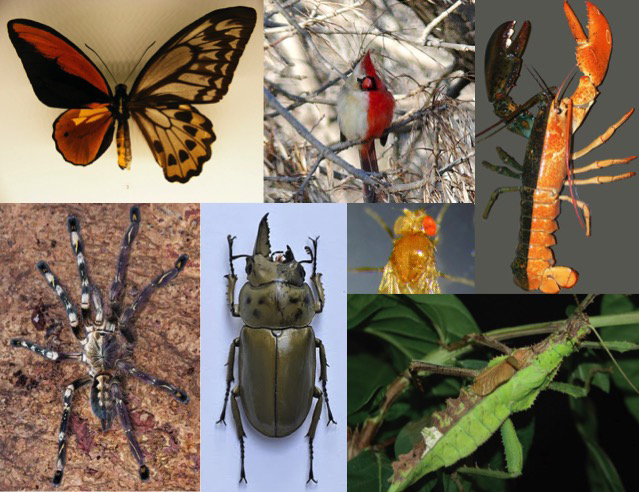
A new story from the lab published in Nature today. We found an intriguing cell competitive interaction between primed PSCs among different species! Human (green) are actively eliminated by mouse (red) cells.

Li-Fang (Jack) Chu (@lifangjackchu1) 's Twitter Profile Photo

Reintroduction of the archaic variant of NOVA1 in cortical organoids alters neurodevelopment science.sciencemag.org/content/371/65…