
Joseph Agu (@josephagu) 's Twitter Profile
Joseph Agu

@josephagu

Director of Elite Nutrition Coaching | PhD Student

ID: 443686064

linkhttp://elitenutritioncoaching.com calendar_today22-12-2011 12:39:33

5,5K Tweet

5,5K Takipçi

272 Takip Edilen
Joseph Agu (@josephagu) 's Twitter Profile Photo

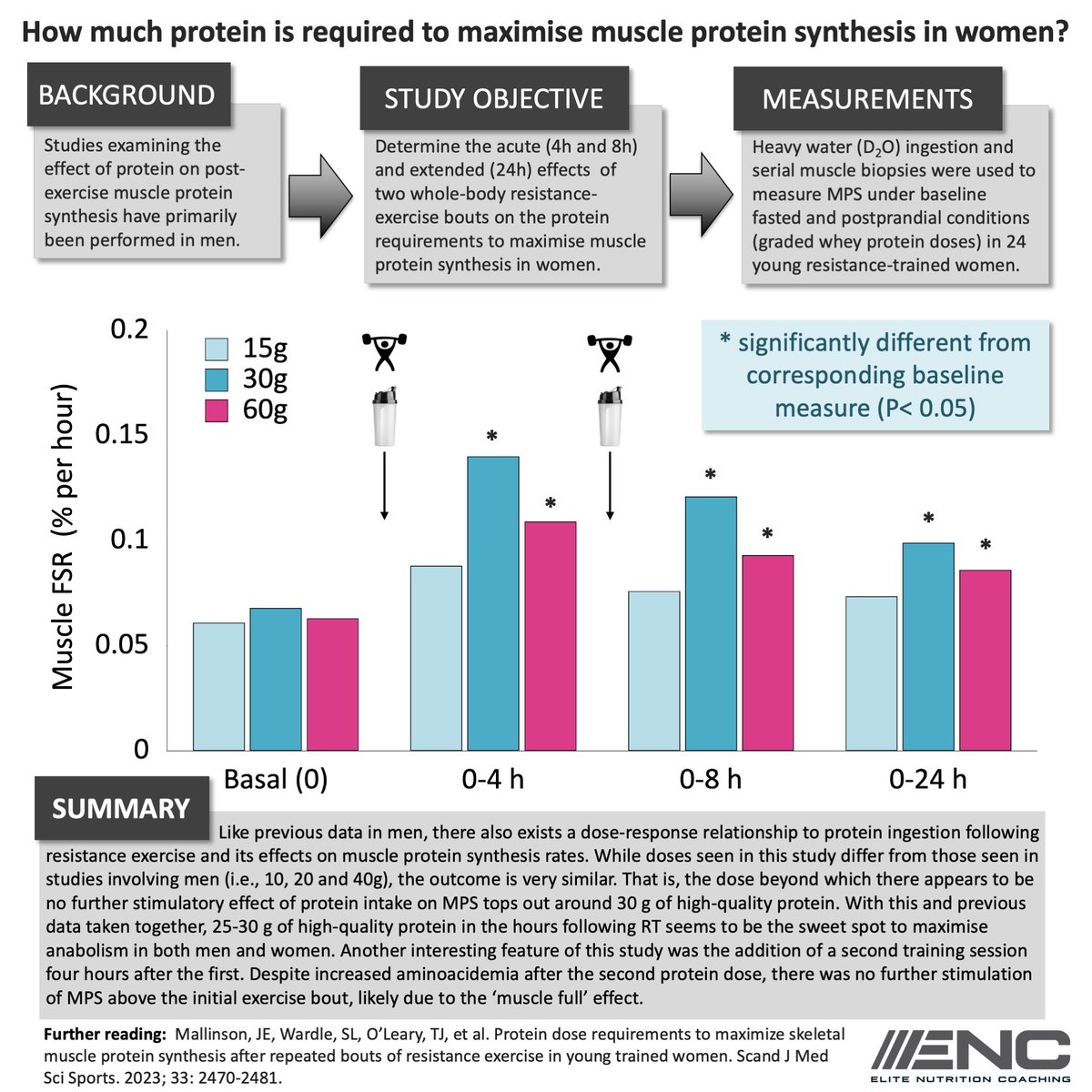
The protein dose required to maximally stimulate MPS in women doesn’t appear to be any different than what is observed in men. That is, 25-30 g of high quality protein (e.g., whey) taken following resistance training will maximise MPS in the majority of people.

The protein dose required to maximally stimulate MPS in women doesn’t appear to be any different than what is observed in men. That is, 25-30 g of high quality protein (e.g., whey) taken following resistance training will maximise MPS in the majority of people.
Joseph Agu (@josephagu) 's Twitter Profile Photo

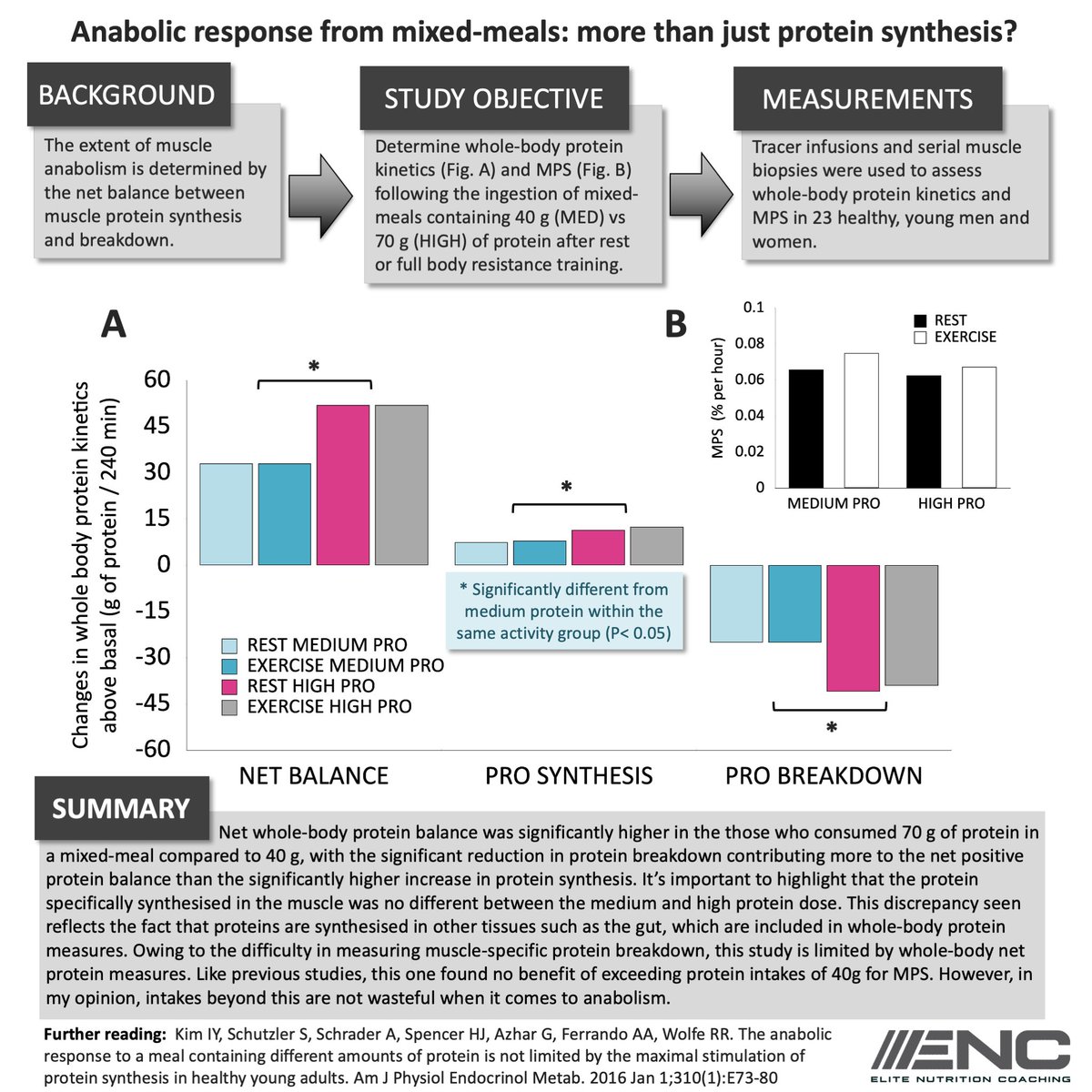
Most studies solely look at muscle protein synthesis measures when trying to determine the optimal per meal protein dose to maximise muscle gain. Is there more to it?

Most studies solely look at muscle protein synthesis measures when trying to determine the optimal per meal protein dose to maximise muscle gain. Is there more to it?
Jorn Trommelen, PhD (@jorntrommelen) 's Twitter Profile Photo

Our new work: No upper limit to the anabolic response to protein ingestion? Challenges current views on: 1⃣Dose-response relationship 2⃣"Excessive" protein getting oxidized 3⃣Protein distribution 4⃣MUCH more! Paper: cell.com/cell-reports-m… 1/10 🧵

Our new work:
No upper limit to the anabolic response to protein ingestion?

Challenges current views on:
1⃣Dose-response relationship
2⃣"Excessive" protein getting oxidized
3⃣Protein distribution
4⃣MUCH more!

Paper:
cell.com/cell-reports-m…

1/10 🧵
Joseph Agu (@josephagu) 's Twitter Profile Photo

100 g of protein exceeds what most consume in a meal. In a practical sense, the results therefore demonstrate that there is no apparent limit to the anabolic response to a protein-containing meal consumed after exercise (in the 12 h measurement window, at least).

100 g of protein exceeds what most consume in a meal. In a practical sense, the results therefore demonstrate that there is no apparent limit to the anabolic response to a protein-containing meal consumed after exercise (in the 12 h measurement window, at least).
Stuart Phillips (he/him) (@mackinprof) 's Twitter Profile Photo

Resistance‐only and concurrent exercise induce similar myofibrillar protein synthesis rates and associated molecular responses in moderately active men before and after training faseb.onlinelibrary.wiley.com/doi/10.1096/fj…

Brad Schoenfeld, PhD (@bradschoenfeld) 's Twitter Profile Photo

Such an important finding: Exercise is comparable to psychotherapy and pharmacology in treatment for depression 💪 ncbi.nlm.nih.gov/pmc/articles/P…

Such an important finding: Exercise is comparable to psychotherapy and pharmacology in treatment for depression 💪

ncbi.nlm.nih.gov/pmc/articles/P…
Joseph Agu (@josephagu) 's Twitter Profile Photo

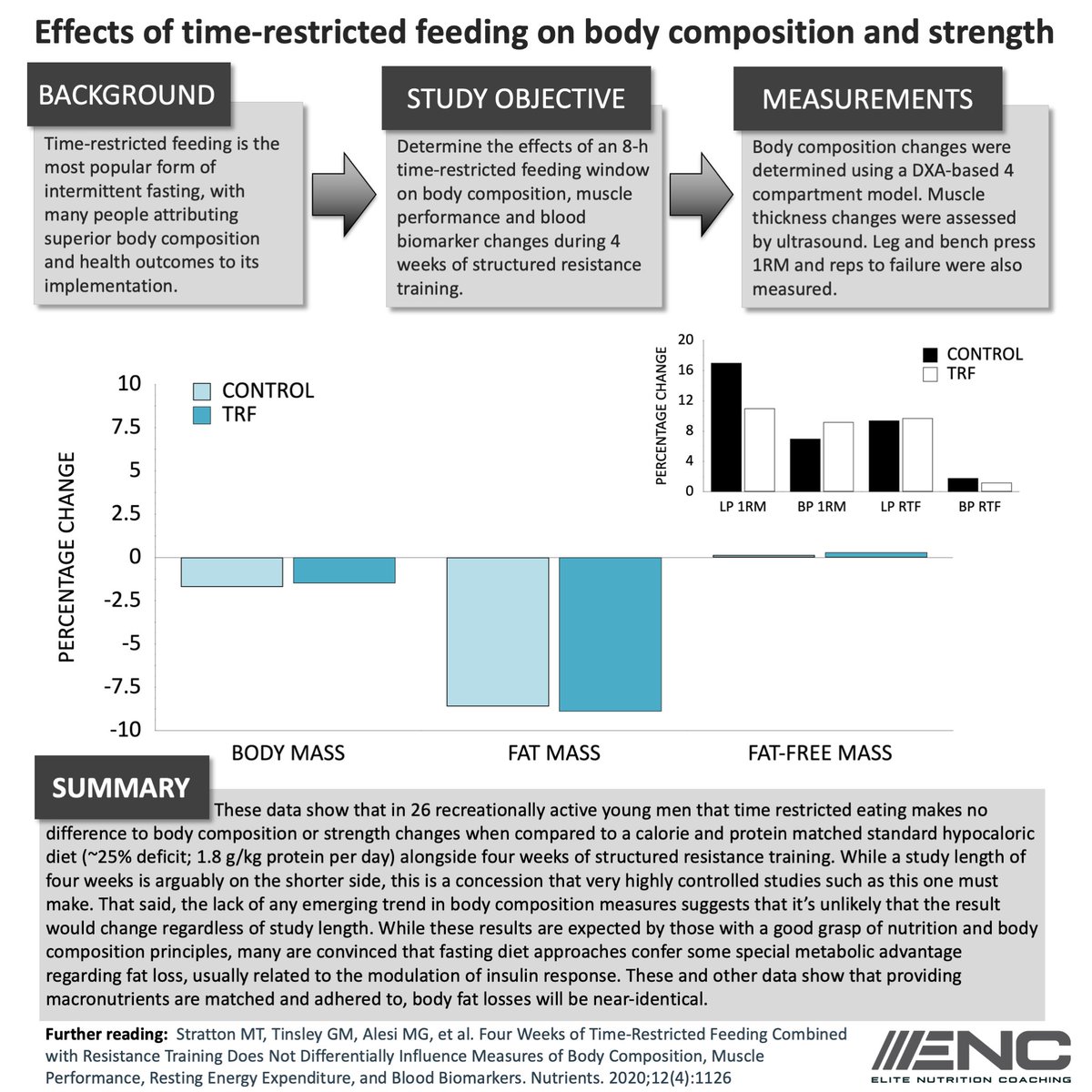
Contrary to the purported insulin-mediated metabolic advantage of fasting dieting approaches for fat loss, this study shows that when diet and training are well-controlled, intermittent fasting makes absolutely no difference to body composition under hypo-caloric conditions.

Contrary to the purported insulin-mediated metabolic advantage of fasting dieting approaches for fat loss, this study shows that when diet and training are well-controlled, intermittent fasting makes absolutely no difference to body composition under hypo-caloric conditions.
Joseph Agu (@josephagu) 's Twitter Profile Photo

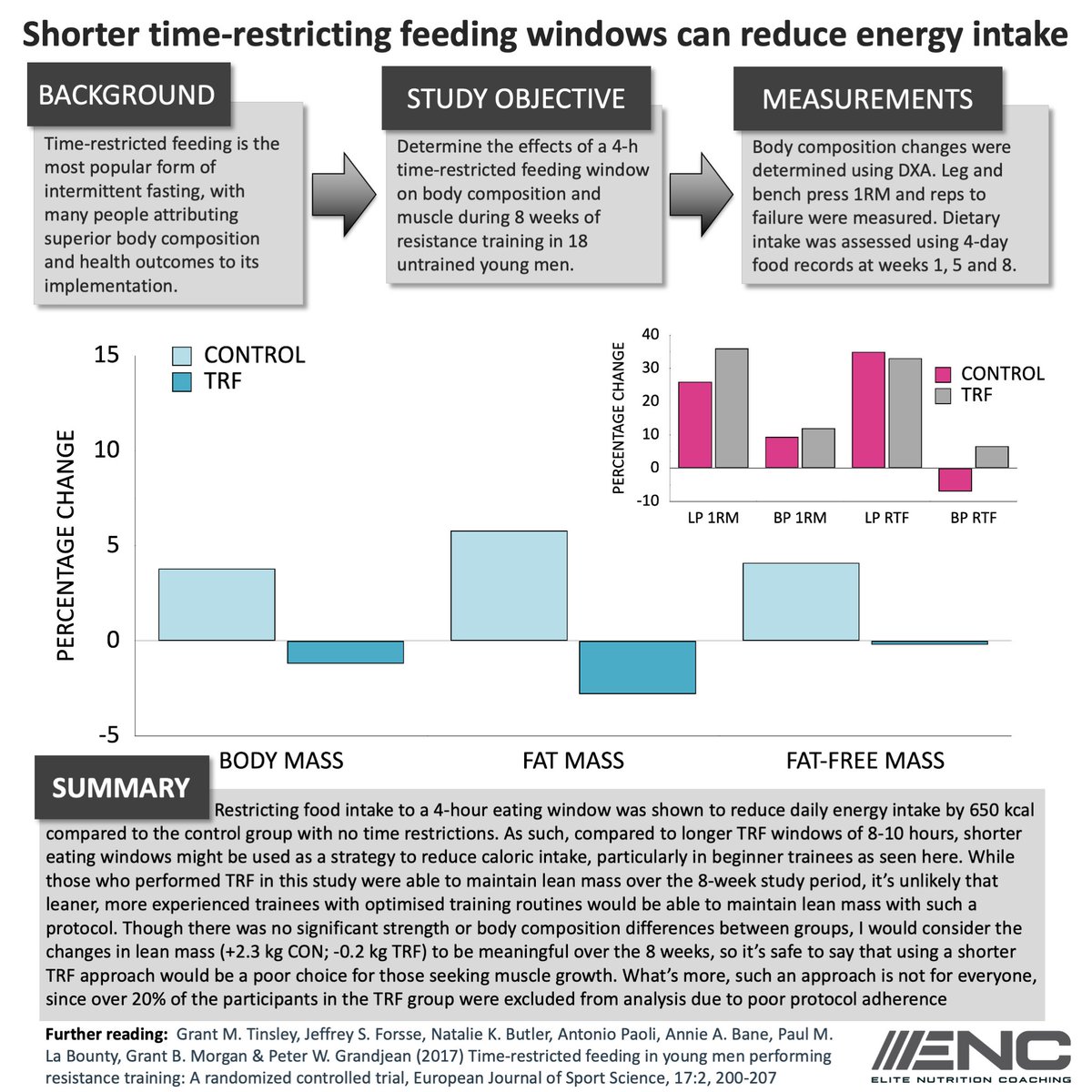
Compared to intermittent fasting with longer eating windows (~8-12h), shorter time-restricted feeding windows (~4h) can lead to considerably reduced energy intake due to the reduced opportunity for eating.

Compared to intermittent fasting with longer eating windows (~8-12h), shorter time-restricted feeding windows (~4h) can lead to considerably reduced energy intake due to the reduced opportunity for eating.
Louise Burke (@louisemburke) 's Twitter Profile Photo

Do Jamie Whitfield, PhD and I think LCHF enhances endurance performance? We love the nuance & complexity of sport. Meta-analyses smash data into a heap. We've built a dashboard that notes the scenarios & limits of a study - see it all here! tinyurl.com/53y85dd8 tinyurl.com/24f7s39f

Do <a href="/jwhitfie/">Jamie Whitfield, PhD</a> and I think LCHF enhances endurance performance?  We love the nuance &amp; complexity of sport.  Meta-analyses smash data into a heap.  We've built a dashboard that notes the scenarios &amp; limits of a study - see it all here!
tinyurl.com/53y85dd8 tinyurl.com/24f7s39f
Joseph Agu (@josephagu) 's Twitter Profile Photo

There is no evidence to support delaying caffeine consumption after waking by 60-120 minutes to improve cognitive performance or any other outcome measure. Nor is there any plausible mechanism. PMID: 38466174

Joseph Agu (@josephagu) 's Twitter Profile Photo

Just because the outcome of a study is statistically significant, it doesn’t necessarily mean that it’s practically or clinically meaningful. Similarly, a study outcome can be practically meaningful yet non-significant.

Joseph Agu (@josephagu) 's Twitter Profile Photo

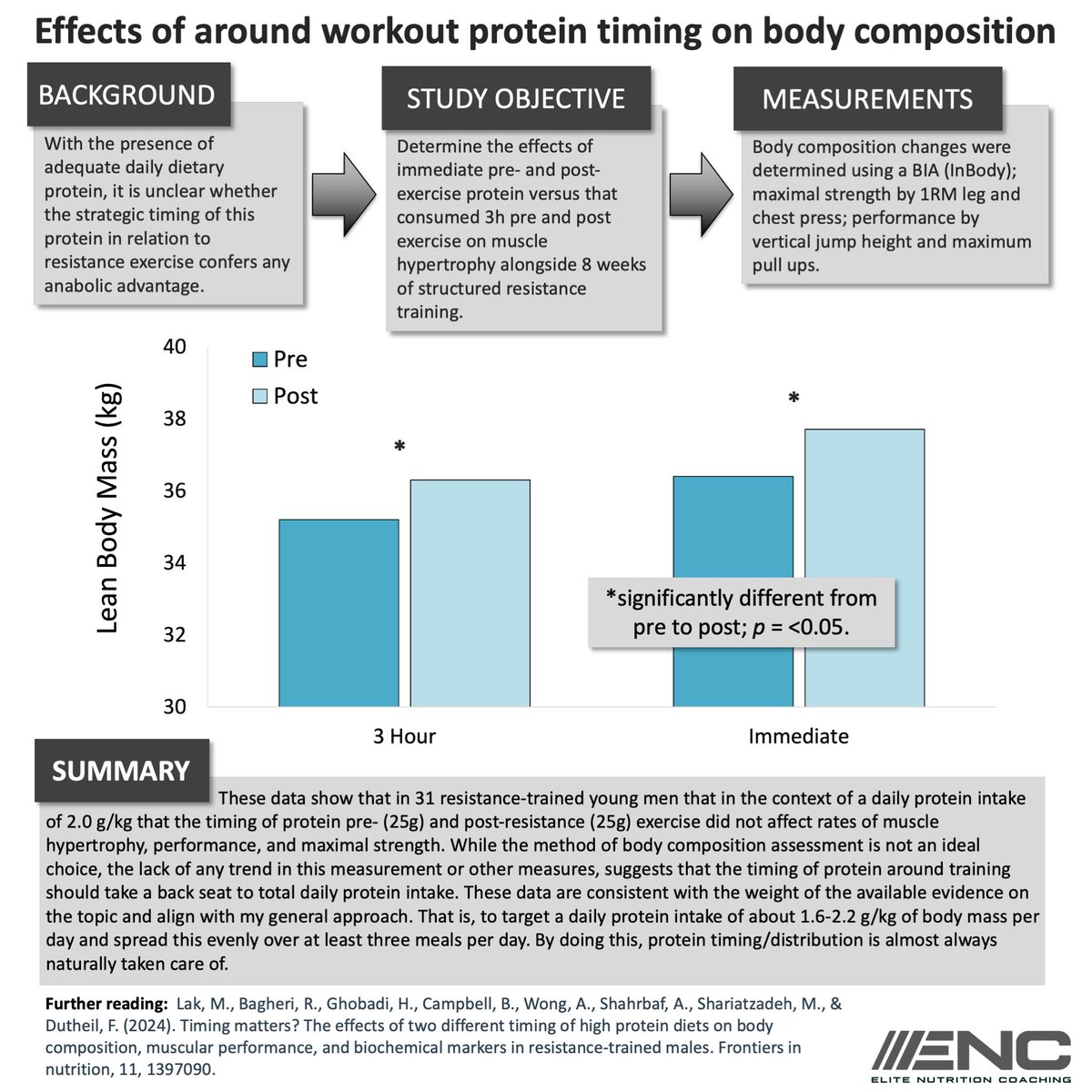
More evidence that there's no need to stress about consuming protein in close proximity to training. Total daily protein will always be king. PMID: 38846541

More evidence that there's no need to stress about consuming protein in close proximity to training. 

Total daily protein will always be king. 

PMID: 38846541
Joseph Agu (@josephagu) 's Twitter Profile Photo

While ketogenic diets can be a useful tool for fat loss, they almost always impair sports performance, especially those requiring bouts of high-intensity activity. PMID: 38934469

Joseph Agu (@josephagu) 's Twitter Profile Photo

When considering the amount of dietary protein required to maximise rates of muscle hypertrophy (i.e., ~1.6-2.0 g/kg body mass per day), there’s currently no evidence that intakes need to be further increased under hypocaloric conditions to preserve muscle mass in young adults.

Joseph Agu (@josephagu) 's Twitter Profile Photo

Despite the fact that no research directly points to a muscle sparing effect of daily protein intakes exceeding 1.6 g/kg of body mass, should it make a difference, it’s often prudent to target intakes slightly above this (1.8-2.2 g/kg), than risk consuming too little protein.

Joseph Agu (@josephagu) 's Twitter Profile Photo

Leucine supplementation enhances integrative myofibrillar protein synthesis in older men consuming lower versus higher daily protein intakes. PMID: 27935521

Leucine supplementation enhances integrative myofibrillar protein synthesis in older men consuming lower versus higher daily protein intakes.

PMID: 27935521
Joseph Agu (@josephagu) 's Twitter Profile Photo

When aiming for fat loss, once calorie and protein intakes are set, the distribution of carbs and fat is largely down to preference. Caveats: 1. Fat intake covers essential requirements. 2. Carb intake doesn’t negatively affect training intensity.

Joseph Agu (@josephagu) 's Twitter Profile Photo

Caffeine-containing beverages are commonly thought to be dehydrating due to caffeine’s mild diuretic effects. However, it has been demonstrated that moderate intakes of such beverages don’t affect total body water or hydration markers compared to water. PMID: 19774754 24416202

Joseph Agu (@josephagu) 's Twitter Profile Photo

Q - Aside from supporting training performance, do carbs help with muscle protein synthesis? A - Providing that protein is sufficient to maximise MPS alone (~20-25g of high quality protein), adding carbs does not augment this response. PMID: 21131864 17609259