Hans Mautong, MD (@hansmautong_08) 's Twitter Profile
Hans Mautong, MD

@hansmautong_08

MD 🇪🇨 and Researcher 🔬| IM PGY-1 at @CookCountyIMR | Cardiology enthusiast 🫀 | GCSRT at @harvardmed 📊| Real Madrid ⚽️ Padel 🎾 and Formula 1 🏎

ID: 222818768

linkhttps://www.researchgate.net/profile/Hans-Mautong-2 calendar_today04-12-2010 15:09:03

13,13K Tweet

556 Takipçi

560 Takip Edilen

CardiovascularCorner (@trackyourheart) 's Twitter Profile Photo

M-Mode Echocardiography Explained This figure demonstrates M-mode measurements from the parasternal long-axis (PLAX) view, crucial for assessing valvular & ventricular function: 🔹 Aortic Valve Motion (Top Panel) - The right coronary cusp (RCC) and non-coronary cusp (NCC) move

M-Mode Echocardiography Explained

This figure demonstrates M-mode measurements from the parasternal long-axis (PLAX) view, crucial for assessing valvular & ventricular function:

🔹 Aortic Valve Motion (Top Panel)
- The right coronary cusp (RCC) and non-coronary cusp (NCC) move
NEJM (@nejm) 's Twitter Profile Photo

Presented at #AHA25: In patients with atrial fibrillation after successful ablation, rivaroxaban therapy did not lead to a significantly lower incidence of a composite of stroke, systemic embolism, or new covert embolic stroke than aspirin therapy. Full OCEAN trial results:

Presented at #AHA25: 

In patients with atrial fibrillation after successful ablation, rivaroxaban therapy did not lead to a significantly lower incidence of a composite of stroke, systemic embolism, or new covert embolic stroke than aspirin therapy. Full OCEAN trial results:
Dr.Marlon Villanueva™ 🩺 𝕏 (@marlonvfzr) 's Twitter Profile Photo

🔊𝗙𝗔𝗧𝗘 𝗯𝗮́𝘀𝗶𝗰𝗼🫀 ⬇️⬇️⬇️⬇️ 1️⃣𝙋𝙤𝙨1 𝙨𝙪𝙗𝙘𝙤𝙨𝙩𝙖𝙡 4𝘾 → tamponade, dilatación. 2️⃣𝙋𝙤𝙨2 𝙖𝙥𝙞𝙘𝙖𝙡 4𝘾 → función global, cavidades. 3️⃣𝙋𝙤𝙨3 𝙋𝙇𝘼𝙓/𝙋𝙎𝘼𝙓 → contractilidad, derrame, válvulas. 4️⃣𝙋𝙤𝙨4 𝙥𝙡𝙚𝙪𝙧𝙖 → neumotórax/derrames.

🔊𝗙𝗔𝗧𝗘 𝗯𝗮́𝘀𝗶𝗰𝗼🫀
⬇️⬇️⬇️⬇️ 

1️⃣𝙋𝙤𝙨1 𝙨𝙪𝙗𝙘𝙤𝙨𝙩𝙖𝙡 4𝘾 → tamponade, dilatación.

2️⃣𝙋𝙤𝙨2 𝙖𝙥𝙞𝙘𝙖𝙡 4𝘾 → función global, cavidades.

3️⃣𝙋𝙤𝙨3 𝙋𝙇𝘼𝙓/𝙋𝙎𝘼𝙓 → contractilidad, derrame, válvulas.

4️⃣𝙋𝙤𝙨4 𝙥𝙡𝙚𝙪𝙧𝙖 → neumotórax/derrames.
Ahmed Mohsen (@drahmedmohsen85) 's Twitter Profile Photo

🚑 Simple way to differentiate types of shock — no Echo expertise needed! 1️⃣ Get Apical 5-chamber view 2️⃣ Place PW Doppler in LVOT (1 cm above AV) 3️⃣ Trace LVOT VTI 4️⃣ Follow the algorithm based on VTI 📉📈 Ref: pubmed.ncbi.nlm.nih.gov/34825894/

🚑 Simple way to differentiate types of shock — no Echo expertise needed!
1️⃣ Get Apical 5-chamber view
2️⃣ Place PW Doppler in LVOT (1 cm above AV)
3️⃣ Trace LVOT VTI
4️⃣ Follow the algorithm based on VTI 📉📈

Ref: pubmed.ncbi.nlm.nih.gov/34825894/
André Martin Mansoor (@andremansoor) 's Twitter Profile Photo

How do you differentiate arterial from venous pulses in the neck? 👀 A quick bedside observation makes it clear. 🩺 I’m teaching a 3-day live virtual cardiac exam course (Dec 2–4). 🌍 Open to anyone, anywhere 🔗 physicaldiagnosispdx.com/schedule-for-t… 🔗 physicaldiagnosispdx.com/sign-up-for-ma…

CardiovascularCorner (@trackyourheart) 's Twitter Profile Photo

LV Torsion: A Powerful Marker of Systolic Function Definition Left ventricular (LV) torsion (or twist) refers to the wringing motion of the heart during systole, apical counterclockwise rotation vs basal clockwise rotation. It results from the unique helical arrangement of

LV Torsion: A Powerful Marker of Systolic Function

Definition 
Left ventricular (LV) torsion (or twist) refers to the wringing motion of the heart during systole, apical counterclockwise rotation vs basal clockwise rotation.
It results from the unique helical arrangement of
CardiovascularCorner (@trackyourheart) 's Twitter Profile Photo

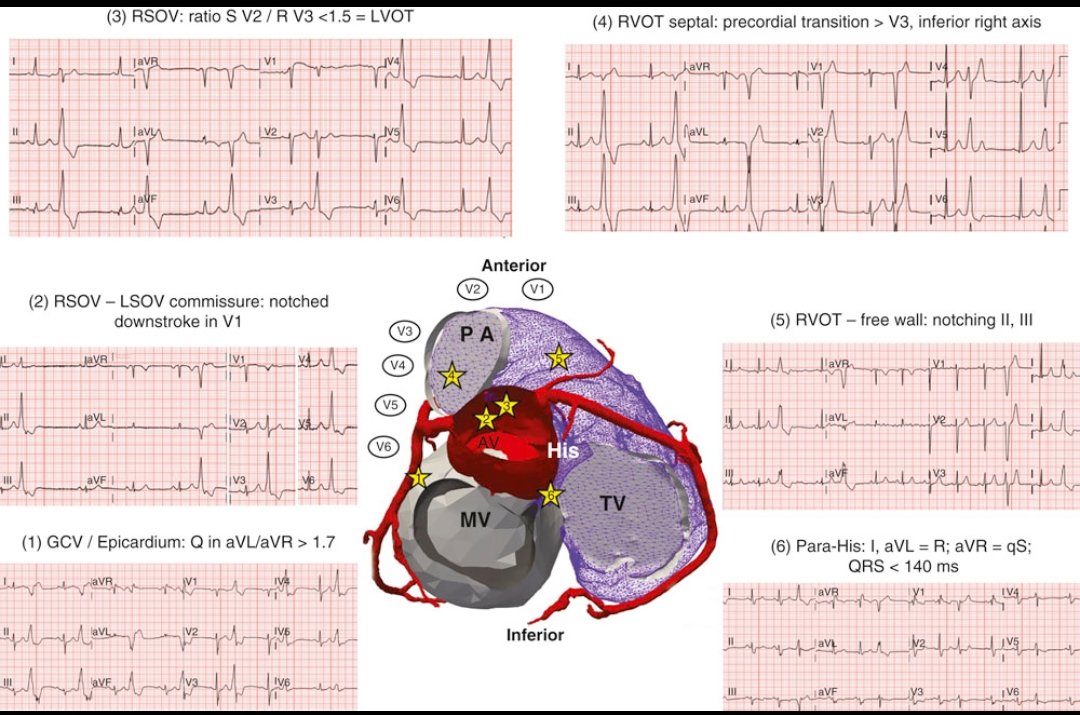
PVC Localization on ECG Premature Ventricular Complexes (PVCs) are early heartbeats that arise from the ventricles rather than following the usual His–Purkinje pathway. This illustration shows PVCs coming from different parts of the heart: the outflow tracts (RVOT and LVOT) and

PVC Localization on ECG

Premature Ventricular Complexes (PVCs) are early heartbeats that arise from the ventricles rather than following the usual His–Purkinje pathway.

This illustration shows PVCs coming from different parts of the heart: the outflow tracts (RVOT and LVOT) and
Irwing Benites (@renino20) 's Twitter Profile Photo

Manejo de diabetes en ERC avanzada/diálisis 📌Hb1ac7.5-8.5% 📌En diálisis, variable en control glicémico: Monitor glicémico continuo >Hb1ac 📌Dapa/Fine aun en estudios con TFGe<20ml/min 📌Optimizar control hipolipemiante ⬇️💀 📌PA<130/80 ✅ NDT Enero26 DOI doi.org/10.1093/ndt/gf…

Manejo de diabetes en ERC avanzada/diálisis
📌Hb1ac7.5-8.5%
📌En diálisis, variable en control glicémico: Monitor glicémico continuo &gt;Hb1ac
📌Dapa/Fine aun en estudios con TFGe&lt;20ml/min
📌Optimizar control hipolipemiante ⬇️💀
📌PA&lt;130/80 ✅
NDT Enero26
DOI doi.org/10.1093/ndt/gf…
NEJM (@nejm) 's Twitter Profile Photo

Cardiogenic shock is associated with high early mortality. Prompt revascularization in infarct-related cardiogenic shock improves outcomes, and mechanical circulatory support may reduce mortality in specific groups. Read the Review Article “Cardiogenic Shock” by Holger Thiele,

Cardiogenic shock is associated with high early mortality. Prompt revascularization in infarct-related cardiogenic shock improves outcomes, and mechanical circulatory support may reduce mortality in specific groups. 

Read the Review Article “Cardiogenic Shock” by Holger Thiele,
Marina Saadi (@saadi_marina) 's Twitter Profile Photo

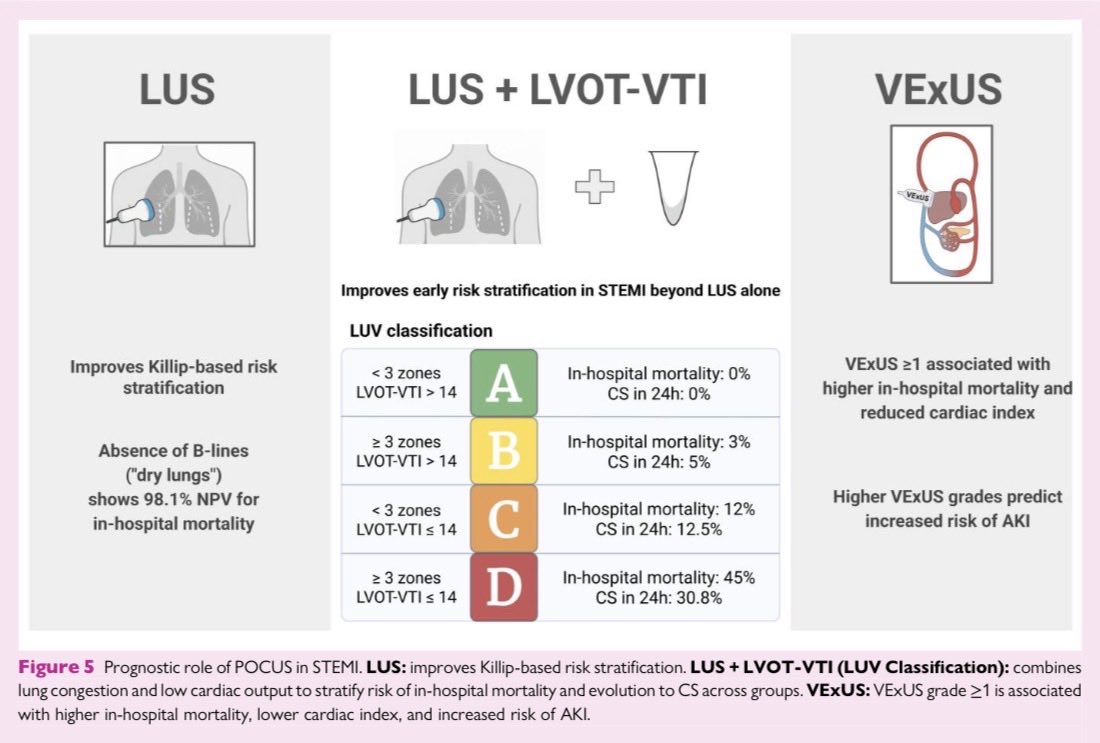
✨ A great way to start 2026! 👉🏼How POCUS is reshaping bedside evaluation in acute cardiovascular care — new review now published in EHJ-IMP. 🔓 Free access: track.smtpsendmail.com/9032119/c?p=5R…

✨ A great way to start 2026!
👉🏼How POCUS is reshaping bedside evaluation in acute cardiovascular care — new review now published in EHJ-IMP.

🔓 Free access: track.smtpsendmail.com/9032119/c?p=5R…
CardiovascularCorner (@trackyourheart) 's Twitter Profile Photo

Understanding Diastolic Dysfunction, Made Simple with Echo This visual shows how the heart’s diastolic function (its ability to relax and fill) changes across different stages of dysfunction , from normal to severely restrictive (Grade 3–4). Here’s what’s being analyzed: 1️⃣

Understanding Diastolic Dysfunction, Made Simple with Echo

This visual shows how the heart’s diastolic function (its ability to relax and fill) changes across different stages of dysfunction , from normal to severely restrictive (Grade 3–4).

Here’s what’s being analyzed:

1️⃣