A.N./NeMO Nantes (@groupnemo) 's Twitter Profile
A.N./NeMO Nantes

@groupnemo

Neuroscientist (PhD) in Team Neuroinflammation, Mechanisms & therapeutic Options.

ID: 1308037200911753216

linkhttps://cr2ti.univ-nantes.fr/research/team-5 calendar_today21-09-2020 13:36:52

126 Tweet

49 Followers

68 Following

Emmanuel (@ejustin46) 's Twitter Profile Photo

9) Slovakian researchers reported the presence of SARS-CoV-2 in the cerebrospinal fluid of patients with long covid. journals.sagepub.com/doi/10.1177/20…

9) Slovakian researchers reported the presence of SARS-CoV-2 in the cerebrospinal fluid of patients with long covid.
journals.sagepub.com/doi/10.1177/20…
Guenter GR (@grguenter) 's Twitter Profile Photo

Emmanuel We know since more than 20 years that human coronavirus can stay persistent and causes MS after a long term persistence amongst other bad things in our bodies. We knew that! Persistence of SARS and SARS-Cov2 is not new. Paper from 1999. Eye Opening! ncbi.nlm.nih.gov/pmc/articles/P…


thetranscendedman (@atranscendedman) 's Twitter Profile Photo

Athens researchers studied 118 people and found that severe COVID-19 patients have elevated CD55 in T cells, which suppresses type-I interferon responses, weakening antiviral defenses and potentially worsening disease progression. nature.com/articles/s4200…

vittorio (@iterintellectus) 's Twitter Profile Photo

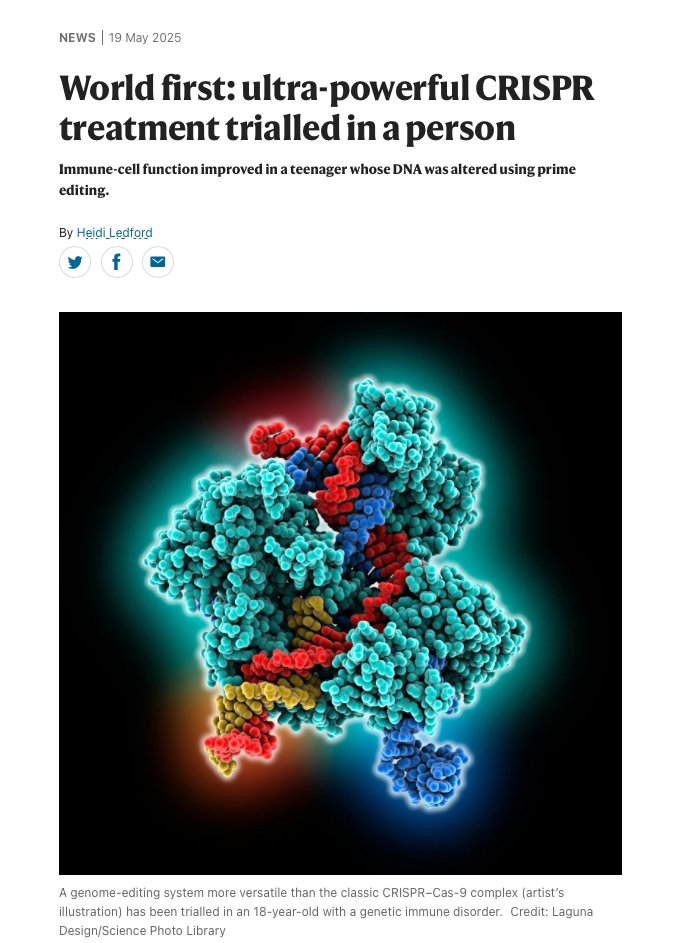
it’s happening! a human was just edited prime editing (the advanced CRISPR) was used to fix a broken immune system a teenager with a rare immune disorder just had his DNA rewritten 1/

it’s happening!

a human was just edited

prime editing (the advanced CRISPR) was used to fix a broken immune system
a teenager with a rare immune disorder just had his DNA rewritten
1/
Roger Gustafsson WHN|bsk.social (@rogergustafsso2) 's Twitter Profile Photo

1/ Swedish study highlights a potential link between severe #COVID19 and an increased risk of developing #MultipleSclerosis (#MS). Researchers at Örebro University and University Hospital Örebro found a doubled risk of MS in individuals hospitalized with severe COVID-19

1/
Swedish study highlights a potential link between severe #COVID19 and an increased risk of developing #MultipleSclerosis (#MS). Researchers at Örebro University and University Hospital Örebro found a doubled risk of MS in individuals hospitalized with severe COVID-19
Brain (@brain1878) 's Twitter Profile Photo

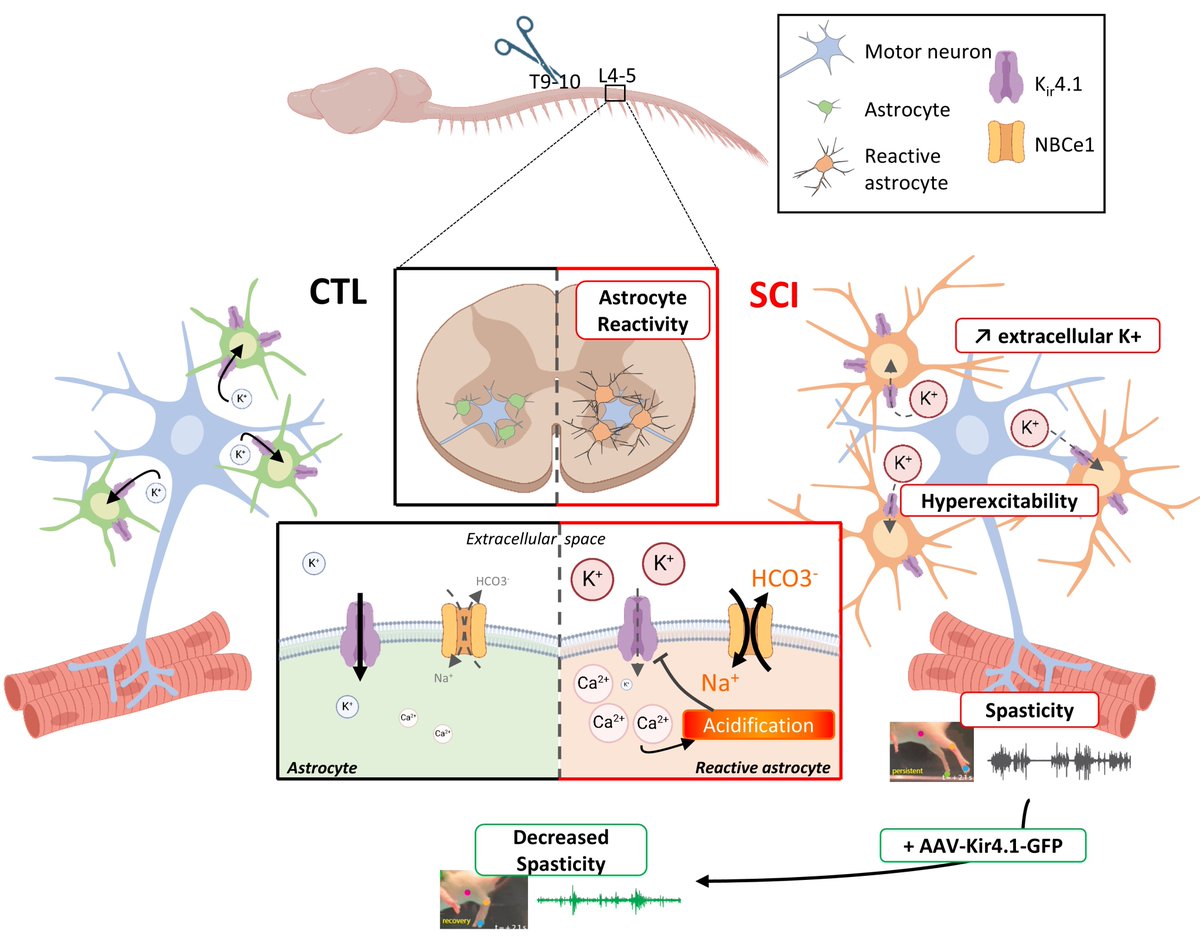
Barbay et al. show that enhancing astrocytic Kir4.1 channel function restores potassium uptake, reduces network hyperexcitability, and alleviates spasticity in a mouse model of spinal cord injury. tinyurl.com/y643a3hm

Barbay et al. show that enhancing astrocytic Kir4.1 channel function restores potassium uptake, reduces network hyperexcitability, and alleviates spasticity in a mouse model of spinal cord injury. tinyurl.com/y643a3hm
Vipin M. Vashishtha (@vipintukur) 's Twitter Profile Photo

A NEW study reports that a high school student worked w/ researcher of University of Victoria to develop #Mobius, a transformer-based AI model that used blood DNA methylation data from 852 individuals to distinguish ME/CFS, LongCOVID, & healthy controls with 97% accuracy. 1/

A NEW study reports that a high school student worked w/ researcher of University of Victoria to develop #Mobius, a transformer-based AI model that used blood DNA methylation data from 852 individuals to distinguish ME/CFS, LongCOVID, & healthy controls with 97% accuracy.  1/
Dr. Sean Mullen (@drseanmullen) 's Twitter Profile Photo

It’s a good thing SARS2 isn’t airborne AIDS. Right? It would suck if it stayed in your balls and then also caused immune dysregulation. Oh wait. auajournals.org/doi/10.1097/01…

David Lingenfelter, PhD (@dlingenfelter) 's Twitter Profile Photo

Projections indicate that between 15 and 20 million Americans likely will have experienced Long COVID by the end of 2025. This estimate is based on current prevalence rates, ongoing viral transmission, and expert analysis of the long-term impacts of the virus.

Projections indicate that between 15 and 20 million Americans likely will have experienced Long COVID by the end of 2025.

This estimate is based on current prevalence rates, ongoing viral transmission, and expert analysis of the long-term impacts of the virus.
Brain Inflammation Collaborative (@braininflcollab) 's Twitter Profile Photo

67% of 2,314 Long COVID patients surveyed reported symptoms of a dysregulated autonomic nervous system such as: - A drop in blood pressure when standing - Brain fog or cognitive disturbances - Dizziness or light-headedness - Heartbeat irregularities - Gastrointestinal issues -

A.N./NeMO Nantes (@groupnemo) 's Twitter Profile Photo

Intrathecal Anti-Akkermansia muciniphila IgG Responses in Multiple Sclerosis Patients Linked to CSF Immune Cells and Disease Activity @CHUNantes Nantes Université mdpi.com/3449990


Ali Max Erturk (@erturklab) 's Twitter Profile Photo

We discovered that SARS-CoV-2 spike protein persists in the body & brain borders years after infection, driving inflammation & brain vulnerability, a mechanism for Long COVID. 🧠 cell.com/cell-host-micr… 💉 Vaccine: nature.com/articles/s4158… 🔬 Method: biorxiv.org/content/10.110…

Zdenek Vrozina (@zdenekvrozina) 's Twitter Profile Photo

COVID-19 and the brain: a new study. What the study looked at - Researchers examined autopsies of 13 people who died with COVID-19 vs 23 controls. Goal: to uncover what exactly happens inside the brain during COVID-19.🧵

Florian Deygas (@flodeygas) 's Twitter Profile Photo

🔬 Sclérose en plaques : quand les régulateurs du système immunitaire jouent les incendiaires L’Inserm vient de publier une étude intéressante sur la sclérose en plaques (SEP). Elle révèle que certaines cellules du système immunitaire, censées calmer l’inflammation, joueraient

🔬 Sclérose en plaques : quand les régulateurs du système immunitaire jouent les incendiaires

L’Inserm vient de publier une étude intéressante sur la sclérose en plaques (SEP). Elle révèle que certaines cellules du système immunitaire, censées calmer l’inflammation, joueraient
charlos (@loscharlos) 's Twitter Profile Photo

“Our primary message is that reinfections still matter, and you should do what you can to avoid reinfection..” — Yong Chen, University of Pennsylvania

“Our primary message is that reinfections still matter, and you should do what you can to avoid reinfection..” — Yong Chen, University of Pennsylvania
charlos (@loscharlos) 's Twitter Profile Photo

“‘The message is about how seriously you should treat your potential risk of getting a second COVID-19 infection,’ says Chen. These results, along with other research, suggest.. a cumulative harmful effect of repeat COVID infections on the body” #LongCovid time.com/7322188/covid-…